


Three side-by-side television screens displaying three different channels can show safety messages, entertainment and promote area services such as ski school, rental operations, food and beverage locations or race department activities. The system can also be used for reports on road conditions, weather or lift status or to page a skier.
“What we think it will do is greatly enhance the service we provide in terms of information,” explained Blackcomb marketing manager Rob McSkimming. “We put out tons of paper and other communications — trail maps, chalk boards, white boards, bulletins every day to all the hotels, daily grooming report with a map. We do everything we can to provide information and equip the guests to give them the best skiing experience, but despite that, we still find we don’t do a great job of informing. Now we’ll augment all that with this medium.”
Bob Liljenwall, developer of the system and president of Private Broadcasting Networks of Manhattan Beach, Calif., describes Ski-V as “a video brochure which is updated daily — and the resort has editorial control.” He says Ski-V has three-fold benefits: “providing customer satisfaction, entertainment and profit enhancement.”
To operate, the Ski-V system utilizes a laser disk to put full-motion video and still frames on screen, a hard-disk computer to produce digitized custom graphics and control what appears on the monitors, copyrighted software and three screens enclosed in a weatherproof pod that has been designed to combat glare.
“It’s a completely turn-key, no-brains operation,” said Liljenwall. “The area basically has to dedicate a part-time staff to input real-time information.”
When completed, Blackcomb’s system will probably consist of both outside and inside locations: two at the bottom of the Wizard quad, two at the bottom and one at the top of the Solar Coaster quad, four in the Rendezvous Restaurant at the top of the mountain and three in the base lodge, two inside and one outside near the ticket windows. Such an installation runs about $250,000, according to Liljenwall, while smaller installations will cost from about $100,000.
U.S. areas operating on Forest Service land may have to absorb more of the cost. Jerry Blann, president of Bear Mountain, Calif., which expects to be the second area to sign on with Ski-V, noted that, “There’s a potential problem on [U.S.F.S.] land. The Forest Service won’t allow promotional programming. We have private land at the base, but areas [that don’t] won’t benefit from promotions.”
According to McSkimming, Blackcomb had to make several attempts to get the outdoor monitors situated correctly, but there was just one operational hole that was easy to plug. “Ski-V is easy to use, and the whole technology has been absolutely flawless, although it’s very complex,” he said. “Getting information as current as possible was a little difficult. Alpine Dispatch is our central place where all information filters through. The lift operators call Alpine Dispatch with liftline status and it took a while to get that information on the monitors. An operational link was missing, but we’ve now ordered a modem to solve that.”
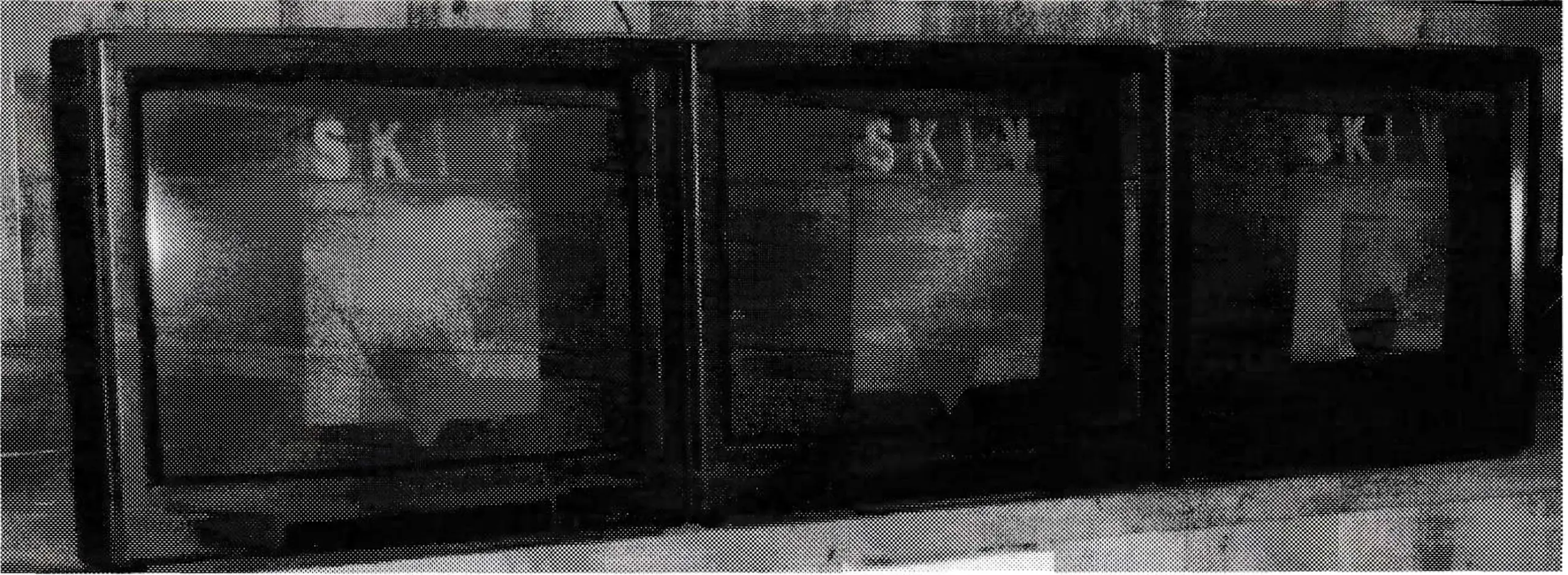
For some areas, Liljenwall believes that the skier awareness and safety messages can be more important than profit-enhancement. “By dedicating the left channel to safety and risk-management issues, Ski-V enhances the resort’s ability to create a first line of defense. You have a captive audience in a liftline and the best way to create skier awareness is to educate.”

Those are the functions that appealed to Bear Mountain management. “I like the ability to communicate with guests,” said Blann. “I like the potential to communicate correct weather and road conditions, and the ability to merchandise products like ski school and the sports shop prompted us to take a good hard look at the system. We hope to have one or two pods this season.”
The Ski-V system cost includes custom programming and monthly updates, including new full-motion video footage to keep the programming fresh. “Every program is tailor-made,” explained Liljenwall. “We analyze the customer’s needs, including risk-management needs. Some areas have a need to move people from one part of the mountain to another. At Blackcomb, which has a high vertical, weather and lift status information are important. At Bear Mountain, the first problem is risk management. At a place like Heavenly Valley, with a double mountain, there would be a need to communicate what’s happening on each side of the resort. We can use the computer to generate a custom-program and create a graphics and entertainment package for each mountain.”
The system’s entertainment component comes from Warren Miller Entertainment, a partner in PBS and supplier of a film library for this application. “We are creating our own library of features that will be put on the system,” Liljenwall said. “Since Warren has filmed at so many areas, we can even tailor our features with sequences from a particular mountain.” Liljenwall added that footage from a ski area’s own video department could be plugged into the Ski-V equation.
McSkimming said that “the entertainment element works well inside, but the jury is still out on full-motion video outside. Some people find it intrusive, too much television. They go skiing to get away from television, so we’re still thinking”
Ski-V’s patented software has what Liljenwall calls “a rigid structure. We create a programming schedule with windows. It’s highly automated, so the operator can’t move it around. On a real-time basis, the operator probably spends two hours a day. They plug in weather and lift status, and they can promote special events or profit centers. If the ski school or race department needs to promote something, it would be put in.”
Blann, while enthusiastic about Ski-V’s potential, believes that Liljenwall might be a little optimistic about the learning curve. “The only downside is that the operator won’t be picked up as readily as Bob hopes,” Blann said. “Getting someone to manipulate it may not be as easy as he thinks.”
In addition to Warren Miller Enterprises, major Private Broadcasting Network’s “technology partners” are Nexus Display Systems of Vancouver, which develops computerized marketing ad display systems for cable companies in Canada; EDI Industries of Toronto, an industrial engineering firm which designed the pod; Tim Patterson, an Emmy-winning video director, and Joan Libera, a well-known Los Angeles graphic and video designer. Similar concepts are being developed in other fields, but Ski-V is the first developed for the special needs of the recreation business