


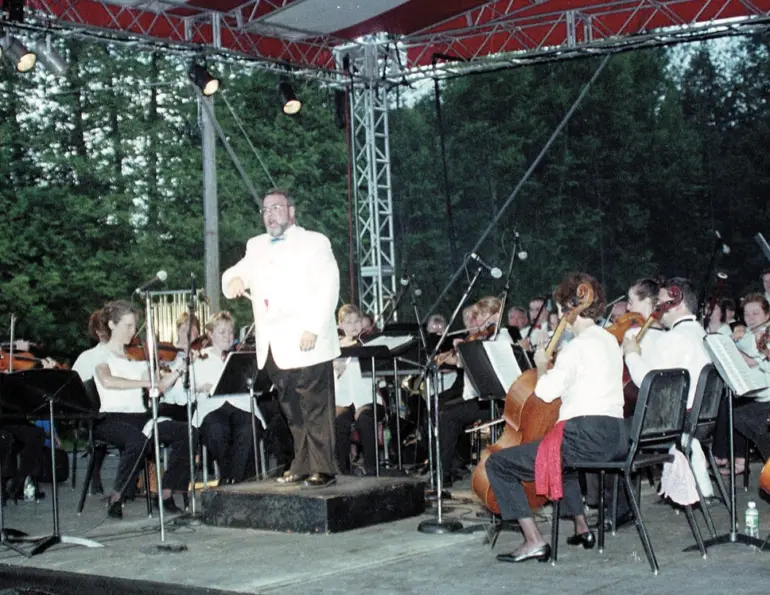
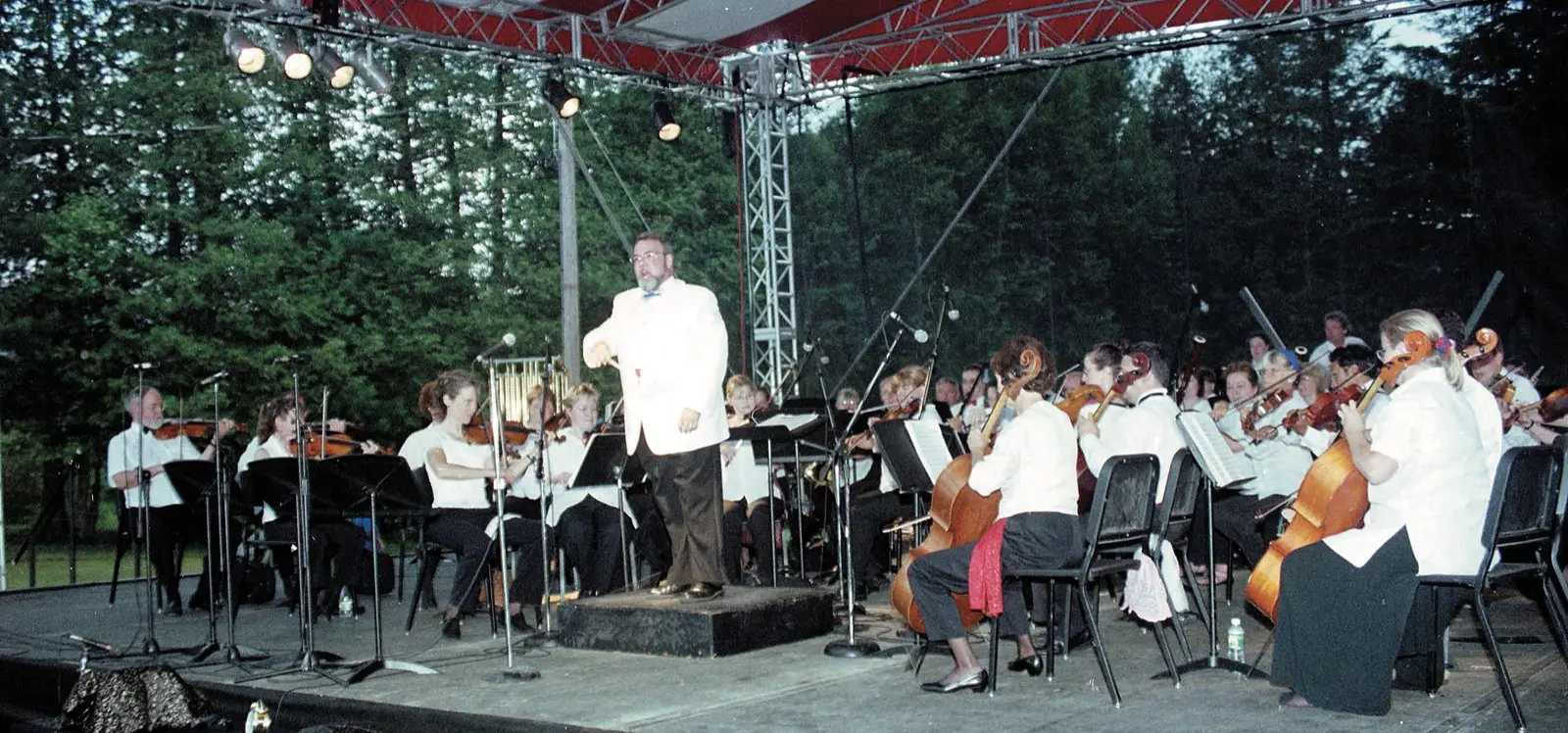
Last July 5, the Bangor Symphony Orchestra (BSO) visited Kingfield, support base for Sugarloaf/USA, and performed an outdoor pops concert. More than 1,000 music aficionados relaxed in folding chairs as the 55-piece orchestra played a selection of rousing marches, patriotic standards and light classical pieces.
Outdoor concerts are the midsummer trademark of many American musical institutions, but it’s not the sort of event usually associated with a rural town with a year-round population of only 1,100.
For Sugarloaf, the Kingfield community and the BSO, last July’s inaugural Kingfield Pops concert was the forerunner of a long-term plan intended to re-establish the orchestra’s rural roots, breathe new life into the host community and jump-start the local economy. Backers envision creating a permanent summer home in Kingfield for the BSO, complete with an enlarged series of classical and pops concerts, children’s events, chamber music camps, art fairs and related educational and cultural activities.
The Opening Notes
The Mount Abram Economic Development Association (MAEDA), comprising Sugarloaf and Kingfield-area businesses, civic leaders and educators, is the driving force behind the idea, and the BSO is fully engaged.
“We’re hoping to make this the start of a long-term relationship here in Kingfield,” said BSO marketing director Catherine LeClair. “The vision is more than putting on a concert. It’s about revitalizing this area in a new kind of way.”
Although the Pops is a community-wide endeavor by dozens of citizens, Sugarloaf played a key role from the inception. Sugarloaf is the largest employer in the area and a pivotal member of the economic development group. A team of three Sugarloaf staffers—events manager Bobby Brown, communications manager Bill Swain and vp of finance and administration Brian Toomey—was deeply involved in planning the first Pops concert. Currently they’re working on next summer’s reprise, slated for June 26, 2004.
“The three guys were heavily involved and gave a lot of time to make sure that this event was a success,” said Ken Wilson, the Kingfield businessman who first conceived the idea. “Sugarloaf played a vital role in the organization and helping us just get off the ground.”
Sugarloaf Plays Its Part
Organizers needed about $22,000 for the orchestra and conductor, plus several thousand more for the stage, lighting, transportation and ancillary costs. The Sugarloaf Regional Charitable Trust was among the earliest major donors with a $5,000 gift.
More important, however, was the people factor. BSO executive director Susan Jonason recalls that involving Brown, Toomey and Swain marked a milestone. “To have the Sugarloaf people step into the picture was a huge boost,” she said. “To have that expertise was an important element in the project, and it gave us all a higher degree of confidence.”
Brown, who had prior experience in event promotion through the entertainment world in Hollywood and New York, volunteered to help with the Pops. “Bobby has a long-standing background in putting on events,” noted volunteer event chairwoman Vicki Robinson. “So he brought a lot of expertise in that area—how to read contracts and how to promote something. And he was thinking long term about this.” That led him to involve Swain and Toomey.
Community involvement makes sound business sense, notes Toomey, who volunteered to serve as Pops treasurer. “It wasn’t a Sugarloaf-initiated concert or event,” he said. “It was just a case of Sugarloaf looking at this and saying, ‘We’re community members; let’s join in.’ The spin-off of that is more summer business—and that would definitely help the ski resort.”
The Sugarloafers had the experience and skills to assist the organizers in several ways. The resort knew the business of concert promotion because it already hosts several slopeside events. The largest of these is the annual Budweiser Reggae Festival, a yearly New England rite of spring which sometimes draws more than 11,000.
On a lesser scale, Sugarloaf holds a Blues Festival on the first weekend of December to promote early-season skiing, and runs a series of popular music concerts in the base lodge throughout the winter.
These events are Brown’s bailiwick, so the Pops project represented familiar territory. “I was able to bring the strengths of my past experience in event management and offer those services and direction to create a project management list and timeline,” said Brown. “I sort of stepped back for the macro look at everything.”
From the outset, Brown dealt with big issues such as committee assignments, branding issues and exploring possible avenues of sponsorship. Fund-raising was crucial to the success of the event, and Brown ensured that the key Pops people understood the secret to motivating corporate contributors.
“It’s not about a company just donating money,” Brown said. “The bottom line is if you can incorporate another company’s marketing effort with a philanthropic endeavor, you have a win-win situation.
“You look for companies that mirror the demographic that you’re attracting to the event,” added Brown. “So if you get that combo where it makes sense for them, where it’s basically a marketing dollar but they’re also helping the community, you’ve got a double bang for the same dollar.”
In late winter and spring, Brown reviewed contracts and supervised the graphics and advertising efforts. As July approached, he turned his attention to issues of site logistics, volunteer support, traffic flow, people movement and post-concert wrap-up.
Swain manages Sugarloaf’s communications, and his duties include promoting the resort’s varied entertainment offerings to dozens of press and media contacts in the vast territory north of Boston.
Thanks to this background, Swain hit the ground running when he came on board; he had the resort’s extensive list of arts editors and entertainment reporters in his media database. These include cable television and radio stations that reach niche markets plus an extensive list of outlets with calendars of arts and entertainment events.
“What I brought was an established base of journalists and outlets to get the word out,” noted Swain. “We use that data base here with our own events, so it was really kind of a natural extension to reach out to them again with this community event.”

His efforts weren’t limited to mailing; he contacted the proper people by telephone. Swain’s spirited salesmanship was a key factor in getting excellent press exposure.
Toomey was the financial guru of the fledgling organization and designed the system of ticket sales, budgeting, cash handling and accounting. He produced the spreadsheets and did the financial analysis. And he brought in additional Sugarloaf personnel.
“It was more than just me,” Toomey said. “Sugarloaf’s accounting department, cash room and internal controls got involved. We set up the procedures, did the cash-outs and did the banking.” On the evening of the concert, Toomey’s wife, Kim, staffed the walk-up ticket window.
And the Band Played
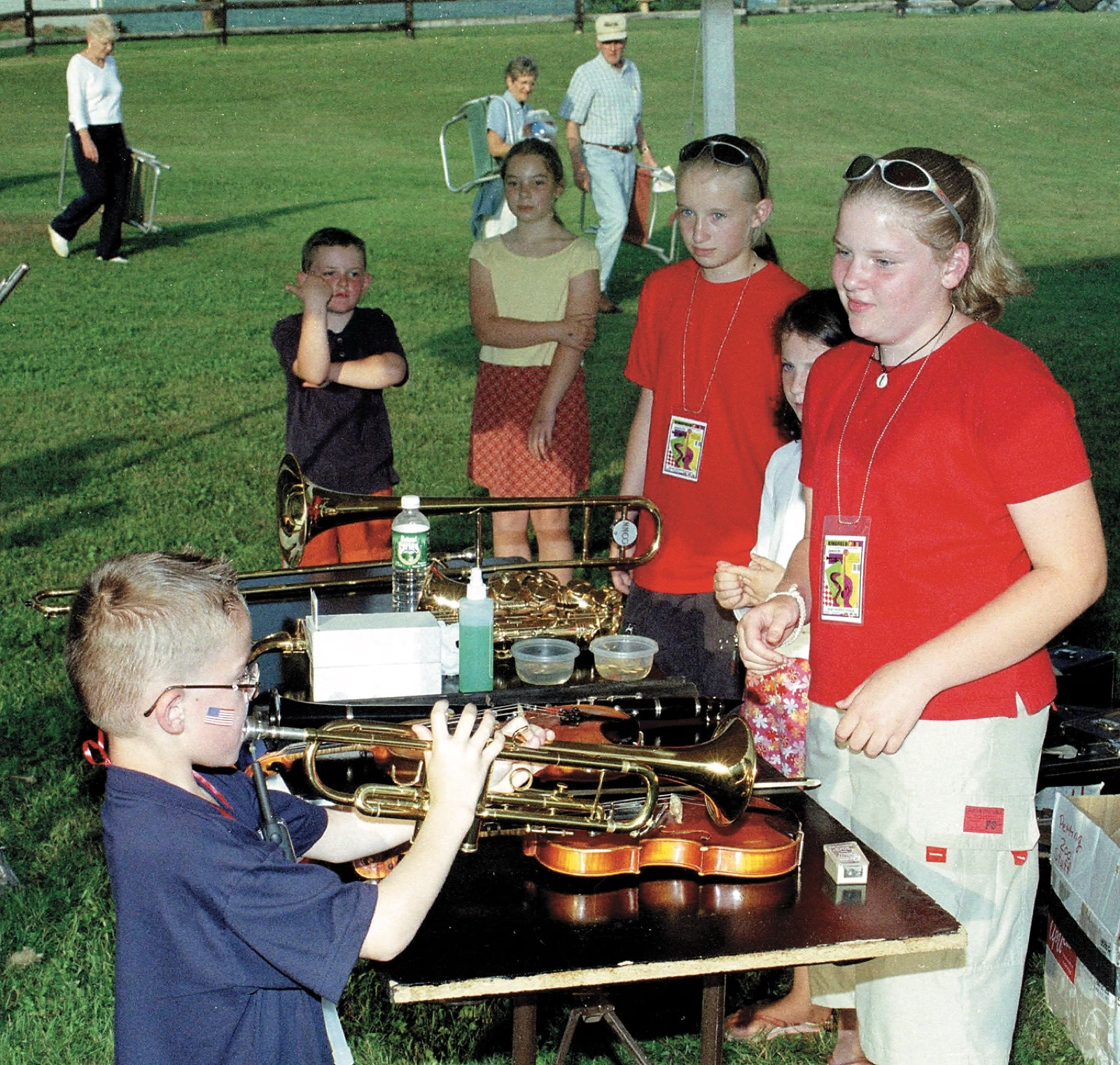
A total of 1,050 people carrying lawn chairs and coolers streamed into the Kingfield Flower Farm near the foot of 4,049-foot Mount Abram. Concert-goers were greeted at the gate by the Western Mountains Trash Can Band, a local troupe of steel drummers. Children were everywhere; some had their faces painted and learned about the symphony at the BSO’s Instrument Petting Zoo, while others frolicked on the gently sloping field above the canvas-roofed stage.
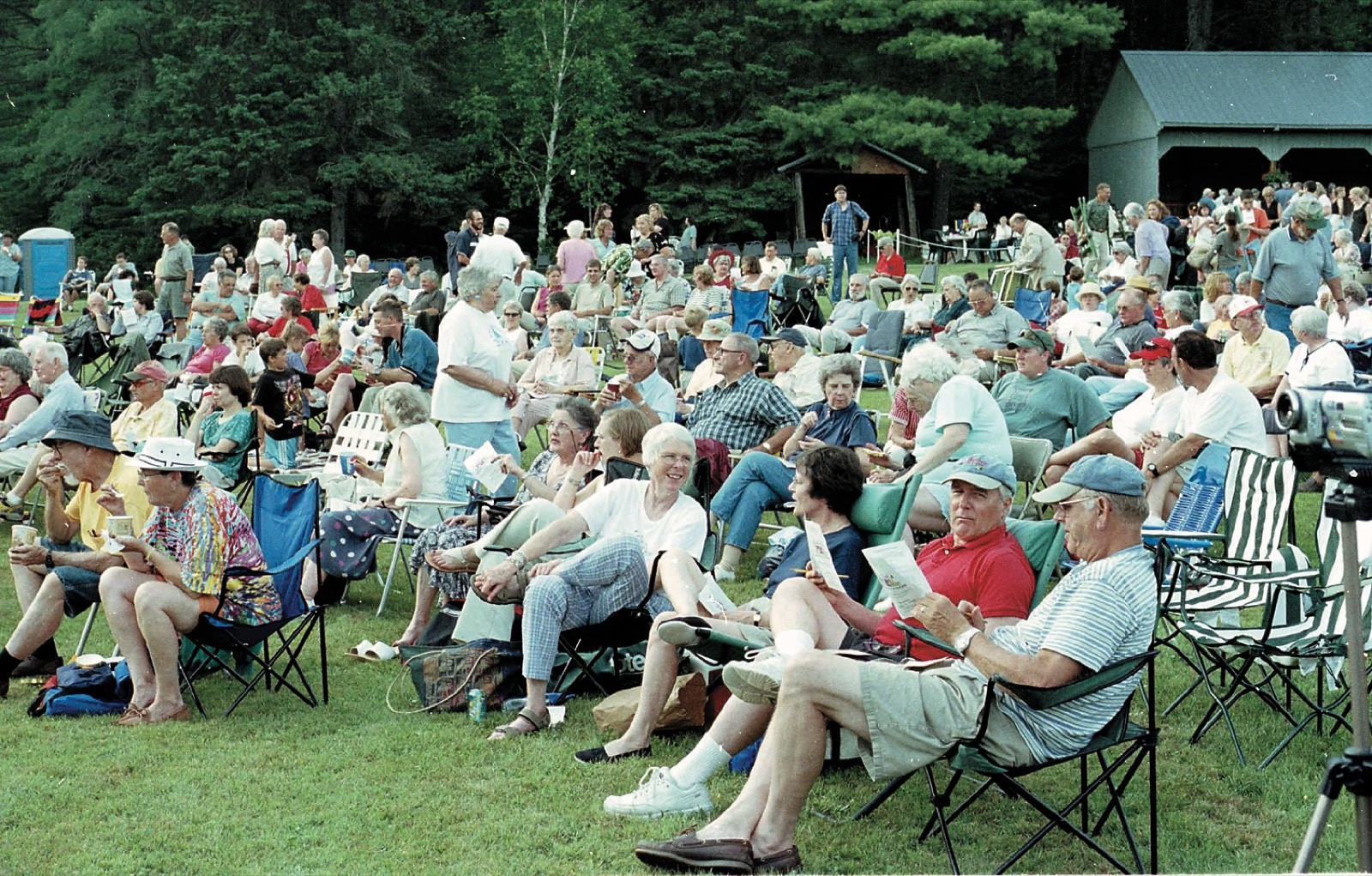
Despite a torrential thundershower that briefly interrupted the 55 BSO musicians, most of the crowd stayed through the end of the concert, which concluded—following Boston Pops tradition— with a stirring rendition of John Philip Sousa’s “Stars and Stripes Forever.”
Looking Forward
When Toomey tallied the final figures, the 2003 Kingfield Pops attained its first-year goal of a small surplus on a total budget of about $33,000. The committee enthusiastically decided to go ahead for 2004 with the goal of modestly enlarging the scope of the activities, chiefly by adding collateral afternoon events so that visitors can spend more time in the area and cap their day with the BSO’s sunset concert.
No one believes that 1,050 concert-goers are enough to keep Sugarloaf busy during the summer or to solve Franklin County’s serious economic woes. But Kingfield Pops organizers believe they’re moving in the right direction. “This event is a unique way to bring people in and showcase the whole region in the non-winter season,” said Swain.
Sugarloaf, of course, will benefit from even modest increases in summer traffic. The highly rated golf course is the principal asset. Other summer activities are limited: A lone Registered Maine Guide leads one adventure trip per day for up to a dozen guests of the Grand Summit Hotel.
“What’s in it for Sugarloaf is the fact that more people will show the propensity to come here to the area,” explained Brown. “If they come to the area, they’re going to know more about Sugarloaf and it will help us with our four-season resort.”
Swain echoes Brown’s thoughts. “We’re in the same situation that most primarily winter resorts are in; we’re underutilized in the warmer months,” he said. “We do well in summer, especially with our golf course, but we still have capacity. Ultimately our goal with this project is to bring more people to the area and make the summer business rival the winter business.”
In the long term, MAEDA and BSO hope to deepen their relationship by creating a summer home for the orchestra in the Kingfield area.
Ultimately, Wilson dreams of creating the “Tanglewood of the North,” referring to the Boston Symphony’s summer-long residency in the Berkshire mountains of western Massachusetts. The Berkshires have been Boston society’s summer playground for more than a century, and today the region is also home to several ski resorts. Tanglewood tallies approximately 350,000 concert-goers per summer—about the same total as the number of skier-days at Sugarloaf.
There are other precedents for collaborations between symphony orchestras and ski resorts. In Maine, the Portland Symphony holds one of its summer run-out concerts at Shawnee Peak. And the New York Philharmonic Orchestra had a 2003 summer residency at the Bravo! Vail Valley Music Festival in Colorado. Bravo! Vail shows just how big these festivals can be. Started in 1987, musicians outnumbered patrons at some early concerts, but today the annual gathering draws about 47,000.
Working Together
Creating a large-scale summer festival in Kingfield remains years away, all parties admit. But the Pops project is creating the momentum for positive change that its backers envisioned, and they are optimistic about their prospects for long-term success.
“There’s often a conflict between the ski resort and surrounding communities,” said John Witherspoon, co-founder of MAEDA. “I think the Pops really pulls the two together and realizes the talents of everybody.”
Brown added: “The Kingfield community is where a lot of us live, and we have season pass holders all over the area. For us to get involved was natural. For us, Sugarloaf doesn’t stop at the end of the access road.”
Scott Andrews, a Sugarloafer since 1985, covers the New England ski industry for regional publications.

