

A decade has passed since eight hand-picked ski areas successfully navigated through the unknown waters of a recreational skiers’ racing program called NASTAR. The National Standard Race was the brainchild of Ski Magazine’s editor-in-chief John Fry, who had run in some recreation-chamois races in France and was convinced that a similar concept could succeed in the U.S. The basic idea was to allow skiers to match themselves against one another, against their own progress and even against other skiers.
NASTAR did succeed — beyond the imagination of Fry and observers during that first experimental 1968 winter. Today, NASTAR is said to be the largest recreational ski program in the world. Last season 81,000 Alpine skiers made some 228,000 runs, and 3,000 runs were made by Nordic skiers in the second year of the cross-country program. When you consider that entry fees are $2-$4 for Alpine skiers and $2 for Nordic skiers, you see there’s a lot of interest — and coin — in recreational racing.
The leap from eight NASTAR areas to a hundred has certainly not occurred overnight, but the rapid escalation of enthusiasm for recreational racing in the U.S. has not been lost on other would-be organizers and sponsors. Like so many Topsies, new programs seem to just grow on the ski scene each winter.
Some of the programs cost little except administrative overhead…and offer little other than “exposure” and “traffic.” Others bear heftier price tags, but promise greater support in running the events.
NASTAR, predictably, at the ripe old age of 11 is the best organized. Participating Alpine areas pay a franchise fee, which can either be a flat fee in three installments over the ski season or a down payment plus a percentage of each racer’s entry fee. It’s a gamble. If it doesn’t snow, plan #2 is preferable. If it snows like gangbusters and you can’t keep the racers away, plan #1 would have been the better bet. In any event, most areas opt for the first plan because they get a two percent discount for doing so and a five percent discount if full payment is in by December 1 Nordic NASTAR has a lower franchise fee, a seven percent discount if full payment is in by December 1 and no #2 payment option.
Interestingly, vertical drop seems to have no correlation with the success of an area’s NASTAR program. In fact, some smaller areas run NASTAR races as if they were hot dogs coming across the counter at a fast-food emporium. When local traffic on a small hill results in skier boredom, many regulars will take up racing. Devil’s Head, Wisconsin, for instance, with a 495-foot vertical, had 3,744 NASTAR entrants last season. Alpine Meadows, California, had 1,882 on a vertical more than three times greater.
A successful NASTAR program can mean dollars in the till. Vail, Colorado, topped last year’s number of NASTAR runners with more than 12,000 entrants and grossed better than $36,000 from the program. The ski area determines how much it will charge as an entry fee — with a top limit of $4. Most areas come in the $2-$4 range, with $1 as a price for reruns.
NASTAR areas are supplied with a combination of tried-and-true programs and goodies — and new wrinkles are added each season. There’s an organized pacesetting system and the lure of finals on some glorious Western mountain (Steamboat, Colorado, April 5-7, 1979), both of which make good copy for the ski press all season. Each area gets a year’s supply of giveaway bibs imprinted with its own logo, three promotional banners, registration materials, a supply of NASTAR Guides, a booklet of marketing ideas which have worked and this year a new logbook for skiers to record their progress. This year there’s even a newly named “official NASTAR slalom pole,” (by Rapidgate), which NASTAR organizers say cuts manpower needs on the hill during races.
An area’s prime out-of-pocket expense beyond the franchise fee is for medals, but because they are bought nationally for the entire NASTAR program, they are quite reasonable considering the quality. Medals are customized with participating areas’ names. Last year, sixty percent of the entrants won gold, silver, or bronze medals.
Cross-country NASTAR is still in its infancy, and predictably — given both the nature of the sport and the relative newness of NASTAR within — is comparatively low-keyed. There is no nationwide pacesetting system. There is no Nordic NASTAR Racing Camp. The entire marketing effort for the 33 participating areas is on a much softer note, but if cross-country programs boom as downhill races have, it is inevitable that all the tested methods will be adapted to cross-country too.
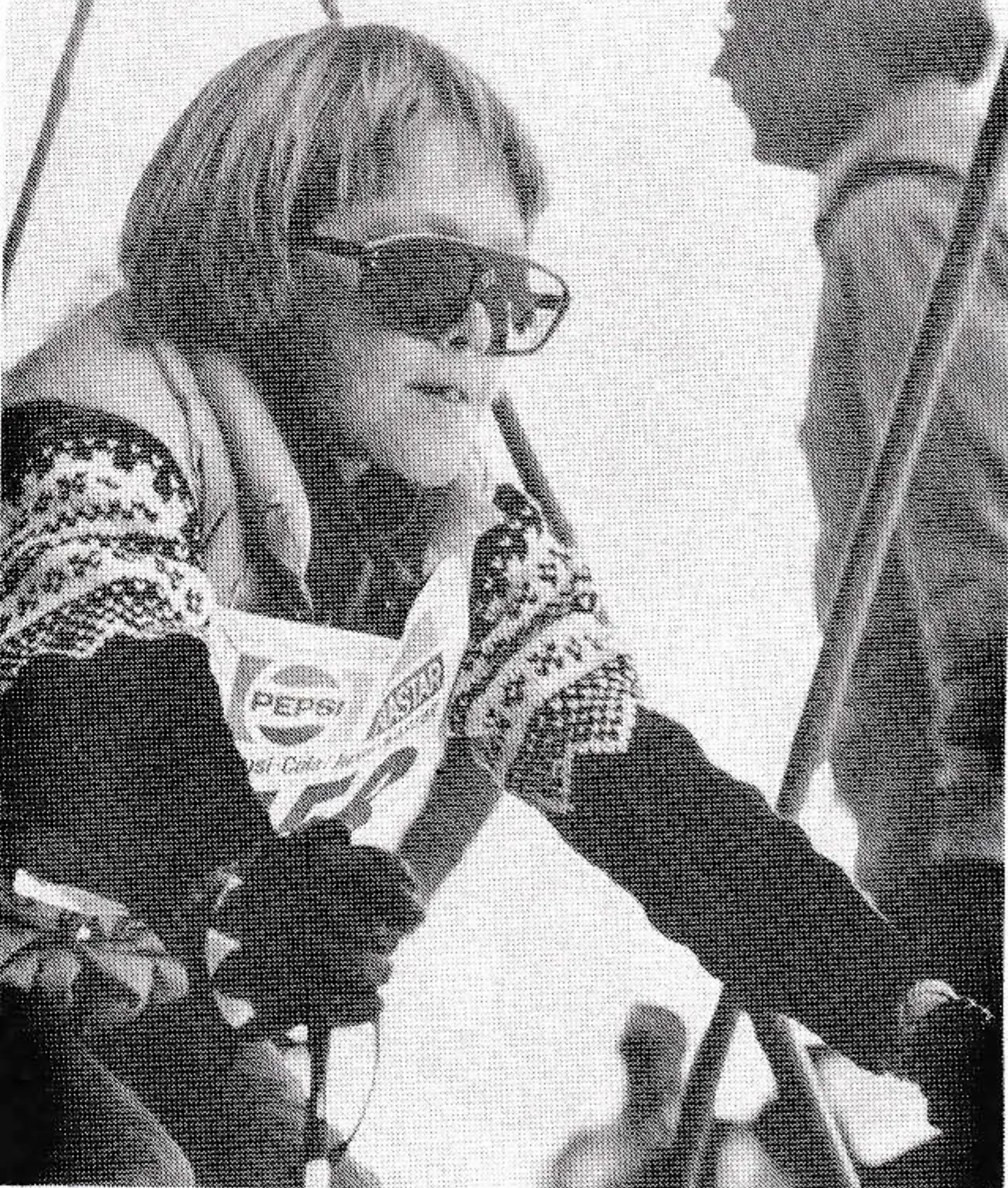
According to NASTAR marketing director, Peter Kirkpatrick, NASTAR is beginning to discover women and children. Of last year’s 150,000-odd entrants (that figure includes many of the 81,000 individuals who raced more than once), a paltry 33,531 were female and just 69,188 were under 18 years of age. NASTAR sees both groups as comprising a significant field for future potential. Bonne Belle, a longtime NASTAR sponsor, is backing a NASTAR race for women, complete with female pacesetter. Pepsi Cola, which has been involved since NASTAR’s third season, homes in on youngsters under 18. And Schlitz. which has been with NASTAR since the beginning, backs the overall program with an eye to those beer-drinking, over-18 American males.
NASTAR clearly has the edge for traditional ski racing format events. More and more areas are using NASTAR for club races instead of their own standard racing programs. Skier acceptance is high and marketing and promotional support helpful. However, some areas still prefer to go it alone. Dave Buckman of Gunstock in conservative New Hampshire says, “Why use NASTAR? We had it and dropped it. It cost us two thousand bucks and didn’t do much for us.” Gunstock is increasing the regularity and frequency of its Gunstock Challenge, with a medal set-up similar to NASTAR’s. The area charges $2 per racer and $1 per rerun, and it can keep the whole thing. Now, Gunstock is developing a Nordic racing program too.
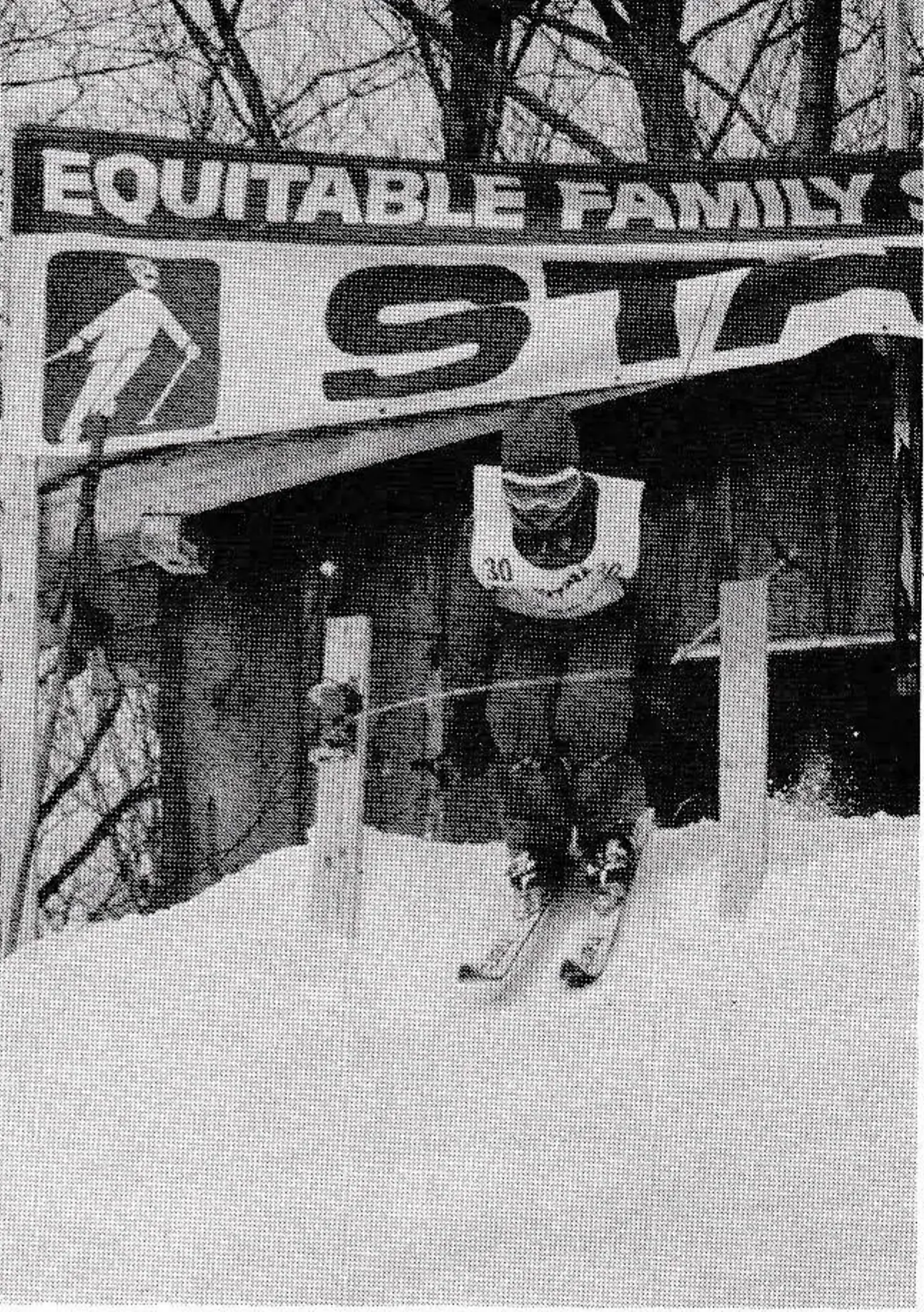
A natural extension of NASTAR has been the Equitable Family Ski Challenge, now in its second year. Based on the success of Equitable’s five-year-old tennis program, which this year attracted 200,000 participants, the Ski Challenge was launched to give parent-child teams an opportunity to pit their racing skills against other father-daughter, father-son, mother-daughter or mother-son duos. Fifty-two ski areas are lined up this year, compared to 75 in the premiere season. Bob Arrix of Capital Sports in New York, which runs the program, says, “We narrowed it down to 52 primary areas and went after the numbers. Some of the smaller areas couldn’t do the job in terms of manpower.”
Probably the most significant single fact to come out of the first season of the ski program is to measure it against the tennis program. Twenty thousand participants in 64 cities marked tennis’s first year. Forty thousand came out for skiing during the 1977-78 season. By the second year, tennis quadrupled with 80,000 players in 128 cities. It will be interesting to see how skiing stacks up at the end of this season.
Participating areas must hold at least one Equitable race per week. Most ski areas did not charge entrants last year, although some set a small fee to defray costs. Equitable supplies national and local advertising, publicity and brochures, as well as racing supplies. Equitable also pays a stipend to a coordinator at each area, generally someone from the ski school, to be in charge of each race. A seminar is run each November for these coordinators. All participants receive pins. Winning families from each ski area are invited to one of nine regional meets to be held in March, and winners from these will receive an expense-paid trip to the Nationals, April 7-11, 1979, at Snowbird, Utah.
Copper Mountain, Colorado, is one area that likes the Equitable Family Ski Challenge and is staying with it, despite some severe organizational lapses during the pilot year.
“The Equitable Program fits our format,” says Gary Andrus, marketing vice president at Copper. “Last year we didn’t get our materials on time, but it’s better this season. Equitable spends a lot of money on this program, and we feel it may prove to be a positive thing for us to have. We like the family image.”
“Look at NASTAR,” Copper’s director of skiing, Jerry Muth, concurs, “and you see a lot of families. Families ski together. It’s a natural. Even if Capital were to drop it, someone else would pick it up. We did a family race once with KOA in Denver. They hyped it and we ran it. People identify with a way of establishing their skills. More and more people want to race.”
At Copper, groups almost inevitably race. Whether they are clubs, airline people, whatever — a race is always part of the package. Copper gives them NASTAR and charges for it — $75 for up to 50 racers on the NASTAR hill. If they set up a special course on Trail 31, the minimum fee is jacked up to $125. An FIS-style race costs $500 to put on for a club or group. Copper throws in an awards ceremony and wine and cheese party but will not put on a race for free.
In the long run, Copper feels it profits and the club gets an excellent race. “We don’t just set up slalom gates and put two people on the hill to run the race,” says Muth. “We put on the best quality race we can, whether it’s a World Cup or a ski club race. We get great repeat business, so we must be doing something right.”

With all this interest in club racing, it was inevitable that someone would formalize that program too — and the someone is Grand Marnier, which is initiating the Grand Marnier Ski Club Challenge this year. Each participating ski club designates three men and three women racers, one from each of three age groups, based on a club elimination format.
Thereafter, four three-day regional meets will be held to isolate the top three teams in each region. The winning team will be given an expense-paid trip to the Grand Marnier Ski Club Challenge Championships during USSA’s SkiFest ’79 at Snowbird, Utah, March 31-April 7, 1979. Each region’s two runner-up teams will be invited to participate at their own expense.
Ski Area Management could not determine what the anticipated participation in the Grand Marnier program was, although Susan Thorpe of Skiing magazine which is supporting the program, pointed out that, in addition to the 2,000 USSA affiliated ski clubs, there are countless school and university ski clubs, other non-affiliated ski clubs, ski-oriented travel clubs and other groups who will be eligible to participate. While school and university groups might have trouble coming up with six racing-oriented skiers above the age of 21, it is not unreasonable to think that there could be 10,000 potential groups across the country.
Ski areas hosting club elimination races could expect hefty lift ticket sales. Of the $3-$4 entry fee, half goes to USSA and half to the participating area. It is also expected that as teams are formed, fellow members will form ticket-buying, eating, drinking, cheering sections.
The potential problem that looms on the horizon is the kind of disorganization that plagued the Equitable program in its first year — perhaps even on a larger scale since no model program exists a la Equitable’s tennis. Action Sports Marketing in New York is handling the program, and in late fall no one in authority or with any knowledge could be reached. Ski industry sources confirm that they are concerned.
Other recreational skiing efforts are coordinated by USSA and NSAA for various commercial firms. USSA is involved in Standard Brands’ Fleischmann’s Margarine and Traveler’s Insurance PEP races. NSAA is heavily involved with Coke and more peripherally, with Dannon Yogurt.
Fleischmann’s has carved Nordic skiing as its territory. In addition to backing the U.S. Cross-Country Ski Team, its funds will go toward the culmination of a USSA-run marathon program. The Fleischmann’s Margarine Ski Marathon is slated for March 25, 1979, at Waterville Valley, New Hampshire, with an anticipated starting field of 2,000 skiers for the 50-mile race.
Other races in the USSA marathon circuit will be a 50-kilometer race at Devil’s Thumb Ranch in Fraser, Colorado; the two-day 100-kilometer Minnesota Marathon at Bemidji, and the 60-kilometer Hennessey Cognac American Marathon at Brandon, Vermont. USSA’s support for the marathons is substantial, involving personnel, quad-track grooming equipment, timing, joint publicity, signage and date management. At this writing, marathon entry fees had not been set, but figures from $7-$32 have been charged in the past and are being bandied about.
USSA spokesman Jock Soper indicates that the association is confident of being able to handle up to 10 marathons a year and invites interested cross-country areas with sufficient directly owned or adjacent available terrain to inquire: U.S. Marathon, Box 777, Brattleboro, Vermont 05301.
USSA is coordinating a series of four smaller cross-country races for recreational skiers, the Traveler’s Insurance-PEP Series of Family Ski Touring Events. Now in its fifth year, the PEP series has become the image of wholesome family races. The scale of these races is smaller, and so is the degree of support given by USSA. The association supplies bibs and banners, race materials, public relations guidance, administrative and technical support and press kits, but not the on-site equipment and staffing which the marathons required.
Youngsters especially seem to find it encouraging to have hot racers up ahead of them. There is a matrix through which racers can ascend as the series progresses, and ultimately an Eastern Citizens Racing Team will be named. Families pay $4 to enter a PEP race. Unlike the marathons, which will be limited in number and which require a feasibility study before they are scheduled, PEP races are relatively easy-to-run traffic builders. The material is given free to interested areas which can demonstrate that they will do a competent job with the program.
Reportedly, Miller Lite is negotiating with USSA for a citizens’ racing program, which has a working title of the Ski Trek. Details have not been formalized.
Coke’s programs are even more diverse. Bottlers across the nation are encouraged to work on a one-to-one basis with local ski areas to come up with targeted programs for the specific market. Marketing assistance is supplied by NSAA’s Tom Murray.
“Coca Cola U.S.A. spends about $50,000 to supply bottlers with ski-related material,” says Murray, who originally came to NSAA to coordinate Coke programs. “There are brochures on skiing, examples of ski-related activities and guides. This year Coke is making 2,700 individual contacts with personnel at the bottlers. There might be two or three people per company, “say, the president, vice president and marketing person, for instance.” Bottlers have begun ordering promotional material that they once didn’t know existed, such as racing bibs, banners and so forth. A bottler can supply racing material for a variety of citizens’ programs at a small cost and reach many skiers in the region.
Dannon Yogurt is reaching the ski citizenry through heavy involvement in winter carnivals, including those at Stowe, Park City and Stratton, as well as sponsorship of several races and Nordic NASTAR, which it co-sponsors along with Bonne Bell.
What ski areas, Alpine and Nordic do with this money, these organizations and the growing interest in recreational skiing is limited just by energy, imagination and some seed money. Citizens’ racing is a proved traffic builder. The growth of established racing programs and the rise of new ones should be ample proof to any interested area operator.