


First Aid on Wheels
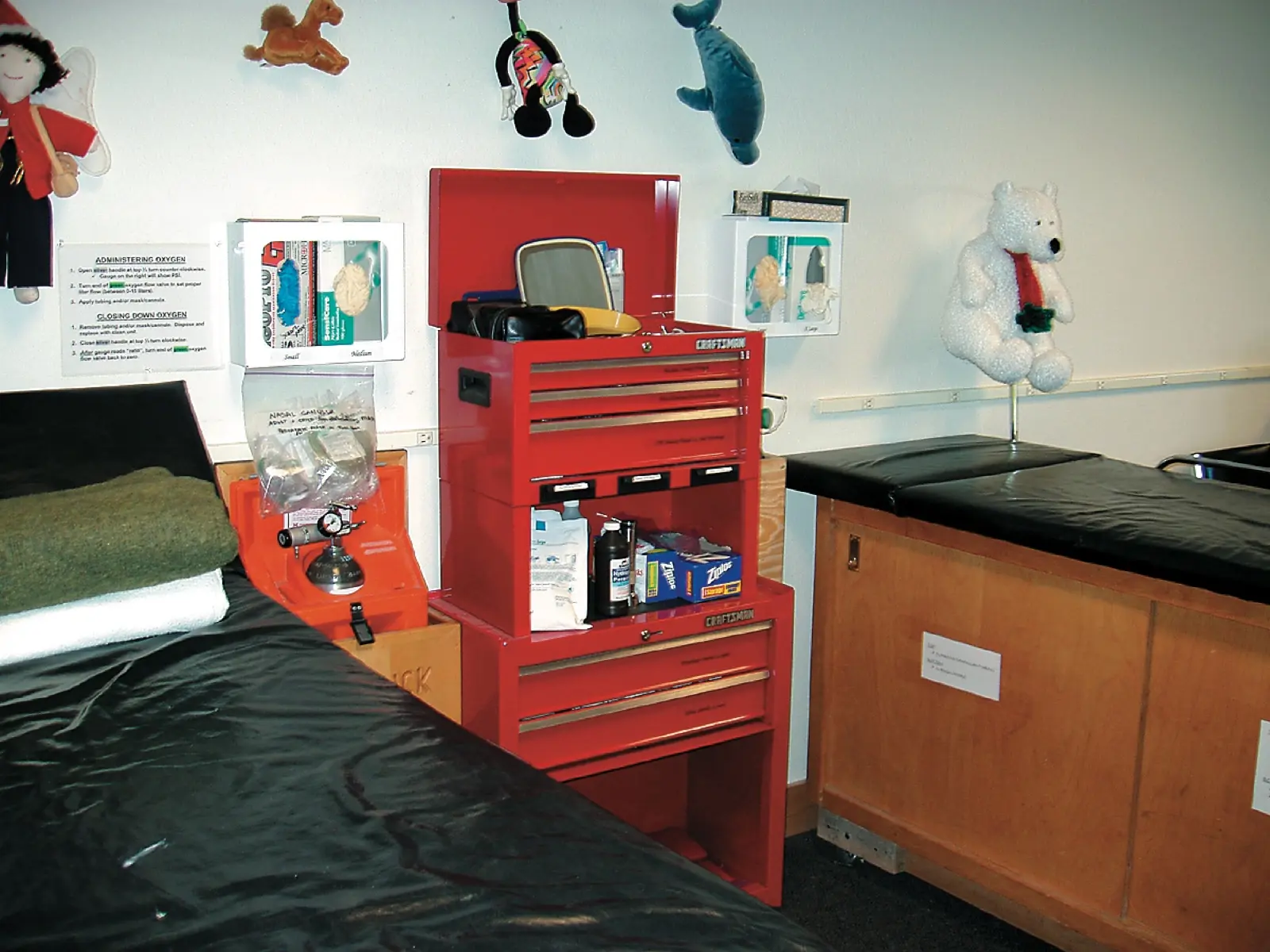
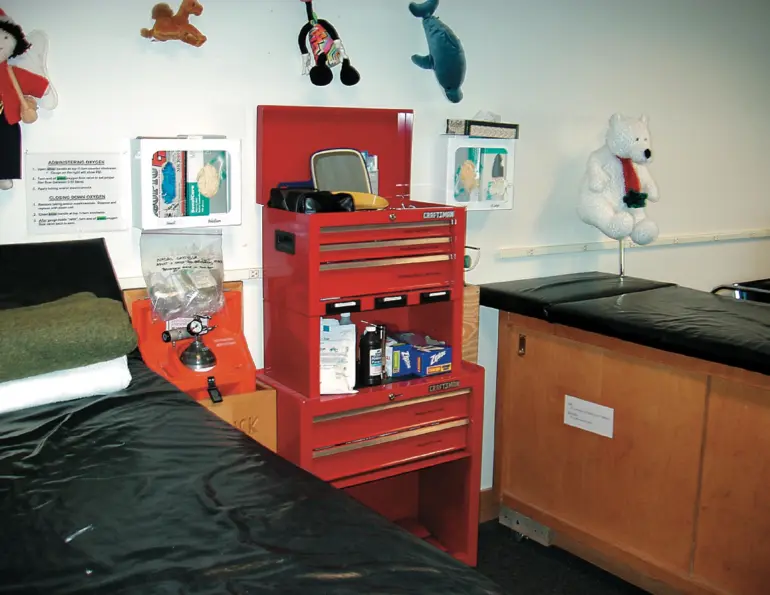
When Ausblick’s ski patrol was ready to move into new digs a few years ago, Patroller Patricia Camp set out to find the best means for storing first aid supplies. Having recalled a similar application at Tyrol Basin, she headed to the local Sears store and found a combination cabinet/toolbox (2 separate items) that could provide the drawers and the flexibility she needed. Finding it on sale for around $100 clinched her decision.
This particular toolbox offers several advantages over traditional emergency kits: it holds a multitude of bandages and other first aid necessities, it is on wheels and can be rolled anywhere in the first aid room, and should an accident occur at the lodge, the first aid cart can be quickly rolled to the scene.
A very good assortment of such toolboxes can be found in the automotive section of your local Sears.
Lifting the Lids
Grand Geneva Resort, Wisc., watched as helmet demand skyrocketed and decided to add helmets to their rental inventory. But there was no space in the rental area.
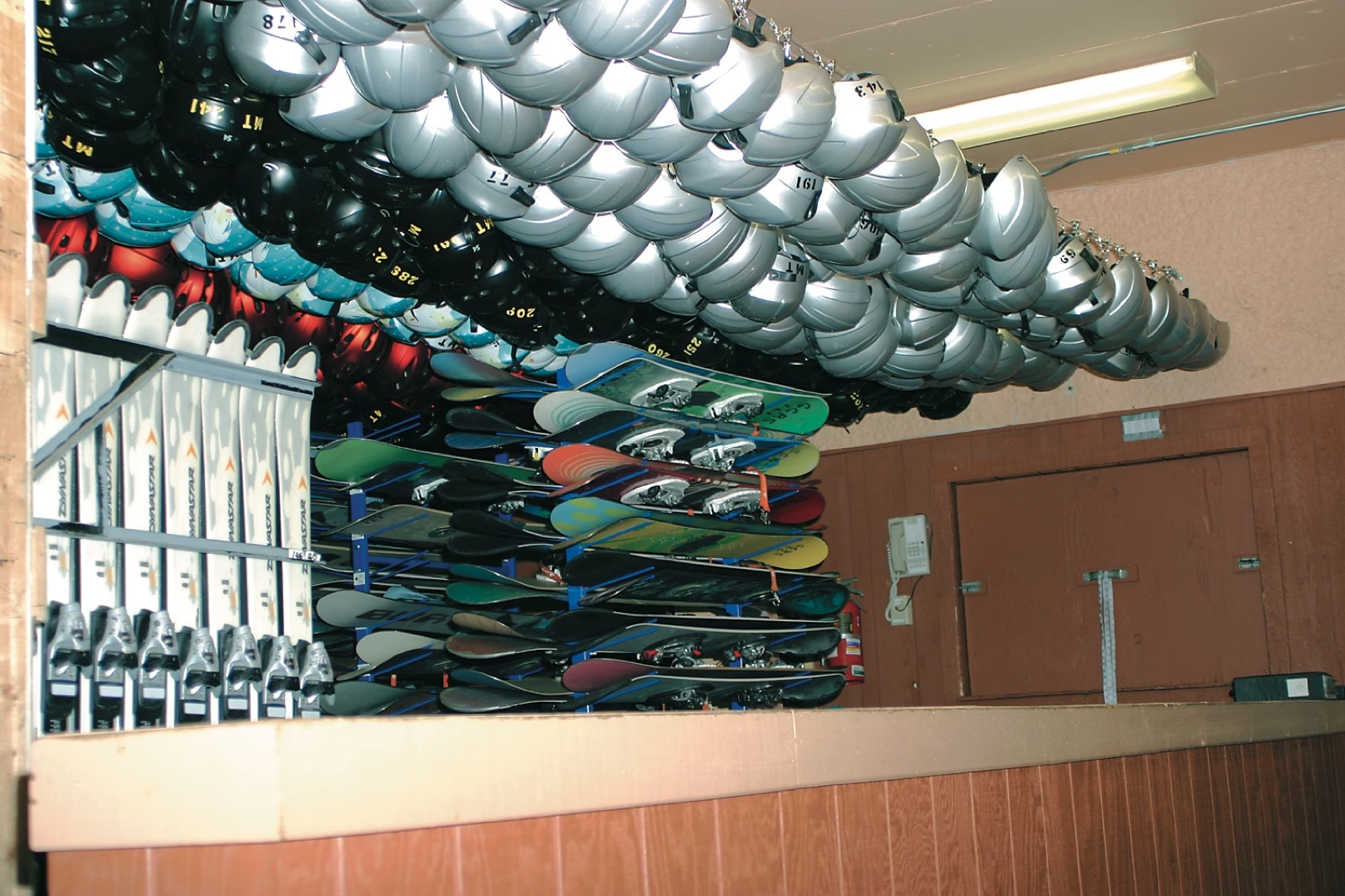
With nowhere to go but up, Bill Stubbs, rental manager, and Hans Hauschild, ski area manager, created a ceiling storage system. They started by stretching plastic-coated GAC across the ceiling (galvanized aircraft cable can be found in any local hardware store) followed by 4-inch S hooks to hold the helmets. The hooks make it possible to quickly hang the helmets without any need for a clipping or locking device. The storage is easily accessible by most employees, though some of the shorter people may need a stepladder or a pole.

The S hooks are about 8 feet from the floor with the helmets hanging 6 1/2 feet up. Hans Hauschild suggests using a fixed pulley instead of a swiveling type that tends to make it a little trickier to hang the helmets, as the hooks roll around easily. A few more cables to space the helmets might also be a good idea and make them easier to hook and unhook.
New Heights
The wood fence in this photo is located along a ski slope at Sunburst, Wisc., and it has not always been this high. When it was constructed two years ago it was a few feet lower and looked more like a traditional fence. But the problem was that after the first year’s snowfall, the fence was barely visible and more of a hazard than help: Skiers could barely see a foot of the top rail.
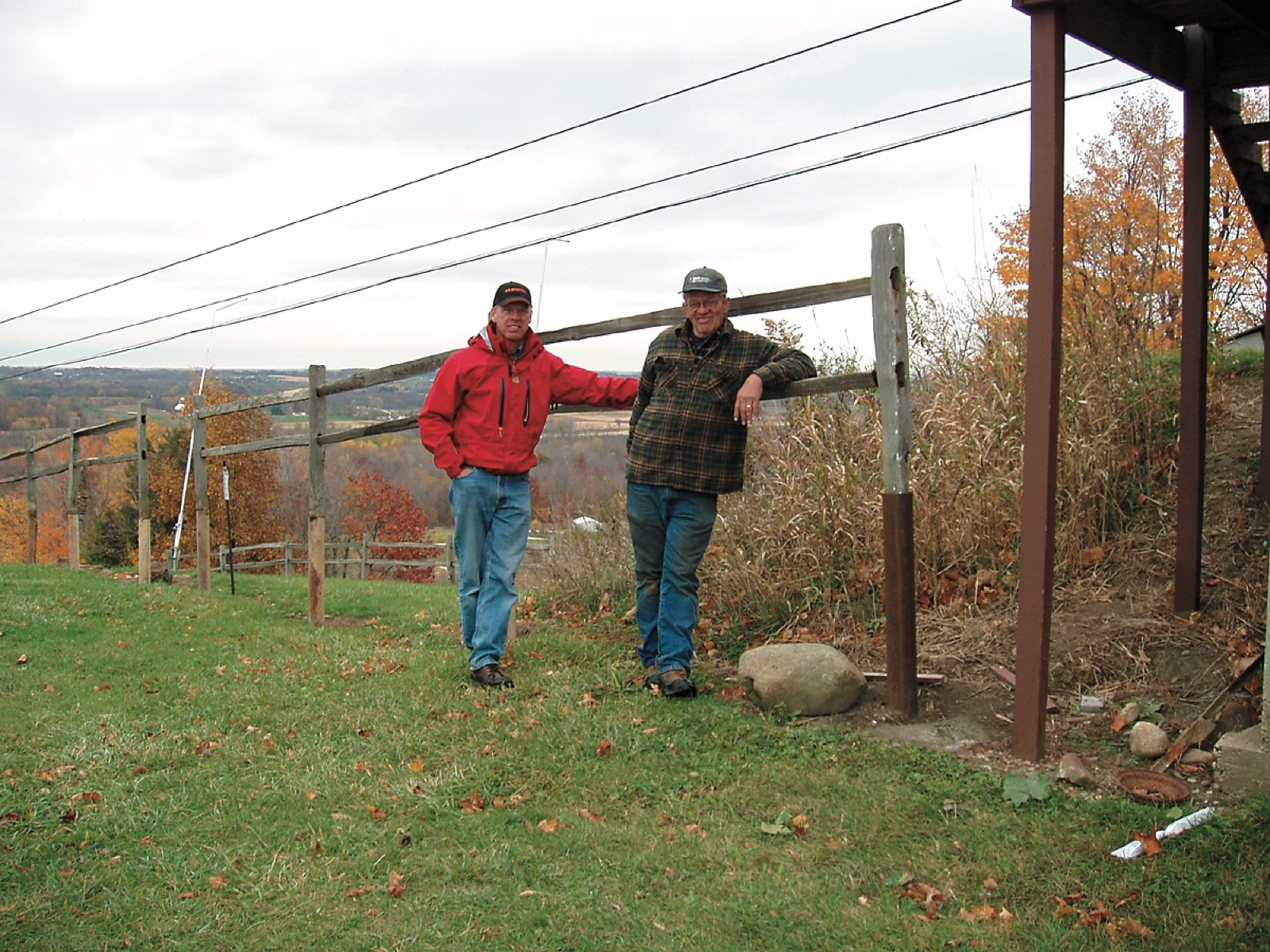
Jim Engel and Dick Holbrook, manager and mountain manager respectively, set out to raise the fence and found the solution in some old 4-inch snowmaking water pipe that they had just removed.
First, the pipe was cut into 5-foot lengths. After removing a wood fence post, two and a half feet of pipe was put into the ground. The bottom end of the post was tapered about 2 feet up. Next the newly tapered wood post was put into the water pipe, providing the much needed elevation. An added benefit is that now the fence can easily be removed if a groomer or other vehicle needs to get access to the fenced off area.

