


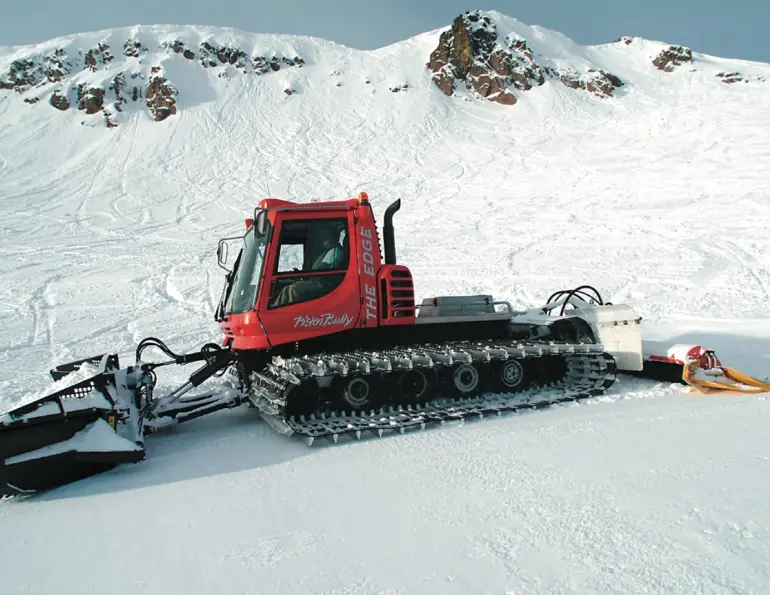
And machines are becoming ever more efficient. Worldwide, the appetite for new machines is stable at 400 to 450 units annually, largely because today’s more powerful machines cover ground more quickly. “The number of machines in use has actually gone down a bit as productivity has improved,” Bombardier’s Chris Nyberg says. “Resorts now get more work out of each machine. Plus, they now keep a machine for four years and about 6,000 hours, where they used to rotate it out of service after three years and 4,500 hours.”
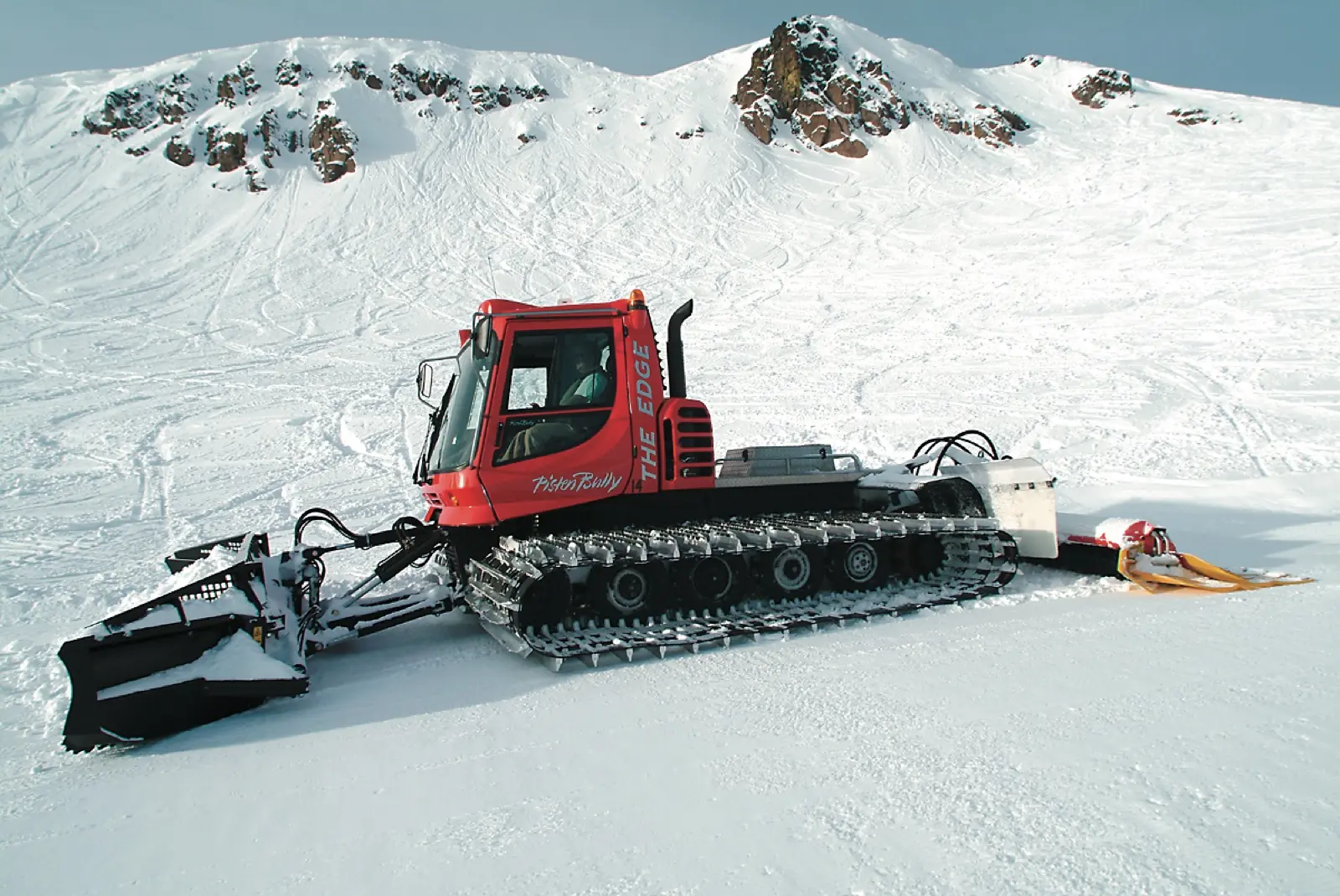
That improved efficiency comes largely from engine design, says Pisten Bully’s John Glockhamer. “A decade ago you had 200 and 250 hp LMC machines burning nine to 11 gallons an hour,” he says. “Today, with electronic fuel injection, computer-controlled transmissions and intercooled turbocharging, you get 330 hp on six gallons an hour. Our own engines went from 170 to 330 hp on the same six gallons an hour.”
Still, the market for grooming machines has heated up, at least in some odd corners of the snow resort business. According to Nyberg, new and expanding resorts in China and Chile are snapping up used snowcats. “China has been opening about 10 new hills a year,” he says. “Most of these are handle-tow ski areas, but they need to be groomed.”
In general, machines fall into two broad categories: Under 200 hp (generally 170 to 180hp) for grooming cross country and snowmobile trails, and over 300 hp for alpine grooming, where much more snow needs to be moved much more quickly. Here’s a look:
Kässbohrer/Pisten Bully
The workhorses of the Pisten Bully line are the models of the 300 series, all powered by a 330hp 7.2 liter Mercedes Benz turbo diesel (Pisten Bully has been operated by Daimler Benz since 1995). The new version, introduced a year ago, is the Edge, which mates the 330hp engine with the shorter, lighter frame of the Pisten Bully 200.
According to John Glockhamer, marketing manager, this frame is only four inches shorter than the 300, but it’s also a thousand pounds lighter. With an upgraded suspension system, this combination allows the Edge to climb better than the full-size 300 machines.
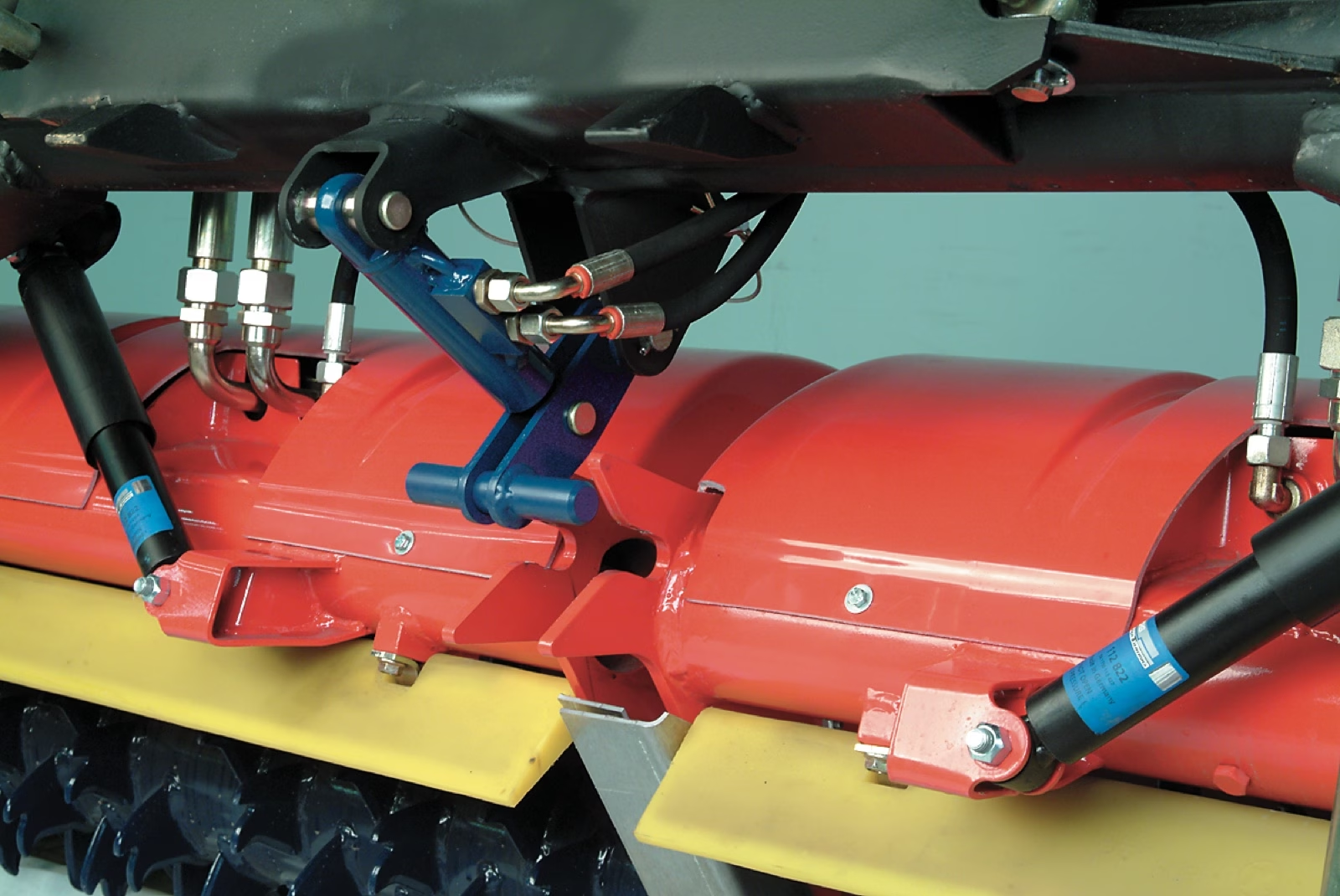
The Edge also comes in $15,000 cheaper than the standard 300, thanks to a more Spartan cabin (no heated windshield wiper; manual cabin heater control instead of automatic climate control).
It doesn’t make the 300 obsolete, however. “The 300 still pushes better,” Glockhamer says. “It runs a lower gear ratio.”
The 300 gets some upgrades, too. A new track sprocket design, a one-piece plastic unit molded around a steel plate, bolts on and off quickly for easier maintenance. The machine now has a standard folding deck for quick loading of cargo, and the tiller shaft speed can now be dialed up to 1600 rpm (the old limit was 1200 rpm).
Both the Edge and the 300 get a new three-speed cooling fan to reduce shock cooling and save fuel.
Pisten Bully also makes a couple of specialized top-end machines. The Park Bully is a sort of double-jointed version of the 300, able to push snow into the vertical walls needed for a complex terrain park. And the Pisten Bully Polar puts a rip-snorting 430 hp engine into a longer, wider frame that is equipped with a wider blade. “It’s popular in Europe, where they really believe in productivity,” says Glockhamer.
The light-duty Pisten Bully machines —the Canyon, introduced last year, and the Pisten Bully 100—are little changed.
Bombardier
Bombardier has been through a major reorganization over the past year. The grooming division’s parent company faced bankruptcy because of heavy losses in its aerospace and rail-car businesses. The cash-cow Bombardier Recreational Products division—which includes all the over-the-snow vehicles, plus the watersports products—was sold off to a group consisting of the founding Bombardier family and a group of Quebec-based investment companies. The family now holds 35 percent of the stock.
Chris Nyberg, VP of grooming sales, notes that the Utility Vehicles unit in Granby, Quebec, is the original production company, descended directly from Joseph-Armand Bombardier’s 1937 factory in Valcourt. “This part of the business has always been healthy,” Nyberg says. “We had to boost production by 30 percent a year ago to meet demand.”
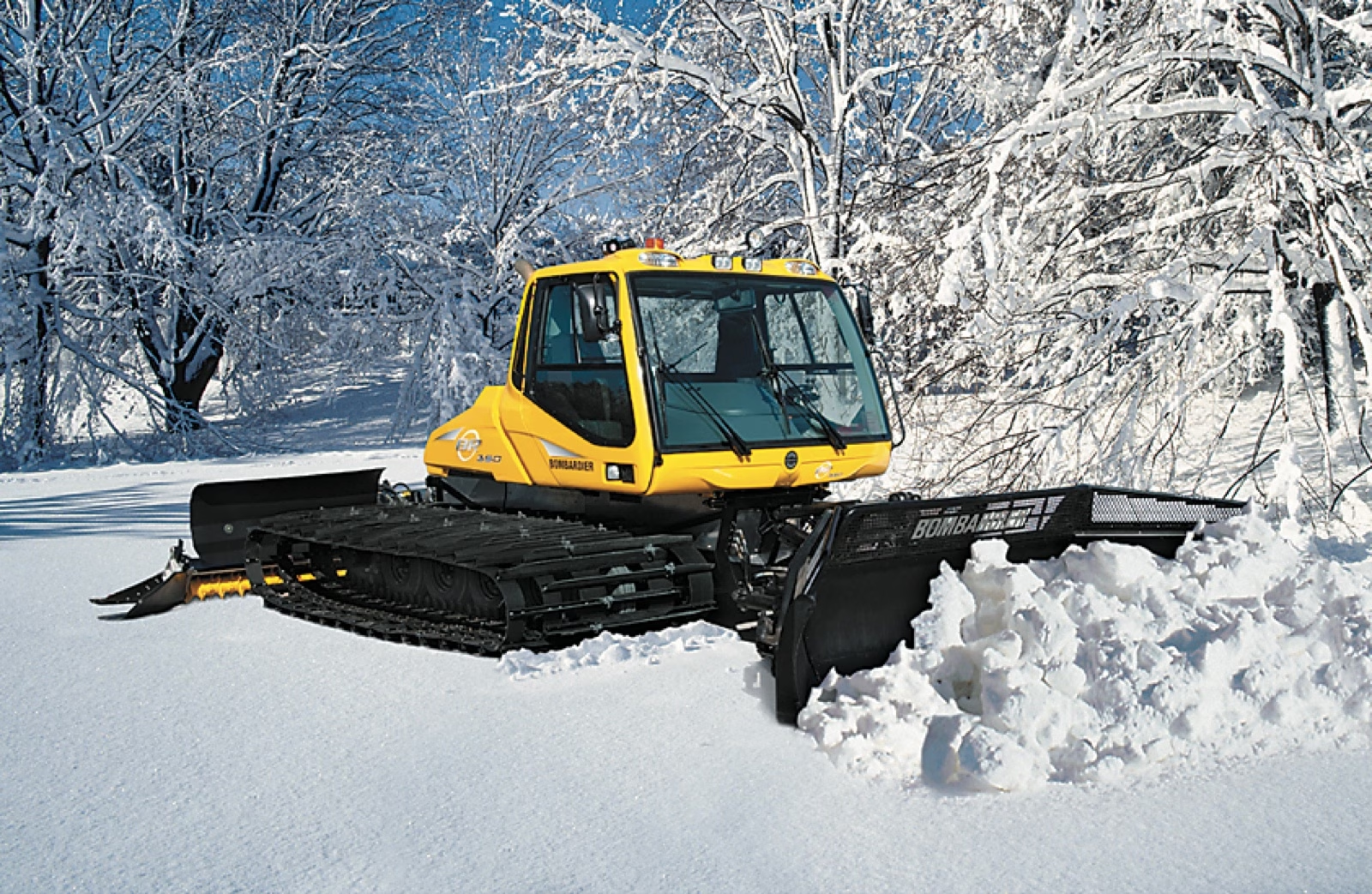
It was just a year ago that Bombardier introduced the BR350 as its new full-size heavy machine. The battle cruiser gets a makeover this year, with a new 8.8 liter Caterpillar 345hp engine in place of the 9 liter Cummins. “The new engine has better torque and is more efficient with fuel,” Nyberg says.
The frame has been extensively revised as well. It’s more supple, and rides on a new longer-travel suspension. By moving the engine back a bit (putting the fuel tank under the cab), the machine’s center of gravity has been pushed aft about 11 inches—back to where it was on the old BR400 machine of 1994.
In addition, about 500 pounds has been shed in the frame and cooling system. The radiator is now at the rear of the frame and is made of aluminum. A computer controls engine temperature in climb and descent, allowing the engine to make about 9 percent more horsepower without danger of overheating or shock cooling. The rear cover is a lot lighter, too—it’s now made of expanded metal instead of thick fiberglass. The result of all the changes, Nyberg says, is better performance in climbs and descents. And it will cover a lot more acreage per hour.

The hydraulic pumps have a new name, too, but that’s just because the manufacturer, Sauer Sundstrand, was sold earlier this year, and got its own name change, to Sauer Danfoss.
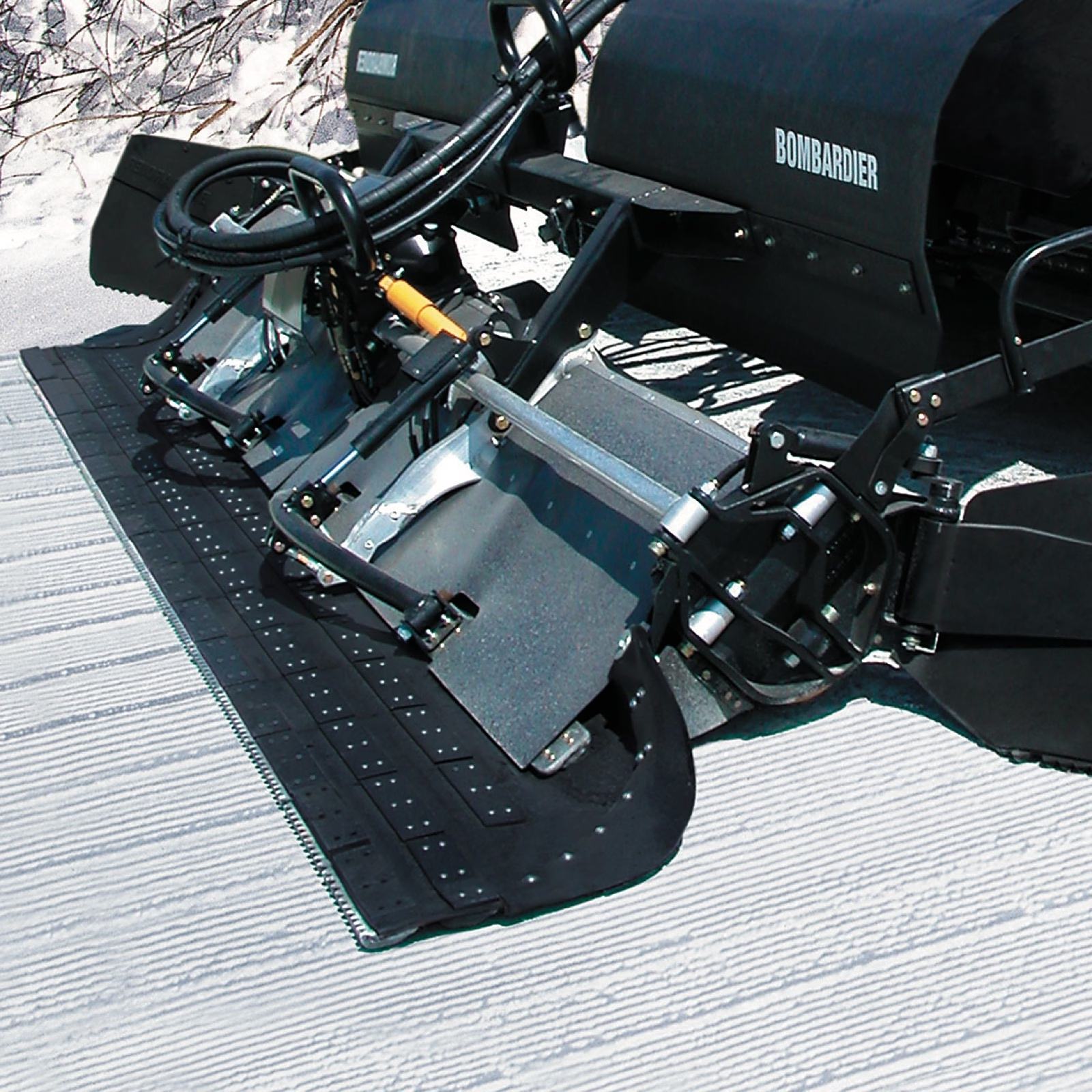
Bombardier accessories include winches and a front-mounted renovator to turn ice into corduroy. There’s also a variety of cabs, from five- to 16-seat versions, for hauling passengers. The Terrain Master blade—200 inches wide—is now standard on the bigger machines, and the new rubber wings on the tiller add about three feet to its working width.
Other models in the line, including the BR 275 and BR 180, are little changed. Bombardier continues to distribute and service the Prinoth line, as well.
Ohara
New kid on the grooming block is the Ohara Caliber, introduced less than a year ago. At roughly one-third the weight (and less than half the cost) of the full-size machines from Bombardier and Pisten Bully, the Japanese vehicle is a basic utility vehicle. It’s optimized for track-setting and passenger-hauling duties.
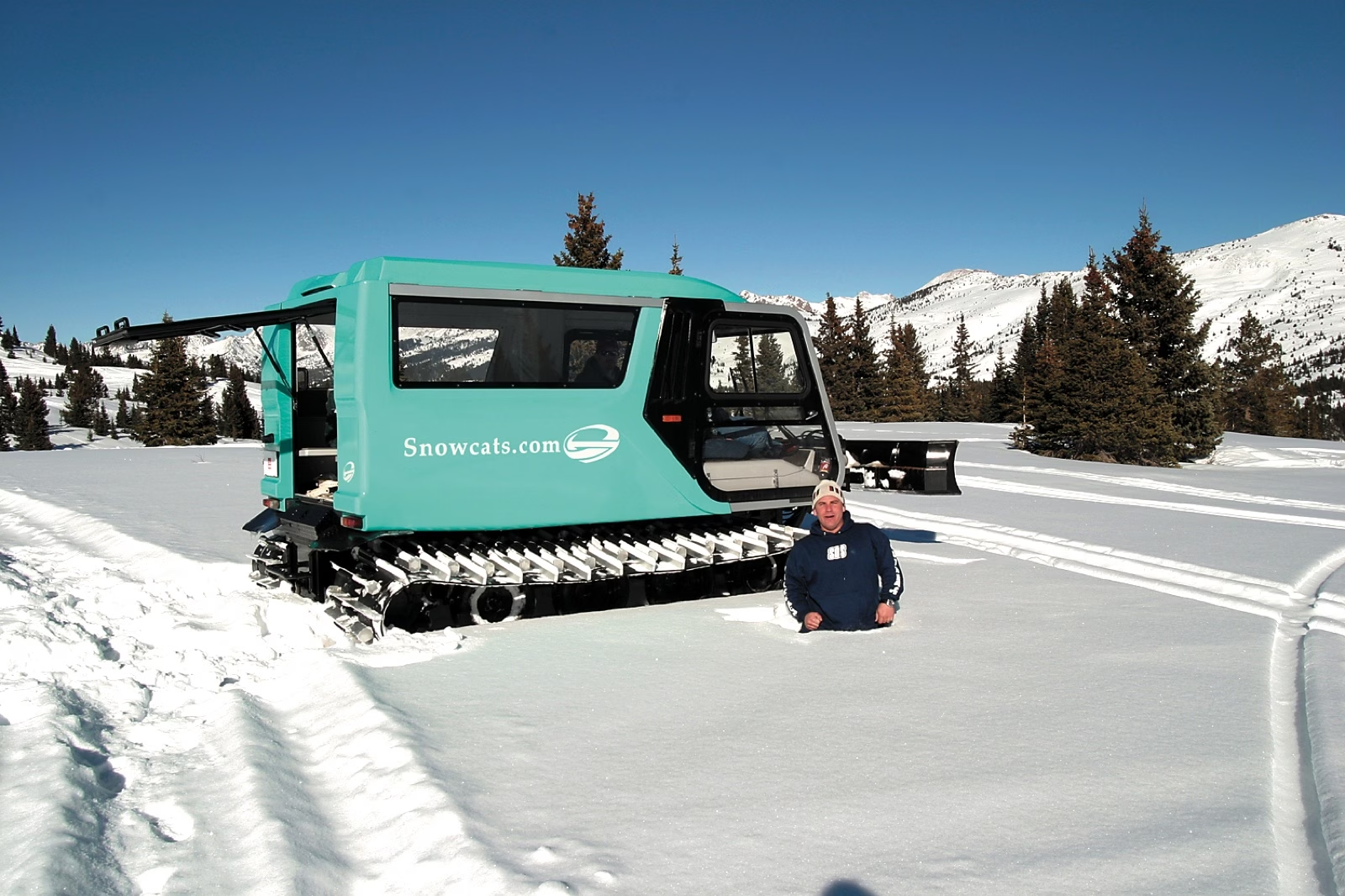
The key word for this machine is versatility. According to importer Paul Leck, the range of available accessories will expand greatly within the next year to make the Caliber an all-seasons utility fielder: a set of rubber tracks will put it onto lawns (with a flail mower or front-end loader), and a special tubing groomer will create tubing lanes. Right now you can equip your Caliber with a 10-passenger cab for snowcat skiing operation, or with a five-person cab, standard two-seat cab or even cab-free for forestry and other warm-weather applications.
Other updates: the original 69-hp engine get a turbocharger, boosting it to 85 hp. A souped-up 130-hp machine is due in January 2005.
Pipe and Park Accessories
Grooming vehicles aren’t just used to produce corduroy highways anymore. Here’s a quick guide to the tools for shaping pipes and parks.
Bombardier
Bombardier distributes the Pipe Grinder from HPG in Finland, which comes in six-, 12- and 17-foot versions. Each has several refinements this season. Plus, new joystsick controls perform several blade functions simultaneously; the hydraulically-controlled Posiflex tiller provides several finishes, from steep vertical to flat to full V.
Kässbohrer/Pisten Bully
Pisten Bully offers the German-built Magician pipe groomer in 3.5- and 5-meter sizes. The three-segment design folds for easy transport and storage, and also allows a longer radius transition from pipe floor to wall. Because the boom pivots, either wall can be groomed going up or down the pipe, and it can be adjusted independent of vehicle steering, which means it’s easy to lay a perfectly straight pipe. PB also offers a “MultiFlex” tiller, which floats with naturally concave or convex terrain, or can be locked straight to groom ramps evenly.
Pipe Dragon
Pipe Dragon, now with some 140 machines in operation around the world, has gone back to the future. The company has revived some of the design features that made its original 1996 machines so revolutionary. According to technical director Randy Havens, “Our first machines rode on big pneumatic tires instead of the heavy skis we’ve used recently. We’ve brought back the tires because they make the machine more maneuverable and more forgiving.” The hydraulic system has also been upgraded for more power, and the mainframe has been standardized to take either the 12-foot or 17-foot Dragon.
Zaugg
Paul Leck’s company, PBL Enterprises, imports Zaugg Pipe Monster halfpipe machines. The standard 13-foot unit sells for $72,000, and the 18-foot Superpipe machine, essential for building those signature pipes, goes for $86,000. At the other end of the spectrum is a new eight-foot machine, for shaping ski school pipes. It’s priced at $70,000.
“All our prices include delivery, set-up and training for the operator and the shop,” Leck says.
Grooming Vehicles 2004: Specifications
| Manufacturer Model | Cyl. # | Manuf. Model | A=after I=inter | HP (SAE) | RPM Max. hp | CID in3/L | Torque Ft-lbs @ rpm | Fuel Rate GPH | Fuel Cap. Gal. | Length Ft. – In. | Width w/Tracks Ft. – In. | Height Ft. – In. | Grnd. Clr. In. | Blade Width Min./Max. | Tiller Shaft Width-Ft. | Pumps Manufacturer | Working Press. psi | Weight Lbs. | Pounds per HP | Price ($000’s) |
|---|---|---|---|---|---|---|---|---|---|---|---|---|---|---|---|---|---|---|---|---|
| UTILITY | ||||||||||||||||||||
| Class I | ||||||||||||||||||||
| Pisten Bully Canyon | 4 | VW TDI | T/A | 86 | 3100 | 116/1.9 | 156 @ 1900 | 2.9 | 29 | 10′ 9″ | 8′ 2″ | 7’10” | 12″ | 8′ 6″ | n/a | Linde | 6100 | 4850 | 56 | 95 |
| Ohara Caliber | 4 | Yanmar | T | 85 | 2400 | 3.318 | 220 @ 1800 | 1.4 | 16 | 13 | 8′ 2″ | 8′ 0″ | 14″ | 7′ 8″ | 7′ 10″ | Sundstrand | 6000 | 5775 | 68 | 96 |
| TRAIL GROOMING | ||||||||||||||||||||
| Class II | ||||||||||||||||||||
| Bombardier BR 180 | 6 | PK 1006-6TW | T/A | 180 | 2000 | 365/6 | 469 @ 1500 | 3 to 5 | 75 | 19′ 8″ | 8’/9’/10′ | 8′ 6″ | 13″ | 8’/10′ | 10′ | Sauer/ Danfoss | 6800 | 10700 | 59.44 | 149 |
| Pisten Bully 100 | 4 | MB/OM 904 LA | T/A | 170 | 2300 | 256/4.2 | 488 @ 1200 | 2.2 | 35 | 23′ 4″ | 8′ 2″/10′ 2″ | 8′ 2″ | 12″ | 8′ 10″/10′ 3″ | 8′ 2″/10′ 2″ | Rexroth | 6250 | 7495 | 44.1 | 140 |
| Pisten Bully 100U | 4 | MB OM 904 LA | T/A | 170 | 2300 | 256/4.2 | 488 @ 1200 | 2.5 | 35 | 15′ 1″ | 8′ 2″ | 8′ 6″ | 12.5″ | 9′ | — | Rexroth | 6250 | 7480 | 44 | 115 |
| Prinoth T2-S | 4 | MB/OM 904 | T/I | 170 | 3200 | 256/4.2 | 488 @ 1200 | 3 to4 | 35 | 22′ 8″ | 8′ 2″/10′ | 8′ 3″ | 12″ | 8′ 10″/10′ | 8′ 2″ | Rexroth | 6000 | 7700 | 45.3 | 140 |
| ALPINE GROOMING | ||||||||||||||||||||
| Class III | ||||||||||||||||||||
| Bombardier BR275 | 6 | CM 6CTA | T/I | 275 | 1900 | 506/8.3 | 825 @ 1500 | 5 to 7 | 69 | 24′ 8″ | 13′ 10″ | 9’3″ | 12″ | 13′.8″ / 16′.8″ | 14′ 1″ | Sauer/ Danfoss | 6600 | 17450 | 63.45 | 189 |
| PistenBully EDGE | 6 | MB-OM 926 LA | T/A | 330 | 2300 | 439/7.2 | 958 @ 1200 | 5 | 50 | 32′ 8″ | 12′ 10″/13′ 8″ | 9′ 5″ | 12″ | 14′ 2″ | 14′ 1″ | Rexroth | 6500 | 16420 | 49.8 | 210 |
| Pisten Bully 300 | 6 | MB-OM 926 LA | T/A | 330 | 2300 | 439/7.2 | 958 @ 1200 | 5 | 50 | 33′ | 12′ 10″/13′ 8″ | 9′ 5″ | 12″ | 14′ 2″ | 14′ 1″ | Rexroth | 6500 | 17450 | 52.9 | 225 |
| Prinoth T4-S | 6 | SC/DS9 | T/I | 325 | 2200 | 550/9 | 942@ 1400 | 5 to 7 | 53 | 27′ | 13′ 2′ | 9′ | 20″ | 14′ | 13′ 2″ | Rexroth | 6500 | 18431 | 50.8 | 210 |
| Class IV | ||||||||||||||||||||
| Bombardier BR350 | 6 | CAT C9 | T/A | 345 | 1800 | 538/8,8 | 1100 @ 1400 | 4.8 to 6 | 72 | 24′ 8″ | 13′ 10″ | 9′ 10″ | 12″ | 13′.8″ / 16′.8″ | 14′ 1″ | Sauer/ Danfoss | 6800 | 18012 | 52.21 | 220 |
| Pisten Bully 300 (W) | 6 | MB-OM 926 LA | T/A | 330 | 2300 | 439/7.2 | 958 @ 1200 | 5 | 50 | 33′ | 12’10″/13’8″ | 10′ 8″ | 12″ | 14′ 2″ | 14′ 1″ | Rexroth | 6500 | 19200 | 52.9 | 265 |
| PistenBully 300 Polar | 6 | MB-OM 457 LA | T/A | 430 | 1800 | 730/11.97 | 1470 @ 1200 | 5.8 | 55 | 33′ | 13′ 8″/14″ | 9′ 7″ | 14″ | 15′ 1″ | 14′ 3″ | Rexroth | 6750 | 19100 | 44.4 | 260 |
- CAT — CATERPILLAR
- CM — CUMMINS
- MB — MERCEDES BENZ
- PK — PERKINS
- SC — SCANIA
- VW — Volkswagen
- W — Winch AvailABle
Table Headings
Definition of selected column headings is as follows: Engine Manuf/Model – manufacturer abbreviations are shown at the bottom of the table; model designation is from engine supplier. Turbo-charged engines are now commonplace in grooming vehicles. They differ mainly in the type of cooling that is employed to remove heat from combustion and friction. Noticeable improvements in horsepower and torque can be attributed to either aftercooling or intercooling. The horsepower listed is uncertified SAE (Society of Automotive Engineers) at the flywheel, including fan load. CID – is total cylinder displacement in cubic inches and liters. Torque – is a direct indication of lugging power and at lower rpm’s than horsepower ratings. Fuel Consumption – represents average claimed fuel use during work cycle. Length – includes blade and tiller (if available). Width – with tracks normally supplied but without blade or tiller. Ground clearance – the least dimension between the undercarriage and the snow surface with track belts resting on the snow. Working Blade Width – is with wings closed and measured to outside of moldboard. Tiller Drum Width – is total cylinder length without finishers or box. Hydraulics Pressure – highest system pressure anywhere in vehicle. Weight – includes blade, tiller and all fluids and standard accessories. Pounds per HP – an indication of the power-to-static load factor. Approximate Price – the price of a complete vehicle with blade and tiller, unless noted.
