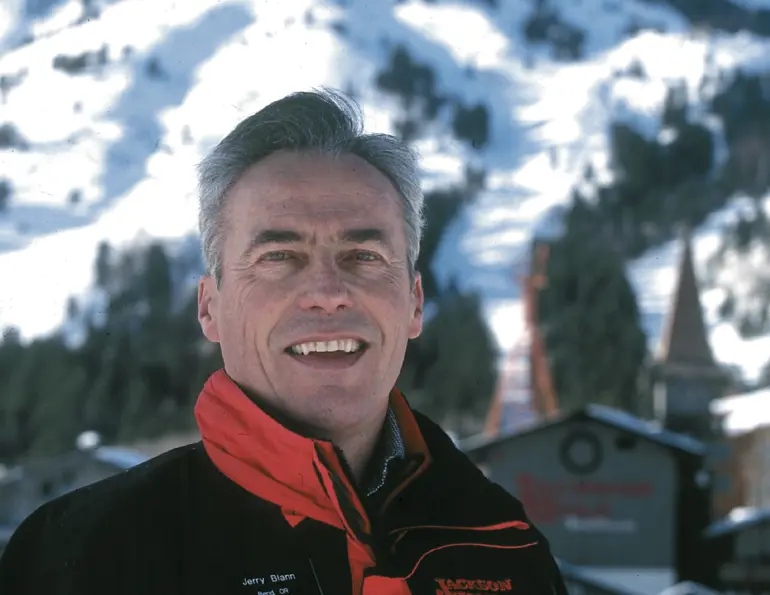
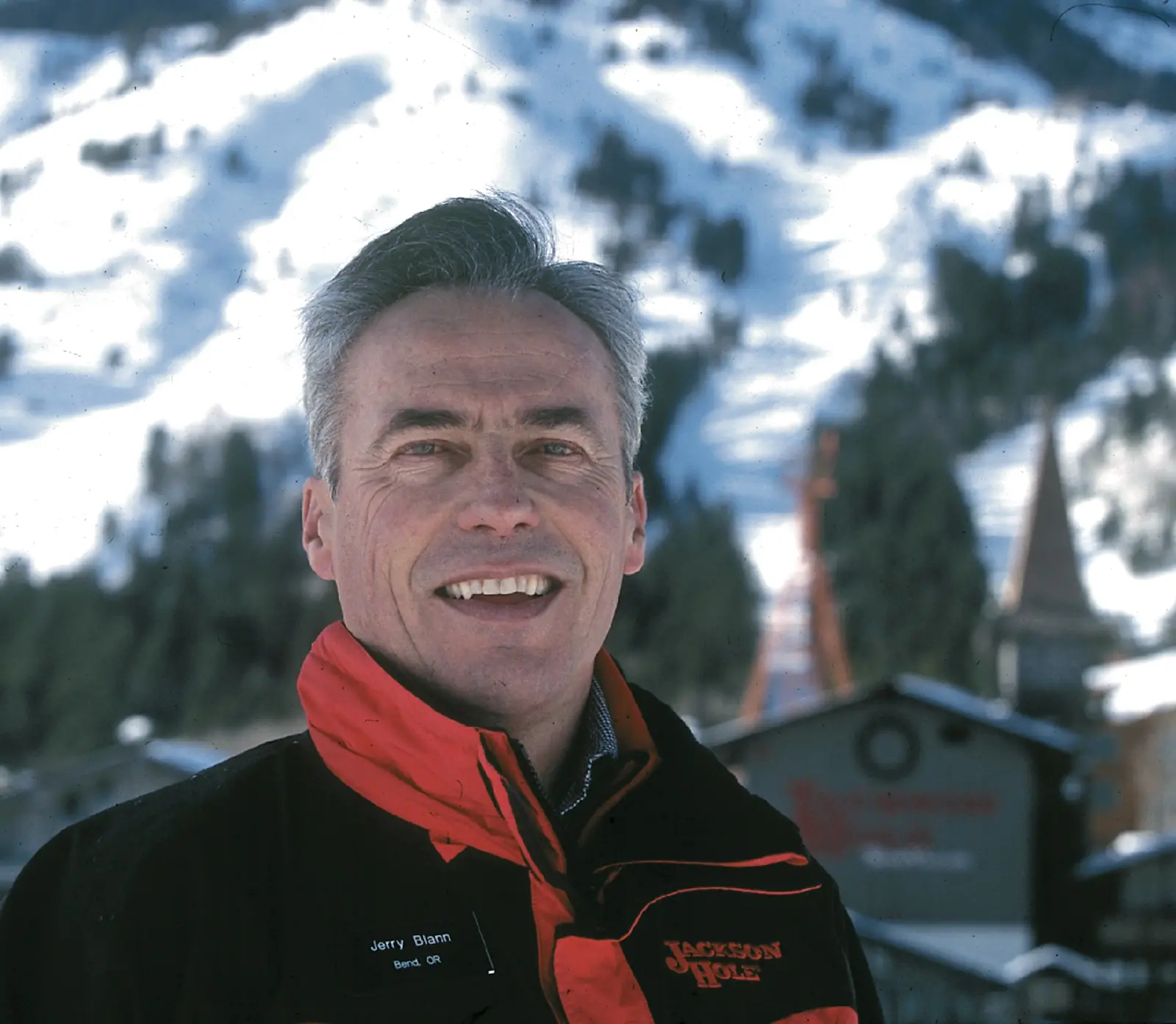
1) Jerry Blann, president and CEO at Jackson Hole, Wyo.
2) Tim Cohee, president and general manager at Kirkwood, Calif.
3) Rich McGarry, senior vice president and general manager at Killington, Vt.
4) F. Scott Pierpont, managing director of The Canyons, Utah.
5) John Rice, president and general manager of Sierra-at-Tahoe, Calif.
6) Allen Wilson, president of Killington, Vt.
7) Brad Wilson, marketing director at Alpine Meadows, Calif.
Today, this septet occupies positions of prestige and power at six truly significant ski resorts across the U.S. Fifteen years ago, they comprised the energetic, creative management team that boosted a bush-league Southern California ski hill called Goldmine into the formidable regional player that was renamed Bear Mountain. Their story demonstrates just how much a talented leader with a top-notch staff (and sufficient financial resources) can accomplish.
The transformation of Bear Mountain began almost as soon as then-giant S-K-I, the Killington-centered conglomerate assembled by Preston Leete Smith, purchased Goldmine in 1989. Smith quickly hired Jerry Blann, then president of the Aspen Skiing Company, and Tim Cohee, marketing whiz at Bear Mountain neighbor Snow Summit, to jumpstart the area.

Their two salaries, Cohee estimates, were probably 10 percent of Goldmine’s revenues. “It was like buying a diesel to run a kids’ train,” Cohee says, but the others soon followed as S-K-I invested heavily in men and materiel.
The group, which in the ski industry (especially in those days) could be considered diverse, comprised a mix of Californians, Vermonters, and a single Coloradan, Blann. They were smart, energetic and talented. More than one has described them as all being “A-types” or “strong personalities,” and everyone credited Blann for respecting, encouraging and empowering them as individuals and, as Cohee says, “letting them do their jobs.”
At the same time, all seven agree it was a team effort. Everyone pulled together—and no one was afraid to get his hands dirty in the process.
And it worked. Goldmine/Bear Mountain rocketed from roughly 85,000 skier visits in 1988-89 to about 365,000 two seasons later. Annual revenues climbed from $3 million to $15 million.
From the start, the team had ambitious goals. “We said we’d elevate the total skier visitation in southern California,” recalls Cohee. “We weren’t just going to get it out of Snow Summit’s hide,” he adds, referring to the nearby ski area where he had worked before heading Bear Mountain’s marketing effort. “Snow Summit was a quality company, and we forced them to become that much better. We raised the bar.”
The Bear Mountain men made good on their intentions. In 1989-90, Bear Mountain logged 235,000 skier visits, and the following year, 365,000. Cohee believes that remains the area’s record season to this day. The 1990-91 season also turned out to be a record for Snow Summit, and between them, the two areas pulled in 912,000 skiers.
The Essentials of Success
Accomplishing this required both strong marketing efforts and improvements in infrastructure and customer service to back up the experience Bear was selling.
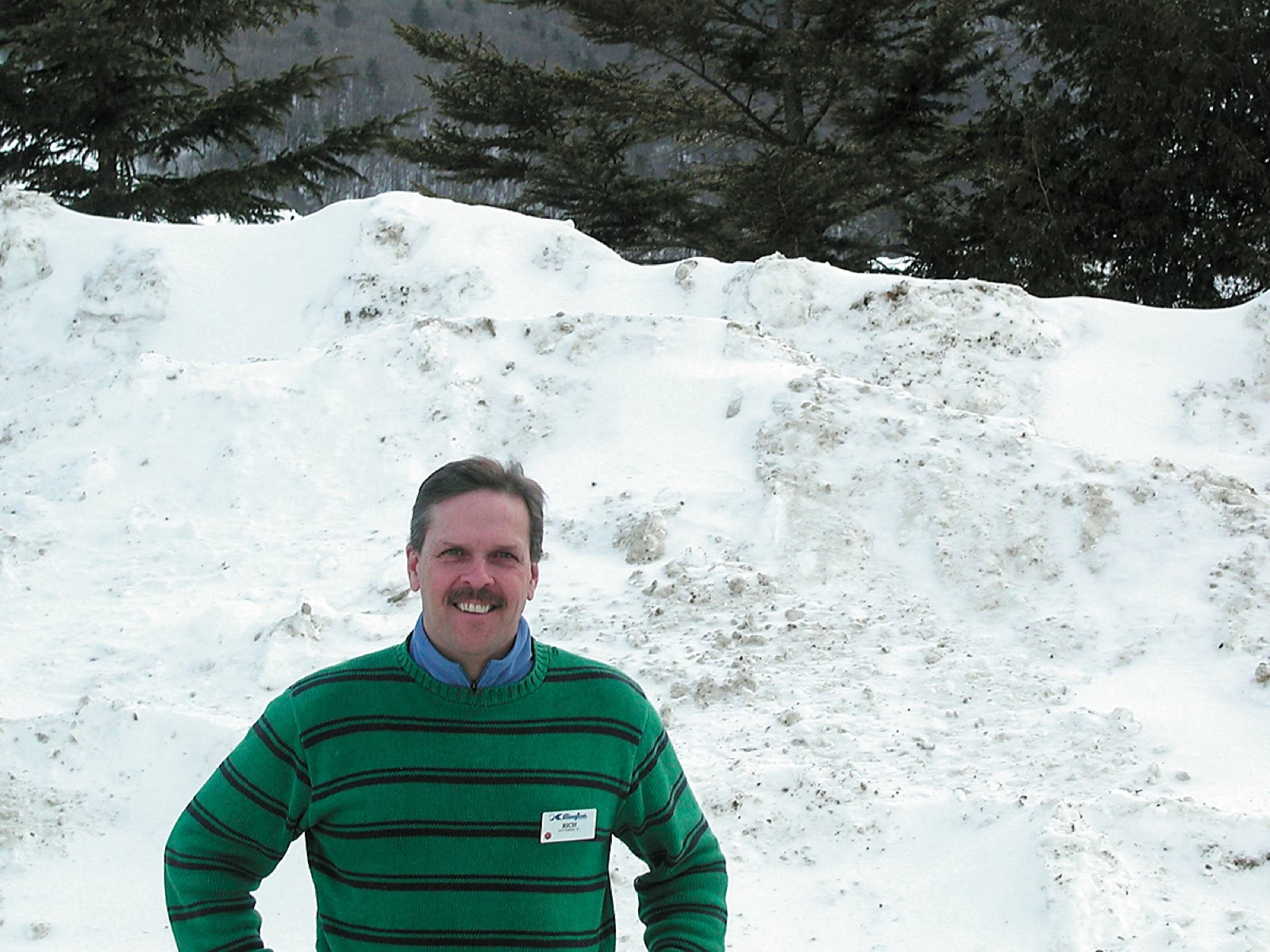
With a massive infusion of capital, S-K-I installed a modern snowmaking system almost overnight. Rich McGarry, then VP of mountain operations, recalls that when S-K-I took over, Goldmine’s snowmaking system had a capacity of 800 gallons a minute and 15,000 CFM. In one heavy-construction summer, they increased that to 5,000 gallons and 80,000 CFM and laid 100,000 feet of pipe.
In the first year, though, marketing got a bit ahead of the rest of the plan. Everyone credits a brilliant marketing effort for putting Bear Mountain on the map, but the area just wasn’t ready to handle the crowds. The parking lot shuttles were inadequate. The rental shop was a nightmare. Despite the improvements, the snowmaking wasn’t up to snuff. In fact, with miscalibrated snowguns and no cooling towers, the system initially made rain and even blocks of ice.
Response was, predictably, the stuff of marketing nightmares. The Los Angeles Times commented, “Unless you live in a cave, you’ve heard of Bear Mountain.” However, the paper went on to describe it as “an overhyped ski resort.”
“Tim did a great job selling the place,” Rice says of year one. “But we weren’t up to it.” To put it more bluntly, as one veteran does, “Snow Summit kicked the crap out of us.”
Maximum Effort
Not that the team didn’t do all it could to compete. On crowded weekends and holidays, the management team took time from managing to do everything that needed doing. They substituted customer service for an infrastructure that was not up to handling the crowds that were pouring in.

“In the morning, we’d be out there parking cars. Then we’d race the skiers to the rental shop. Then we’d help on the lifts and bus tables. And in the afternoon, we’d do the reverse. We never said, ‘That’s someone else’s job’,” recalls Blann, who certainly never had to do anything comparable at Aspen.
The others quickly followed his lead. “Before I came to Bear Mountain, I was a marketing guru and prima donna,” Cohee admits. “Now, I’m known for doing anything.”
Rice affirms that “Jerry showed the rest of us that there was no task that was beneath us. The rest of the employees saw that if they had a problem, they could always call on the A-team to help.” Despite the hard work, every one of them still recalls the period as “fun.”
The most fun, if it can be described that way, was had in the rental shop. Cohee recalls the sight of a phone line lighting up on busy Saturday mornings, knowing that it would be Brad Wilson, director of skier services, saying, “I’ve got four empty benches. I’ve got screwdrivers.” And they’d troop to the rental shop, this cadre of well-compensated executives who also happened to be certified ski techs.

They all remember customers who would ask questions like, “Is this your regular job?” No, the customer would be told, and the vice president of mountain operations, the vice president of marketing, and the president would be pointed out. It did not fail to impress. Cohee recalls one awestruck customer saying, “I know you guys are new. You guys will win.”
S-K-I invested heavily to meet the technical challenges and dramatically improve the infrastructure for the second winter. Lift improvements were comparable in scope. But even after the reality matched the marketing, the men kept up their efforts to make the area as good and successful as it could be.
Success Starts at the Top
To a man, Blann’s team describes him as a gifted manager who let his people’s gifts and talents shine.
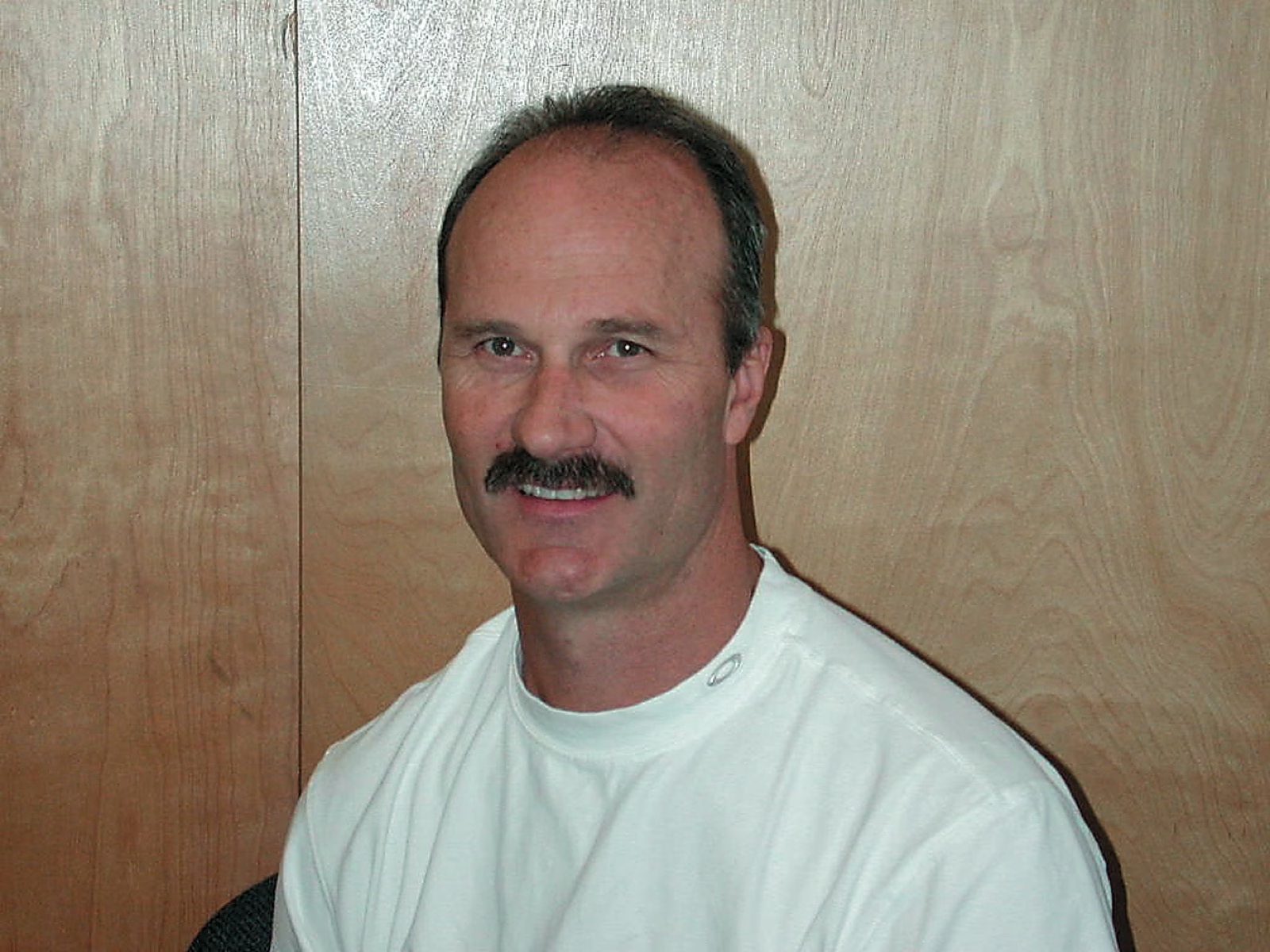
“His energy and professionalism were inspirational,” says Rice, who came up through jobs that included human resources and is therefore attuned to motivational matters. “He has a very supportive and empowering style of leadership. He gave junior managers the opportunity to show what they could do. He did a great job of making you believe in yourself.”
“Jerry was very sharp and very good at harnessing that talent pool of Type A personalities,” Allen Wilson says. “He was superb at keeping us working as a team.”
“Jerry was a hard driver and a hard player,” says Pierpont. “He was very matter-of-fact. Very to the point. When there was something to be done, he had a sense of urgency. He was a true professional, and he had a passion for the sport.
“I think we all do the same. We work hard and do our jobs well, and we have fun. That’s why we’re in this business.”
The Importance of Teamwork
Looking back at the Bear Mountain years and the people who shaped them, Blann says, “There was no lack of ideas, and just having ‘yes people’ doesn’t nurture ideas.” His real skill was blending this group of idea men into a cohesive team.
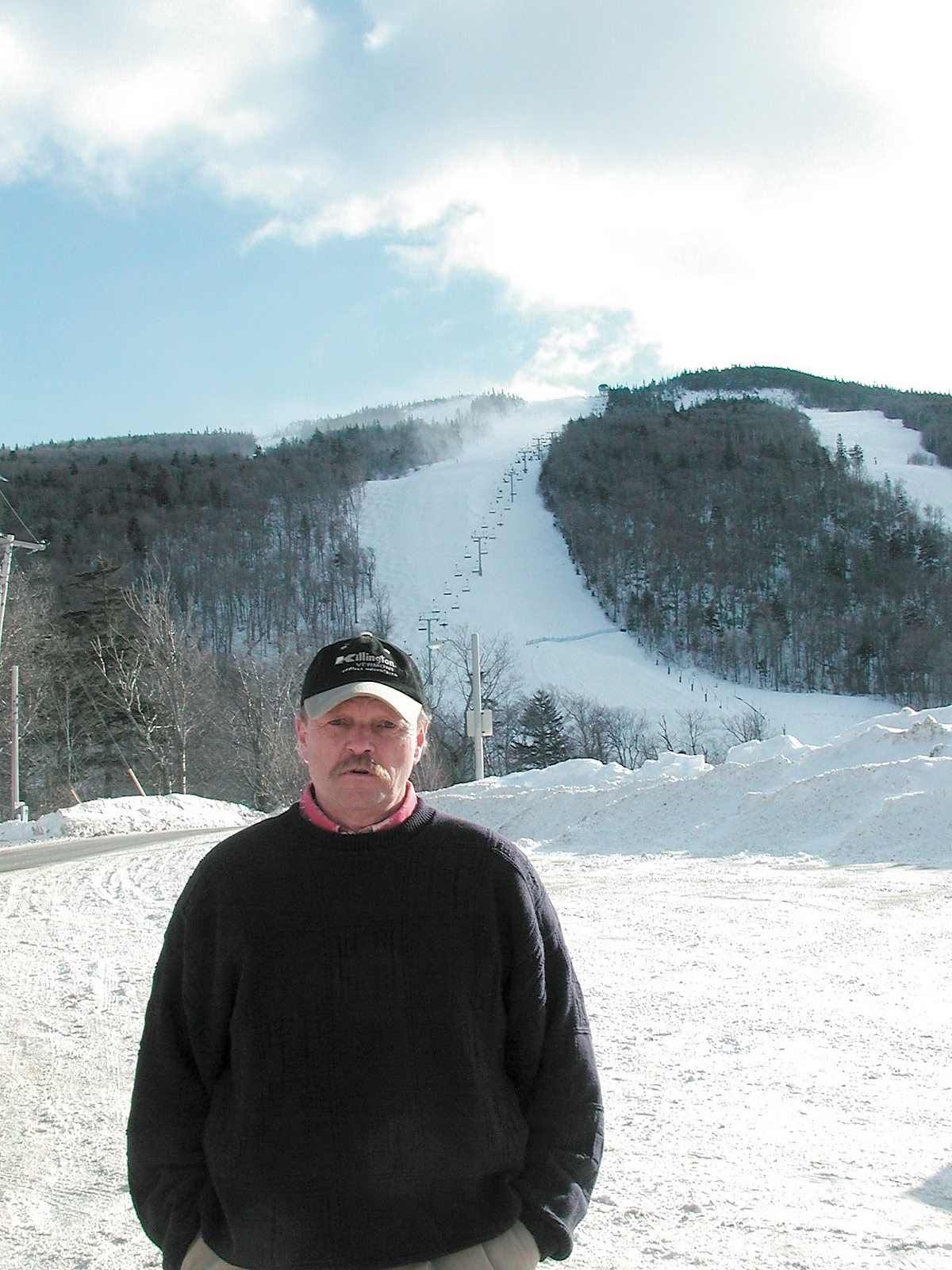
“I feel it was probably the best team in the country,” says Allen Wilson. “The camaraderie was incredible. That came from taking over Goldmine and changing it overnight into the premier resort of Southern California.”
“Three of us came in from the East thinking we knew everything,” recalls Rice. “Pretty fast, we figured out that we didn’t know everything, that California was a different world. The Californians also thought they knew everything, but they figured out that we knew a few things, too.” The experience taught Brad Wilson about the Southern California market, knowledge that he took with him first to market Mountain High and, more recently, to Alpine Meadows.
“Southern Californians exhibit an undying response to the mountains,” notes Wilson. “It can be 93 degrees in L.A. on a weekday in March, and you’ll get 2,000 people on the mountain. We once reopened Mountain High after a May snowstorm and about 3,000 people showed up.”
Blann kept the ideas flowing and punches from being thrown. A decade and a half later, all of them still speaking glowingly of each other, stay in touch, and get together when they can.
“There were a lot of egos,” says McGarry, “Not the least of which was Jerry’s. But he didn’t let them get in the way of teamwork. He emphasized, ‘The only way we’ll be successful is to put any issues aside and pull for the whole.’”
Rice also praises Blann’s integrity and hard work. “We had some real environmental challenges to our master plan,” he says. “The opposition came out in force against us from the Big Bear area and Los Angeles. The planning process was challenging, but Jerry always took the high road. He also modeled the work ethic. We worked hard, but he showed us that it was okay to have fun.”
Brad Wilson was assistant general manager at Mountain High, where, he says, “I had the opportunity to use some of the tools that I learned from Jerry. People I worked with there have prospered as well, and I’d like to think that it’s because of what I learned from Jerry.”
Off on Their Own
The members of this team have long since gone their own ways, occupying the top spot at some of the best-run, most respected ski areas in the land. But like fraternity brothers or Army buddies, they share a bond that stretches across the miles and over the years.
“There was no doubt who was in charge,” says Brad Wilson. “Jerry was a charismatic leader, but we were a tight-knit group of people.”
“We all liked to do stuff,” says McGarry. “We were all active and about the same age. We liked to party. We mountain biked and surfed. We’d go to Mexico or Colorado or Lake Powell. Or we’d take a river trip. When we weren’t working, we were always doing something.”
“And that was before team-building became fashionable,” adds Wilson. “We did it because we wanted to, and there aren’t a lot of management teams that would feel comfortable doing that.”
“Jerry’s kids,” as they jokingly call themselves, say that Blann exemplified the ability to work hard, work with integrity, and have a good time. When it comes right down to it, that exemplifies what the skiing and the ski industry are all about.