


While mountain crews in most mountain shops are familiar with large compressors that are used to make snow, they probably know less about the smaller end of the compressor scale and machines that power pneumatic tools. Compressors of 60 and 80 gallons, with 5-, 6- and 7.5-horsepower capacities, fit the needs of most mountain shops.
Because the comparisons presented are based on a wide spectrum of machine sizes, the evaluations could not be matched one-to-one. Instead, each machine was measured based on what would be optimum performances in that class and compressor type.
The criteria for these judgments include area volume performance, overall construction features, vibration/noise levels and expected life span. For clarity, the cfm was rated based on the formulas for delivered air instead of displacement. Delivered air (also called free air) is lower in volume than displaced air and is a good indicator of unit efficiency.
When buying a shop compressor, the first consideration should be the amount of cfm needed for a shop. All air tools are cfm rated, so estimates can be based on the combined needs if all machines were working at the same time. Keep the required tool psi in mind when combining air tools to get the maximum threshold and be sure to compensate when computing tools rated at 40 psi with tools rated at 90 psi.
Once you’ve computed the maximum cfm needs, decide whether you want a single-stage or two-stage unit. Basically, if more than 150 psi is needed on a regular basis or if you need high air volumes, a two-stage unit is appropriate.
The next consideration is tank size where the rule-of-thumb is to buy the biggest that your budget and shop space can handle. The tank is where the air is stored and has nothing to do with cfm, but it does permit flexibility in terms of the amount of air stored above and beyond pump production. A bigger tank provides a cushion when running tools that are not thrifty in air usage.
| 1-10 Rating | Manufacturer | Model | CFM @ 40 PSI | CFM @ 90 PSI | CFM @ 175 PSI | Tank Capacity Gallons | Voltage | Pump Material | Weight | List Price |
|---|---|---|---|---|---|---|---|---|---|---|
| 9 | Campbell Hausfeld | CI071080VMS | — | 27.2 | 25.1 | 80 | 230 | cast iron | 535# | $1,879 |
| 7 | DeVilbiss | L560V1 | 12 | 10 | — | 60 | 230 | alum. | 280# | $599 |
| 10 | Emglo | W58-80V-230 | — | 20.2 | 17.5 | 80 | 230 | cast iron | 610# | $2,287 |
| 7 | Sears | 1752611 | 12.5 | 10.2 | — | 60 | 230 | alum. | 275# | $579 |
| 9 | Speedaire | 5Z638 | — | 18.5 | 17.1 | 80 | 230 | cast iron | 589# | $1,399 |
Campbell Hausfeld — Model CI071080VMS
This is the largest compressor tested with an 80-gallon tank, a two-stage cast-iron pump head-driven by a 7.5-h.p. motor. The motor is the largest tested in a single-phase-type unit and offers respectable power levels.
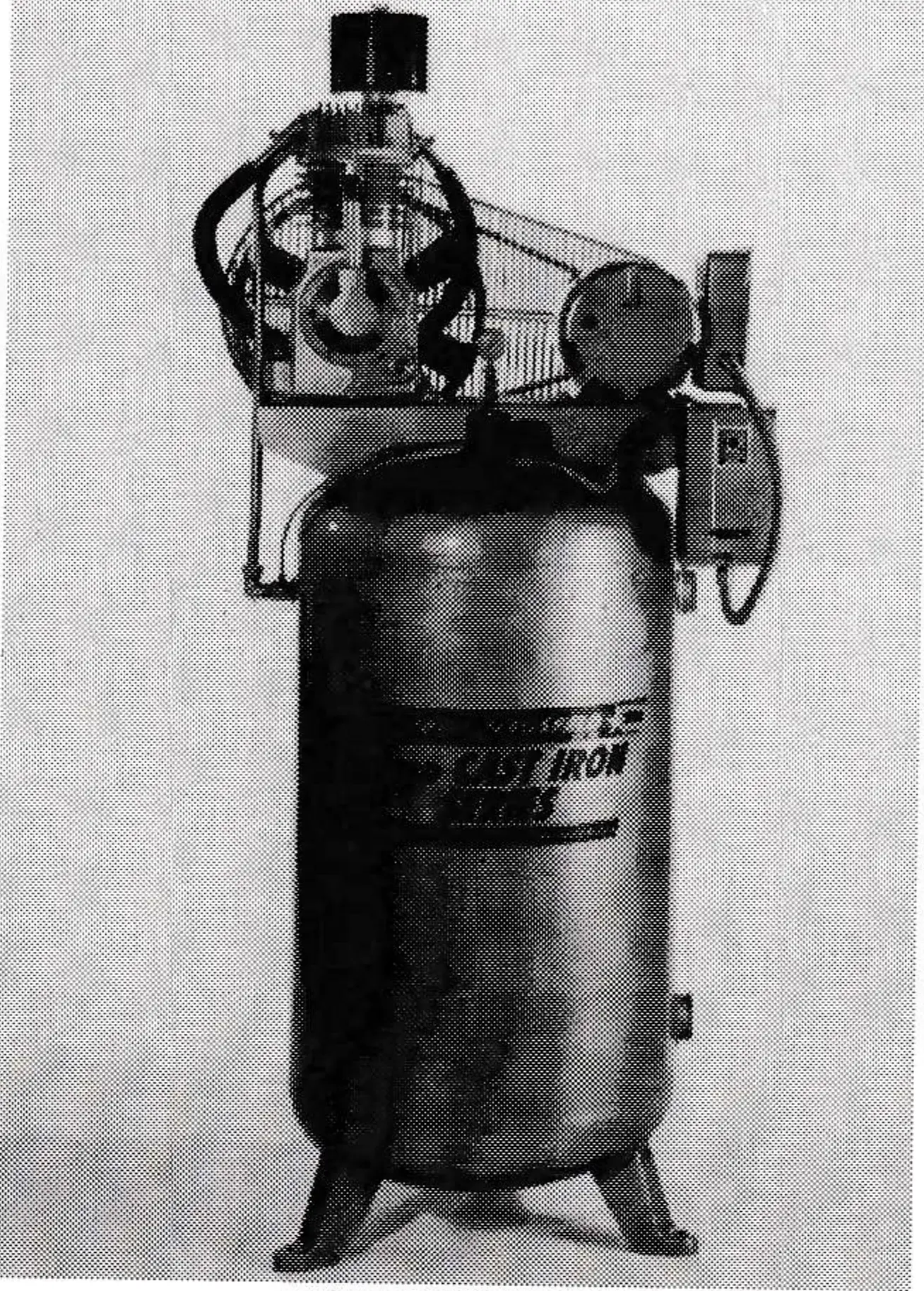
By incorporating a second level of compression during the stroke action of a cylinder, the two-stage pump produces more efficient air production ratings. In essence, these double action compressors run cooler, last longer and offer more volume at higher pressures.
The Campbell Hausfeld compressor has a two-stage pump made of cast-iron that will probably last longer than aluminum. None of the two-stage units rated in this report utilize aluminum, but it is a consideration when researching compressor options.
Another good feature of this unit is an oil sight level built into the pump base that makes checking oil levels easy. The air filter is an automotive type so maintenance is also easy.
The unit comes pre-wired with a magnetic contact switch and a built-in reset switch. There’s also a reset on the motor itself, so the unit is protected two ways. Typical of the other two-stage compressors tested, this unit puts out a maximum of 175 psi, which is more than adequate for running most tools found in mountain shops.
The mass and weight of the Campbell Hausfeld unit limits the machine’s vibration. Basically, this is a very tough, well-built machine designed for years of abuse and stress.
DeVilbiss — Model L560V
This single-stage pump makes all of its air in a single stroke of the piston. But it’s not as efficient in producing volume or psi — putting out a maximum 125 psi — so it may not be an option for shops that require lots of air for sand blasting and operating several other hand tools at the same time. The unit can’t keep up with that amount of required air.
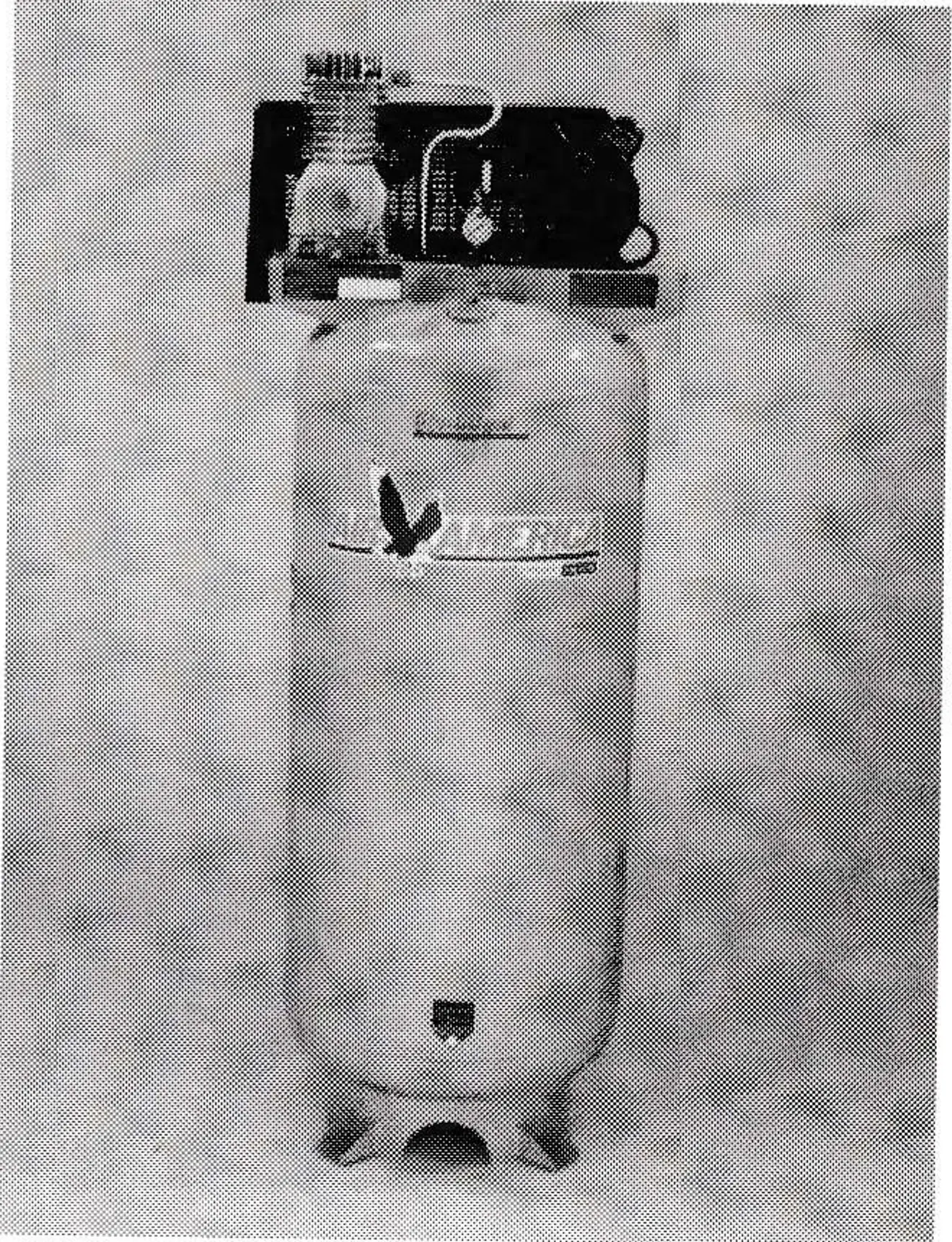
The unit does not have a magnetic starter commonly found on heavy shop machinery, which may be due to the fact that it isn’t a heavy-duty compressor. Even its reserve tank is lower in overall volume with 20 gallons less than most of the test units in this report.
The most disturbing aspect of the DeVilbiss compressor is the aluminum used in the pump, a less expensive manufacturing option that may not last as long as cast-iron heads.

Even though it’s a light-duty compressor, this unit might serve as a supplement duty machine for times when a shop needs a little extra air.
Emglo — Model W5B-80V-1-230
This unit is expensive but a top performer in the medium-size class. The pump is cast iron and two-stage, and the machine has fine castings with excellent machining and craftsmanship.
Emglo is so serious about precision and quality that every unit is hand-tested. While all of the units that we tested are ASME-rated and fit the Society’s safety criteria, Emglo goes one step further, actually testing each tank to 230 psi before it leaves the factory.
The unloader is centrifugal, which translates into easier start-ups and lower motor load. Dual automotive filters keep the pump clean and also do a pretty good job of silencing the machine. The piston pins are fully enclosed so the crankcase remains free of airborne particles that influence the required maintenance schedules as well as unit longevity. Multiple V-belts drive the pump system with great efficiency and the magnetic starter is manufactured by General Electric.
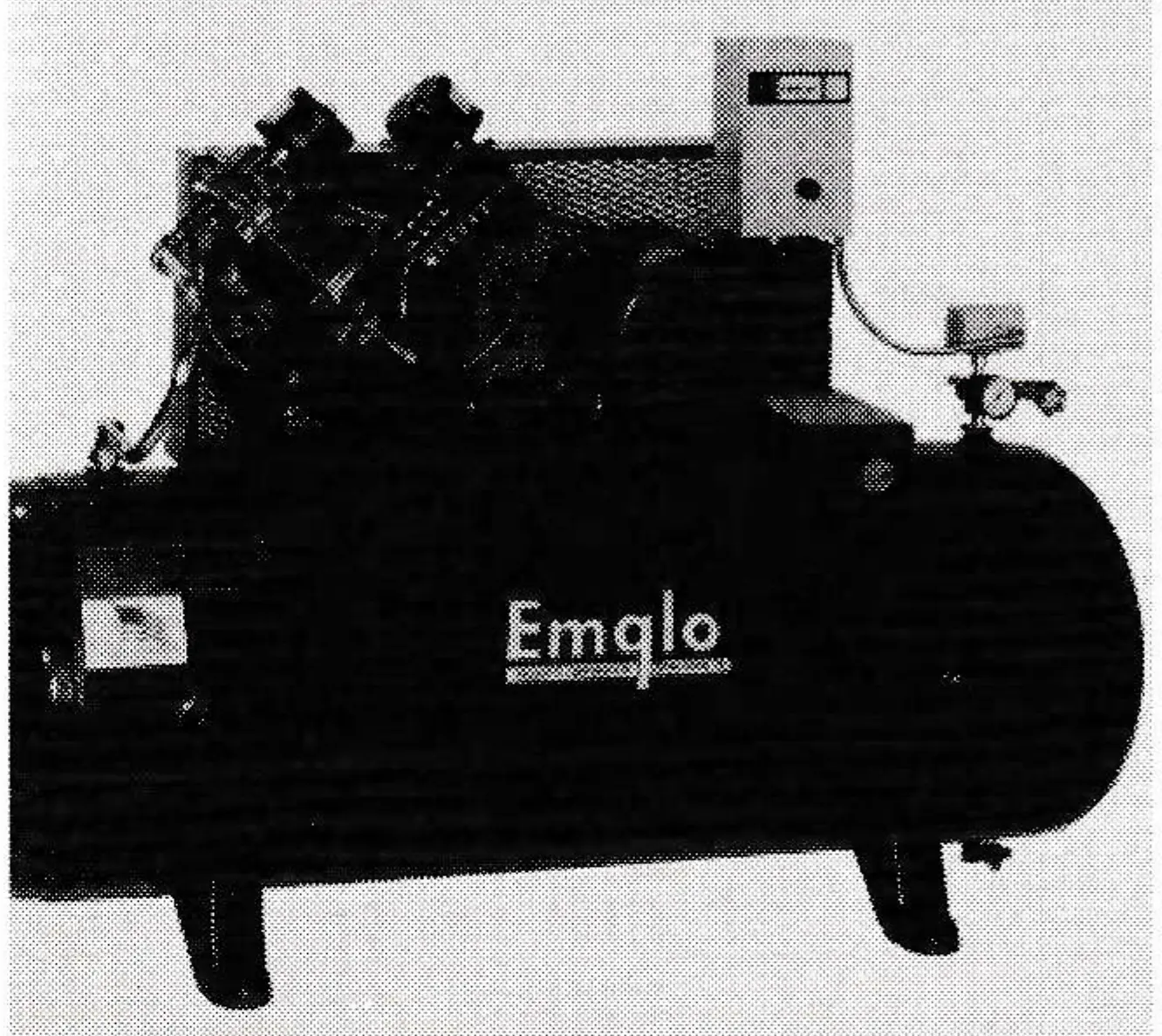
The Emglo compressor can be ordered with a dual-control switch that makes the machine more versatile. By setting the switch to constant-run, the air supply is predictable even during times of heavy consumption. The unit also can be ordered with a low-oil cut-off switch that automatically disconnects the pump from usage in cases where lubrication is insufficient. This is worth the expense and adds to the compressor’s life span.
Sears — Model 17526
This unit is made by DeVilbiss for Sears, but it has a motor with a 6-horsepower rating. It also uses a single-stage aluminum, two-cylinder pump that has cost benefits as well as life-span handicaps.
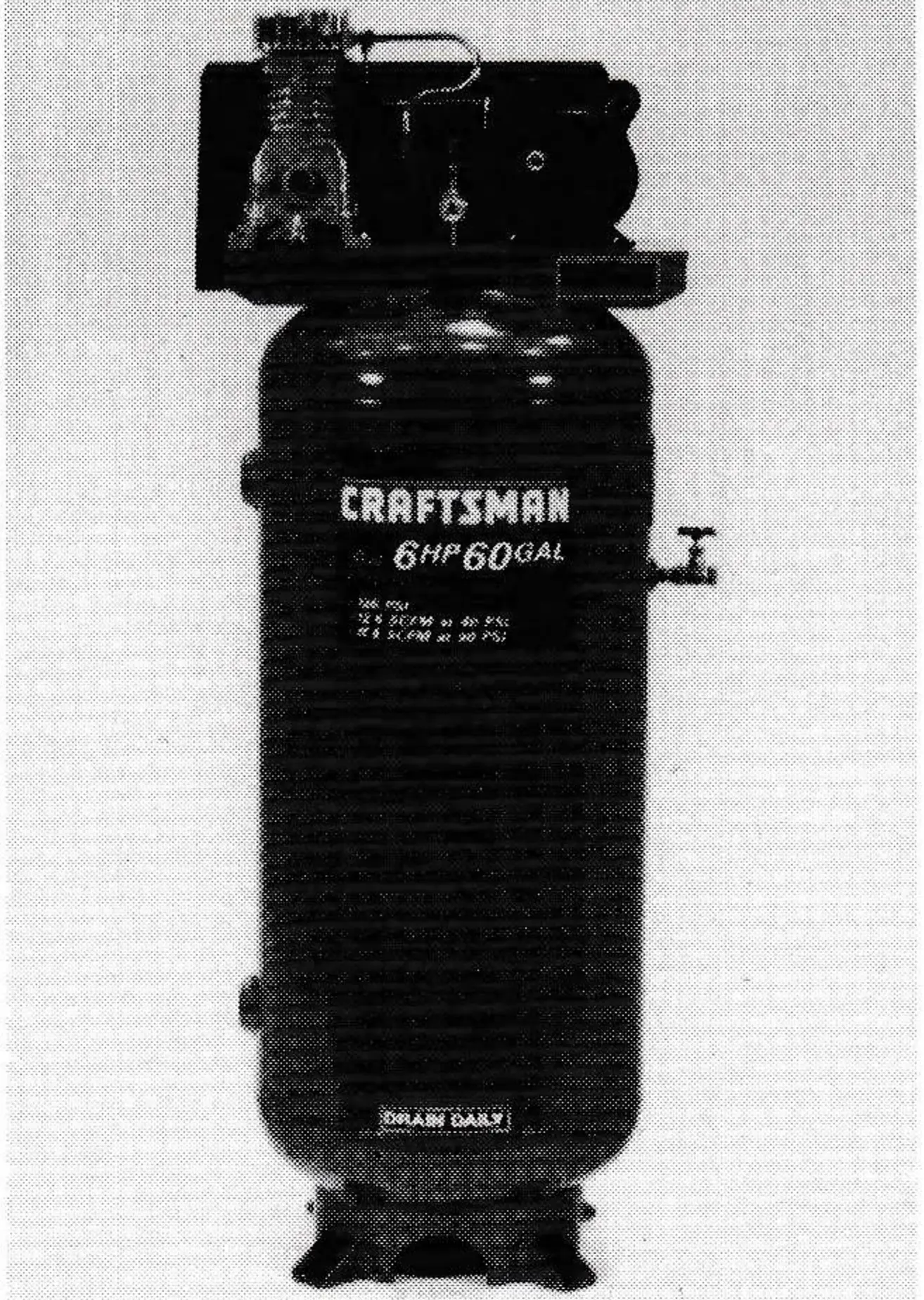
The pumps on both the Sears and the DeVilbiss machines are identical, but the Sears unit has a touch more cfm so with the larger motor, it has an additional .2 cfm at 90 psi. That may border on ridiculous, because of the cost for an additional 5 amps from service.
The Sears unit lacks a magnetic starter and has a maximum operating pressure of 125 psi. Like the DeVilbiss, this unit may be a viable solution only if economics are the primary consideration.
Speedaire — Model 5Z638
Campbell Hausfeld produces this machine for Grainger in a 7.5- and a 5-horsepower format. The results for the 7.5 h.p. were the same as the Campbell unit, so this report will focus on the 5-horsepower unit.
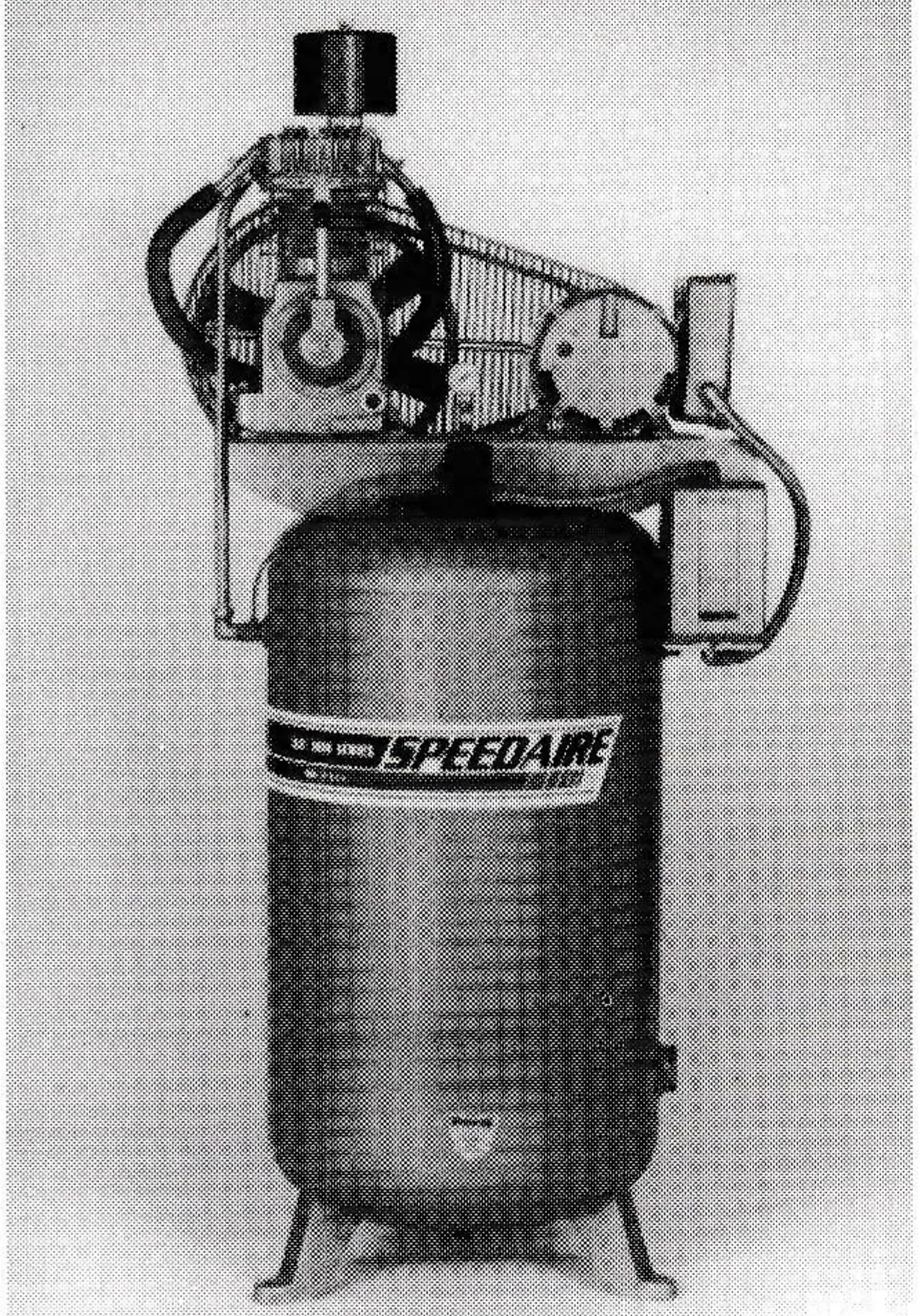
The 5-h.p. Speedaire has a cast-iron, two-stage, two-cylinder pump that will probably last a long time. It has the same oil sight glass as the larger unit, as well as the magnetic switch mechanism and the automotive-style filter. It also has the same 80-gallon tank, but the available cfm is significantly reduced. In a nutshell, though the pump and the motor are shrunk in capacity, they both come from the same family. Even though the specs on the 5-h.p. unit are economized, it has respectable ratings.
The overall construction of the Speedaire is beefy and if the tank is drained as often as the manufacturer recommends, it should last a long time. Overall, this unit’s quality is comparable to that of Campbell compressor.