
Obituaries
Judson had been president of Eastern Ski Area Operators Association in 1962 when he joined with industry leaders from around the country to found NSAA, and was elected president by his peers. He held this position for three years.
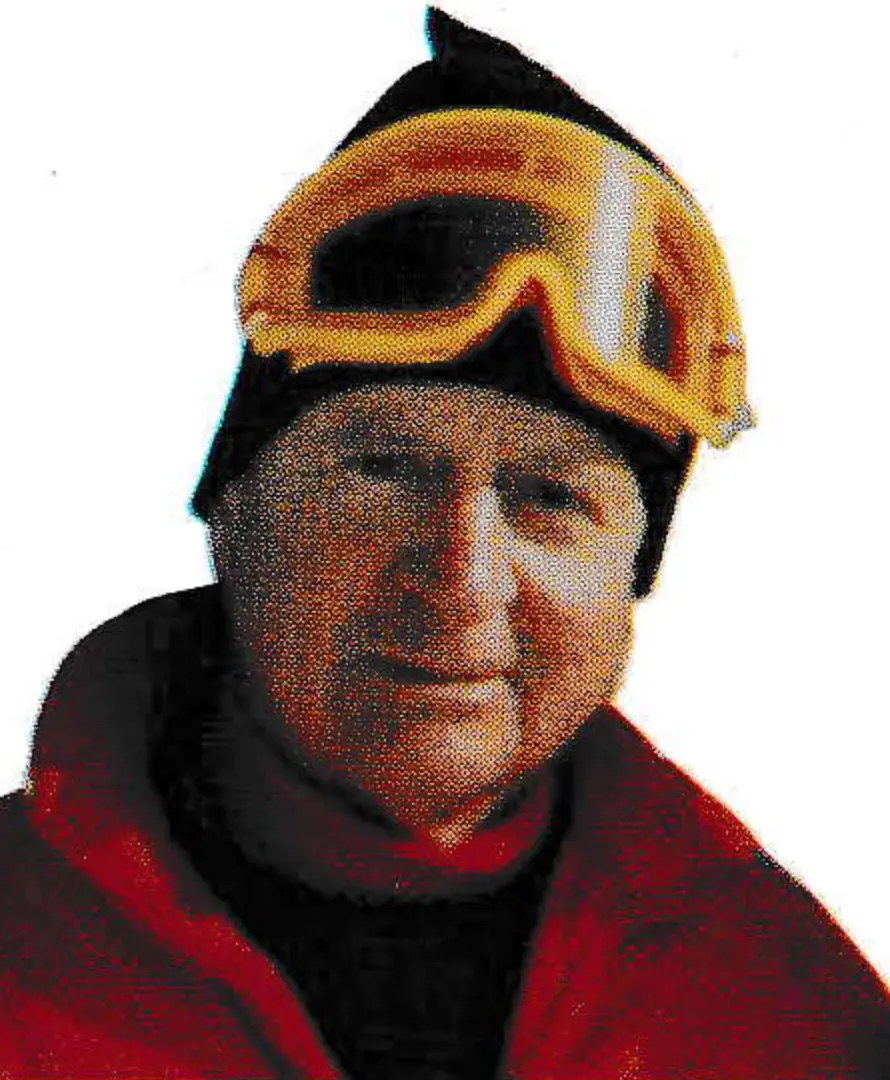
David Judson was the owner and operator of Otis Ridge Ski Area, in Otis, Mass., for 30 years. He and his wife, the former M. Hooker Woodward, created a highly successful ski camp at the area, giving intensive ski and race training to 100 youngsters at a time, who stayed in dormitories for two- or three-day sessions over weekends and holidays.
Judson was a veteran of the 10th Mountain Divsion in World War II, including service in Italy and Austria. At the conclusion of the war, Judson embarked on a writing career before starting his ski area.
In 1976, Judson was given the Sherman Adams award for his many contributions to eastern skiing.
(See also a tribute to David Judson in Speak-out.)
David J. Vanderzee — After a year-long battle with lymphocytic leukemia, Dave Vanderzee, owner and operator of Willard Mountain Ski Area, in Greenwich, N.Y., died on March 24 at the age of 60.
Vanderzee started the Willard Mountain operation in 1957, having decided on a ski industry career while doing ski patrol work at Mt. Snow.
David Vanderzee was active in the early organizational days of the New York Winter Sports Council, which later became today’s Ski Areas of New York.
Vanderzee was an outstanding athlete in college, playing football, baseball and basketball for four seasons at the University of Michigan. As a senior, he made the opening kickoff in the Rose Bowl.
1991 skier totals down
At presstime, Ski Area Management got an early look at what the 1991 National Sporting Goods Association skier count would be. Not surprisingly, the numbers are down. Alpine skiers counted were down to 10.4 million — a drop of 8.2 percent from 1990. Cross country skiers were down to 4.4 million for a larger percentage drop of 14.9. Snowboarding, however, posted a gain of 8.4 percent to 1.6 million.
NSGA counts Americans, seven or older, who participate two or more times.
The annual survey of American Sports Data counts Americans, six or older, who report having participated once or more.
Their 1991 figures show 13.7 million downhillers, for a drop of just four percent. They found five million cross country participants, a 19 percent drop; and the same 1.6 million snowboarders that NSGA did, but which registered as a drop of 12 percent in ASD’s figures.
More detailed coverage of both these studies, and of the National Ski Opinion Survey, will be in the July issue of SAM.
Gravink to Attitash
Phil Gravink, who last year ran the Mt. Sunapee and Cannon Mountain operations as New Hampshire’s director of state ski areas, has resigned to take over at Attitash, a major resort near North Conway, N.H. He replaces Jeff Lathrop who resigned.
Ski Business bought by N.Y. Times Magazines
Ski Business, a controlled circulation trade publication for ski retailers, founded in 1961, has been purchased from Nick Hock Associates by the Sports/Leisure Division of The New York Times Company Magazine group, publishers of Snow Country and 12 other publications in the golf, tennis and sailing fields. Also purchased from Hock was Ski New England, an annual guide he has published since acquiring it in 1984.
The terms of the purchase of the financially-troubled Ski Business, which had skipped some issues recently, were not disclosed.
Nicholas Hock, who has been in the ski publishing business for more than 40 years, will remain with the magazine as publisher, but the properties will move from Darien to Trumbull, Conn., headquarters of the Sports/Leisure Division. John Fry, current editor of Snow Country, will guide the magazine’s editorial effort.
Ski Business won the Jesse Neal Award for “outstanding how-to-editorial” four years running, starting in 1988.
Crested Butte upgrades; will install detachable
On the heels of a season that its president, Edward Callaway, described as “excellent,” Crested Butte announced a $20 million plan for capital improvements, spearheaded by construction this summer of a detachable quad. It may even celebrate with two detachables — doing “something spectacular on the mountain this summer that the guests would appreciate,” as Callaway put it.
In addition to re-working its lift system, Crested Butte is investing in a $1 million resort-wide, computerized information system that will make every guest transaction during a vacation — from reserving airline tickets to buying lift tickets and scheduling child care and ski lessons.
Hitherto known — and sometimes teased — for its laid-back style compared to the flash and glitz of some other Colorado resorts, Crested Butte seems to be changing. Other items for the future include a summit restaurant and a new hotel.
Proposed resort gets Forest Service go-ahead
The first big regulatory hurdle for Snowcreek was successfully negotiated when the U.S. Forest Service gave it a go-ahead after some five years of environmental review. The proposed area, in the Sherman Bowl section of Mammoth Lakes, Calif., is cheek-by-jowl with Mammoth Mountain. The developer is Dempsey Construction Corp., which, according to the Wall Street Journal, “has built much of the Mammoth community as well as structures in other western resort towns.”
Though this may be a big hurdle, the permit issued by the Forest Service is really just a green light to proceed to the next one, which is to prepare a master plan. In the meantime, the local Mammoth Lakes newspaper, The Review Herald, reported that the Sierra Club and other environmental groups will probably litigate against the Forest Service on the basis of procedural inadequacies. For now, there’s no permission to start building anything, or even cut a tree.
Snowcreek is being planned as a major destination resort with world-class style and amenities. Though it would have terrain as spacious as Mammoth’s, it would not seek to rival its neighbor’s huge capacity. Rather, it seeks to bring high-end vacation traffic to Mammoth Lakes.
Developer Tom Dempsey’s roots are in the community, where he was a ski racer in his youth. He remains close to Mammoth’s founder, Dave McCoy and the two talk of some sort of linkage someday. McCoy had also looked at the Sherman Bowl opportunities, but decided at the time he had enough on his plate with his dream of linking up Mammoth with the June Mountain operation he bought.

Three-stage gondola slated for Telluride
Financed by $9 million in tax-exempt bonds, construction will start this spring on a three-stage gondola at Colorado’s Telluride resort. The contract went to CTEC, the Utah-based lift manufacturer, who will use Garaventa grip technology and eight-passenger CWA cabins for the project.
Section I of the system is designed to link the historic mining town of Telluride to the mid-mountain area called Coonskin. Scheduled for construction in the summer of 1993, it has a length of 6,100′ and a vertical of 1,790′. Section II, which will be built this year will continue to the Telluride Mountain Village. It has a length of 4,110′ and vertical of 998′. Section III will continue, essentially on the level, to a new parking facility, and will be constructed beginning in the spring of 1993. It has a length of 2,930′ and a vertical of just 15′.
Sections I and II may be operated independently or in concert, while Section III is a totally independent system. There are separate drives for each section, and the overall capacity is 1,200/hr.
CCSAA defines goals; plans member recruitment
At its annual convention in Whitefish, Mont., the Cross Country Ski Areas Association (CCSAA) divided itself into small focus groups and did some soul-searching as to its identity and its future. At the end, there was a feeling of success, according to executive director, Chris Frado, in that a lot of thought had produced some clear focus.
First, as to identity, the association determined in two sentences that: “CCSAA is a trade association for the benefit of profit-driven businesses which benefit from skiing on groomed cross-country trails. CCSAA promotes charging compensatory fees for ski services.”
The message the group was trying to convey was that, while cross-country skiing means many things to many people, for their association it means groomed-trail skiing for which user fees are charged. CCSAA is perfectly happy to cooperate with all other cross-country interests, including those which do not charge trail fees, but wants everyone to know up front that theirs is a trade organization with a business, profit-oriented focus.
The CCSAA board agreed its first priority was membership recruitment, and set a goal of achieving 30 to 50 percent of all commercial XC operations; it currently has between 20 and 25 percent as members.
It also directed the association to provide “very tangible, solid membership benefits,” rather than urging membership on the basis of it being ”for the good of the industry.” In that connection, it wants to get away from “throwing money into big national marketing programs,” and become more focused on programs with direct benefits to member areas.
The downhill XC area — One of the most stimulating of the presentations at the convention was by John Slouber, the innovative, sometimes maverick operator of Royal Gorge, Calif., the world’s largest cross-country operation (over 100,000 skier visits this year). Slouber wants to “take the sweating and grunting” out of the sport and make sure there is more customer gratification and fun. To do this he wants to “provide a downhill experience.” He has installed lifts — T-bars and handle tows — so that the cross-country guest may have the normal ups and downs while skiing a trail, but will have more down than up as a result of the lifts. He plans more lifts.
Slouber is also working on equipment suppliers to re-design their product. He wants to make turning and sliding easy for the XC skier, which he says they are not now. With their current length and lack of side-cut, Slouber says, cross-country skis just don’t turn. And the “no wax” skis cannot give a remotely satisfactory glide.
“We in the business demonstrate a sport on the equipment we use that our guests cannot possibly duplicate with the equipment we put them on,” he says.
“We cannot succeed as cross-country operators,” Slouber insists, “until we give our customers fun.” As it is, Slouber feels, the sport is just too demanding to make it much fun for most, and too exhausting to do for more than a couple of hours. “You can’t blame people for not wanting to drive several hours to visit us for that,” Slouber adds.
National Recreation Trails Act — The federal government is funded to spend an estimated $30 million annually for the next six years in construction of state trails for the benefit of the public. These are for hiking, trail biking, snowmobiling and cross-country skiing. An 11-person committee is being formed to make decisions on the allocation of this money, and one seat is reserved for a representative of the cross-country ski trail users.
CCSAA is concerned about being in competition with the federal government in providing cross-country skiing to the public, and is hoping to get John Frado, a veteran professional in the field of XC area design and operations, to fill that slot.
The association’s position is that it is one thing to construct trails for skiers who want to do non-track touring, but that if the government trails are to be groomed and track-set, there should be appropriate fees charged.
Pavlik leaves Kassbohrer; Hazen McMullen promoted
Hazen McMullen, who handled sales of Kassbohrer of North America (KNA) from 1980-87 before moving to that company’s Setra bus division, has been promoted to executive vice president of KNA, overseeing operations of both the bus and tracked vehicle divisions.
The move was made in the aftermath of a decision by Henry Pavlik, formerly president of KOA, to return to his homeland of Czechoslavakia, where he will represent Kassbohrer products.
In related moves, Cathy Langill has been named treasurer and v.p. finance, responsible for planning and implementing short and long-term financial operations. John Glockhammer has been named Sierra branch manager, with Rod Elwell replacing him as service manager. Don Jensen was named as sales representatives for the Sierra territory.
Rampini buys Prinoth
An Italian manufacturer of capital equipment for civilian and military use, Gruppo Rampini, has bought Prinoth S.p.a., the manufacturer of Prinoth tracked grooming vehicles. North American sales and service of the Italian-made vehicles will continue to be handled by Hagglunds, Inc., of Arvada, Colo., a member of the Incentive Group.
Amendment proposed for Forest Service appeal process
The Federal Register of March 26 contained notice of a proposed amendment to the Forest Service’s regulations that could help protect the ski industry by making it somewhat more difficult for project opponents to challenge Forest Service decisions that approve ski area development.
According to Harris Sherman, partner in Arnold & Porter, and specialist in environmental law and regulations, “Such challenges would have to be brought in federal court, which generally involves greater cost and more complex filing requirements than the administrative appeal process. In addition, the courts are generally deferential to agency decisionmakers and will usually uphold agency action if it is rational and within the agency’s authority. This could deter some opponents from challenging approvals. On the other hand, it could also lead opponents to redouble their efforts to secure a favorable decision at the forest Supervisor level, which could make the NEPA process more lengthy, adversarial and costly for applicants.”
Ski Area Industry Calendar
| Date | Event | Location |
|---|---|---|
| May 11-15 | Canada West Spring Conference/Trade Show | Harrison Hotsprings, B.C. |
| May 19-21 | Calif. Ski indust. Ass’n. Technical Conference | Mammoth Mt. Calif. |
| June 1 – 4 | USIA National Convention and Ski Area Trade Show | Orlando, Fla. |
| June 23-24 | Colorado Ski Country Annual Meeting | Hyatt Hotel Beaver Creek, Colo. |
| August 3-6 | Midwest Ski Areas Ass’n. Technical Conference | Alpine Valley, Wisc. |
| Sept. 21-23 | Ski Areas of N.Y. Annual Seminar & Trade show | Grandview Holiday, Lake Placid, N.Y. |
| Sept. 24-27 | Canadian Ski Industry Symposium | Capri Hotel, Kelowna, B.C. |
| Oct. 8-10 | Interalpin ’92 Trade show | Innsbruck, Austria |