


Take equal parts Tarzan and James Bond, add a safety tether and mix with rope bridges and zip lines in the trees and you’ve got an exhilarating activity that summer guests can navigate at their own pace. High-ropes courses are a nascent activity at ski resorts in North America that started as a corporate team-building exercise and is now expanding to include solo summertime fun.
This activity is also practiced, but in a much bigger way, in the French Alps. In the Haute Savoie, it is called aerial trekking and is the latest fad among European tourists looking for a bit of high-flying adventure.
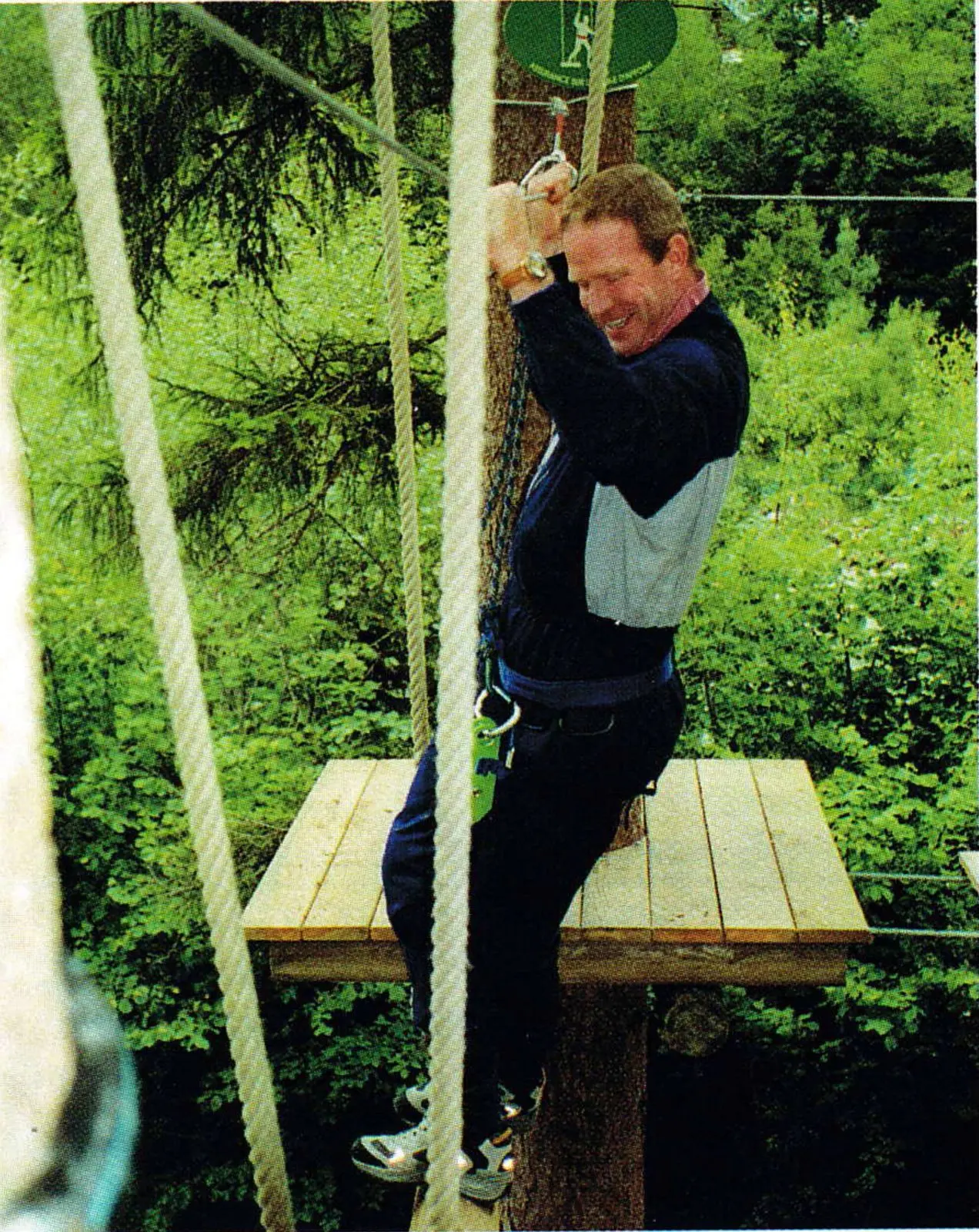
Photo courtesy of Rod Kessler
But regardless of the locale, completing a ropes course is a challenge that guests seem to thrive on.
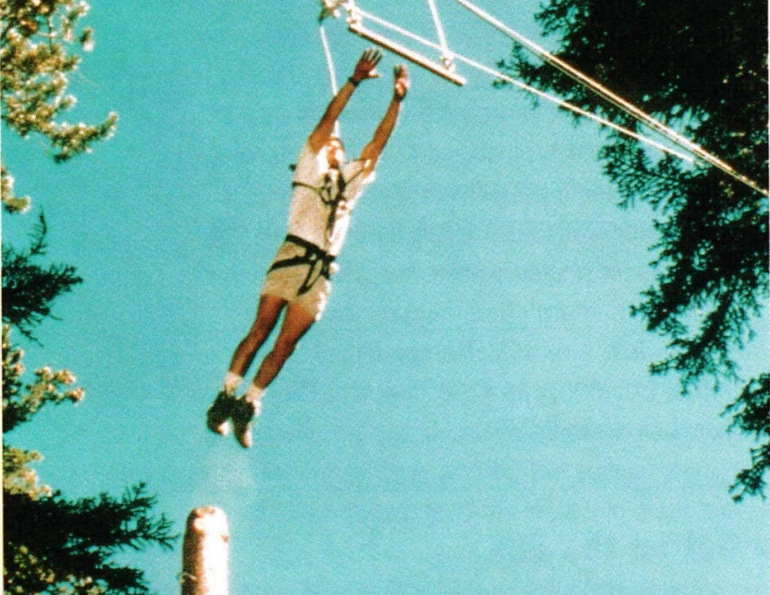
A course at Northstar-at-Tahoe, Calif., challenges guests to climb a 30-foot pole, stand on its end and leap to a trapeze before being lowered to the ground by staff. There are also secured-rope bridges, free-swinging bridges made of tree trunks and a 400-foot-long zip line (how Hollywood shows thieves and spies getting from high rooftops to lower ones in a hurry) that regularly has burly guests shrieking like children.
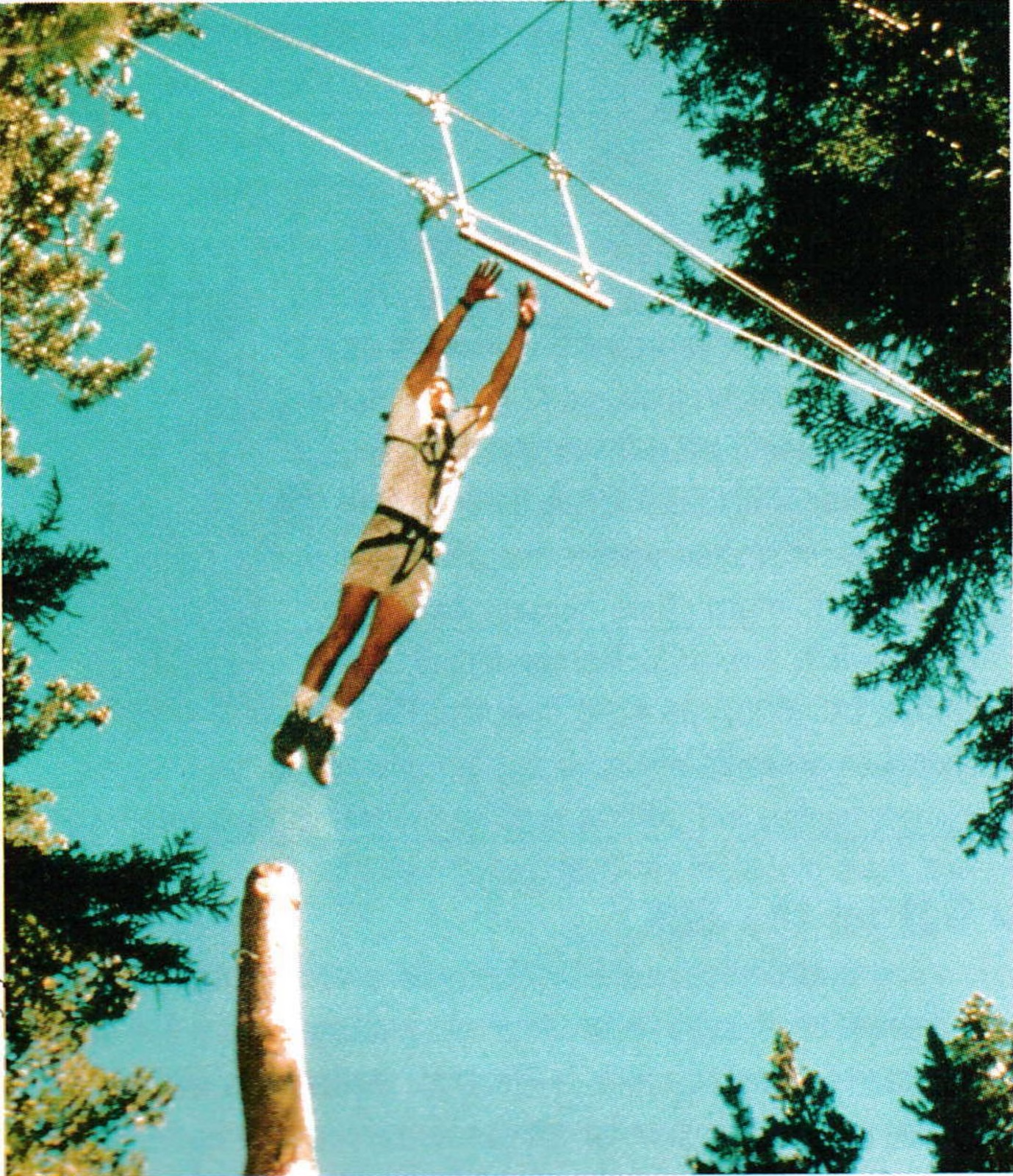
Photo courtesy of Adventure Associates, Inc.
Cruising a maze of cables, logs, suspended platforms and swings strung among the trees is infectious in its appeal to adventurers of all ages. It takes the guesswork and obvious danger out of climbing trees while preserving the drama and at least some of the anxiety.
A company called Adventure Associates owns the Adventure Park concession at Northstar, which charged guests $43 per day last summer to spend as much time as they wanted swinging from the trees and seeing what they could accomplish. Adventure Park actually has two separate ropes courses (one with high ropes and the other with low) and can accommodate 30 to 40 people a day (100 a day when sessions are set aside for corporate groups), Thursdays through Sundays. Operators encourage reservations and won’t open the ropes unless eight people show by a certain time: cost-efficiency is key. In all, 2,500 people visit in a 10-week season. Besides the tree-based activities, there’s also a climbing wall, orienteering course and a junior ropes course for kids under 14.
“Typically, individuals want the immediate thrill of the high-ropes course,” says Brad Albert, marketing director and a facilitator for Adventure Associates. He helped build the park at Northstar 10 years ago and says that ski resorts are the best fit for the activity. Albert says courses at many golf resorts don’t get the traffic found at ski resorts because golfers, in general, are not as adventurous as mountain resort guests.
A typical guest spends about four hours at Adventure Park—filling out the requisite paperwork, being fitted with a helmet and learning about the safety harness, warming up on the low ropes (if necessary), getting instruction in belaying others and completing the challenges. When guests belay for one another, a staff person is always there supervising and ready to step in. Visitors are also taught how to self-belay using a GriGri device, which has a self-arresting feature to prevent falls, but the activity leans on teamwork in pairs.
“If mom and dad are not interested, they’ll at least learn how to belay for their children without having to pay their own way through the course,” says Albert. “It keeps the family together and we don’t become a day-care center.”
A Blueprint for Challenge
Adventure Associates also runs ropes courses at Mammoth Mountain, Calif., and Snowbird, Utah. At each, the emphasis is on safety first and challenge second, the mantra being “Challenge by Choice.” As a result, hesitant guests are encouraged to attempt each feature, but no one is ever forced into anything.
There are 15 challenging elements in Northstar’s high-ropes course, with some that require a partner to accomplish. In addition to the cable crossings, swings and log bridges there are two zip lines, including a 400-foot giant that starts at about 55 feet off the ground.
“The challenge for us is getting people to be very pleased with themselves no matter how many challenges they’ve done,” says Albert, who notes the park attracts people from all walks of life.
A testament to the growing popularity of this activity is the existence of the Association for Challenge Course Technology, a professional organization for instructors and builders that publishes course standards and provides for inspections. Their Website (www.acctinfo.org) even provides details on how different tree species affect challenge elements.

Professional riggers install courses using elements that typically cost between $500 and $3,000 each, depending on whether it is suspended high above ground or within six feet of the surface and how complicated it is. An average course setup in the U.S. would cost between $80,000 to $150,000. On top of that, the course needs to be supervised by safety staff with climbing skills. When the Northstar course is full, six staff members are attending to belays.
“The individual walk-ons don’t create a cash cow,” says Albert, “but it has a great indirect effect.” He explains resorts can profit from companies looking for team-building experiences and can build walk-on traffic at adventure parks by making them visible or easy to find. “The best marketing is having it right there in front of people’s faces.”
And when done correctly, using professional riggers, the liability exposure is not as high as it would seem, says Albert. “When you concentrate on safety, people won’t get hurt.”
Adventure Alpen-Style
The French take on “aerial trekking” is slightly different. There are at least 10 courses set up at recreational centers, most at or near mountain resorts. One of the courses, “La Forêt de l’Aventure,” above Lake Annecy in the Haute Savoie region of the French Alps, has 40 obstacles or crossings strung high in the pines of a 30-acre forest. It is entirely above ground (unlike Northstar’s, which requires 10 belays back to earth) and generally takes two and a half hours to complete, with elements that become progressively more difficult. The focus is on entertainment.
The guest is helped into a climbing harness and outfitted with two safety tethers that attach to a continuously-running steel cable with clips. There is also a pulley that is used for the seven very popular tyroliennes, zip lines that send guests shooting across open space like charging Navy Seals. Spring-loaded brakes slow riders down before they crash into the tree on the other side.
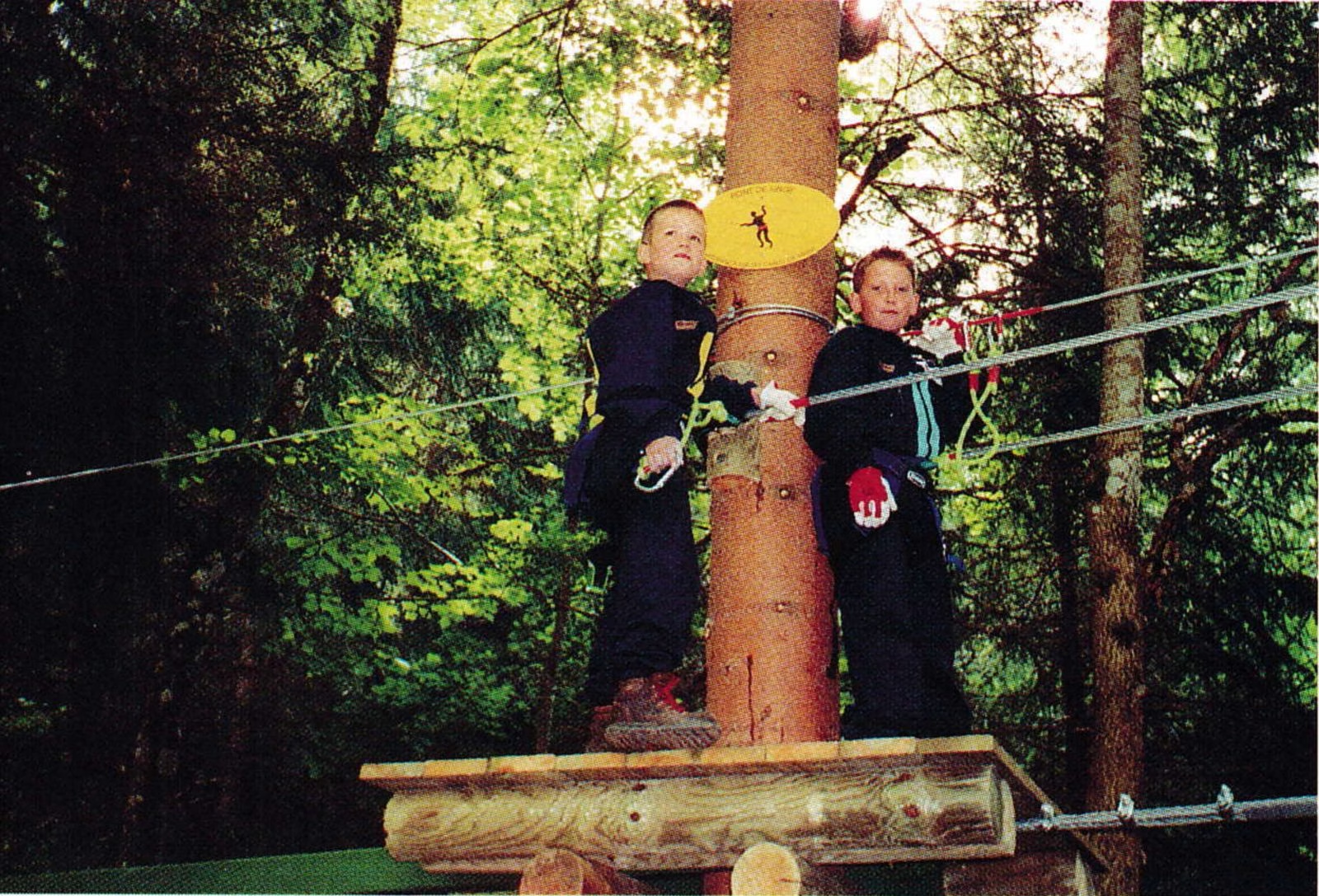
Photo courtesy of Rod Kessler
There are rope swings, suspended log bridges and hanging stirrups for crossing from tree to tree. All of the challenges are between 10 and 33 feet off the forest floor. Safety crews are located throughout to help coach guests, who pay about $17 to enter.
According to Alain Lazard of France Neige International, there is a similar course at Les Deux Alpes that is said to have attracted 16,000 visitors last summer. At a cost of about $300,000 to install, this shows it is possible to break even in one season.
The activity has become so popular in France that the three partners who opened the Lake Annecy site have opened another near Lake Geneva under the La Forêt de l’Aventure brand name. One of the partners is a ski instructor and a mountain guide, another is a mountain rescue technician. The partners have said that in the four years the Lake Annecy park has been operating, it has received 50,000 visitors. That’s a lot of people thumping their chests and trying to yodel like Johnny Weissmuller.
For more information on resort-based ropes courses, visit the Adventure Associates Website at www.adventureassoc.com.

