When it comes to choosing a snowmobile, the key is figuring out what types of chores the sled will be expected to perform. Most manufacturers offer heavy machines with wide tracks and big engines as well as lighter, faster machines with digitally controlled altitude-compensating carburetion and everything in between. The following roundup concentrates strictly on the utility vehicles manufactured for 2000.
These two-stroke snowmobiles all have two-up seating and include carrying racks as well as tow hitches. Almost all of them have hand and thumb warmers and reverse gearing for easy changes of direction in tight locations. Three of the five manufacturers offer liquid-cooled engines and two have models with hydraulic disc brakes. (see table)
While a few of the machines have new features, most boast good track records and system improvements as their main selling points. But in one case, a breakthrough in track design marks the entry of a new player in the North American market.
While most of the data presented in the table is self-explanatory, some shorthand was required. Here is a key to our abbreviations: Hi/Lo/Rev refers to two forward speeds and a standard reverse gear; Electronic under the Transmission heading for Ski-Doo refers to a unique way of reversing the ignition timing on three models; SA refers to a swingarm suspension; Slide refers to an articulating slide arm; ATSS stands for Alpina Track Suspension System with heavy duty dual, self-compensating rubber-damped arms.
Alpina (570) 473-8545
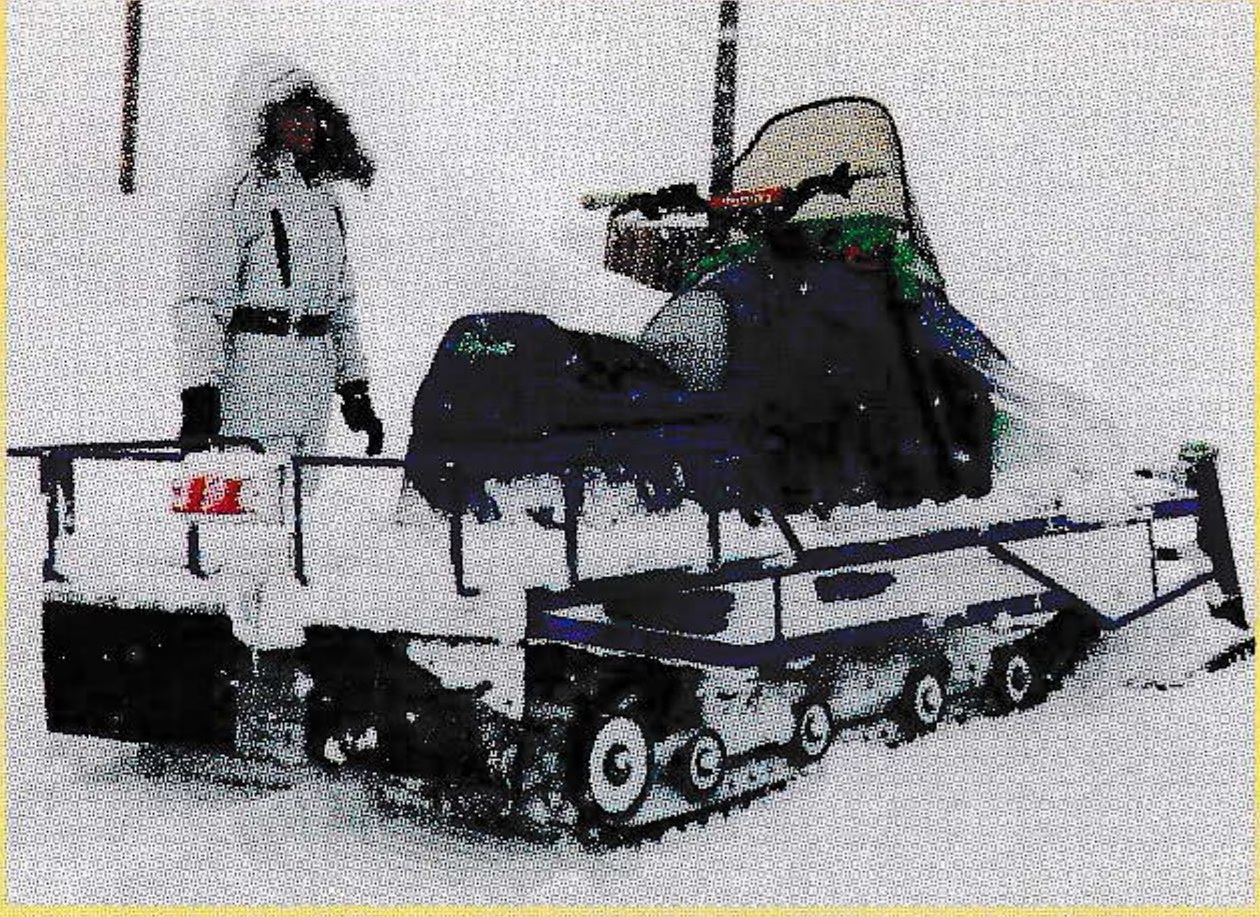
A new sled among utility snowmobiles this year is the Alpina. This Italian manufacturer offers two Superclass models, the Classic and the Xtreme. What sets these sleds apart is their unique twin tracks that combine for a whopping 30-inch-wide footprint for extra stability and towing power. The trade off is weight. The sleds each weigh in at a hefty 926 pounds dry.
Each of the twin tracks that drive both models is suspended by its own ATSS (Alpina Track Suspension System) that provides one of the most rigid rear rides in the class. It is a self-compensating system that follows the contour of the ground and is cushioned by a stacked system of elastomer bumpers.
The only difference between the two models is the carburetion. The Classic, rated at 45 hp, has a single Bing breather that makes it less sensitive to altitude changes, while the Xtreme has two Bings and has an additional 20 horsepower.
Arctic Cat (218) 681-4999
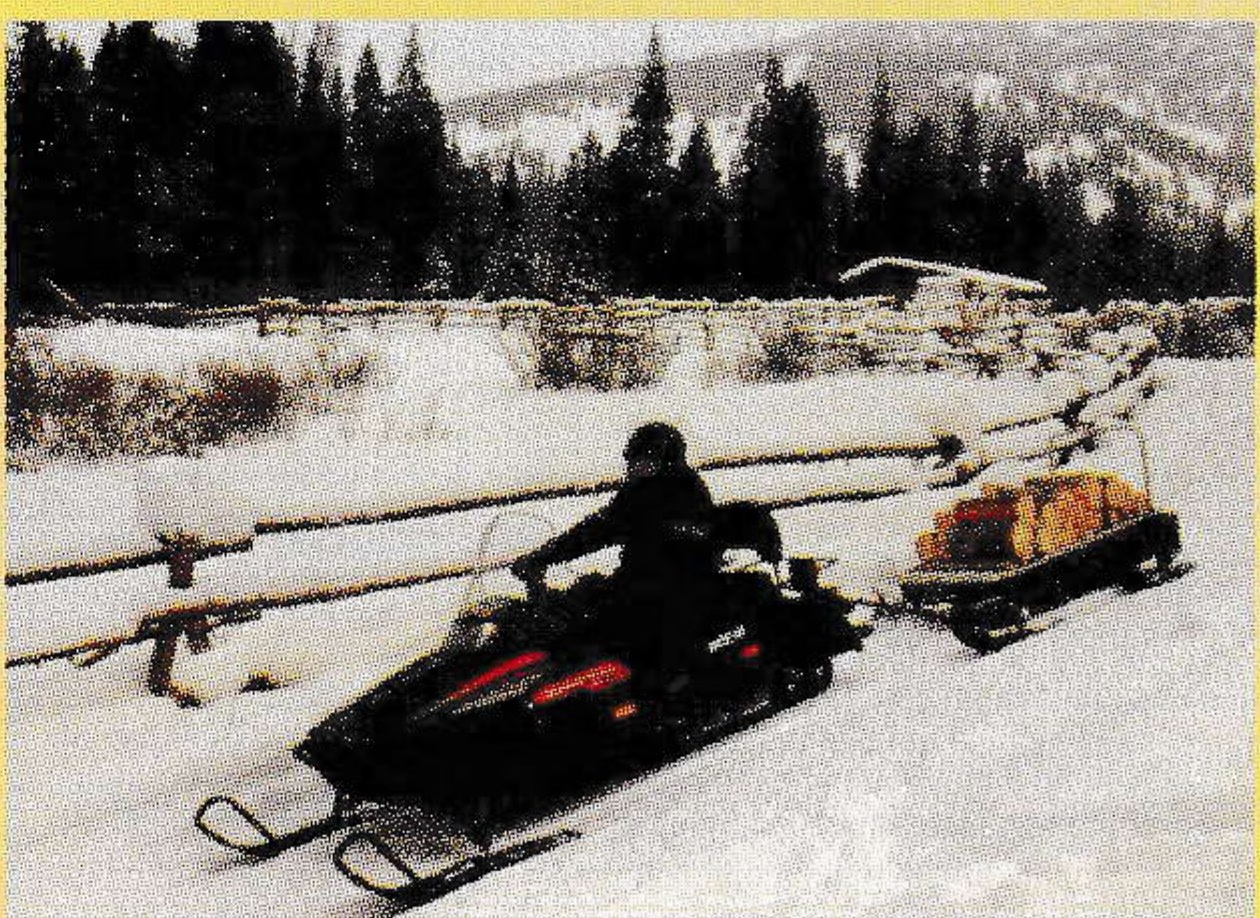
Arctic Cat has four utility models, beginning with the liquid-cooled 550cc Widetrack that gets an update with new, plush front shocks and hydraulic brakes this year. The Widetrack, estimated at 80 hp, has the largest fuel tank in the group at 15 gallons for extended range. The three smaller models are fan-cooled and have displacements of 431cc and 339cc.
All four sleds have articulated slide rear suspensions with 8.5 inches of travel with adjustable torsion springs for different load capacities and fiberglass overload springs. They also have larger-profile windshields this year designed to deflect more wind and snow.
Polaris (800) 765-2747
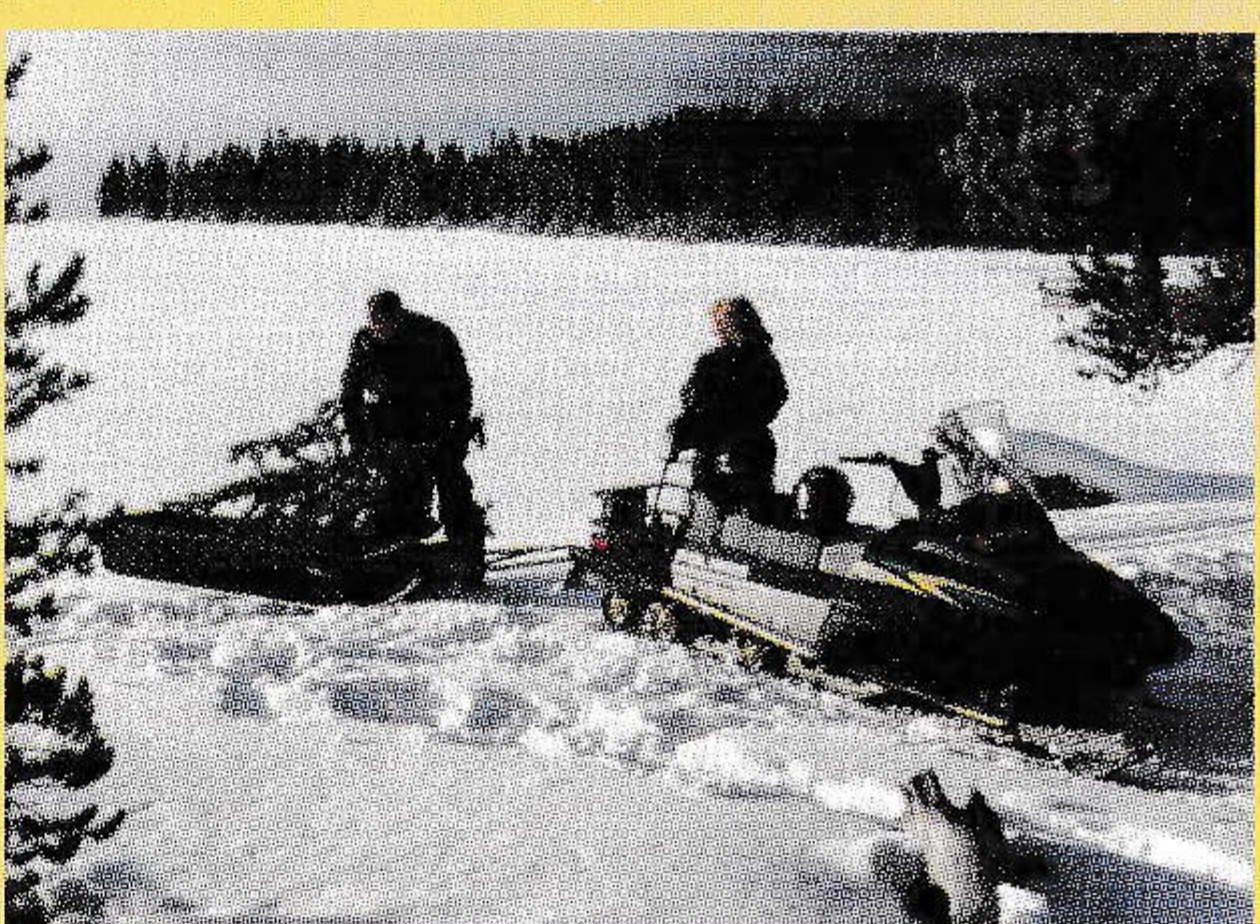
The Indy WideTrak LX is the single utility snowmobile offered by Polaris in model year 2000. Its liquid-cooled 488cc engine is aspirated by twin 34-mm carburetors and fed by a generous 11-gallon fuel tank. It has the brightest headlight of the utility vehicles with a 100-watt high beam and 60-watt low beam (new this year) and is guided by wide (8.5 inches) carbide ski runners for improved flotation and handling. Its 20-inch by 156-inch rear track has one-inch lugs and larger window openings this year for durability and cooler operation and is suspended by an articulating slide rail. The rear suspension has 9.5 inches of travel and is damped by Nitrex shocks.
Ski-Doo (800) 375-4366
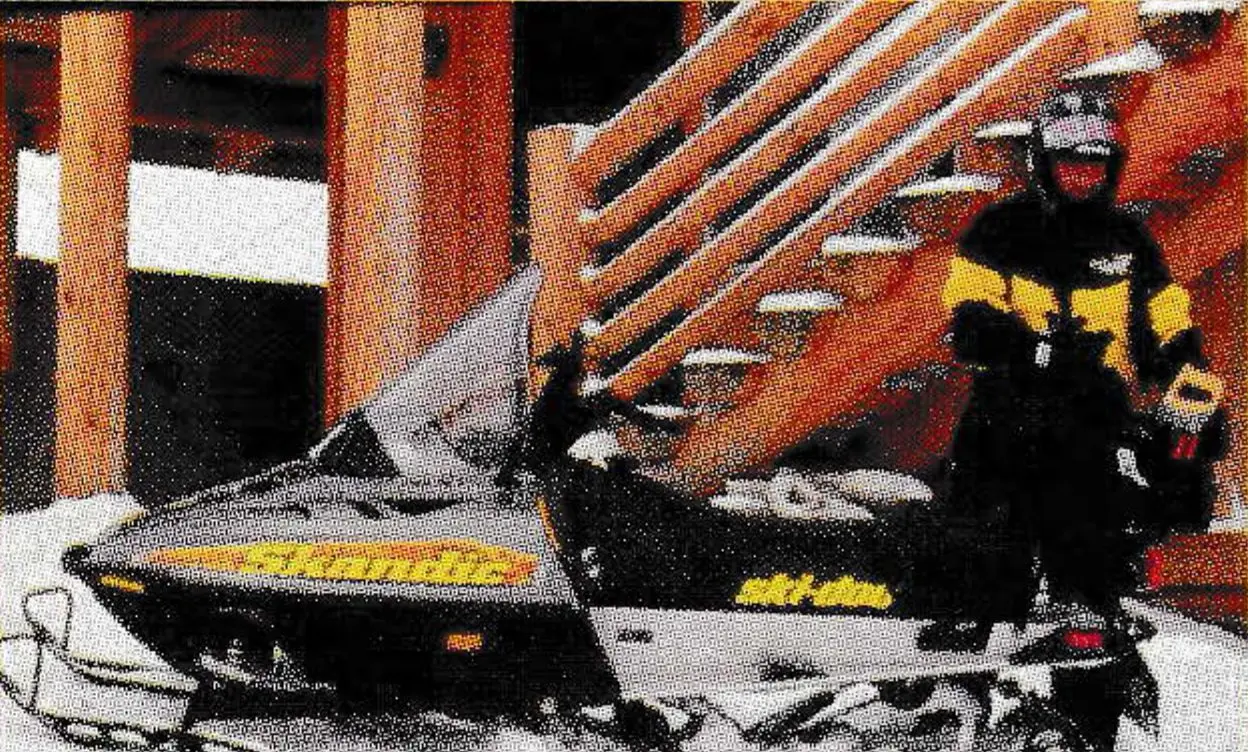
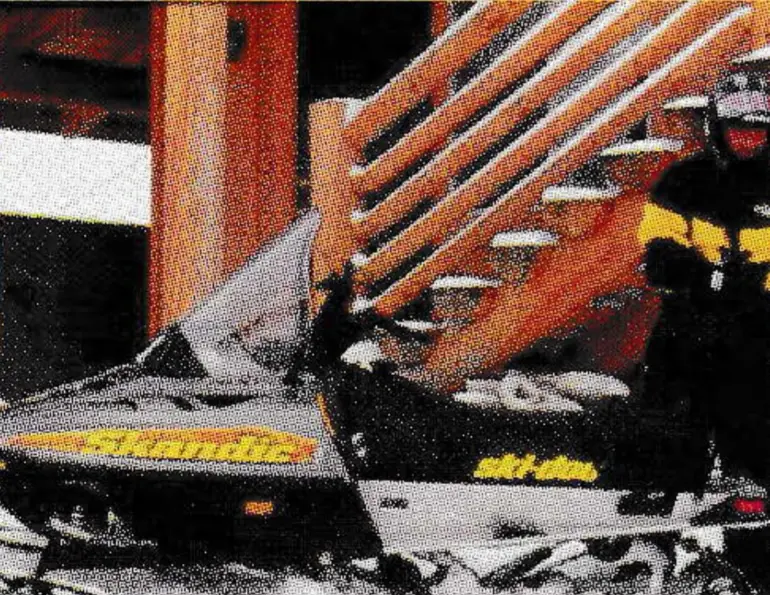
Ski-Doo, owned by Bombardier, has the widest selection of utility sleds among the manufacturers with six models. Four of them have hydraulic brake systems and the largest three have the narrowest ski stance in their class at 35.4 inches. The biggest model, the Skandic WT LC, has a liquid-cooled engine for durable performance, while the rest use fans to cool the Rotax powerplants. The real workhorse in the group, the Skandic SWT, boasts the widest track width of 24 inches (except for the dual-track Alpina) for good flotation and added pulling power. The tracks for the WT LC, SWT and WT are suspended by an articulating slide rail with 8.3 inches of travel cushioned by hydraulic shocks.
The Skandic 500 and Skandic 380 have front suspensions benefitting from a swingarm system with radius rods that reduce “bump steer” and “scrub.” (The Polaris has a similar system, while the Arctic Cats have double-wishbone suspensions.) They also benefit from an extra-plush touring rear suspension with 10 inches of travel. But the truly amazing feature of the 500 and 380, which is shared by the single-cylinder 269cc Tundra R, is the electronic reverse.
To save weight, the sleds have been outfitted with Rotax Electronic Reverse (RER), a computer system that reverses the spark timing to actually run the engine backwards. By hitting a button on the dash, no matter the speed, the engine slows, stops momentarily and then begins running in reverse, actually spinning the crankshaft in the opposite direction. It works via a double-helix cam on the clutch.
Yamaha (800) 692-6242
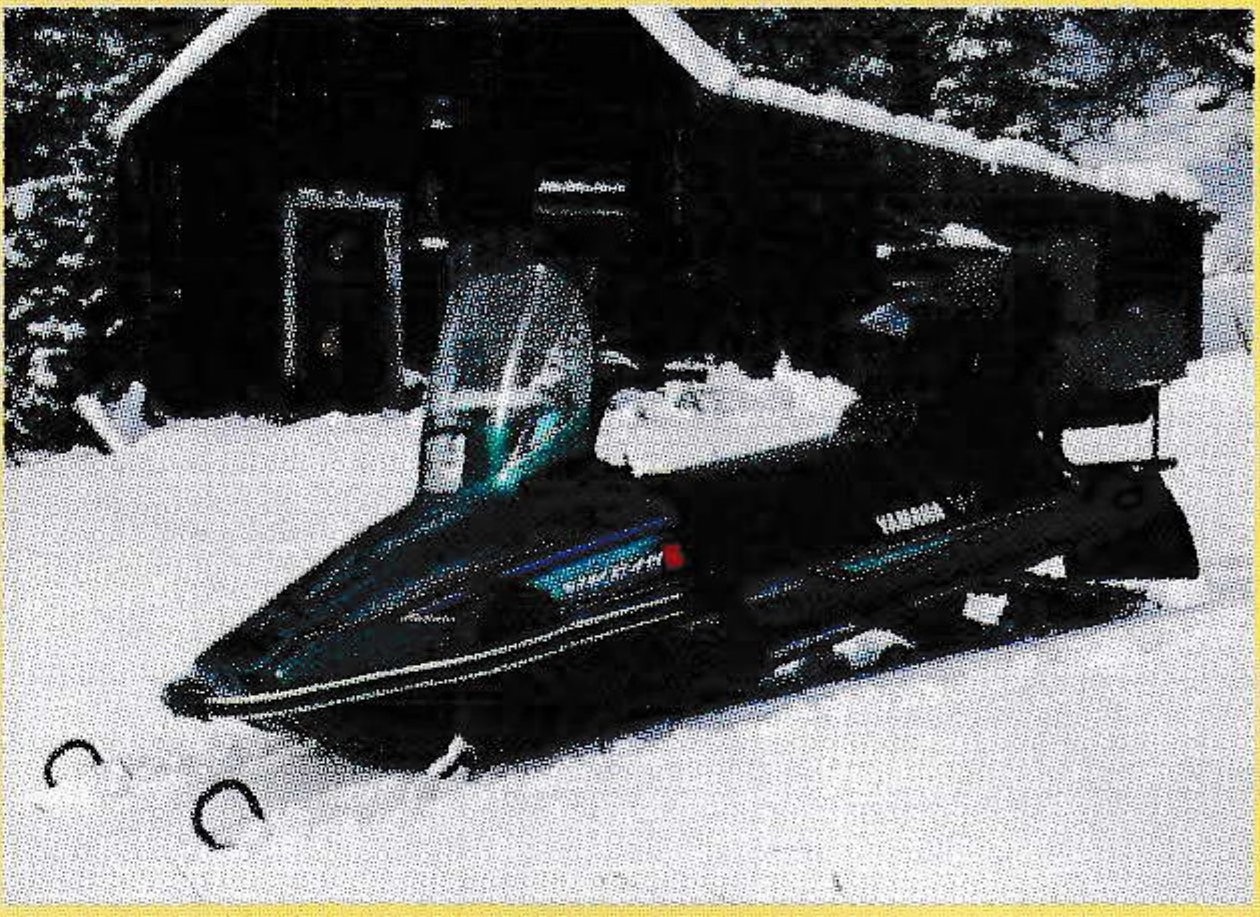
The Yamaha VK 540 III is one of two fan-cooled utility sleds offered by the manufacturer for 2000. New features for this year include an “easy-adjust” gas-charged rear suspension with the longest shock travel of all the utility snowmobiles at 11.5 inches. The extra plush damping and spring rates can be adjusted quickly by hand to accommodate various types of loads and towing capacities.

The model is the third heaviest in the class after the Alpina and Arctic Cat Bearcat Widetrack and following those two sleds has the third largest engine. It also offers a new adjustable passenger backrest and new graphics. And like the Alpina, Polaris and three of the Ski-Doo models, the VK 540 III has a high/low range transmission for towing purposes with standard reverse.
Snowmobile Safety Refresher Course
The value snowmobiles bring to winter resorts is extraordinary and when snowmobiles are down, everyone from staff to guests is affected. But with the benefits of snowmobiles, come some risks.
Liability claims are growing from snowmobile-related accidents. In the last two years, for example, Acordia Resort Services has incurred millions of dollars in snowmobile-related claims, most of them brought by skiers who collided with snowmobiles. Usually, the resort does nothing wrong and these claims can be defended. But the cost of a successful defense is high.
Also alarming is the increase in snowmobile-related workers’ compensation injuries, currently the most expensive workers’ comp claims for ski resorts. Most could have been prevented because the problem is usually with the operator. Here are four Suggestions for making your resort snowmobile safe:
1) Provide snowmobile training and manuals to employees. Manuals should instruct drivers to train passengers on riding positions and safety. Drivers should also receive extensive hands-on training and be evaluated on different types of terrain and the Snowmobiler Safe Riders Pledge. (Copies of the pledge can be obtained from the International Snowmobile Manufacturers Association at (517) 339-7788.)
2) Evaluate driving records. Acordia has found that operators in snowmobile accidents often have poor driving records. Screen the motor vehicle records of potential snowmobile drivers at your resort.
3) Make safety modifications. Resort vehicles should all fly flags to alert skiers and can be fitted with flashing lights and sounding devices. Okemo Mountain, Vt., reduces the gearing on its sleds to slow them down.
4) Set attire requirements. Clothing should never be able to snag on fixed objects. While not wearing a helmet may be defensible in some courts, it appears the future will require all operators to wear helmets.
—Tom McCampbell
Originally printed in Acordia Resort Service’s Resort Report, Summer ’99