



It didn’t take Fred Pabst long after he opened Bromley in 1937 to realize some sort of slopeside facilities for children would free mom and dad to spend more time skiing. And if the parents were liberated from the children, they would “tend to spend” — spend time, spend money — at Bromley. Thus, the southern Vermont ski area began carving its reputation as a five-star family area by installing what generally is regarded as the first slopeside nursery.
“It’s a very simple piece of logic which is still true today: skiing families are the backbone of the ski industry,” says Dan O’Connor, marketing director at Bromley. “If you can help make those young families feel comfortable, if you can free the parents for some skiing while the kids are professionally taken care of, then it’s going to mean happy parents because they’re getting to ski and happy kids because they’ve got a new batch of toys, some new friends, a whole new experience.
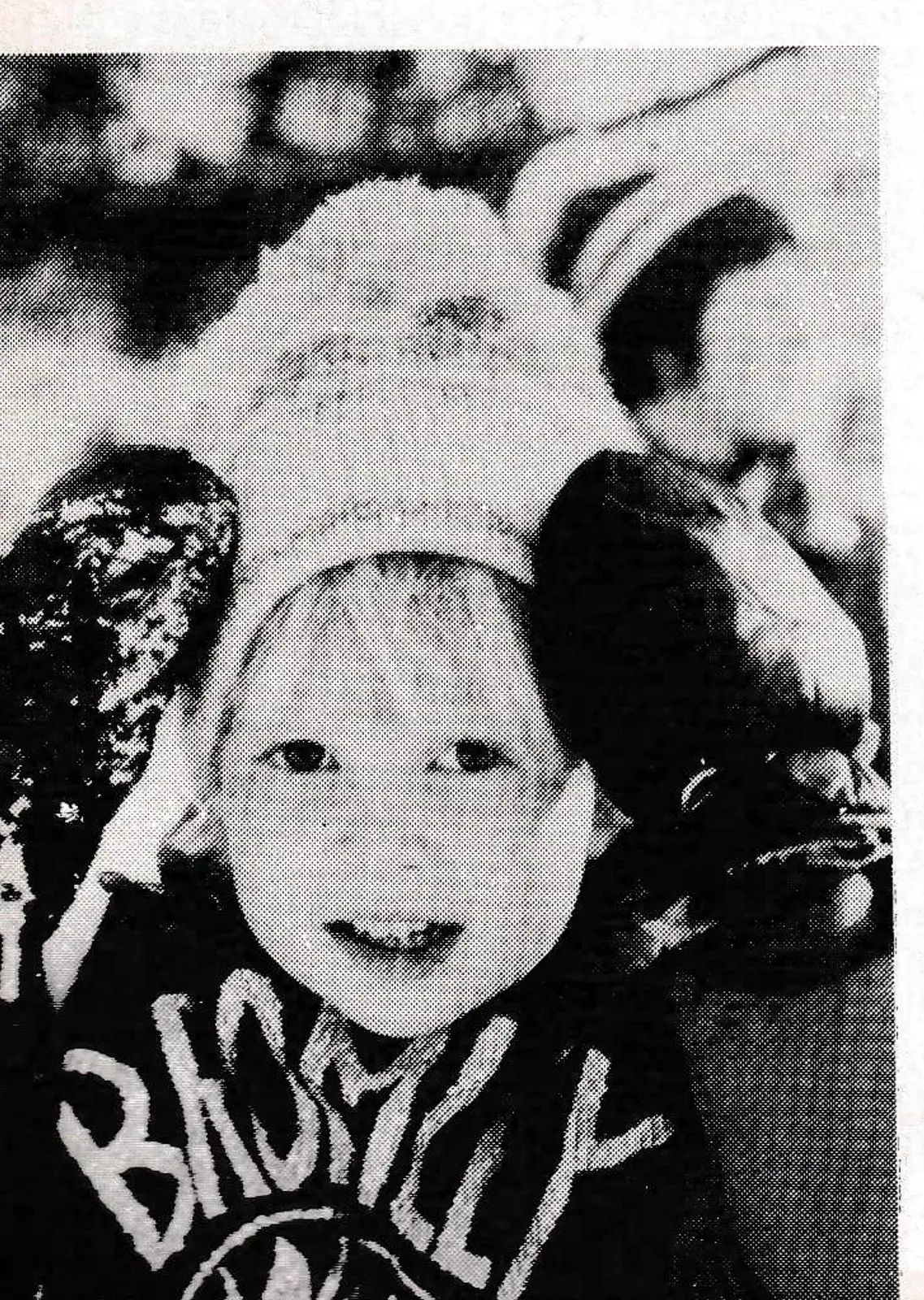
“But you shouldn’t make your nursery just a warehouse where you stash the kids until the parents come back,” he says. “You’ve got to have a strong commitment to caring for those youngsters . . . really, just like they were your own. I couldn’t tell you how often I’ve heard — and I’m sure almost any area with a decent nursery has heard the same thing — about a young family who wanted to ski at such-and-such a place ‘but we don’t go there because they don’t have anything for the kids’ or ‘because they really don’t do a good job with the kids.’ Young families want something, they want it at the mountain and they want a nursery which does a good job.”
Facilities
Ski area nurseries take a variety of forms. Bromley, for instance, uses the first floor of its administration building for its four-room kidshed; King Ridge (NH) has two separate nurseries, one for the tykes and one for older children; Snowbird (UT) has converted a meeting/conference room into the nursery which is free to guests of its four base-area lodges; Stowe, which is one of the newcomers to nurseries, has a freestanding nursery building, as do a number of other areas. Some nurseries are self-contained: Sugarbush (VT) has its own kitchen, washer and dryer, while others trundle lunches over from the base-area kitchen, and still more just close at noon, making the parents pick up their youngsters for lunch.
The Mount Mansfield Co., which operates the alpine complex at Stowe, Vt., used to farm out children of skiing parents to local mothers who operated babysitting services. Two years ago, Stowe bought a couple of portable classrooms and installed its own nursery; now there is a day care center at the Tollhouse slopes, handy to the Winnie the Pooh Ski School.
“The main reason was the public demand,” says Peter Ruschp, who heads the Sepp Ruschp Ski School and who guided creation of the nursery. “Our skiers wanted their kids up here on the mountain, not down in the valley. It’s that simple. They wanted the convenience of having their kids here.
“We knew we needed it for the last five years before it went in, but, frankly, it was a case of economics. We knew we’d have to put up an $80,000 building, staff it and everything else, and we just didn’t see the return. But the thinking has changed. It’s pretty much a break-even or close-to-break-even thing,” he adds.
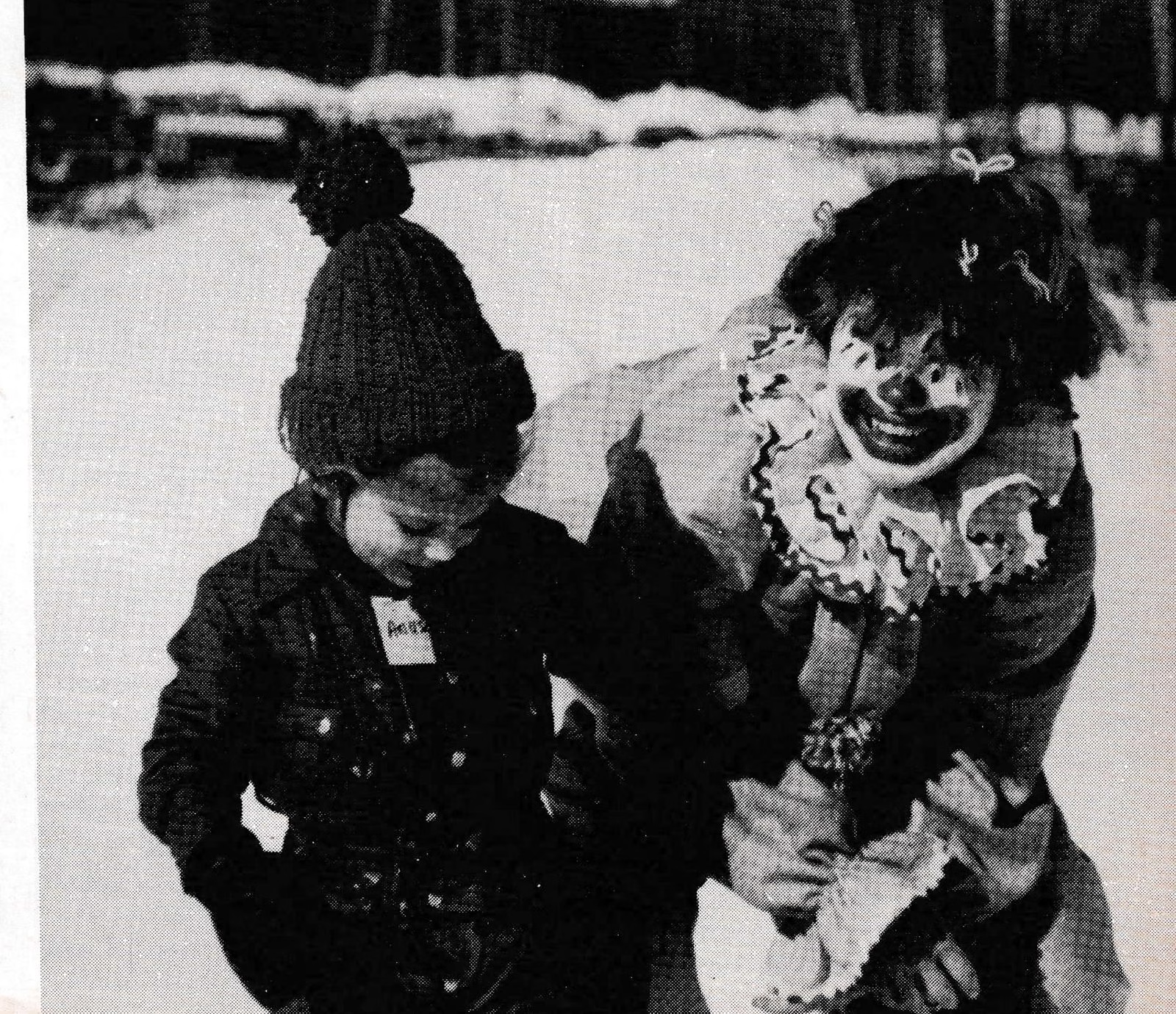
The result has been a day care facility for children three and older. Stowe wants the children skiing, Ruschp says, so the center works closely with the Pooh ski school. Every youngster gets an on-snow inspection and is graded. Special cloth patches, named for the various characters in the Winnie the Pooh tales — Pooh, Tigger, Ee-Yore, Kanga, Roo, etc. — and made with a sticky backing, are applied to the peewees’ parkas. They not only indicate the skiing level, but they clearly designate each youngster as a Pooh school student in case they wander off.
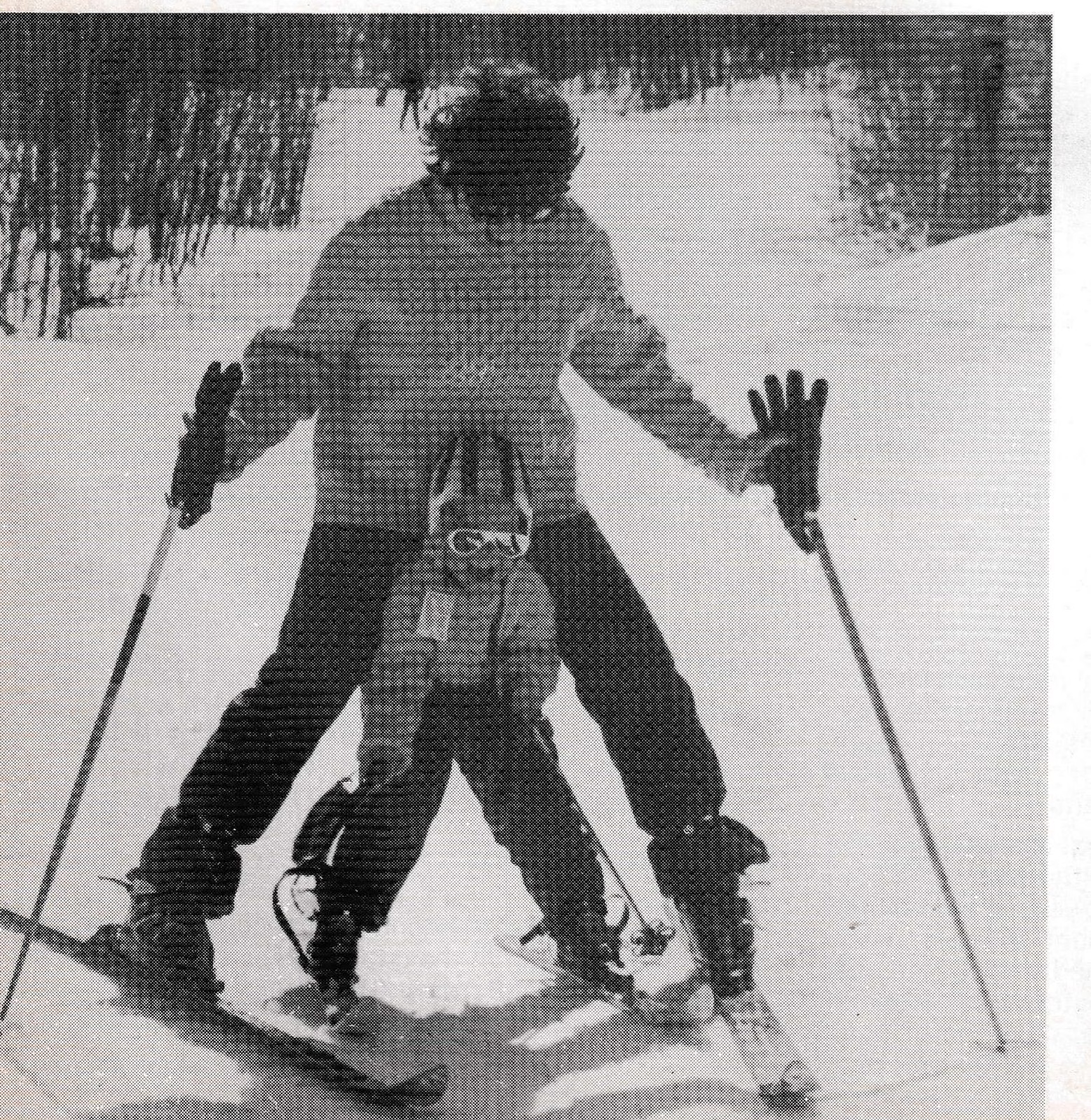
At Bromley, the junior ski school and the nursery are completely separate operations and at opposite ends of the base area; parents pick up their children and take them to lessons, then return them afterward. At Sugarbush, the Valley Day School — keeping the name it started with 17 years ago when it was a kindergarten and day care center which took skiing youngsters as a sideline — has its own low-key instructional staff to buttress its primary function: day care.
“We’re a nursery. That’s it — a nursery,” says Lorraine Harrington, a mother of four who ran her own private nursery before taking over at Bromley in 1970. “It would be too easy to get distracted if we let ourselves into the ski school thing. This way we concentrate on what we do best: running a nursery. We’re not trying to be all things to all people.”
Judy Reiss, who has played Mother Hen to youngsters at Sugarbush since she gave up a teaching career 17 years ago, has two fulltime instructors on her staff, but she points out the ski lessons are not the Valley Day School’s primary goal. It’s one more service which she provides, but she doesn’t consider herself a ski school director, and the two instructors don’t have their eye on a more lucrative instructional assignment.
“We give the kids equipment they might need, but they pay for lessons. Still, though, some parents don’t consider them actual lessons since we don’t have the kids riding a chairlift. Some of the children we see,” says Reiss, “haven’t even seen snow so we’re not trying to do anything more than just show them what skiing is like. You’d be surprised, though, how kids three-and-a-half or four can make their turns and snow plows by the end of the week.
Reiss and Harrington run state-accredited nurseries, which is something some areas just don’t want to face. Jan Peterson at Snowbird, coordinator of hotel services, says the free-for-guests child care center is one way of sidestepping bureaucratic redtape and regulation in lieu of having fullscale nursery facilities.
“If we charged for the service, the state could step in and we’d have to be licensed. We’ve got a complete nursery planned, probably in the next building to go up, but until we get that, we’ll keep the center as is.”
Guests at the four lodges at Snowbird may leave their youngsters three and older at the center free of charge; in-room babysitting is available for children under three years old. Since Snowbird is less than a half hour from Salt Lake City, most of its young-family daytrippers make their own arrangements for sitting at home or bring their children and spend the day teaching or skiing with them.
The two-nursery setup at King Ridge, a medium-size area which draws heavily from Greater Boston (two hours away down Interstate-89 and I-93), evolved because of space considerations. General manager Bill Bardsley used to have the facility next to his office, but, as more kids were being dropped off, that became unmanageable; eventually, the second floor of the administration building became the nursery, and when a new base lodge was built a few years ago the nursery annexed what had been restaurant space in the old lodge. The state-approved facility has the infants’ crib room and a larger play area on the second floor, with older children enjoying themselves in the “annex.”
“Eventually we’ll have a separate nursery building which will be totally self-contained,” says assistant manager Syd Badmington, “but that’s a few years away.” The lack of adequate space for a lunchroom also means King Ridge parents return at noon to retrieve their kids for lunch, “but we’ll have all of that in the nursery when we build it.”
When Waterville Valley (NH) built its million-dollar base lodge two years ago, one of the first things included was a larger nursery facility. The White Mountains resort had been operating separate in-diaper and out-of-diaper facilities, one at Tecumseh (WV’s major mountain) and the other at Snow’s Mountain.
Keystone and Arapahoe Basin, which are about five miles apart in Colorado’s Rockies, have centralized their nursery, locating the Children’s Center in the Mountain House at Keystone Mountain. Now in her fifth season at Keystone and third with the Children’s Center, director Linda Simpson says running a year-round operation makes things move efficiently; the center also accepts local children during the summer.
“We’ve got kids one to twelve, and they may go into the ski school when they’re four,” she says. “We also arrange babysitting for children under one and at night we’ll provide nursery service for conference groups or arrange sitters.”
The floor plan at Keystone, similar to Bromley’s four-room layout, features an oversized play area with several tables at one end, next to the kitchen. There’s also a crib room, storage area for clothes and equipment, plus an administrative section. In summer, the center prepares meals, but when the traffic increases in winter lunches come from the resort’s main prep kitchen, while the oven sometimes is used to bake cookies.
Accredited by the Colorado Department of Social Services, the Children’s Center operates independently but dovetails at times with the ski school. “I’m a great believer in the educational potential, so we perform a preschool function,” according to Simpson, “with the alphabet, numbers and colors, but we also try to get the kids on the mountain as soon as possible.
“We start ’em sliding and move them along as they progress naturally. Everyone progresses at a different speed, of course . . . and they all like to eat snow better than anything anyway,” she says.
Staffs
As in so many businesses, nurseries tend to be as good as their staffs. Bromley’s Lorraine Harrington and Judy Reiss from Sugarbush are firm believers in the mothers-are-best concept. “It takes mothers — at least that’s what we’ve found — to keep things rolling smoothly. They’ve got the patience. They can adjust. They’re flexible . . . probably because they’ve already seen everything in their home before they even get here,” says Harrington.
“We’ve had a number of girls with college degrees in child development come in, and they’re great in a one-on-one situation, but they panic, they’re lost in the group interaction.”
Reiss adds, “Those child development graduates are great in a day care center situation where you’ve got the kid or kids coming back, but in a nonrecurring situation like this they just don’t cut it. I don’t hire anyone unless I know them. I think ski areas make a big mistake if they just hire a couple of ski bums to sit in a big room and watch the kids. There isn’t a lot of money to be made in day care, so there’s got to be that commitment.”

One central theme pops up in conversations with nursery personnel: be flexible. What works for one child center might not work for another. Nurseries aren’t like stretch socks; i.e., one plan fits all.
Bromley, for instance, separates its toddlers from the walkers. The infants and creepers have their own crib room and crawl-around area: bigger kids have their own play area with a double-sided (but shut-down) fireplace, which invariably becomes a cave or garage for the kids. At Sugarbush, a similar arrangement quickly became obsolete: “The fenced-in kids were outside the fenced-in area and the big kids kept climbing over to get into the creepers’ area,” says Reiss. “Now we don’t separate them at all and there’s no problem. They all play together very well.”
Another aspect of being flexible is in determining at which age you don’t take children any more. Reiss has a nominally enforced rule of seven years old, “but we try to stay flexible. Ten is really too old and yet I’ve taken a couple of ten-year-olds — one, in particular, whose parents were trying to punish him because he didn’t do so well in ski school — who have worked out tremendously well.”
How young should nurseries take children? It varies with the goal and plans of the area, of course, but Bromley and Sugarbush have had infants as young as a week or two. Other areas want children out of diapers, perhaps a minimum of three years old, but will supply a list of babysitters.
Most nurseries which take infants arrange a specified time when nursing mothers should return to feed their babies. “We also let them know, though, that if we’ve got a special colored piece of paper — maybe red for this mother, blue for that one, another color for another, depending on how many we have on a certain day — if we place that piece of paper in the window, it means ‘Come in. Your baby is crying and wants to be fed, and there’s nothing we can do to help,’ ” says Harrington.
Harrington and Reiss also say they are seeing more retarded youngsters being brought to their ski areas, often winding up in the nursery. Sugarbush has its own handicapped specialist on staff; Bromley uses its years of experience in handling the situation.
Prices
Meals and pricing vary from area to area. Usually, the cost of a lunch is built into the full-day rate, although at Snowbird, where the day care is free, there’s a $3.00 charge for lunch. Snacks—”It seems like we spend more time eating than anything else, between the mid-morning snack, lunch and then a mid-afternoon snack,” says Reiss—are usually a freebie. For hourly or half-day children, lunch usually is a separate fee.
At areas where day care space is at a premium, the effort understandably is made to channel youngsters into at least half-day programs rather than hourly drops. “We’ll take them on an hourly basis if it’s slow,” says Chip Carey of Sugarloaf/USA in Maine.
In addition to the usual hourly half-day and all-day rate structure, some areas offer a season pass to the nursery, which helps attract skiing mothers all winter. Sugarloaf/USA, Maine’s largest ski resort, offers a five-day package, and its regular day care rate includes a ski lesson; the program is open only to kids three to seven.
At Snowbird, where the sitters usually have to drive twenty or thirty minutes to get up the canyon, the rate starts at $5.00 for the first hour, $1.50 for every other hour, regardless of the number of children. Other areas go with a straight hourly scale.
One unwritten rule for successful operation of the nursery (and preservation of everyone’s sanity) seems to be “Leave your kid(s) and beat it. Keep your nose out.” A rug rat’s crying and hysteria often increase in direct proportion to the length of visit(s) by his or her parents.
“They’ll stop crying as soon as the parent disappears,” says Judy Reiss, “but if you let the parents hang around or if they keep popping back in, it can create problems. That two-year-old or that three-year-old gets set off again as soon as his mother or father comes back through the door.”
And diapers? Again, it varies. Bromley supplies ’em free, for instance, while Keystone urges parents to bring their own disposable diapers.
Entertainment
Television generally is a no-no, although Bromley permits the tube at lunchtime because “Sesame Street” is shown locally at that time. Some nurseries look at TV as “a cop-out” to proper supervision and almost an affront to their professional skills.
The selection of toys at most nurseries is highly varied and contains few duplicates. “Buy quality stuff,” says Linda Simpson from Keystone. “It may cost a little more, but it lasts a lot longer.” Judy Reiss adds, “No metal toys. We’ve found they don’t last as long as good, quality wooden toys . . . and the kids used to wind up clunking someone on the head with the metal toys. They don’t do it with the wooden ones. We also have a lot of toys to ride — two trains, a boat, jet plane, not to mention a jungle gym.”
“Keeping kids active is an important part of the schedule,” says Jan Peterson from Snowbird. “If they don’t stay active, they lose interest, get bored and that’s not fun for anyone. We’ve got a member of our staff who leads the kids in dancing, which is excellent; there are all kinds of dances, and it keeps everyone active.
“When we get our new nursery, that’s one of the priority items — space, so we can have more physical toys such as slides or a jungle gym of some sort. They’re good to have, just to begin with, but on those cloudy, cold or windy days when everyone is stuck inside, that’s when you really notice.”
At Sugarloaf/USA, the ski school operates the nursery, while at Sugarbush Reiss is a quasi-concessionare, leasing the building and running her own programs. At the same time, after 17 years, she’s proven she knows what she’s doing and resort president Roy Cohen solicits her input for a proposed nursery building. “If we’re going to spend $100,000 for a nursery building, that’s going to mean more skiing families — and that’s going to mean more profit — for Sugarbush, then we’re going to build something which answers Judy’s needs,” he says. “We’re not going to sink that kind of money into any project without making certain everything is in there that should be in there.”
Have things changed much over the years in nurseries? “People are looking for more now,” says Reiss, “but I think that’s true in everything everywhere: people want more. The weird part for me comes now when I get someone bringing in their children and I had the parents when they were kids. I wasn’t even married when the nursery was started; now I’ve got three kids — 13, 10 and 7 — and I’m seeing the second generation of children coming through here.
“I guess I’m not a kid anymore.”
