Pine Creek
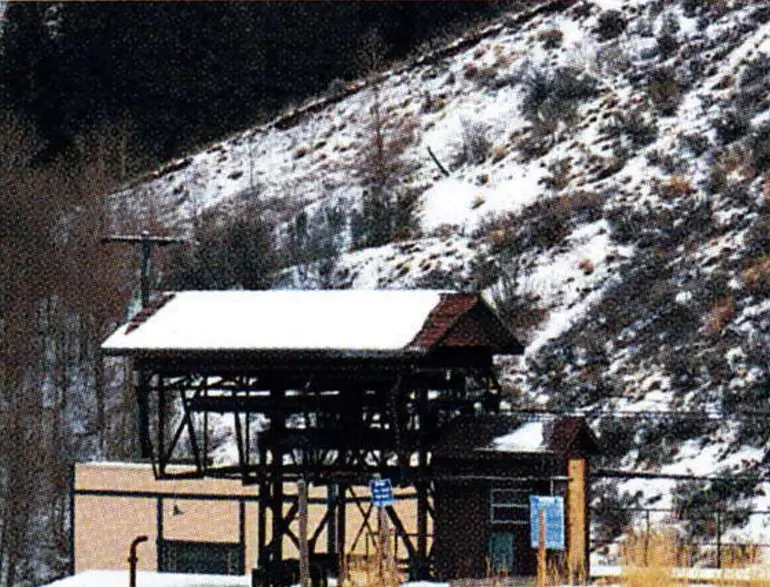
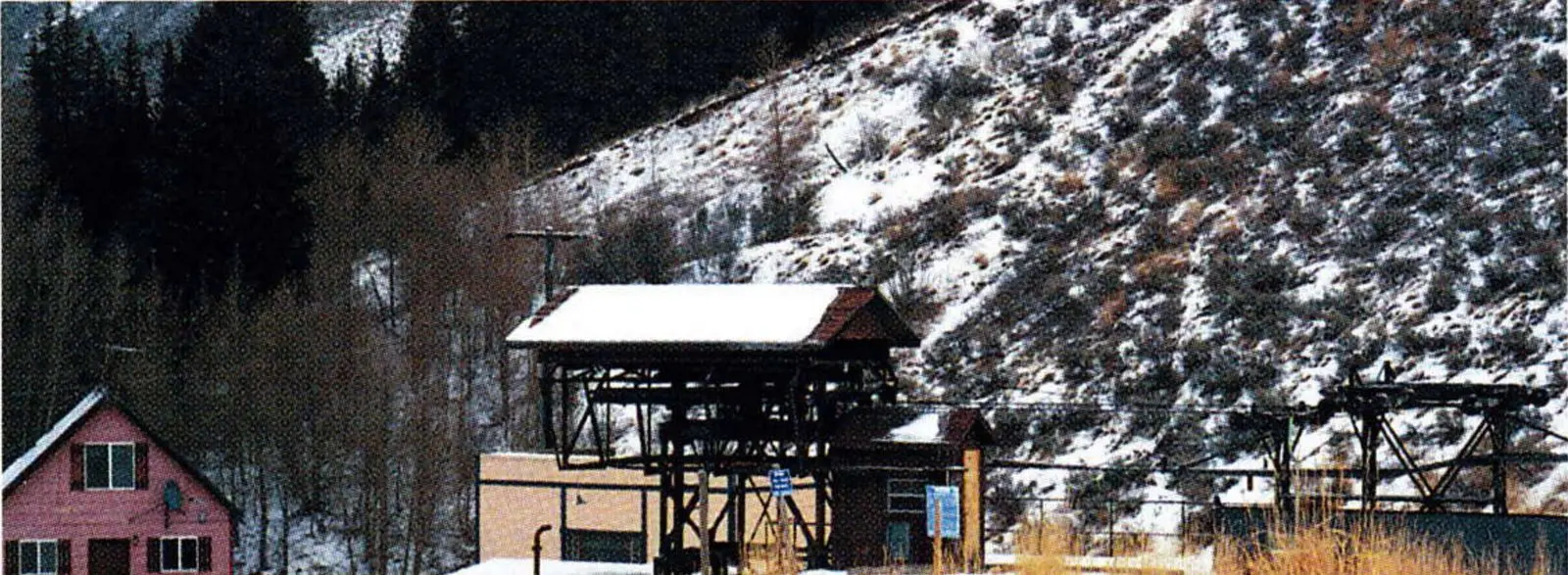
When the locally run Pine Creek Ski Area in Lincoln County, Wyoming, bought a fixed-grip quad, the folks from Doppelmayr/CTEC were shocked. First, because they had never heard of Pine Creek. And second, because of the old lift the new quad was replacing: the “Mt. Millicent” single chair (bottom terminal shown in top photo, left, in 2000). The Mt. Millicent was initially installed at Brighton, Utah, in 1946—the second chair ever built in Utah, after the Collins chair at Alta. Pine Creek purchased and installed the lift in the early 1970s.
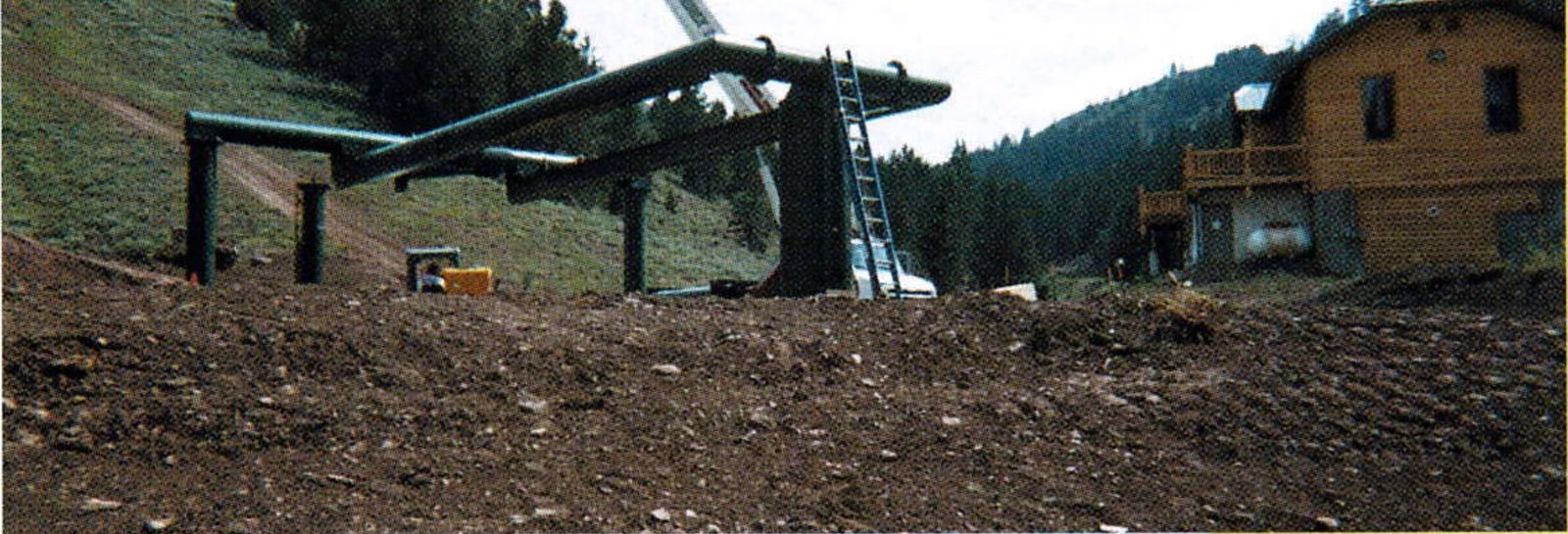
The new quad (middle photo, left) represents a significant upgrade. It has a design capacity of 1,500 persons per hour and will climb 1,362 vertical feet over a length of 4,444 feet. The installation has bottom drive/tension and a fixed top return, with a 300 hp DC drive. It will serve Pine Creek’s clientele of mostly local and school-program skiers and riders in an all together new fashion.
Big Mountain
Big Mountain, Mont., is in the midst of a 10-year village building program, but it hasn’t forgotten to take care of its maintenance crew in the interim. To ease groomer maintenance, the shop installed a Lif-Track, which will make the old maintenance pit (visible at far right in the photo, below left) more obsolete than the Tucker Sno-cat sitting nearby. The installation looks pretty straightforward, but it wasn’t. The shop has radiant heating tubes embedded in the concrete floor, and this posed a small problem—installation requires drilling holes in the floor to bolt the lift to the floor. There was no map of the tubing layout, and the crew didn’t want to drill through pipes. So they used a laser thermometer to pick up minute temperature differentials and map the system.
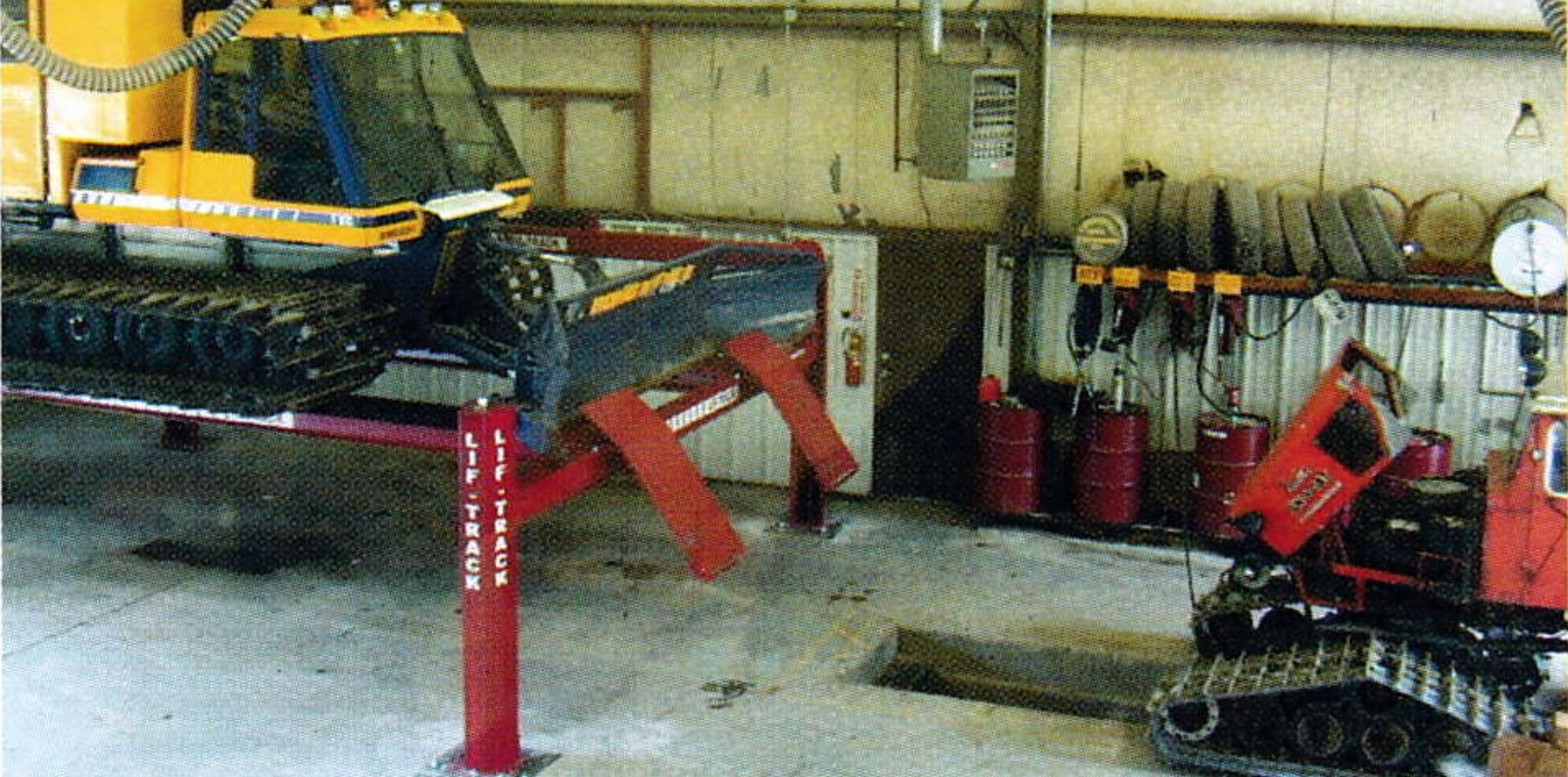
And that was a good decision, as it turned out; there were tubes under all four lift columns. The solution: adding “floater plates” under the column baseplates, then drilling the bolt holes in areas of the floor that had been determined to be tube-free. Then the floater plates were welded to the column baseplates. “There was a lot of tension before I drilled the last couple holes,” says Lif-tech Equipment’s Gary Pavlick, “but we didn’t hit a single gusher.”
Okemo
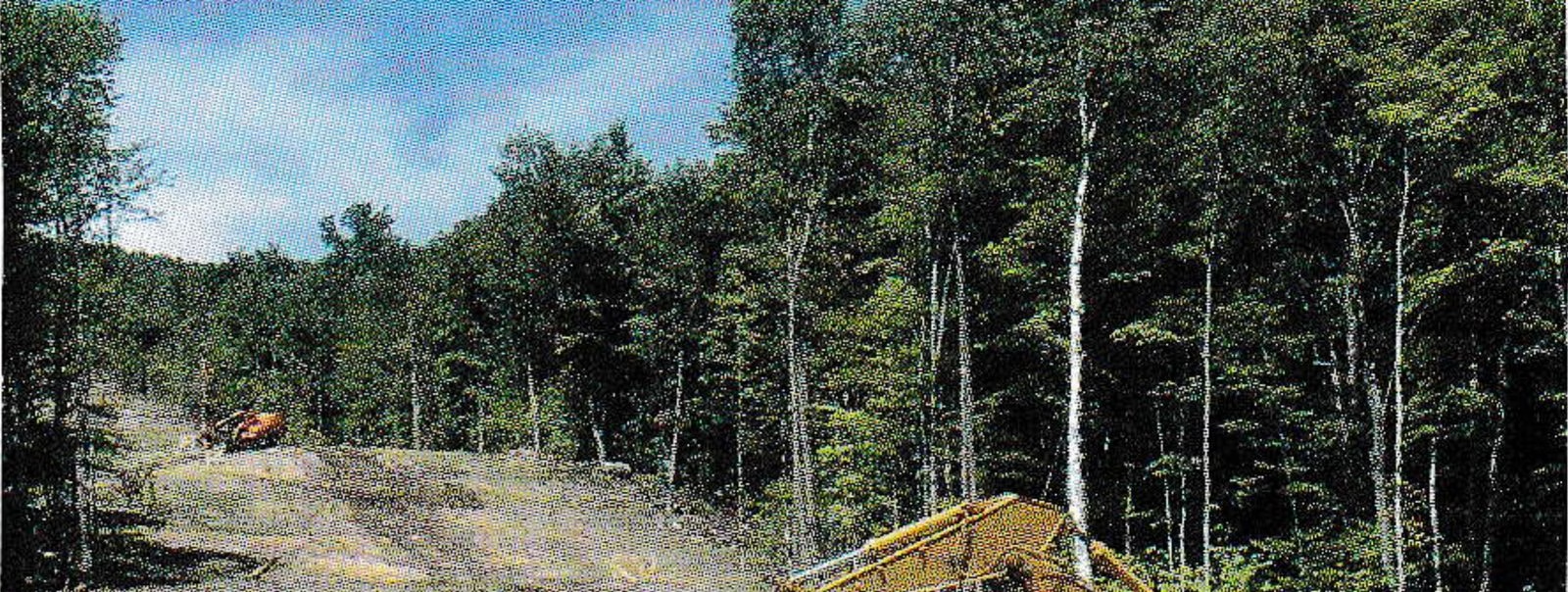
After four years in the application and permitting process, Okemo, Vt., has begun construction of its ambitious Jackson Gore expansion. The first stage: a Poma detachable quad, seven intermediate and advanced trails and snowmaking. The lift measures 4,093 feet, with a line speed of 1,100 ft/min and capacity of 2,400 riders per hour. The new terrain adds 40 acres of skiing, much of it cut with the sweeping turns and undulations reminiscent of classic New England trails.
To make the trail work as environmentally friendly as possible and to expedite the clearing process, Okemo used a stump grinder. This saved time and money. And, by grinding stumps to just below ground level, crews eliminated the need to dig up the stumps and disturb large areas of earth.
Okemo had hoped to begin work on other elements of the $100 million expansion, which will eventually include nine more trails, four additional lifts and a gondola, a base lodge, condo hotel, train station, retail village, tennis center, golf course and water park. However, some of those projects are subject to a ruling by the Vermont Supreme Court, which is expected to hear an appeal of the project sometime this summer.

Bretton Woods
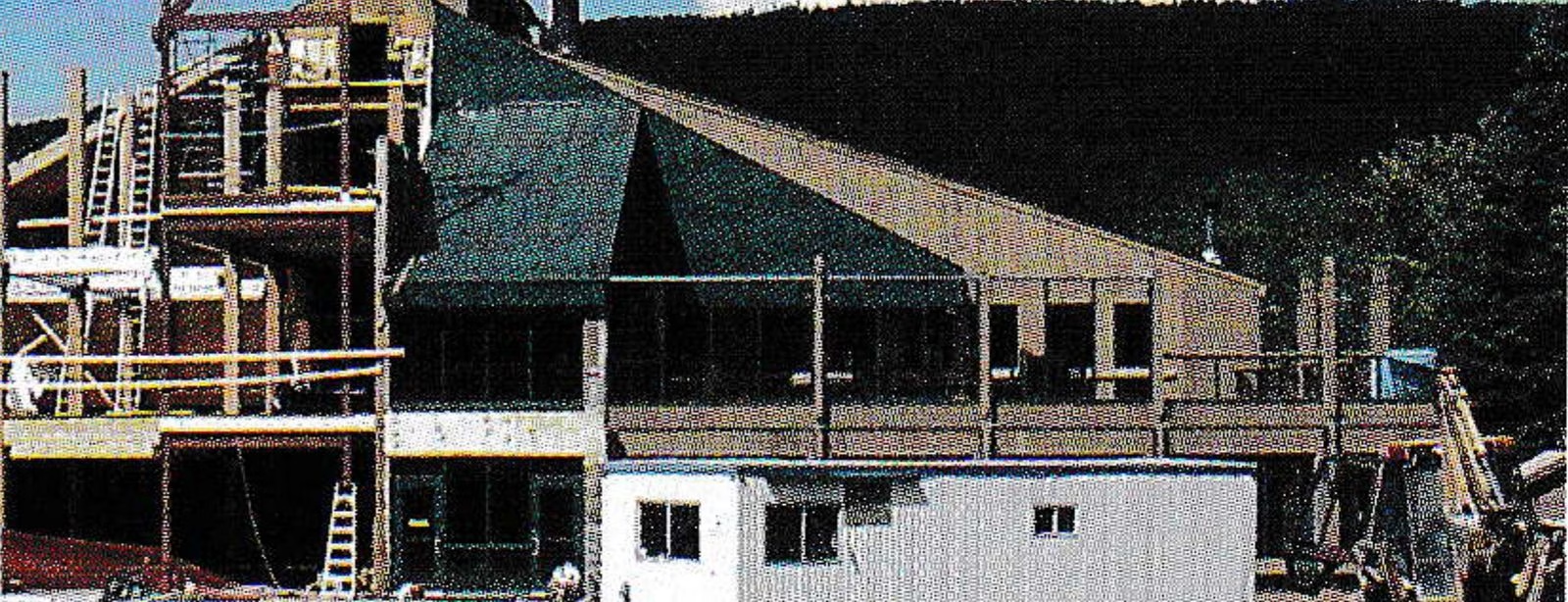
As part of its ongoing expansion, Bretton Woods, N.H., is rebuilding its base lodge, expanding it by 50 percent (20,000 square feet). The project will take 18 months and completely remake the facility. In the original 1973 design, each floor had different levels; now, everything’s on one level. For economy, the resort installed a heavily zoned heating system with computer thermostats. The new layout includes redesigned rental, retail and food and beverage areas, plus private sports boxes with views to the slopes and the Presidentials. Last but not least: an exhibit room for the New England ski museum (first up: a history of ski lifts). For this, plus two new quads—one fixed, one detachable, both Doppelmayr/CTEC—the tab comes to $5 million this year.
Mammoth
Mammoth Mountain, Calif., is spending $24 million on improvements this summer. The centerpiece of all this activity is the $11 million Village Gondola, which connects the town and the resort. Mammoth founder Dave McCoy first conceived of the idea in the 1960s, when heavy snow clogged the road from town to mountain. McCoy saw the need to reduce reliance of auto access and began planning a route for a future gondola. Forty years later, his vision is becoming a reality.
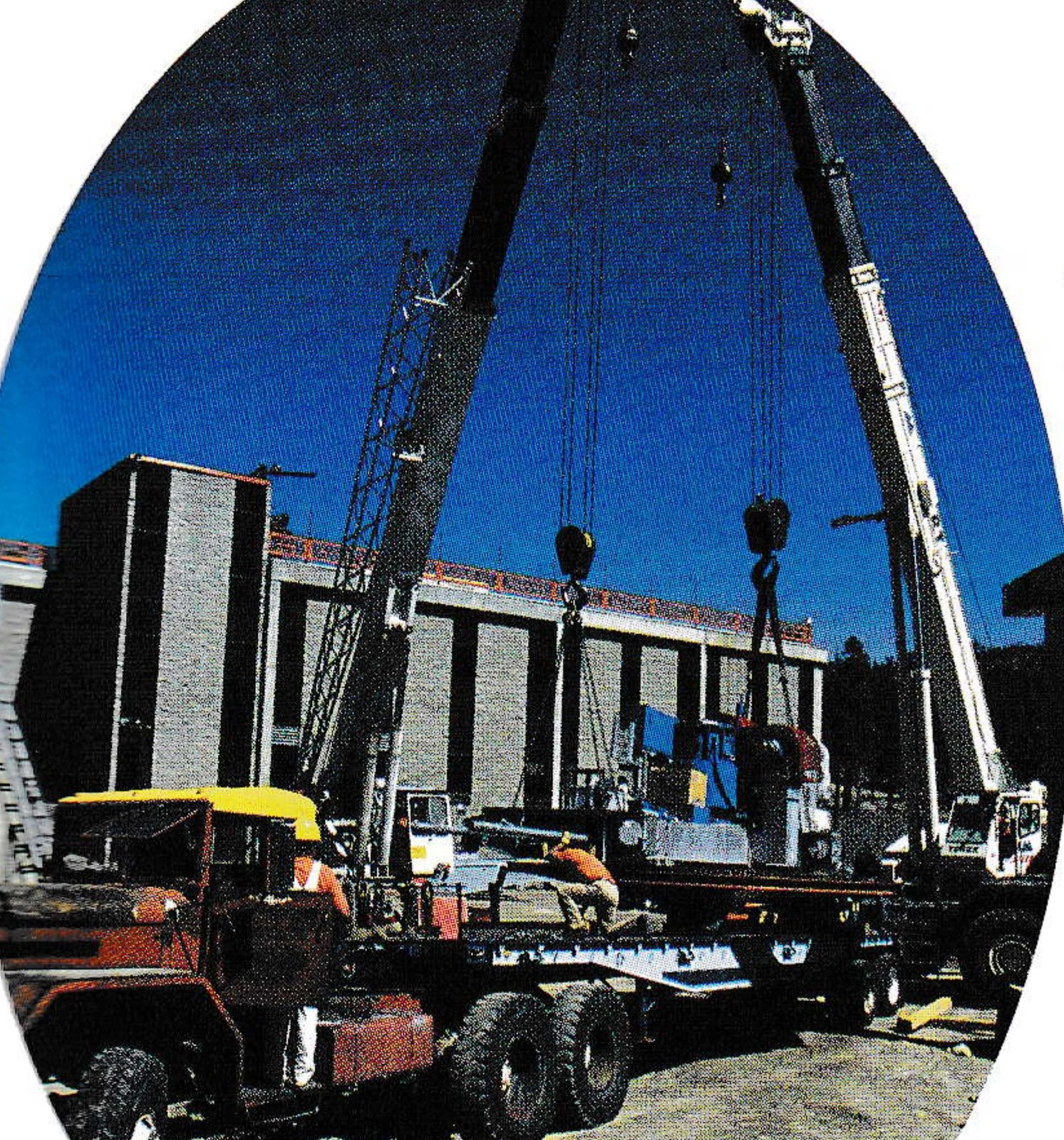
The 15-passenger gondola will transport guests from the Village at Mammoth to Canyon Lodge. With a capacity of 3,000 guests per hour, the gondola will quickly and efficiently connect town and mountain with a six-minute ride. It will be stylish as well as functional, too: the bottom terminal, with its 75,000-pound bullwheel and motor (being unloaded in oval photo), will be housed in an eye-catching building, capped with a copper fly roof.
Other projects this summer include a new restaurant and skier services building in the village, four new retail shops, enhancements to the Unbound Terrain Parks, and renovations at the Mammoth Mountain Inn.