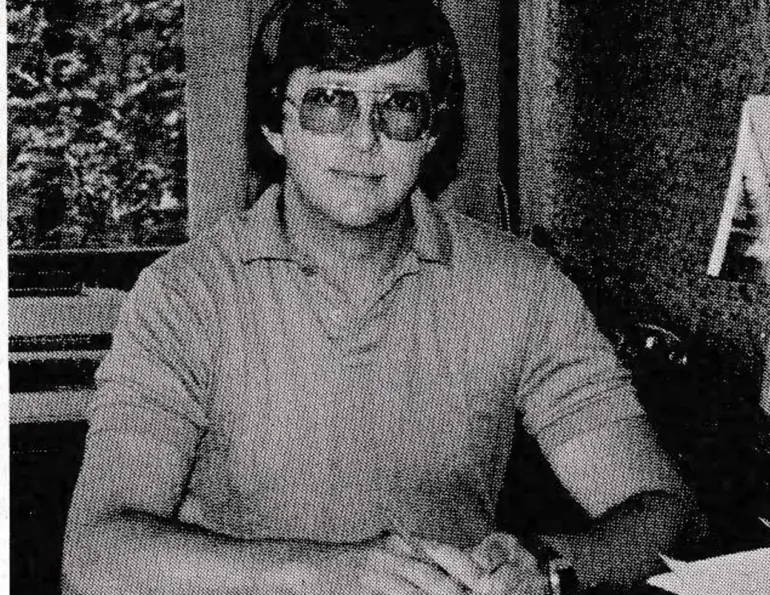
Five years ago, Killington, Vt., purchased bankrupt Mount Snow, and that event was followed by other mergers in the East and the West. Although such pairings never blossomed into a garden of conglomerate ski areas, operators have been watching for significant advantages that might emerge from two resorts under one corporate head. Chris Diamond, vice president and general manager of Mount Snow, discusses the criteria for combining two ski resorts and explains the benefits from the merger of Killington and Mount Snow.
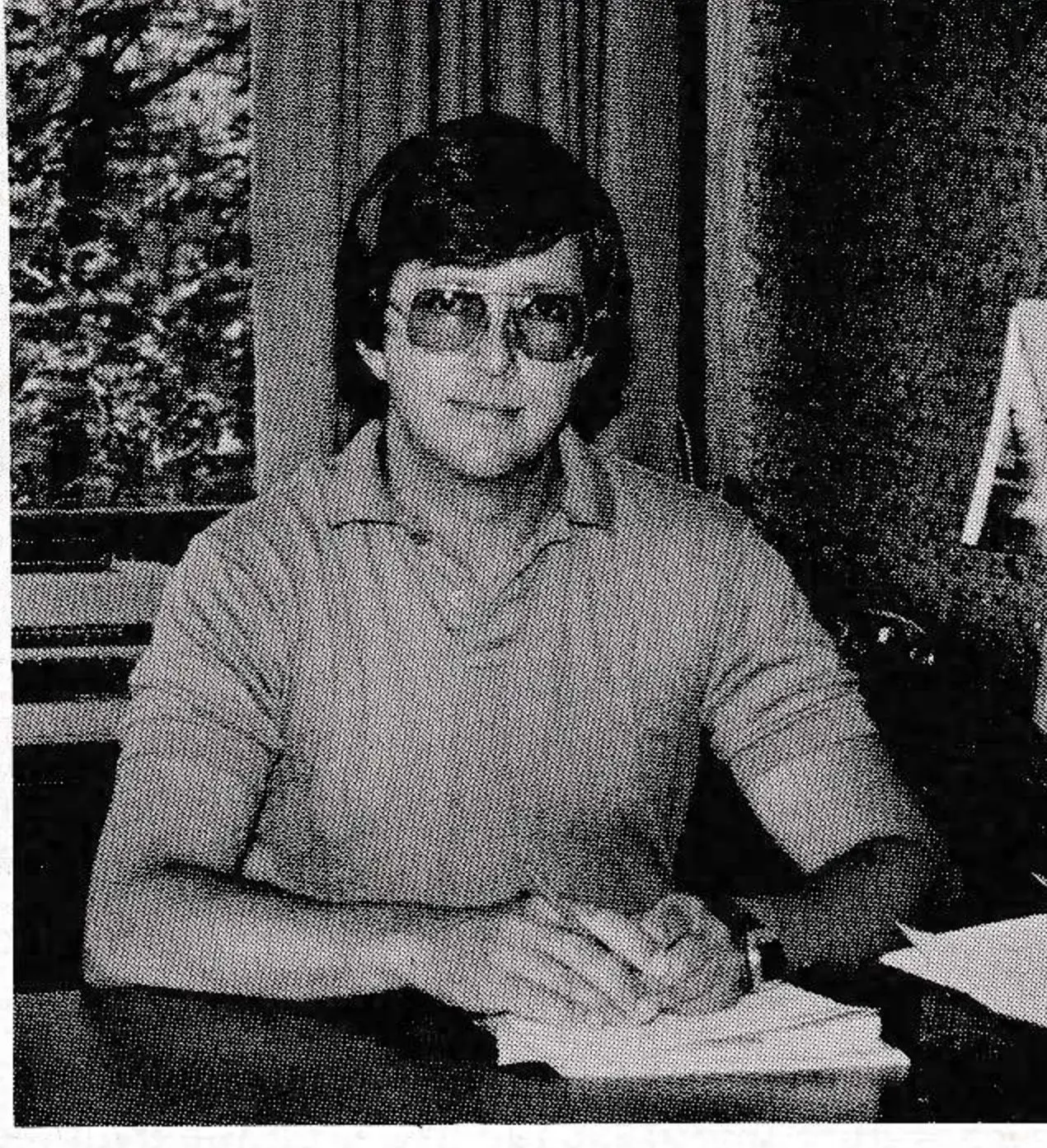
Ski Area Management: Why did Killington acquire Mount Snow and what has been the impact of that purchase?
Chris Diamond: We had been looking for some time for an opportunity to purchase another area, but for one reason or another no major opportunity came to fruition. Then Mount Snow became available and we were in a situation ourselves with a balance sheet clean enough and banking relationships strong enough to have the financial resources to buy.
SAM: What noticeable changes came about because of that purchase?
Chris Diamond: The purchase contributed significantly to Sherburne’s growth. With Mount Snow doing about 50 percent of the business of Killington, we obviously added significantly to our revenue growth. With this broader revenue base, we were able to expand rapidly in certain staff areas such as planning and control, and these efforts then provided the momentum for continued growth.
SAM: At the same time, Sherburne put a lot of money into Mount Snow on top of the purchase price of about four million dollars.
Chris Diamond: That’s right. By last winter we had invested about as much as the purchase price. Most of this went into the improvement of existing facilities, lift capacity and snowmaking. When we first considered the Mount Snow purchase, we knew that the total commitment would be significantly greater than the purchase price if the area were to regain its productivity. The work that we foresaw as part of the rebuilding effort has now been substantially completed and we are investing in new or expanded facilities, such as our new North Face triple chair.
SAM: Is that a logical way of acquiring—that is, for a strong area to purchase an area in trouble?
Chris Diamond: I don’t want to oversimplify the situation. I think it is a question of economics in any deal like that. If an area is in trouble and the price is discounted sufficiently and the buyer can see how an operation could be pieced back together and become productive, it may work. In other words, you have to look at the costs to make it productive on top of the purchase price. On the other hand, if the price isn’t right you might do better buying an area that is doing well and making a healthy profit. In the case of the healthy resort it’s also easier to quantify the risks.
SAM: In the case of the Mount Snow purchase, the Sherburne Corporation had the finances to improve a rundown area. Was that one of the deciding factors in the deal?
Chris Diamond: Financial ability is not the only deciding factor. It is important to have the cash to deal with problems and it is important to have confidence that you can recognize problems and correct them. In 1977, we at Sherburne Corporation were very, very strong in depth in those areas where Mount Snow was weak. We had the people who knew how to create productive and efficient lift systems. Lift capacity was Mount Snow’s major problem in 1977. The second was a lack of snowmaking. We had within our organization, personnel with the knowledge to come up with a cost-effective system to take care of a very major deficiency in that area, too. Those two in combination allowed us to quickly solve some real physical problems at Mount Snow. Obviously, another problem was proper financial management and again we had systems ready to go into place down there. The total combination gave us at least a good chance for success, and that’s what made it work so well for Sherburne. The Mount Snow deficiencies matched up very well with the Sherburne strengths.
SAM: So a larger organization like this provides an opportunity to utilize trained personnel. Are there other corporate benefits of this type?
Chris Diamond: Certainly an expanding company provides a place for people to grow. That’s been a big plus for us. It also means—with a larger, more complex organization— you can have specialization. I have the luxury of being able to call on an engineer who is a specialist in steels and metals to help me solve a particular problem, or I can get a guy to help me with a design problem relative to a building.

There are other obvious synergies that you get when you add two strong organizations together. Marketing is one. In the case of Mount Snow, we are able to take a lot of experience in the marketplace and put it to work to defind Mount Snow’s program. The same is true in financial management. The kind of systems developed over the years at Killington are able to be picked up and reconstituted at Mount Snow, giving us the ability to fine-tune day-to-day operations.
SAM: How much influence do the Sherburne executives have over the Mount Snow operation? For instance, is marketing a separate entity or is it directed from Killington?
Chris Diamond: It’s a two-way street. Foster Chandler is the Sherburne director of marketing and Bruce McCloy is the marketing manager at Mount Snow. Since McCloy came here in 1977, immediately after the purchase, there has been a gradual transition and shedding of the Killington supervision. It’s part of the human development inherent in the company’s growth and also relates to different strokes for different folks. Mount Snow is not Killington and it needs to be marketed differently. It needs hands-on direction from someone who understands it and knows what its product is all about. At the same time, it needs the kind of broad review that someone with Foster’s experience can provide. Foster is involved very much with developing the broad strategy and working out budgets, and certain staff people at Killington help place ads and cooperate closely, but the basic thrust of the program is now done in-house.
SAM: Have you tried to alter the character and the target audience for the Mount Snow product? That is, change it from its original form or make it similar to Killington’s?
Chris Diamond: Each area has its own character and believe it or not, some aspects of that can’t be changed even if you want to. There’s an almost sensual feeling about Mount Snow, a kind of softness that goes back to Walter Schoenknecht’s early efforts. That’s not necessarily created; it’s part of the mountain feeling, such as the wide fall-line trails that are pure exhilaration. That’s part of the Mount Snow personality. We’ve just tried to make it less schizophrenic and more creditable. We’ve had to let people know that we’re serious about skiing first.
SAM: As far as the ski industry is concerned, do you see multiple acquisitions and multiple ski areas under one corporate head as the wave of the future?
Chris Diamond: I can’t buy the idea of everything sort of merging and reemerging as larger entities. The ski industry is a tough business in which to make money. It takes real commitment to understand the economics of it and it takes work. This discourages a lot of businesses from entering into it. I’m not sure one-plus-one always equals three, especially when you look at great geographical distances. Mount Snow is 75 miles from Killington, so I can run up for a meeting and get back in a day. That would be a lot different if I had to fly to Denver.
SAM: Do you see more acquisitions in the future?
Chris Diamond: I think there is a tendency to want to believe this is an inevitable thing—that is, that small areas are going to be gobbled up by larger ones next door. There are a lot of very well run, very productive operations that don’t stand to gain much by association with another area. All failing resorts, even those with good mountains, are not necessarily good purchases. Some ski areas don’t make sense at any price. That’s a harsh reality, but true.
You have to consider the uniqueness of different areas. If behind the scenes there are special conditions, such as location or where one area could see inexpensive solutions to create a fast turnaround—that can make a good marriage. But you can’t necessarily take A plus B and make a stronger C. There have to be certain pre-conditions and where those have been met, you can make a successful marriage. I believe that’s what we have with Killington and Mount Snow.