ENVIRONMENT
Area men, ecologists meet in Aspen
So went the rallying cry of Denver environmentalist Roger Hansen. His platform was the National Seminar on the Environment for Ski Area Operators held in Aspen June 1-3. More than 90 ski area managers, foresters, ecologists, architects, engineers and planners attended the meeting, and though words such as “interaction,” “ecosystems,” “monocultures” and “energy flow” were cause for some head-scratching at first, they were firmly a part of a common vocabulary at meeting’s end.
The seminar, co-sponsored by the Rocky Mountain Ski Area Operators Association and the NSAA and directed by the Rocky Mountain Center on the Environment (ROMCOE) and the Thorne Ecological Institute, was concentrated into a rigid three-day format in which ecologists, environmental planners, architects and forcesters keyed in lectures on the applications of ecological principles to ski area design.
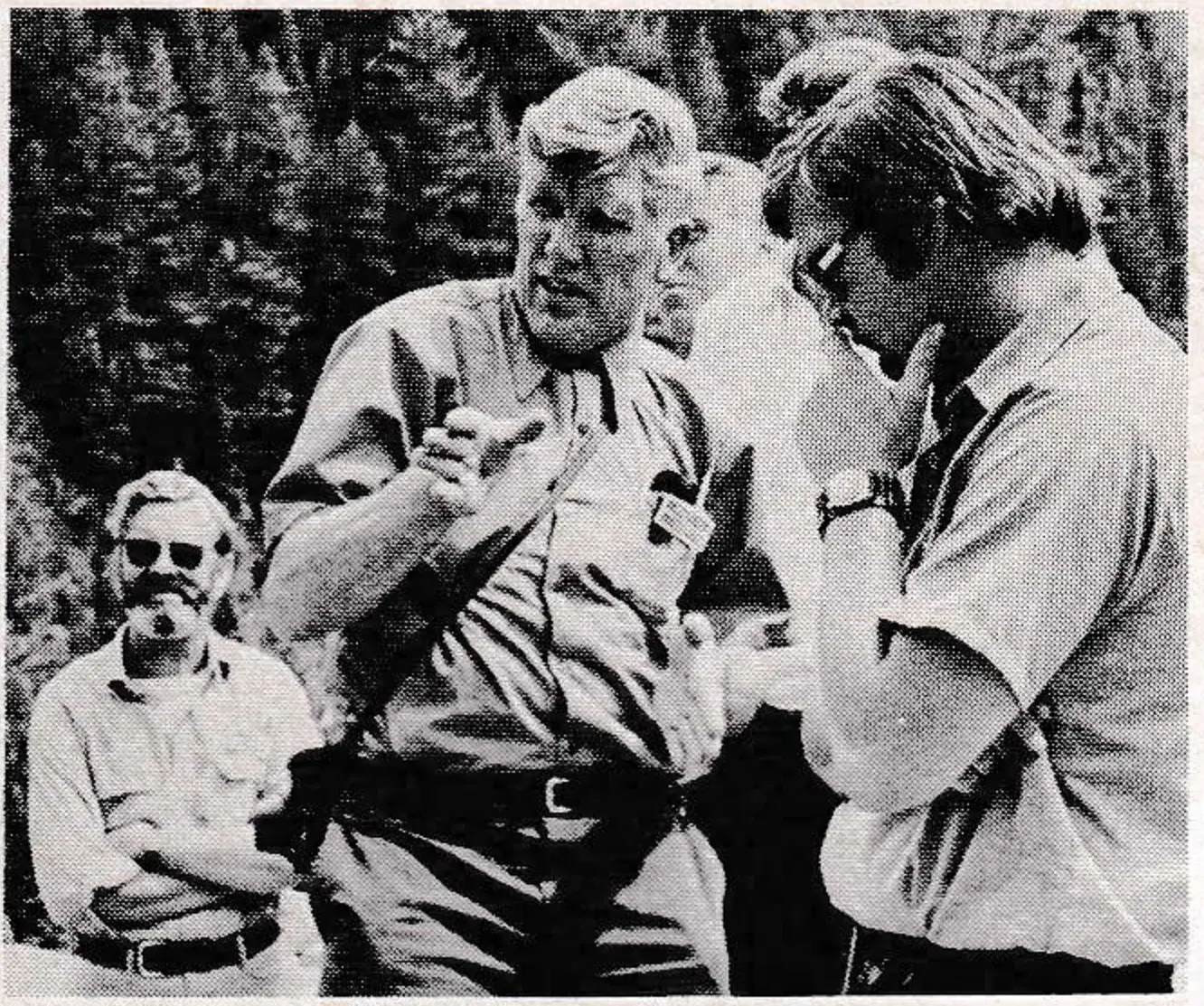
Through field trips in the Aspen area and a close look at the planning at Snowmass and Buttermilk, operators found themselves suddenly cast as critics. They took their insights back to the classroom, there to sift and talk out the principles of ecology and the political and economic realities of ski resort design.
NSAA president Frank Snyder, in his keynote talk that led off the meeting, lashed out at “environmental publicity seekers whose modus operandi is confrontation and conflict.”
“Ski operators have had a tough time this past year, but we do too much crying. It’s negative and backward-looking. Rather, we should start thinking in a constructive way. Above all, we shouldn’t be wasting our time by trading irresponsible statements with environmentalists in the press.”
Snyder also focused on the impact of the ski area on its surrounding community, what Mt. Snow’s John Christie earlier this year referred to as “secondary development.”
“These developers,” said Snyder, “are in business only to make money. They have no long-term interest in the community. The area operator can’t control what’s being done down the road. They can’t do the whole job alone—it’s everyone’s job.”
Snyder’s point was echoed later by environmental designer Robert Twiss, who said of his planning of the Lake Tahoe community, “The planning process has to be an evolutionary one based on participatory design. All users—everyone with a stake in the outcome—should contribute.”
On another tack, Killington, Vt., president Preston Smith looked askance at the ski area put-down, saying “What we lack is encouragement. And encouragement means praise. Praise is necessary for pride, and we need pride if we’re to maintain the desire to improve. If pride is missing, the area operator will simply look for loopholes to skirt environmental laws.”
Winter Park’s Steve Bradley, co-chairman of the conference with Bob Parker of Vail, said he originally had reservations about bringing area operators—the environmental “black hats”—and ecologists together in the same arena. However, that notion, based on comments overheard at the meeting, was firmly dispelled. Here were a few:
Bob MacDonald (Madonna Mt., Vt.) “Rewarding.”
Carl Reynolds (Mt. Hood, Ore.): “A lot of ideas that I’m going to put into practice.”
Tom Corcoran (Waterville Valley, N.H.): “A valuable meeting.”
Preston Smith (Killington, Vt.): “Way beyond my expectations.”
Luggi Foeger (Ski Incline, Nev.): “One of the most rewarding meetings I’ve ever attended.”
A repeat next year seems certain, though that decision—and agreement on the format, site and underwriting costs—will await NSAA approval.
EPA grant to Grand Targhee for Thiokol plant
Grand Targhee Resort in Alta, Wyoming has received a $58,000 grant from the Environmental Protection Agency for the construction of a sewage treatment plant and summit house.
The system is an experimental one developed by the Thiokol Chemical Corp. for use in a remote highly clean area. Thiokol’s participation in the project amounts to $13,000.
According to Grand Targhee president and general manager Robert L. Blank, the resort is already well on its way to raising the $20,000 needed to complete the project. Included in the summit house, to be located at the top of the Bannock chairlift terminal at an elevation of 10,400 feet, will be the sewage treatment plant, restrooms and a restaurant.
The grant is part of the research and development program funded by the EPA to develop engineering solutions to environmental problems. If the Grand Targhee sewage treatment plant fulfills expectations, the idea reportedly will be used elsewhere where similar conditions prevail.
Killington wins a round against Vermont
Killington’s still youthful, still resourceful president, Preston Leete Smith, won still another battle in May when he acted as a layman lawyer against the powers of the Vermont Environmental Protection Agency and obtained a full permit from the district environmental commission to carry out a four-phase expansion project.
Work started this summer on an 18-hole golf course, 18 condominium units, a huge ski school orientation and training building and a tertiary sewage treatment plant which will fertilize the golf course.
The issue was not between Killington and the district commission, but between Killington and the EPA.
Basically, EPA head Robert Williams wanted to hold up on the application until Killington submitted a detailed, long-range master plan for the sprawling resort.
Smith said that the basic information was contained in the annual stockholders’ report and that state officials had also received all other pertinent information. Smith refused to go beyond that, maintaining that much of Killington’s long range plan is based on what other landowners and resorts in the area do.
Williams made a rare appearance at the hearing in Rutland on the first day, but declined Smith’s invitation to appear the next day to answer questions.
—John Hitchcock.
Christie hits peripheral development
Ski areas have taken much abuse from environmentalists, but, according to Mount Snow vice president and general manager John Christie, some of the criticism may be misdirected.
In a paper written for the Governor’s Act 250 Task Force studying environmental legislation, Christie pointed out that “large quantities of commercial activity surrounding existing recreational facilities appear to have an adverse effect . . . The paradox,” Christie added, “is that the ski area developer now finds himself unable to purchase the lands surrounding the ski area due to their astronomical prices.”
According to Christie, much of the conflict stems from the developer’s ignorance of Vermont’s Environmental Act 250 “and frustration with the machinery associated therewith.” Looking at the other side of the coin, he added that “preservationist elements use the hearings to delay whenever possible, regardless of the quality of the proposed project and its favorable economic impact.”
Citing the contributions the ski industry makes to the economy of the state of Vermont, Christie asked that the state assist “serious and conscientious developers who have a genuine concern for building the proper kind of project.”
DEVELOPMENT
Jankovsky group to acquire Arapahoe Basin
The Arapahoe Basin (Colo.) Winter Sports Area will soon be acquired by a small group of investors headed by Joseph Jankovsky, a former manager of the area.
At this writing, the price and terms of the agreement could not be disclosed. It was reported to SAM, however, that the sale would be an installment deal for cash.
“The sale hasn’t yet had the approval of the stockholders,” said Harry Baum, a vice president and director of Arapahoe Basin, Inc. and the man who is handling the negotiations. “However, it will be management’s strong recommendation that the stockholders accept the offer.”
Arapahoe Basin Inc. owns the Arapahoe Winter Sports Area, which is located in Summit County, the Arapahoe East ski area, 20 minutes west of Denver, as well as other properties in the state.
Jankovsky was area manager at Arapahoe Basin from 1959 to 1970. After leaving the area, he served for a season as general manager at Thredbo ski area near Sydney, Australia. He subsequently acquired and is now owner of the Happy Jack ski area near Laramie, Wyo.
According to Jankovsky, plans call for the modernizing of all buildings and the eight lifts at the area.

Aspen Skiing Corp. sale is off
The rumored sale of the Aspen Skiing Corp. is off, according to ASC president D.R.C. Brown. At a directors meeting held in June, the ASC board concluded it would not sell nor entertain an offer for a tax-free exchange of stock with another company.
“We’ll continue to go it on our own,” Brown told SAM from his Aspen, Colo. offices.
The Aspen Skiing Corp., a publicly held company with 932,000 shares, is held by 300 stockholders, 10 of whom own nearly 75 per cent of the company.
Offers had been made by various investors—AMF, the City of Aspen and “one or two” other listed companies—but none could meet the $20 price per share figure set by the directors.
What prompted ASC to seek a purchaser in the first place? “Some of our larger shareholders,” explained Brown, “were looking for more liquidity. Our stock is closely held and it’s therefore difficult to dispose of large blocks. A tax-free exchange with a listed company would have enabled the stockholder to cash in his stocks quite readily.”
Marble resort readies for ’72 opening
Marble Ski Area, 20 miles southwest of Aspen, Colo., will open this year with a lodge and 4,200-foot Riblet double chairlift. President John Zakovich and area manager Al Atkins report that another 12 lifts are projected for the resort and are now awaiting Forest Service approval.
Marble, with 2,300 feet of vertical, has a 2,700-acre base area, most of it slated for condominiums and single-family dwellings. The areas is being designed as an all-season resort; four tennis courts were completed this summer.
TECHNOLOGY
Tower airlift at Northstar a record-setter
It probably won’t top Charles Lindbergh’s feat, but out at Lake Tahoe, Calif., the Northstar ski resort last month set some aerial records of its own.
During the period June 19-23, 177 lift towers were airlifted into place by a fleet of helicopters as part of the resort’s push to have five lifts in operation by Northstar’s December opening.
The lifts, all Riblet double chairs (the longest spanning 5,688 feet), will open up the east and north facing slopes of Mt. Pluto. Cost of the lifts is $1,400,000, representing one of the largest single ski lift construction contracts ever awarded in the United States.
The Northstar area, developed by Trimont Land Company, a Fibreboard Corp. subsidiary, is a sprawling $100-million year-round resort complex which projects a 10,000 skier-per-day capacity by 1979, its completion date. Other projections include 20 miles of downhill skiing terrain, 70 miles of potential cross-country trails (1,340 skiable acres in all), 16 lifts, 3,700 dwelling units and an auto-free, pedestrian village mall.
RACING
NASTAR seniors: 40 is faster
NASTAR may have done more than Geritol for the over-40 set this season. The two fastest skiers in the finals, held at Aspen Highlands this spring, were in the 40-plus division—Jack Armstrong of Waterville Valley, N.H., and George Hovland of Mt. Telemark, Wis.
During the season, 79 areas participated in the program, running 1,301 races for 32,233 skiers. Each area pays $1,000 to participate with the area collecting $2 from each skier participant. With 49,831 entries over the course of the season, NASTAR proved a profitable venture for many.
The age of the participants peaked at 14 with 2,048. Next year the teen-age showing should be even stronger with Pepsi Cola sponsoring a special Pepsi Junior NASTAR program.
Participation dropped off as the age of the skiers increased—845 at age 24; 364 at 34; 206 at 44; 45 at 54 and only 19 over 60 years of age. For reasons that can only be guessed at, there was one exception to the pattern: between ages 39 and 40 participation increased from 254 to 373. The youngest skier started his or her racing career at three and, women’s liberation aside, men outnumbered women by more than four to one.
Heaviest activity regionally was in the Northeast followed by the Rocky Mountains, Pacific, Southeast and Midwest. The chart below shows the ranking of the top 10 areas.
| Rank | Area | Entries | Races | Reps at Finals |
|---|---|---|---|---|
| 1 | Aspen Highlands, Colo. | 2875 | 47 | 2 |
| 2 | Mt. Snow, Vt. | 1936 | 28 | 1 |
| 3 | Peek ’n Peak, N.Y. | 1907 | 26 | 4 |
| 4 | Boyne Mt., Mich. | 1775 | 29 | 3 |
| 5 | Alpine Meadows, Calif. | 1742 | 27 | 0 |
| 6 | Indianhead Mt., Mich. | 1646 | 39 | 3 |
| 7 | Cannon Mt., N.H. | 1450 | 37 | 0 |
| 8 | Winter Park, Colo. | 1289 | 17 | 0 |
| 9 | Camelback, Pa. | 1245 | 17 | 0 |
| 10 | Bear Valley, Calif. | 1235 | 25 | 1 |
ASSOCIATIONS
Ski area consultant group underway
A new ski industry group, Association of Ski Area Consultants, Inc., was formed during the recent NSAA Annual Meeting in Sun Valley. President Jim Branch of Sno-Engineering said the group evolved in response to a need that had been voiced by several industry consultants.
“Information just wasn’t being disseminated,” he said. “We also felt the need to recognize the professional qualifications of the consultant. Further, the group will provide us with a means to better support our relations with the industry.”
The group will meet annually, Branch reports, “probably in conjunction with the NSAA’s mid-winter meetings.”
Said Branch, “Those who have already expressed an interest in the organization represent a broad spectrum of participation—meteorologists, sewer and water specialists, architects, economists, land planners and others.”
Other ASAC officers are vice president Mel Borgersen and secretary-treasurer Bob James. Bill Scott, Paul Hughes, Peter Alford and Sam Bomasso, along with the group’s officers, form the association’s board.
Those wishing further information on ASAC should contact Jim Branch, Sno-Engineering, Box 65, Franconia, N.H. 03580.
PROMOTION
French resorts kick off sales combine
While most European ski resorts were complaining for the second straight year about a lack of snow, nine French areas were inviting tour operators and airline officials from North America and Germany to visit their slopes this past March.
Last September the nine resorts—Avoriaz, Flaine, Tignes, La Plagne, La Daille (an agglomerate of several housing/hotel units on the outskirts of Val d’Isere), Les Menuires, Les Arcs, Le Corbier and Superdevoluy—formed an association known as SNO, France’s equivalent to Ski the Rockies, to lure foreign skiers to their slopes. Grouping areas less than a decade old, SNO resembles Ski the Rockies in its promotional aspects. However, there is another, and perhaps more fundamental, facet of SNO’s organization: central reservations.
American Express, along with Air France and several tour operators, will be doing most of the North American publicity for SNO and will link its Space Bank reservations system to SNO’s C.I.T.E.L. set-up to handle the flow of individual and group lodging requests for the nine areas.
As for prices, the group is going out of its way to offer tour operators very competitive rates—airfare included—with Ski the Rockies.—Barbara Bush.
MANAGEMENT
Scholars join ski industry in UVM study
The faculty of the University of Vermont recreation resources management program will be joining with the ski industry in presenting a ski area management seminar at the Mt. Ascutney ski area in Brownsville, Vt., August 21-25.
The week-long seminar, geared to those considering or already involved with the ski industry as a career, will be offered in cooperation with the Kissing Bridge Corp. of Glenwood, N.Y., a firm which manages five ski areas in the Northeast, including Mt. Ascutney. University of Vermont students and others will have an opportunity to earn UVM credit upon completion of the course work.
The curriculum, to include lectures by area operators, state officials and university educators, will explore ski lifts, grooming equipment, snowmaking, weather modification, ski school, ski patrol, ski equipment and rentals, ski shop operation, market research, public relations, advertising, ecology and other topics. Among those scheduled to speak at the seminar are Governor Dean Davis, NSAA president Frank Snyder and Waterville Valley’s Tom Corcoran.
Registration fee is $125 including a meal package. A special student package is available for $100. For more information, write to: Bob Paron, General Manager, Mt. Ascutney, Brownsville, Vt. 05037.
PEOPLE
- Charles E. Johnson has joined Vail Associates as assistant marketing director. Formerly he was manager of tour development for Trans World Airlines.
- Thiokol Chemical Corporation has named J. Edward Immergluck ski-lift sales manager for its Logan Division.
- Patrick Mouligne has been appointed Ski School Director at Sugarloaf/USA, Me. where he has served as assistant director for four years.
- Sigi Engl has been amed director of skiing at Sun Valley. He was replaced as head of the Sun Valley Ski School, a post he had held since 1952, by Paul Ramlow.
- Jay Price, general manager of Boreal Ridge, Calif., has been re-elected to his fourth term as president of the Sierra Ski Areas Assn. Earlier this season he was also elected to the newly created post of secretary for the National Ski Areas Association.
- John Christie, vice president and general manager of Mount Snow Development Corp., West Dover, Vt. has been elected president of the Vermont Ski Areas Association.