

“Hmmm?” I said, surprised; I was making a routine condition check at Mt. Snow before driving over that December Friday morning.
“That freezing rain last night wiped us out,” she continued. “We’re grooming now, and it might be fair to good later today, but now, wow. Just a sheet of ice.”
“So you wouldn’t bother driving over?”
“Honestly,” she said, “it’s a good morning for turning over and going back to sleep.”
Since I had not identified myself, she had no way of knowing that I was a season ticketholder; I was simply John Q. Skier calling for a report. Then I called three other nearby areas; all reported “good.”
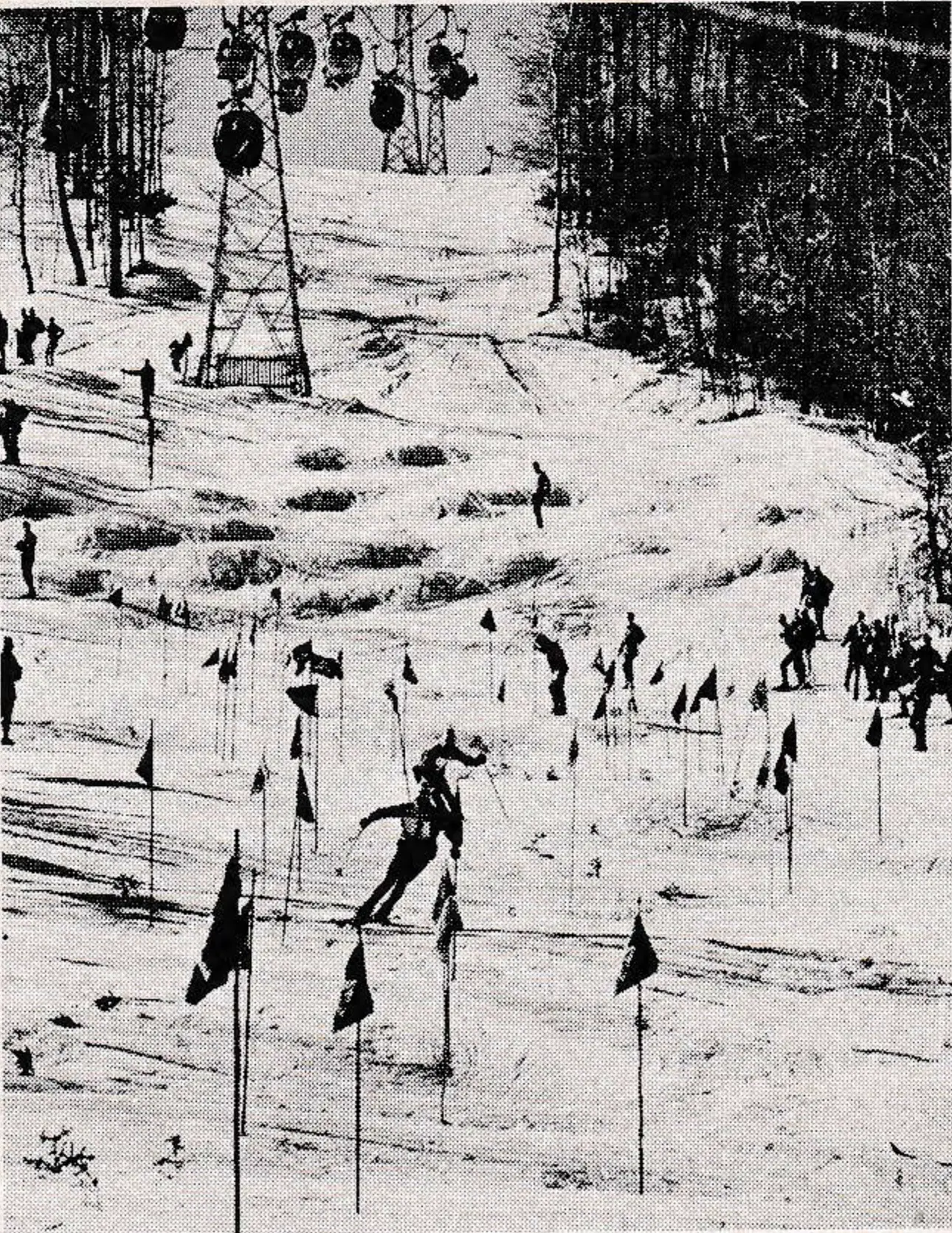
Yet by noon, the other three, which I visited en route, were still icy or ice-cubey, skiable only by a fanatic, while Mt. Snow had sent out its two-phase choppers and sprayed a fine mist of powder—admittedly ice powder—over several of the easier slopes. You could actually toss a rooster—albeit a teeny, tiny rooster—into the air.
That this kind of consumerism—hyper-honest reporting and expensive, effective grooming—exists in southern Vermont at all is commendable; that it existed on a weekday, when even Mt. Snow could have used the business or justified not grooming, is even more impressive; and that it occurred during a season when Eastern ski areas could have qualified under the Federal Disaster Area act, well . . . Well, maybe that’s one of the reasons Mt. Snow this past season showed an even larger profit than it did the previous year, which was one of the best snow seasons in recent years.
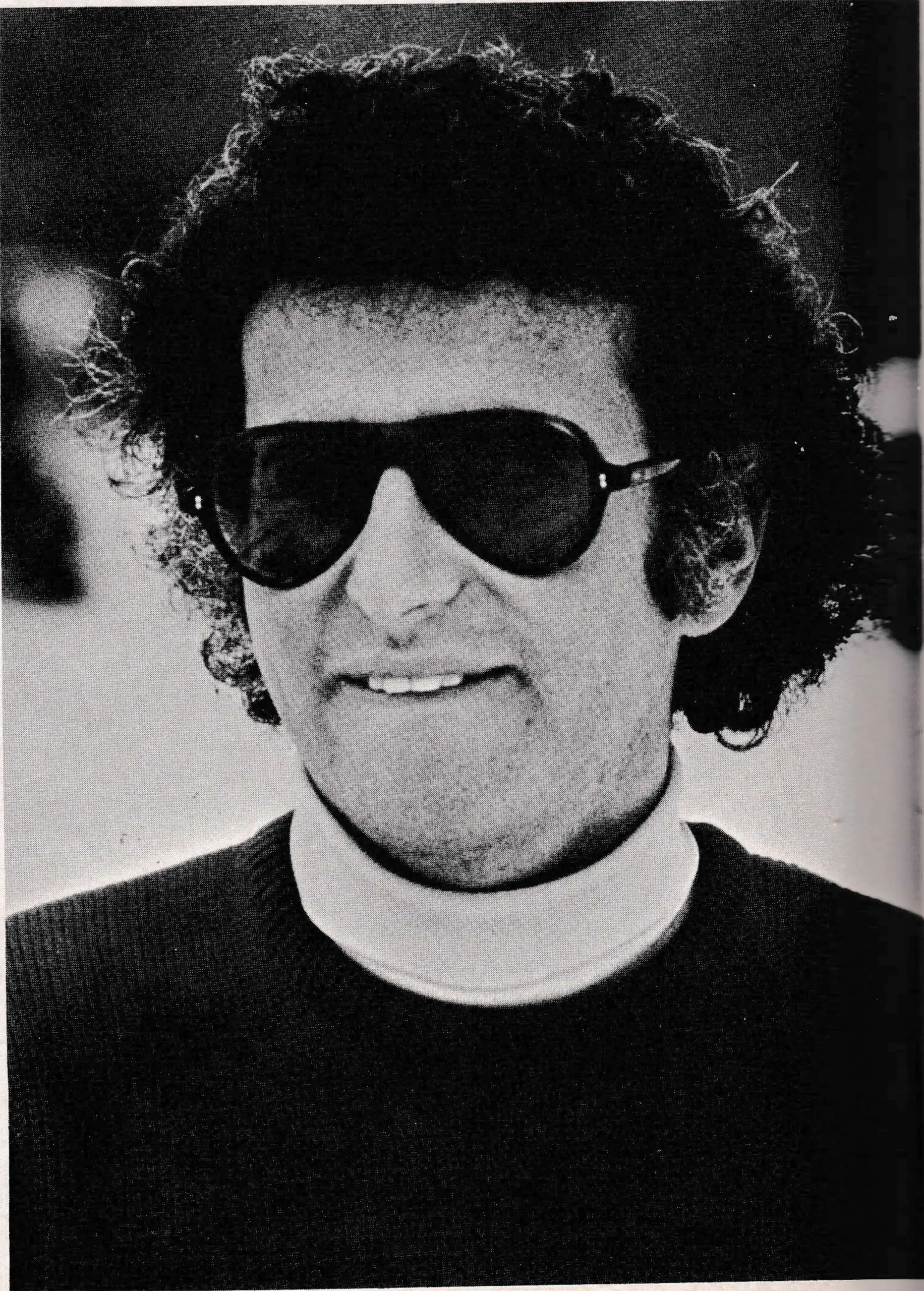
The force behind both the concern and the profit profile is Mark Fleischman, 32-year-old president of Davos Inc., the company that now owns Mt. Snow. The theory is simple, even if it does contradict decades of ski-industry thinking: Consumerism, according to Fleischman, is not something that has to be done grudgingly, not something that costs money and decreases profit; rather, consumerism—a real, up-front, total concern for the comfort and well-being and desires of the customer—is something that increases business. Good, honest and bigger consumerism yields good, honest and bigger profits.
That kind of thinking—in an era when many federal, state and local agencies have been formed to protect consumers from a multiplicity of get-rich-quick firms—is not only rare, it has the further virtue of being successful. And success is important to Fleischman. (“I am a capitalist,” he says simply. “I believe people should be rewarded for stronger motivation. There is nothing wrong in being a successful businessman. It is not something that someone should be ashamed of.”)
This brand of consumerism shows up in many ways, some little—like refurbishing the women’s rest room (“You can’t imagine how important that is,” said one long-time denizen)—some big—like replacing one old cranky chairlift with a new covered lift—or some simply operational—like shifting some advertising funds from print to radio spot after making a careful analysis of returns. But more than “showing up” in obvious, physical improvements, it is an operating policy that is transmitted to all the people who work for Mt. Snow.
“One of the things you have to do to run today’s businesses successfully,” says Fleischman, “is to understand people, what they want to do and what they can do. You have to be concerned with them as people, not as employees.” Fleischman creates good employee relations because he wants his staff to be happy, and be pleasant to the customers. “We want them to smile,” he says of lift attendants and waiters, “to say ‘hello’ or ‘have a good run’ or ‘the beef is very good tonight.’ My wanting the customer to be happy is not enough; all the people who work here have to have the same desire. And it has to be an honest desire.”
Effectively, this is a subtle but significant break with ski-industry tradition, which has tended to regard the average employee as a seasonal migrant worker, someone to hire for the lowest possible wages, fire peremptorily and train not at all. Someone who, if he gets hurt, is on his own; someone who, if he gets sick, could pass on to the Big Ski Slope in the Sky without notice.
“We’re offering free, full insurance coverage to all employees,” says Milton Namiot, Davos’ director of marketing. “We have a couple of other long-range plans in the works also. What we want are permanent employees, people who’ll work for us for the full year for several years. We want people who are interested in the future of Mt. Snow because they realize Mt. Snow is interested in their future.” The best people, he indicated, will be kept, trained and promoted. The whole thing sounds like a real-life, up-front, progressive business operation; what kind of thinking is this in the wilds of Vermont ski country?
“It is a business,” Mark answers simply. “We haven’t made any of those big, major sweeping changes. Ours have been small: efficiencies like having the security guards also handle the parking, like making sure four and five people aren’t doing the same job, like building our own laundry and saving $50,000—that kind of thing.
“Mostly, it’s getting the people used to thinking of Mt. Snow as a business with all the cost controls that implies. Analyzing every department item by item, assuming nothing.
“For instance, most ski people think of repairing their snowcats and grooming equipment, without realizing that sometimes it’s cheaper to buy new ones.” But it does not mean not spending money: “We bought two new Thiokol powder makers in two days, almost overnight, when we saw what a bad snow year we were into.”
This type of thinking—examining each item on its own merits, spending glunks of money when you have to and tightening up on that ever-present waste—has not been common in the ski industry. Perhaps the reason Fleischman is able to think in these terms is that he was not trained in the ski industry. He was never a ski bum, he has no connection with the Tenth Mountain Division and he isn’t even Austrian or Swiss. Worse, he is a skier. He spends long hours every weekend on the mountain, allegedly “checking the hill” and general conditions and such but really, well, just skiing and enjoying himself on the slopes. Bombing down the hills with friends, clad in jeans and dull parka and looking, with his helmet of tight graying curls, like a slightly overage teenager. And running the Nastar courses every time he’s at the mountain on Friday—running them and winning medals. Everyone in the industry knows you cannot run an area from the mountain, not by skiing and enjoying yourself.

Yet this kind of involvement, functioning on a line level and having fun doing it, is one of Fleischman’s hallmarks. Trained in the hotel and food business—his father is a noted hotelman in the New York metropolitan area and he is a 1961 graduate of the famed Cornell University School of Hotel Administration—Fleischman spent three years as an officer running Navy clubs, then spent better than a year rescuing New York City’s renowned Forest Hills Inn from impending disaster. (He bought it, salvaged it, sold it at a hefty profit). This one adventure probably has set the entire tone of Mark’s involvement with the leisure-time industry. The Inn was in lousy shape, way in debt, playing to an empty house, in imminent danger of dying. Mark bought it for very little cash, another of his techniques, and by some intelligent handling of the bankers who held the obligations; then he took over.
Reminisces Rose Ann Greco, his long-time secretary and executive assistant, who was still working for the Inn: “He was regarded by all of the old-timers there as Little Boy Wonder. He was all over the place; no one could get over this youngster walking around with his pad and pencil, watching and checking everything. When I finally met him, I was overwhelmed; he was 25, but he was a full-grown man. You knew he knew exactly what he was doing. You knew that if anyone could save the Inn, he’d do it.” He did, and began to build the reputation; but finally he got tired “of just running a hotel,” and began to cast around for other ventures in need of his unique form of salvation. He helped Mon-Ark Shrimp expand—he still, under Davos’ aegis, owns the company—but again, he got restless, and he ran smack into the Davos Ski Area.
If there was ever a case of an irresistible Muhammad running into an immovable mountain, that was nearly it. Davos’ financial conditions made the Inn look like the epitome of solvency. It was a small Catskill hill surrounded by a ring of red ink, ascended by inadequate lifts and descended on less than Wasatch cover. By the time Fleischman got control of it—after one of those complex intercorporate mergers he loves to create, which resulted in the formation of Davos Inc., the ultimate mother of virtually all of Fleischman’s ventures—the season was upon them and . . . “What a mess,” Fleischman recalls.
“Nothing worked. My brother Alan [who now runs the area] and I scurried and sweated, doing the cooking and acting as maitre d’ and even washing the dishes. Learning about lifts and snowmaking. I didn’t pay myself a salary for months.” It was an all-or-nothing venture for Mark. All the profits from the Inn deal, virtually all of the assets of the Mon-Ark Shrimp Co., were riding.
As it turned out, it was a hell of a good bet. Within two seasons, the whole Davos complex—the second-home development, the rechristened “Big Vanilla” ski area, the enlarged food-processing operation—was a socko, growing success. It was hard, challenging work, but it offered Fleischman something he needed—still needs—a series of complex, changing, varied problems, a swirl of movement rather than the static situation of one business at a time.
Then, suddenly, “the word” came down within the industry that Mt. Snow was in trouble. Over-extension trouble: $700,000 worth and maybe, possibly, sinking fast. Mt. Snow, the big one in Vermont. The Coney Island of skiing. Walter’s Wonder. The home of the two-passenger gondola and a few trolley-car lifts known as the Grease Buckets. Those rumors were not groundless—and they reached Fleischman just as he was ready to move again. (“I think maybe that foreclosure thing was exaggerated a little bit,” he says today. “Walter [Schoenknecht, Mt. Snow’s creator, former owner and still president] is a visionary, a genius. He sees things ordinary people don’t. But sometimes you need other than genius to handle money. So we’ve been giving him a little help there. Let’s say we’ve added another voice, other ideas about how to operate.”) That little bit of help included paying off the debts in cash, working another one of those intercorporate swapsies, and effectively controlling the fiscal policies and practices of the company.
Walter, like anyone with any rank, has a major voice in the present and future of Mt. Snow. Fleischman does not rule by fiat, he governs by persuasion—and, sometimes, by absence. When general manager John Christie, who also served in that capacity under Schoenknecht, and Davos controller Marshall Kagan disagreed over the operating budget, Fleischman did not intervene actively; in effect, he forced them to work out a compromise.
“It’s very easy working for Mark,” Christie said early in the season. “You know what you have to do. You have to earn 20 cents a share for Davos. Running Mt. Snow is a business, and Mark is a businessman.”
Yet, Mark Fleischman is a businessman in the new mold. He does not play the impressario power-trip game. When you hear about his string of successes (the Inn, Davos and Mt. Snow are just a few of them; he also has done well with meat-processing and in creating the popular “Quiet Little Table in the Corner” bistro in Manhattan where several other food-and-liquor operations had failed before), you expect a younger version of Lewis Stone in Patterns—aggressive, hard, insensitive, grasping—the Protocapitalist of a Red Chinese morality ballet.
The reality is shockingly different—disappointingly so, if you like your heroes grounded in granite. Fleischman is quiet, a good listener, able to admit doubts (“I got scared of the Mt. Snow deal part way into it,” he said last fall. “I wondered if it was too big.”) and mistakes (“We got a little too efficient on our weekday lift operations,” he said recently. “We were closing down a few too many now and then. So we changed it. You cannot afford to get efficient to the point where you’re affecting service.”) He’s quite prone to relax and have fun with friends, many of whom are not particularly wealthy, and he makes no show of being a millionaire: the farm he co-owns with Dr. Robert Millman in Vermont is far from lavish (it had been abandoned for several years, with cause); the car he drives is far from new.
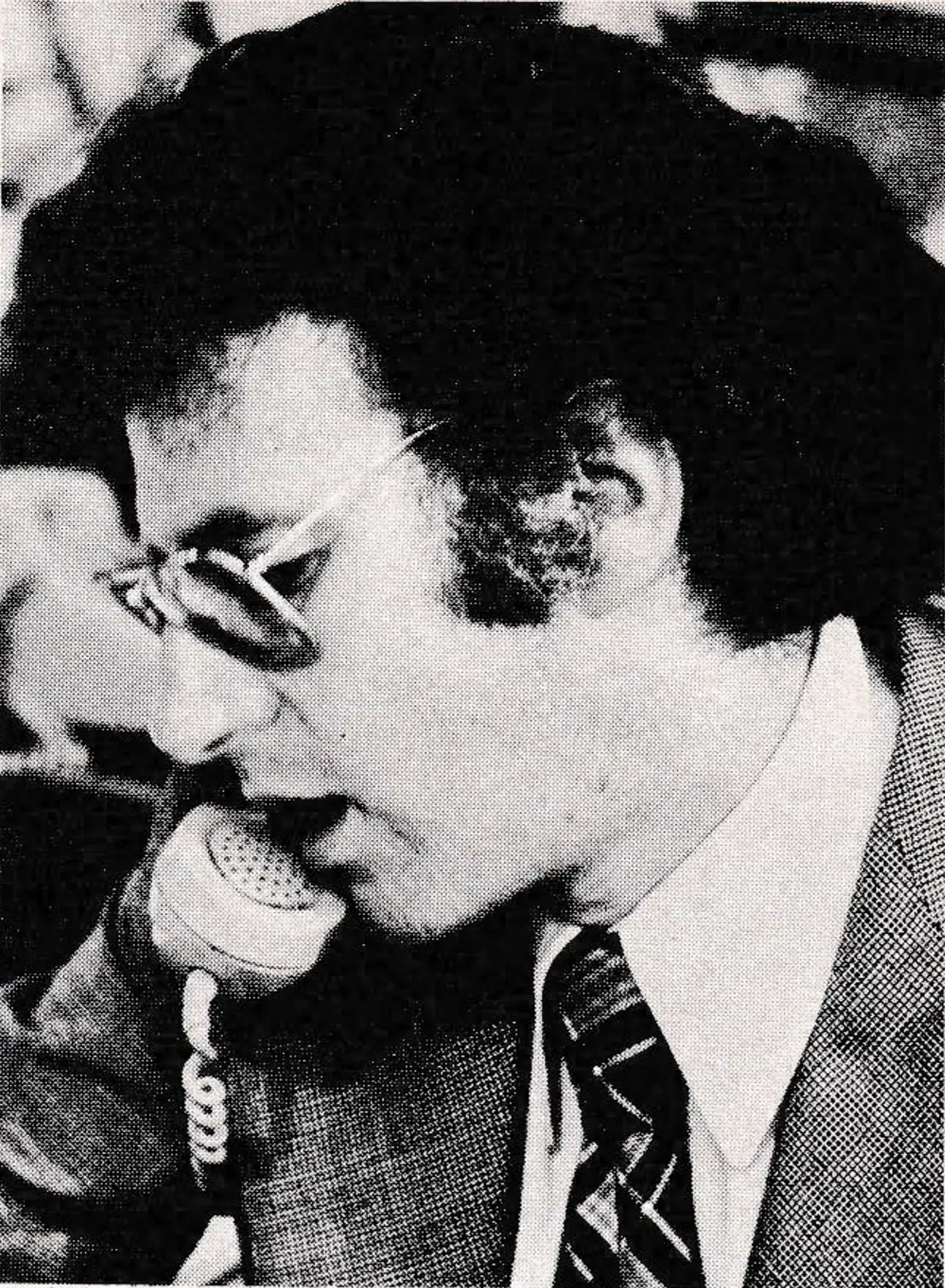
This constant sound of contradiction—the pure capitalist who believes in consumerism, the millionaire who comes on as middle-class “sorta making it,” the leisure-time tycoon with real concern for his employees (to the point where he refuses to discuss people as working for him)—reaches its crescendo in Fleischman’s Manhattan office. It is a maelstrom, more like a big newspaper’s city desk on deadline than the headquarters of a growing corporation. Ad hoc conferences with other Davos brass ebb and flow without seeming pattern over endless sequences of deals while the trio of telephones—which he juggles like a fugitive from the Ed Sullivan show—jangles and flashes with insistence. Yet he never loses his cool, never alters that impression you get of inner quiet and of listening.
One day, though, the conflict resolves in your mind: Fleischman does not regard himself as being in the ski industry, or—as his operation continues to expand—in the real-estate development business. Instead, he feels he’s in the resort business, the leisure-time industry; he is a hotelman, a restaurateur, and the thing he is selling is service. (“You have to give people what they want, and to do that you have to know what they want.”) This is why he eavesdrops on dialogue in the base lodge, starts conversations in the big bar upstairs and pays attention to the comments. Above all, he draws conclusions and spots trends based on first-hand observations.
“Skiers have changed,” he said recently. “Not just the obvious changes, like being more middle-class or more drawn to it as a total, social as well as sport, experience. A few deeper changes. That old ‘in-crowd’ nonsense, building an area’s reputation on having the Kennedys or the Lindsays there, doesn’t work anymore. The only thing that works is giving them a better product—and anyone who thinks that people can’t tell the difference is in the wrong business.”