


For most, number two on the list would almost certainly be a cadre of skilled employees who would insure the area takes maximum advantage of whatever its terrain and mountain offer. Such a cadre would perform with a style and grace that would forever eliminate management worries and anxieties in such troublesome— and potentially expensive—disciplines as liability, care of equipment and personal behavior, including treatment of customers.
Is this an impossible dream, especially in regard to new people on the staff?
No, not really. The trick to making that dream become reality is to take all of the knowledge gained by the area’s senior employees over their years of service and instill it in the minds of new employees. If that could happen, in a matter of days or even hours, those new people would not only perform their own jobs well, but their work from the first day on the job, would reflect management’s overall concept of the area.
The Aspen Skiing Company of Colorado, which has a roster of 1,200 employees spread over four mountain areas, is heavily committed to using audio-visual techniques to make that kind of knowledge transfer possible. In fact, John A. Cadmus, Jr., Aspen’s training and employee relations supervisor, thinks Aspen’s scale of commitment to audio-visual programs is probably greater than at any other ski area, though Mammoth Mountain in California might dispute this.
Such programs use photographic slides cued to a narration on tape or video tape plugged into a television set to convey their messages. Whether television or slides are used, the programs teach by effectively combining words, images and sounds in attention generating presentations that can also employ such proven methods of imparting information as slow motion and repeat action.
A-V Benefits
During an interview with Ski Area Management, Cadmus repeatedly expressed his convictions about the benefits of audio-visual training programs. He bases his enthusiasm on the capability of the medium to compress a tremendous amount of information into a short time span and to do it in a way that enables the trainee to retain most of the information presented. Cadmus also points out that audio-visual programs standardize training so that each employee receives information at the same level of quality, a level that is the best the area can produce.
On the down side, Cadmus acknowledges that it is expensive for a ski area to gain in-house audio-visual capability. (See author’s comments in Sidebar.) Yet, the idea should not be dismissed at the first look at the bottom line, he says. That’s because audio-visual capability enables an area to present a package of information at one training session that might otherwise take 10 years of on-the-job exposure for the trainee to acquire. This means an enormous potential for long term savings to an area through effective training programs that can make employees reach their potential quickly and, in the process, make them aware of the cost of carelessness in matters such as liability and the use of equipment.
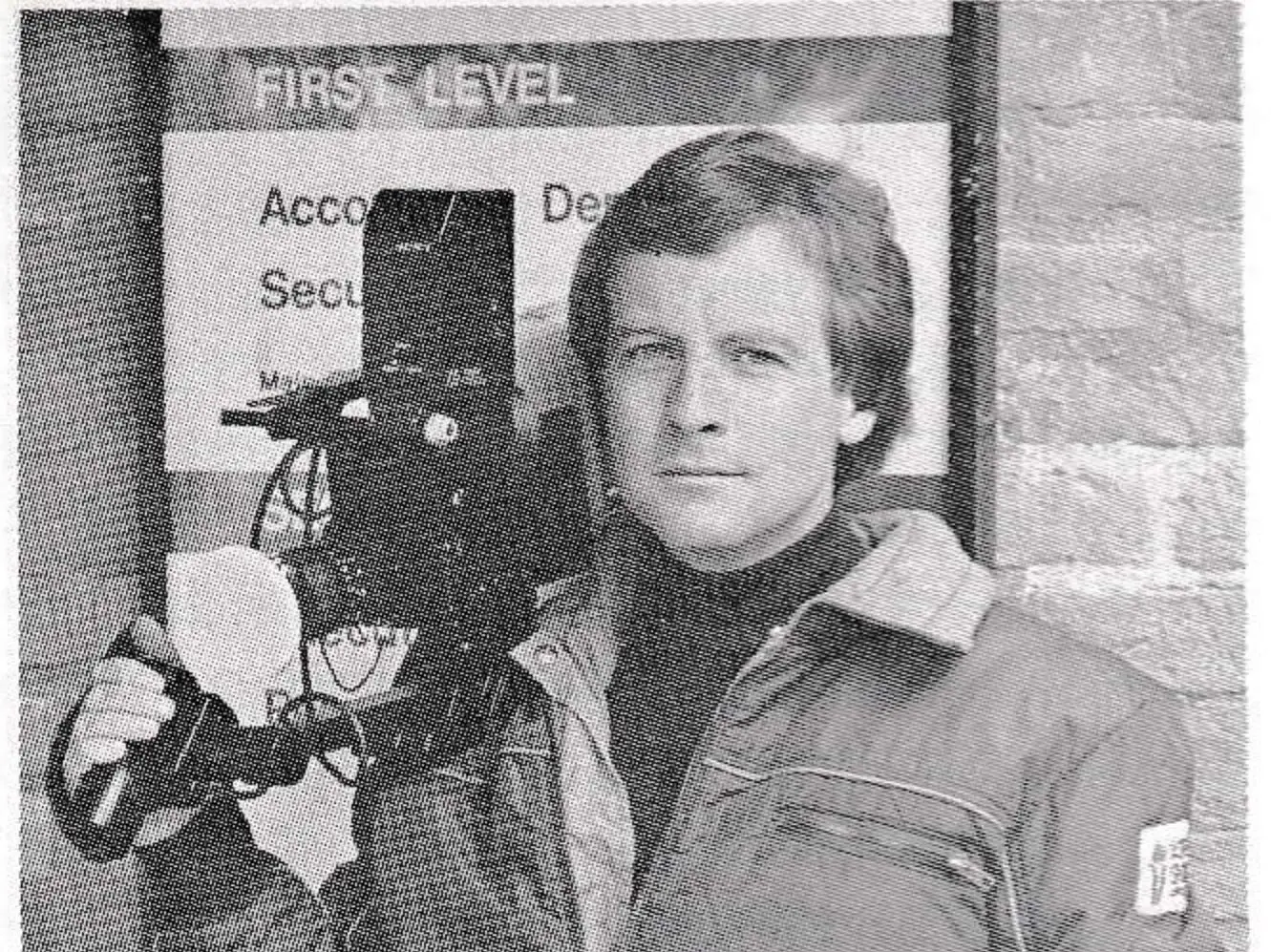
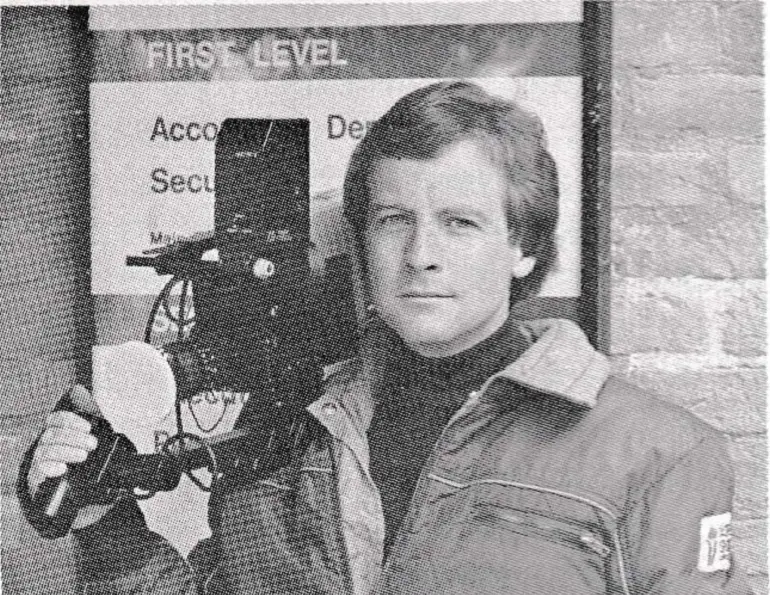
The efforts being made at Aspen are hardly surprising in view of Cadmus’ background. As an undergraduate he studied marketing followed by graduate work and a master’s degree in education and educational media. He then became a teacher and media specialist at Colorado Mountain College before joining Vail Associates as a media specialist. With that extensive seasoning, he joined Aspen where he has just completed his first season.
It is not surprising that it takes Cadmus less than a minute to tick off nearly a dozen situations in which audio-visual programs are useful. These include:
- Orientation information about the company, its management personnel and what they look like;
- The company’s history and its clientele;
- Lift operations;
- Snowmaking;
- Ski school instructor training;
- Awareness of the complex subject of liability with emphasis on the care employees must take to avoid potential problems;
- Employee benefits;
- Employee housing;
- Food service operation with subjects ranging from how to operate a cash register to courtesy of busing personnel;
- Self-evaluation for supervisory personnel;
- Ski patrol work;
- Guest relations;
- Ski rental information.
In addition, he is quick to mention some major side benefits from the ability to produce audio-visual materials. Chief among them is the generation of publicity. It is often much easier to send out an unedited videotape of an event or race that is being held than to persuade a television station to send in a crew for filming. “The publicity that results from coverage of just one race or other event,” says Cadmus, “may easily be worth $4,000 to $5,000.”
A less obvious benefit is that audiovisual programs provide a record of training received that can be extremely valuable for evidence in the event of a liability action. And finally, audiovisual training programs become particularly useful during the season when key supervisory personnel are frequently too busy with operations to be available for orientation or training programs.
In-House Costs
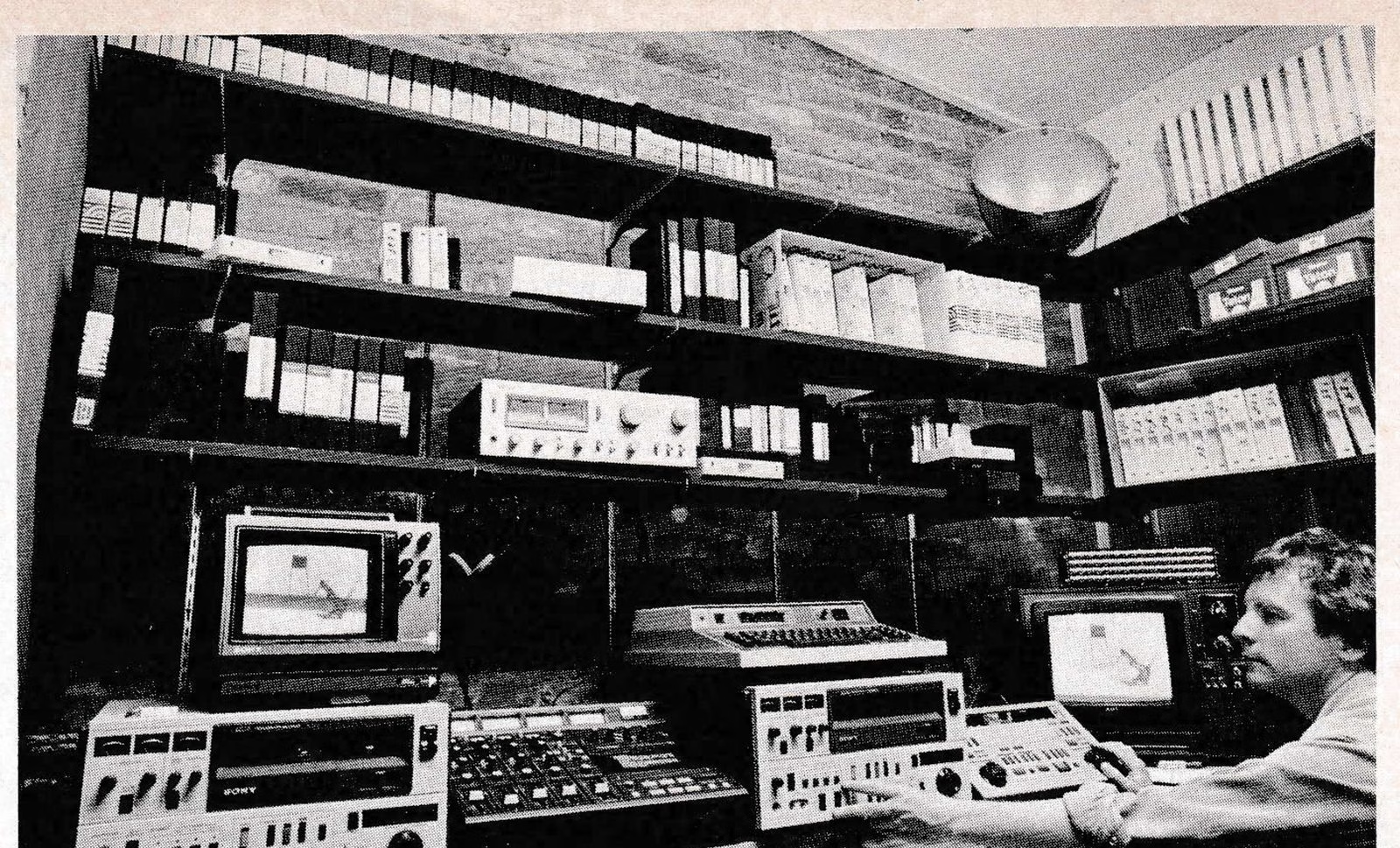
The other side of the equation is that gaining the in-house capability to produce audio-visual programs is not cheap. Videotape equipment alone, if it includes the capacity to edit, means a $30,000 investment. The cost for sound-slide equipment is considerably less, but even a system that includes two projectors and a dissolve unit will cost around $2,500, and still camera equipment runs $1,000. Both figures can be modified up or down, depending upon the equipment used.
The hardware, however, is only the beginning in the establishment of a system. The area must hire or train people to use the equipment. Fortunately, the skills needed are generally transferable to other areas of operation. A video camera photographer, for instance, will usually have the skills needed for still photography, or a person who can write or program a script will have the skills to write publicity copy.
Cadmus strongly recommends that ski area management personnel become as familiar as they can with audio-visual capabilities and equipment before making a commitment to in-house programming. Audio-visual departments of colleges or high schools are often good sources of information, he says, because they have the equipment and the specialists in operation, and usually the willingness to spread the word about the technology. Suppliers of equipment are happy to make salespeople available for demonstrations. Finally, information is usually available at industry conventions, from suppliers and users alike.
However, Cadmus cautions against an area buying equipment and then hiring specialists for its operation. A much better approach, he says, is for the area management to become familiar enough with the field to be confident in hiring a specialist who would then work out the details of the operation including what equipment to purchase. Cadmus emphasizes that every piece purchased should be of the highest quality because mountain weather often takes its toll. “Most ski areas are miles away from A-V service areas,” he comments, “so they should minimize the down time on the equipment by buying first-class gear to begin with.”
Film represents another on-going cost in audio-visual production. To insure satisfactory results, much more film has to be shot than is actually used. “If Hollywood needs up to 30 takes to shoot a scene for a movie, then how can I do better?” Cadmus asks. “The fact is, you need film. In a videotape operation, you will probably have to buy seven times as much as you will actually use.” To a lesser extent, the same is true of slides where often four times as many exposures are made as slides eventually used.
Outside Sources
If a ski area’s management can see the value in audio-visual programs, but balks at the cost, there are various ways to minimize the financial load.
One way to minimize costs is to hire an outside producer. The overall savings by going outside, however, are probably illusory. In the short run, the initial savings may be more because the area isn’t making the investment in the hardware needed to produce the program, particularly in the case of video. But even so, the cost of the program put together by an outside producer will be expensive. As a ballpark figure, Cadmus says, the cost for every edited minute of an educational film is between $1,000 and $2,000, so that area may easily spend between $10,000 and $15,000 for just one program. Then, if circumstances change, the program becomes outdated and has to be done all over again. Obviously, it is better to have the in-house capability to make the changes in programs as needed.
Another way of reducing costs, especially for smaller areas in the same geographical region, is for them to join together on one program so that two or three resorts can share the costs. But first they must agree on a program that will meet all of their needs, as well as on the financial commitment each one would have to make. These are obvious problem areas.
Producing a Show
Assuming that a ski area has acquired the capability for its own audiovisual work, the process of producing a program becomes extremely important. Cadmus emphasizes that everyone who will use the program must become involved in its production, so that the end product will be both useful and accurate.

Cadmus—and other producers, for that matter—are only facilitators. Describing his role Cadmus says, “I am not a lift operator, so therefore I cannot presume to put together a program on lift operations by myself. I can only tell the lift supervisors how the audio-visual technology works, and how the information can be presented. They must work on the information and become involved in the process of selection and present ideas so that the end product accurately reflects the messages they want to deliver.”
The process begins with the area examing an existing training program and then asking whether it can be improved upon. If the decision is that an audio-visual program would be appropriate, then those involved must determine what kind of program.
In general, Cadmus believes that videotape is more effective if the training subject involves action; slides are better if it doesn’t. For instance, a mountain rescue involves action and with videotape the people involved in the rescue can explain what they are doing while they are engaged in the task. Slides are more appropriate for a subject like snowmaking that involves interpreting the instruments on a control board or the methods of making hook-ups for the various components of the system. Slides have an advantage in that they require less equipment to produce a show, they can be edited more easily and they provide a better quality image for the final product. Equipment needed to project slides with sound, however, is apt to be more cumbersome.
The initial production session should also consider other audio-visual methods for the training program. For instance, a “Resusci Annie” is a common device for CPR training, pieces of real equipment can be brought into a training room or there can be a mock-up of a control board for an equipment operator.
After the initial brainstorming session, the supervisor of the operation involved should break the action down to its simplest components. For example, if the subject is loading a chairlift, then the various motions should be isolated, as well as the location of the lift controls. The breakdown provided by the supervisor should then be circulated to everyone else involved to gain their insights. At this point, a lift loader with several years of experience might think of a good safety tip on a particular lift that the supervisor had overlooked, yet could be illustrated.
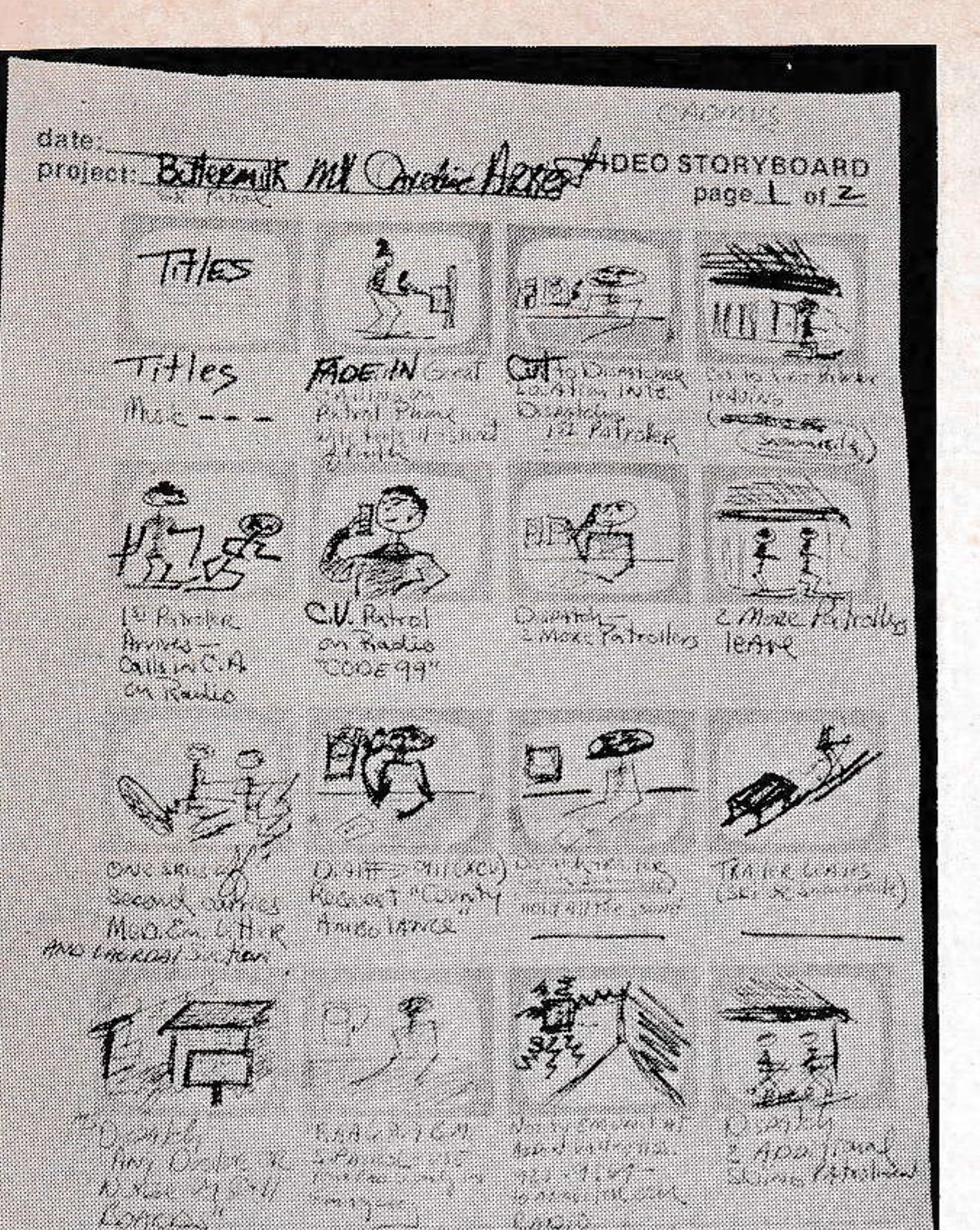
Having received the breakdown of the subject into parts, Cadmus then “story-boards” the program, a process that involves drawing pictures of the operation that might be illustrated through slides or videotape. The process involves visiting the sight of the “shoot” to determine effective camera angles. The “story-board” sequence then goes back to the supervisor for study, changes and final approval.
Cadmus emphasizes that this part of the operation—determining the sequence of photography—is extremely important because of the expense of photography and the coordination required in order to bring all the participants together for a “shoot.” He warns that by the time everyone goes on location for the actual photography for the program, the producer must have it all figured out. “This means knowing what angle to shoot from, and knowing just what the subject is to do,” he explains. “Otherwise, you are just taking snapshots and may have to return for supplementary photography, a step that is extremely expensive in terms of time and materials.”
If the process is right, which means that the people who will use the product are involved in every step in the production, then the program will meet the need for effective training. If the users are not involved, Cadmus warns, then the way is open for inaccuracies that destroy the program’s credibility.
To be effective, he emphasizes, the final program must be credible. It will be if the material is accurately presented, if the photography and the narration are professionally handled, if the supervisors are a visual part of the program as they explain the jobs and finally, if the area’s name is on the program as its sponsor.
When these standars are met, the program will be highly cost-effective, Cadmus says with a conviction that comes only after many years of teaching and thinking about media instructional techniques. Aspen has already placed its bet on his conviction and is confident of the pay-off.
Author’s Note
As a former teacher, I heartily endorse the central thrust expressed in the Cadmus interview: that audiovisual programs are a tremendously effective way of imparting information to new employees.
But, as an independent producer of sound slide programs—an occupation I share with writing about skiing— I have three observations about the thoughts expressed during the interview.
The first is that while the kinds of programs that Cadmus produces at Aspen certainly make sense for that resort, one of the larger in the industry, his operation may not be relevant for smaller resorts that just do not have Aspen’s resources. Smaller areas have the same problems for audiovisual preparation to address, but they need a solution that is low in cost.
The second is that, while videotape programs are effective, as Cadmus points out, they are expensive to produce in terms of in-house equipment and editing time. Multi-projector slide programs are just as effective, more flexible, less expensive, and the end product can then be converted to videotape, thus eliminating the problems associated with cumbersome projection equipment needed for multi-image dissolves.
The third is Cadmus’ remark that audio-visual programs put together by independent producers may ultimately be too expensive for an area. I don’t think this is necessarily so in the case of sound/slide programs that are less expensive to produce than videotape—that is, if they are kept relatively simple. It might well be less expensive for a resort to hire an independent sound/slide producer, be assured of the quality and save the time such a show would otherwise have taken the area’s own personnel to produce. A second cost advantage is that independents can often use slides provided by the area. A third advantage is that slide programs can be updated fairly easily as situations change.—L.C.C.

