


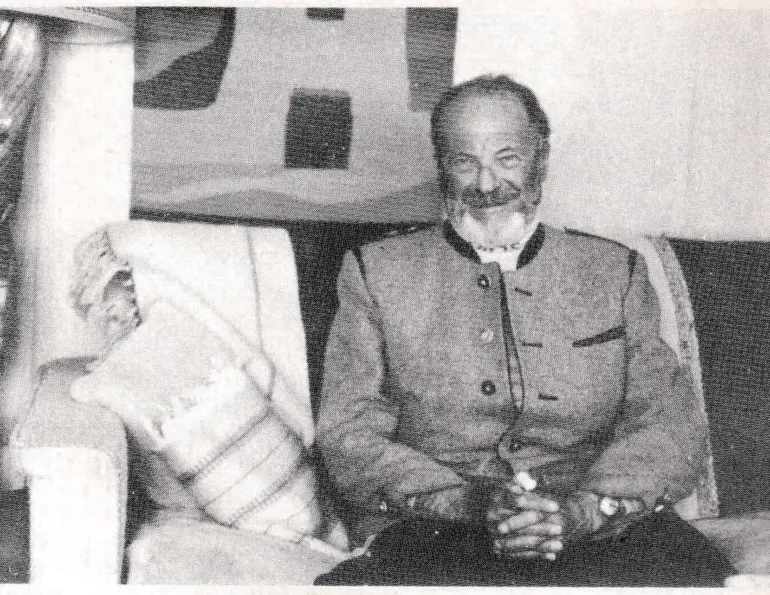
Ernie Blake: There is no such thing as too much. It’s a natural development for skiers to expect improvements and growth, and that should be left to the devices of the ski areas to supply.
JN: Do you think the top limit on lift ticket prices is close at hand?
EB: Since 1931 skiing has been dedicated to the wellheeled skier. It is a luxury sport, but this hasn’t restricted the numbers. Sports around the world are monstrously expensive, and in skiing it’s the extras that make it so costly. A vehicle that cost $10,000 in 1970 is more than $70,000 today with its voluptuous attachments. There’s no top price when the American consumer demands so much. We’re not climbing on seal skins anymore.
JN: Then, you believe the quality of skiing can be maintained by raising prices?
EB: No. In fact, it may go down because of overcrowding as long as the Federal government stands in the way of natural growth in the ski industry. I think the government should regulate its lessees, but for the last 10 years there has been no growth in skiing. This no-growth policy, based on the fear of the lunatic fringe of the ecology movement, will surely lead to terrible overcrowding of ski areas because the number of skiers is growing steadily—but sadly, the number of available lifts and slopes are not.
JN: Is limiting lift ticket sales the inevitable answer to this problem?
EB: Vail is the precurser in this, and I’m sure limited ticket sales are coming because of the lack of new areas. You can count on it, though, one day the Feds will turn around and ask us to expand just as hastily as they asked us to retract.
JN: Taos is often filled to capacity—as long as there’s good snow. Is that the future of ski marketing?
EB: We’re actually trying to keep people away. Is there any sense in trying to market skiing when we can’t expand? The idiocy of keeping all mountains free of skiing is ridic- ulous when you fly over the Rockies in a small plane. There’s untold land for skiing in the U.S. and it’s much less disturbing to the purity and serenity of the atmosphere than hikers or horseback riders. No one is willing to spend time and effort on the hassle of starting the paper war required to open new mountains for skiing. It’s easier to take talent and experience to Spain or Canada or New Zealand.

JN: What might influence the Federal government to change this policy?
EB: The public. Everybody is organized except the skier. The skiing public must be organized and competition must re-enter ski area building. If there was more demand for lifts, the price would go down. In fact, without strangulation this sport could do great things for the health of the American economy.
JN: Ideally, how would you like to see the ski resort industry grow?
EB: A ski area should expand and grow cautiously. Each mountain needs its own experimentation in development, depending on wind, amount and type of snow and other factors. The best skiing climate in the world is right here in the U.S. We sometimes seem to have an inferiority compared to the Alps, but that is unjustified. The Alps have cuter villages, that’s all. And in parts of the Alps the pastry served after skiing is superb. But, for light powder snow, for slope maintenance, for sunny weather and wellmannered skiers, give me the U.S. anytime.
JN: What is your prognosis for the future of the ski industry?
EB: I warn you, I’ve often been wrong in my anticipation of the future. Years ago when Mr. Head asked a group of us to test his skis at Tuckerman’s Ravine one Spring, I told him they would never sell. The public would always want the smell of good hickory in their skis. But for skiing I see, without restrictions on growth, the prices could go down. In fact, one day the government will tell us, “Build, build, build.” Skiing could become a national sport.
