
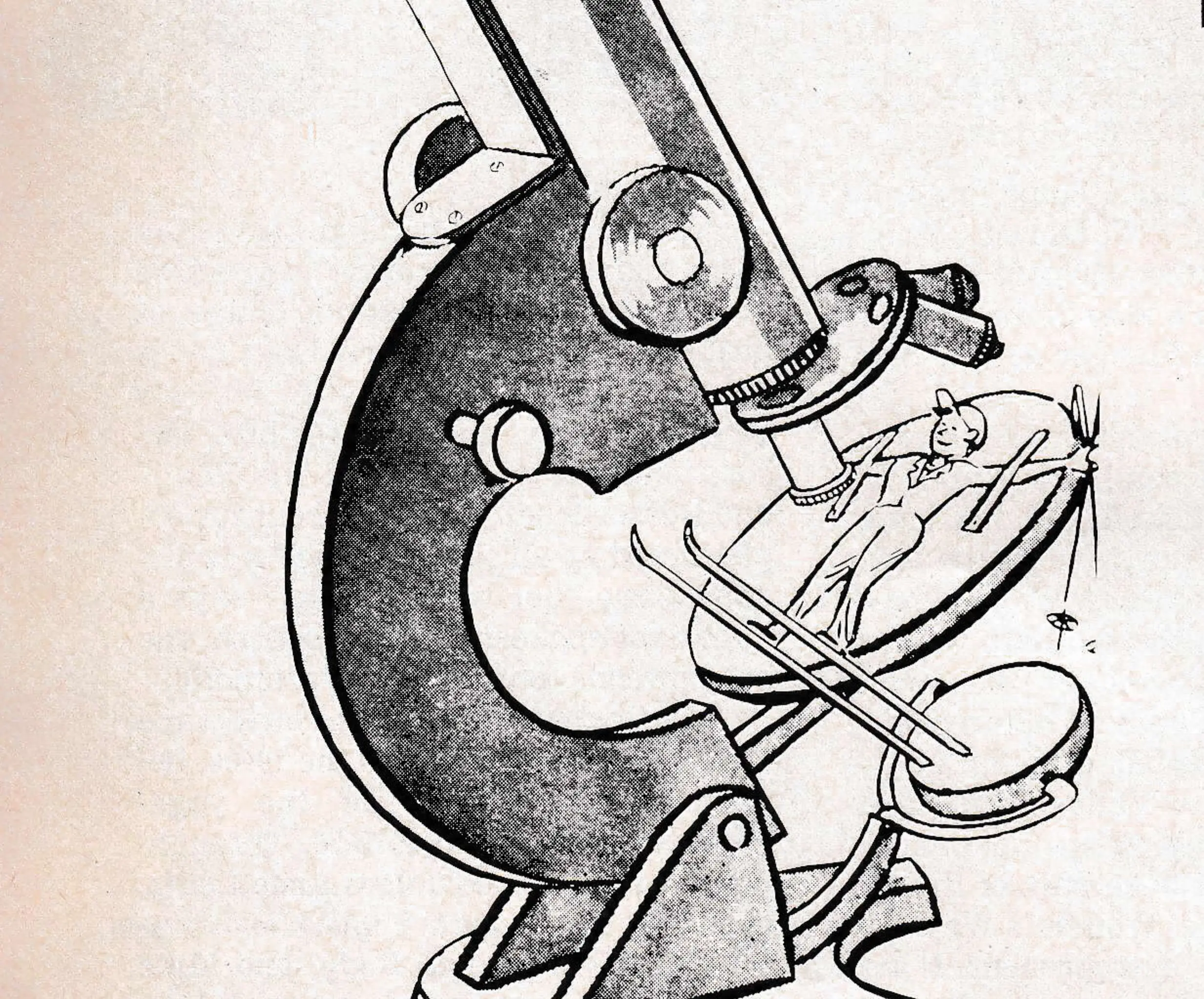
These are questions every marketing person in the ski industry has grappled with at one time or another ever since the first tow in this country pulled skiers uphill at Woodstock, Vt.
Back in the industry’s halcyon days of the early 60’s, the rapid growth of the skier market led some industry spokesmen to speculate that the skier population had reached over 5 million in the U.S. The guesstimates of these pundits were so widely quoted and believed that many in the industry were sent into a state of shock when Ted Farwell’s classic study for the U.S. Dept. of Commerce indicated the actual market at that time was more like 1.5 million.
In the intervening years, despite a number of studies by the U.S. Government and commercial syndicated research services on skiing activity, the industry has been reluctant to let go of this 5 and 6 million figure, though it has sometimes tempered it with a more sobering 3 million estimate of the so-called “hard core” skier market. Some recent studies have indicated the total skier market by now is considerably larger, but the industry has stuck to the same estimate for close to 20 years. The larger figures didn’t seem to jibe with reported skier-day totals as well as with known totals of ski equipment purchases. What was missing was a reliable study to describe the behavioral characteristics of this market: how often ski trips are taken, why skiers take up—or drop—the sport, how much they spend on ski trips or on ski equipment and clothing, what their demographic characteristics are (age, sex, income, occupation, length of time skiing, marital status, education, and the like), and perhaps most importantly, what motivates them.
At long last, the industry has such a study, one that provides comprehensive, definitive, and projectable market information that can be used with confidence by all those serving the needs of the skiing enthusiast. This is a study conducted for Skiing Magazine by Opinion Research Corporation of Princeton, N.J. (an Arthur D. Little subsidiary). ORC, an independent research company with over 40 years of experience, contacted a nationwide probability sample of over 30,000 U.S. households by telephone to determine whether the household qualified as a member of the survey universe. A qualified household was one that included individuals age 18 or over who skied during the 1976-77 season (defined as current skiers) or skied during the four preceding seasons but not during the 1976-77 season (defined as past skiers).
Follow-up mail interviews were conducted with a randomly-selected sample of one adult skier in each household. The mail questionnaire consisted of a 12-page booklet of questions requiring a simple check to indicate the appropriate response. There was also some limited data obtained on teenager skiing activity, gathered from all contacted homes whether or not the homes included adult skiers. The cut-off date for returns was in January 1978, at which time 2,363 usable interviews had been received from 2,363 different households, representing an interview completion rate of 62 percent, after allowing for undeliverable questionnaires.
Because random sampling procedures were rigorously applied, the findings are statistically projectable. Highlights of the study include the following that should be of particular interest to ski area management:
Size of market—In the 1976-77 season, there were 8.3 million adult Alpine skiers (age 18 and over) plus an additional 4.0 million teenaged skiers (age 12-17). The study did not develop a figure for small children (the under 12-year-old market). There was a total of 3.9 million cross-country skiers age 12 and over of whom 2.3 million were also Alpine skiers. In addition, the study found 7.0 million adults who had skied during the four-year period from September 1972 through August 1976 but who did not ski during the 1976-77 season.
Skiing frequency—Though these figures indicate a total market far larger than the industry had assumed to be the case, when the figures are broken down to isolate the serious Alpine skier, defined as one who skied downhill for six or more days during the 1976-77 season and who owned Alpine ski equipment, only 3.6 million qualify among the 8.3 million adult Alpine skiers. The average number of days skied for the whole adult Alpine market was 11.1, but for the serious skier, the average was a startling 18.6 days. Some 73 percent of the total adult skier days were accounted for by this group of serious skiers. By contrast, adult Alpine skiers not classified as serious skiers skied an average of 5.4 days each.
Purchasing habits—Not surprisingly, the serious skier was found to spend more money on ski trips than other Alpine skiers. A third of serious skiers spend $700 and more per household on ski trips compared to only seven percent for other Alpine skiers. Another third spends between $300 and $699, compared to only 15 percent of other Alpine skiers spending this amount per household. Only nine percent of serious skiers spend less than $100 per household on ski trips compared to 43 percent of the other Alpine skiers spending less than $100. (Because of the way the survey questions were phrased, these figures are probably understated.)
One oddity is that the serious skier is far more apt to patronize an area ski shop than is the rest of the Alpine skier population.

Motivation—The study is replete with tidbits of information about why skiers ski—or why they drop out. The cost of skiing was most frequently mentioned (by 43 percent of past skiers) as th reason they hadn’t skied in the 1976-77 season, and among the costs cited as excessive, lift fees led the way (mentioned by 46 percent of current skiers as having increased more than most things they buy). Not surprisingly, a third of past skiers cited the snow conditions of the 1976-77 season as the reason they hadn’t skied.
But the thrill and challenge of the sport was one of far greater importance to the current Alpine skier. Personal and social reason such as getting away with friends or family were mentioned about equally by current and past skiers, whether Alpine or cross-country.
Introduction to the sport—How do skiers happen to take up sport? Some 61 percent mentioned that friends were responsible; 35 percent said they had been introduced to skiing by family members.
Advice given—Some 82 percent of all Alpine skiers and 92 percent of serious Alpine skiers give advice to others about ski areas and resorts. The ski publications play a role here, with 32 percent of skiers saying they read Skiing for help in selecting a ski resort and 25 percent reading it for help in planning a trip.
Demographic profile—The skier differs from the general population in all demographic respects, with the serious Alpine skier even more set apart. For example, 59 percent of all Alpine skiers—and 62 percent of serious Alpine skiers—are male, compared to 48 percent of all U.S. adults. Among all Alpine skiers, 53 percent are single; among serious Alpine skiers, the figure is 54 percent single; whereas among all U.S. adults, only 18 percent are single. The median age of adult Alpine skiers is 25; of serious adult Alpine skiers, 26; and of all adults, 41. Incidentally, one out of every six teenagers is a skier—a startling, highly significant figure!
Ski trips—The serious Alpine skier took close to 13 trips per skier compared to just under four trips for the rest of adult Alpine skiers. For the serious skier, 71 percent of the trips were overnight, whereas only 46 percent of the trips for the rest of the skiers were overnight. Of these trips, 82 percent were made by private car, two percent by rental car, four percent by bus, and one percent by airline. The trips were made only within the U.S. by 91 percent of the adult Alpine skiers, with another nine percent also skiing abroad (or in Canada). Among the leading regions where Alpine skiers took these trips, 53 percent skied in the West, 51 percent in New England. Among the leading states, however, Vermont led with 24 percent, followed by New York and Colorado with 22 percent each. Of the household expenditures made on these trips, 25 percent went for transportation, 25 percent for lodging, 21 percent for food, beverages, amusement, etc., and 29 percent went for fees, lifts, and rentals.
There is insufficient space here to catalogue all the information that could be useful to ski area marketing departments. Suffice it to say that a breakthrough has been made which should provide crucial answers for almost any ski industry executive making marketing expansion or long-range plans.
More information about the statistics contained in the study can be obtained from Skiing Magazine, One Park Ave., New York, N.Y. 10016.