
Superconvention ’78
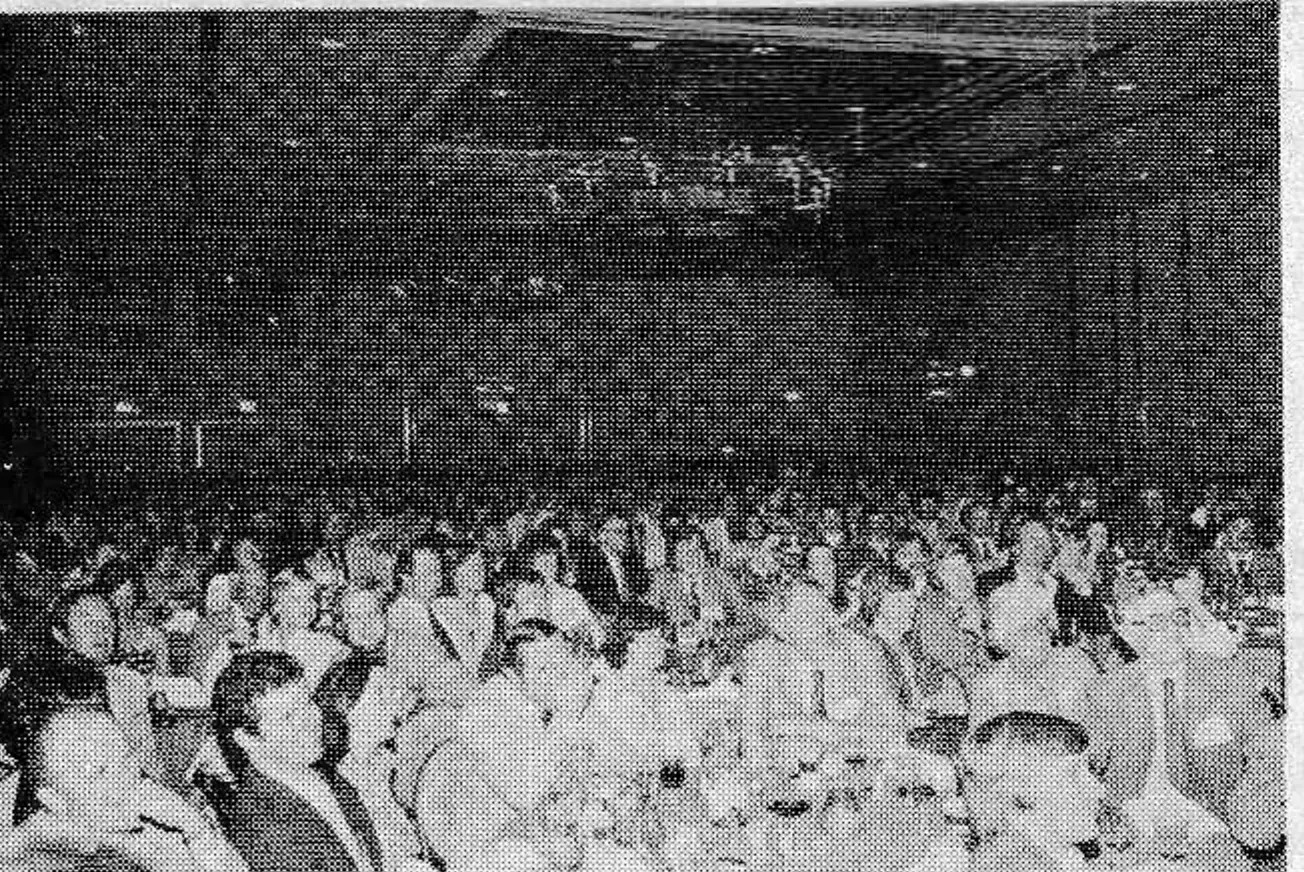
Maybe the record numbers who attended wanted to use up the extra profits from a record season on the gaming tables.
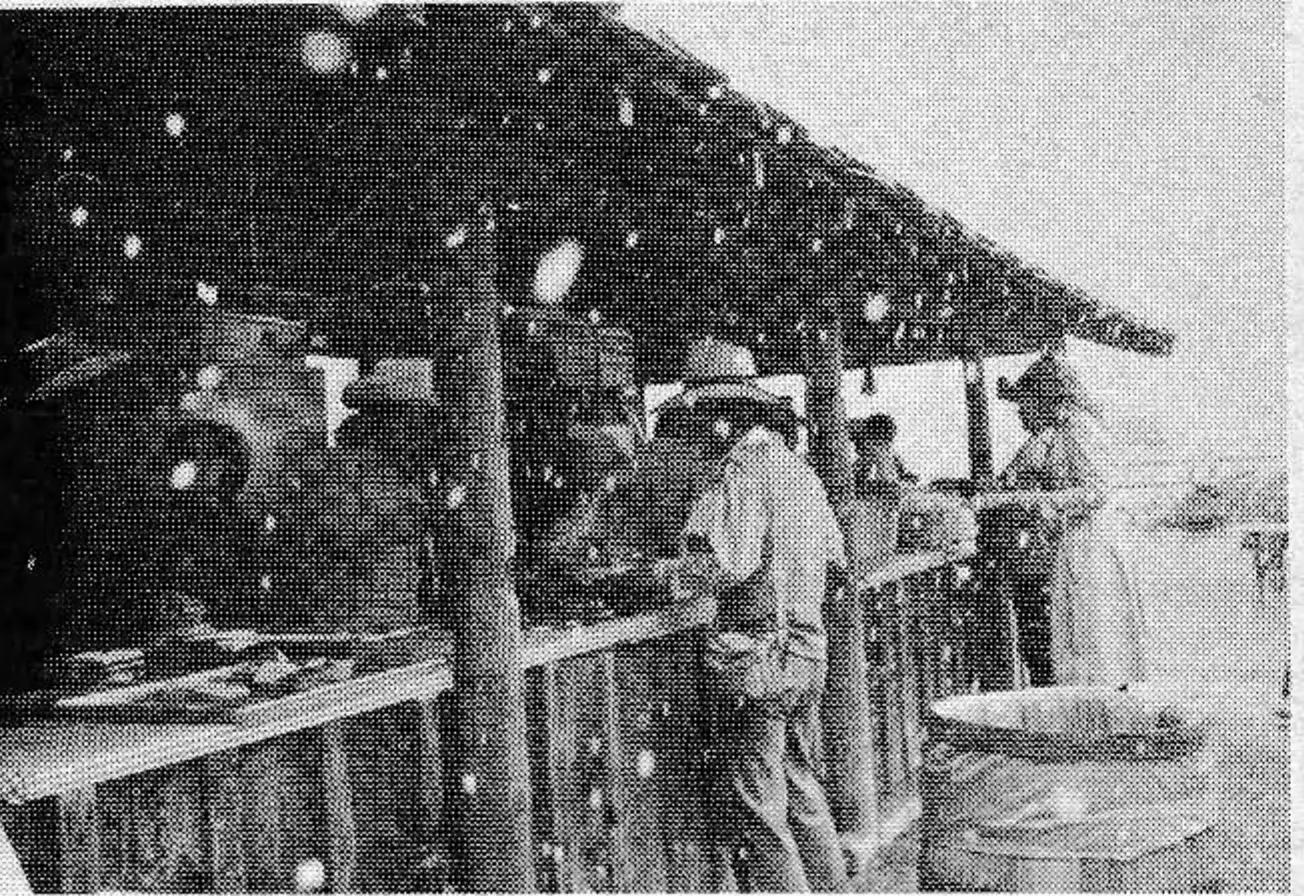
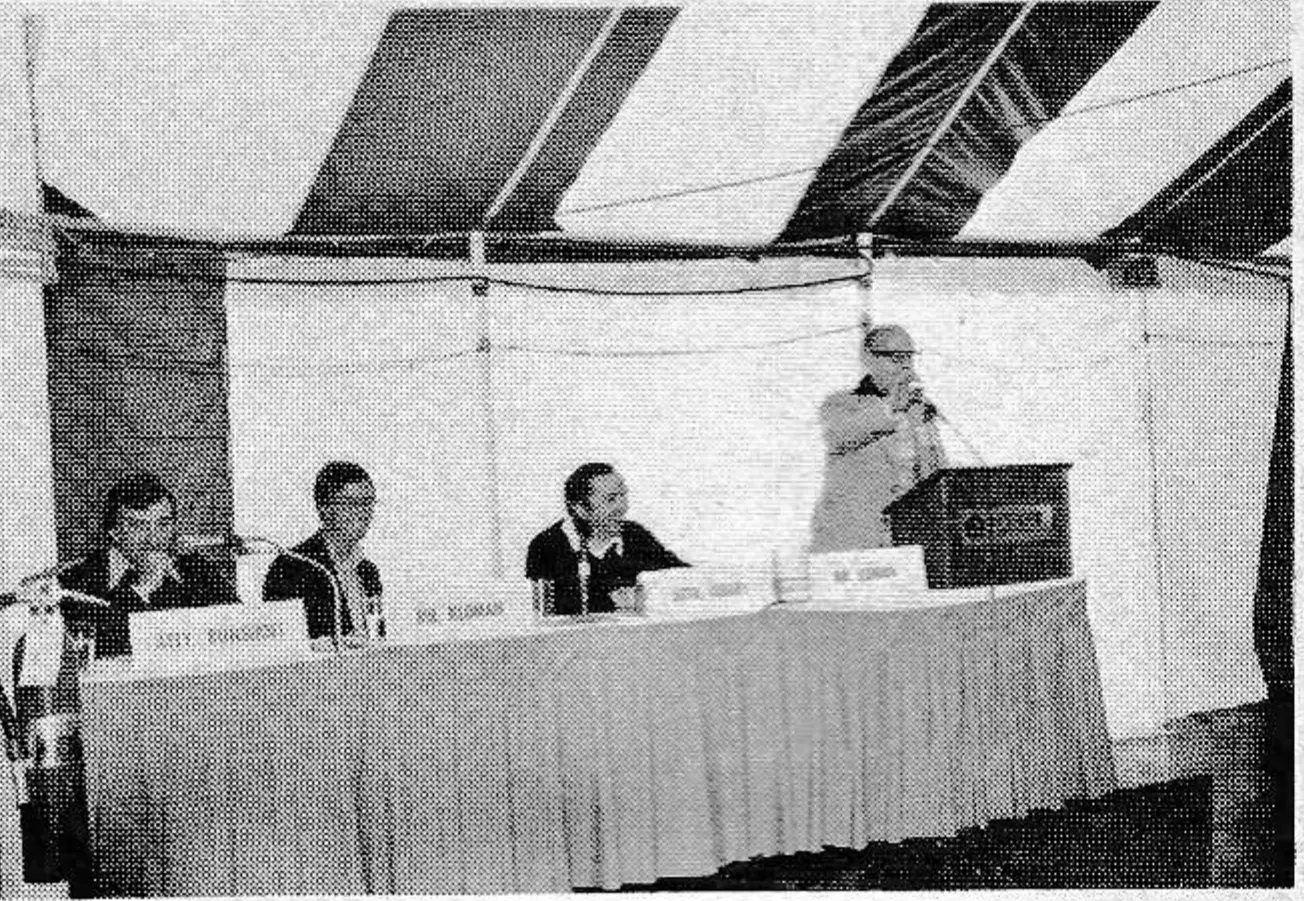
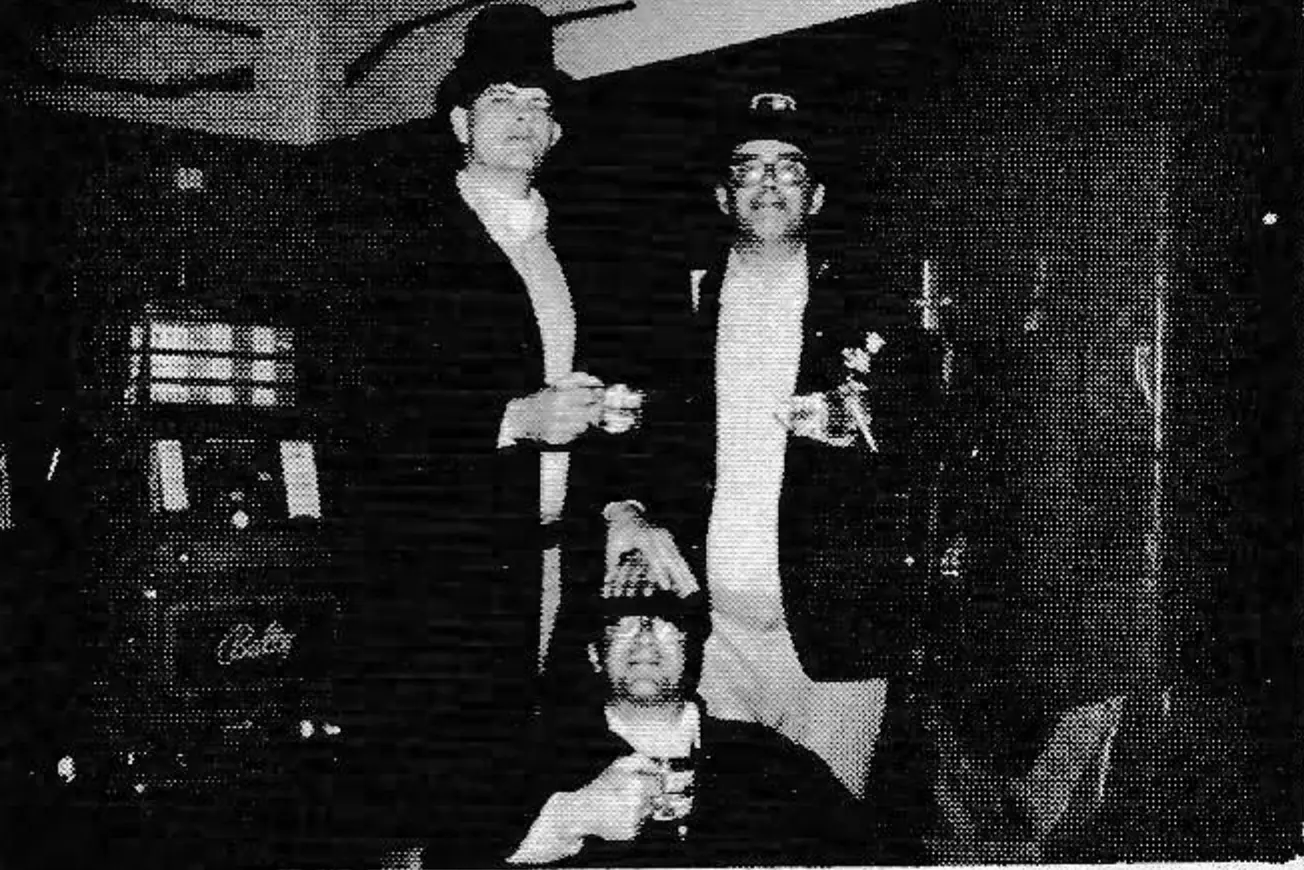
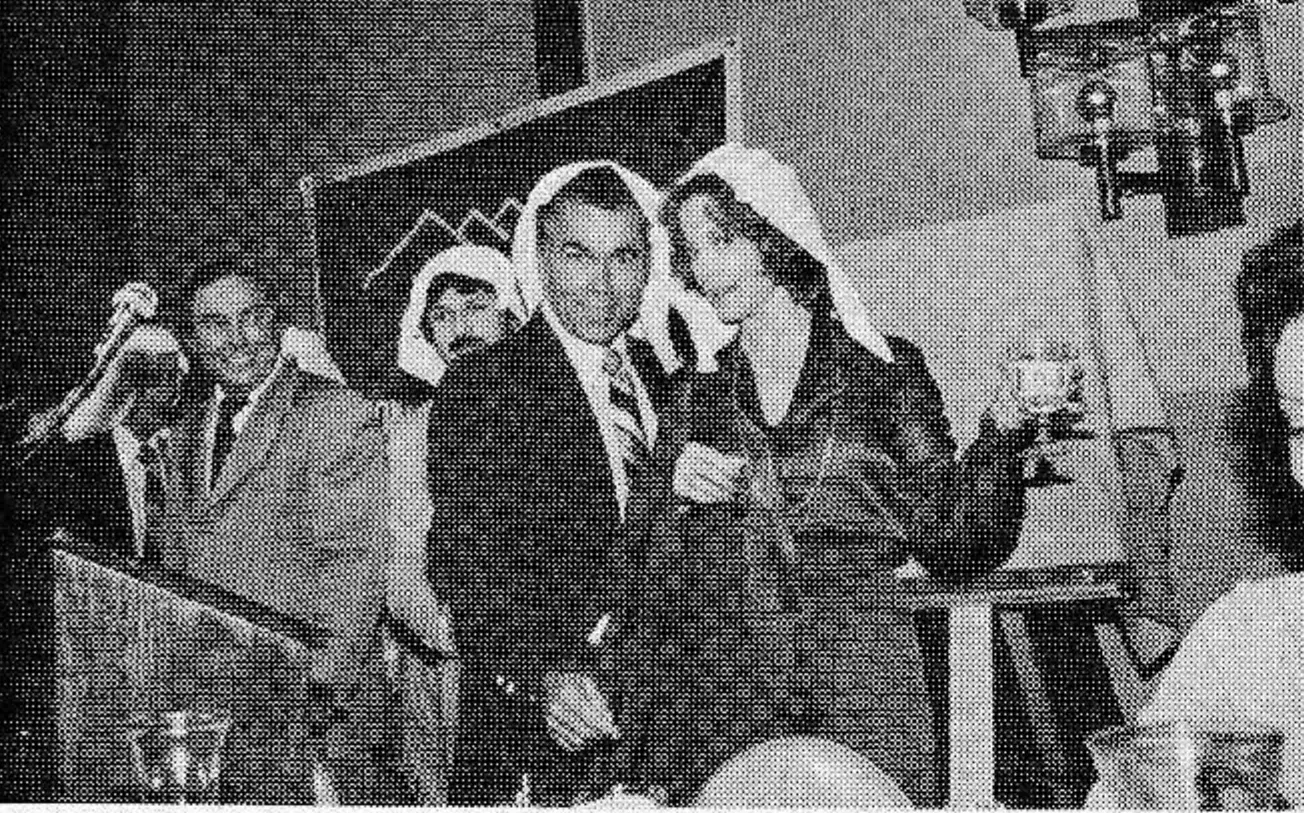
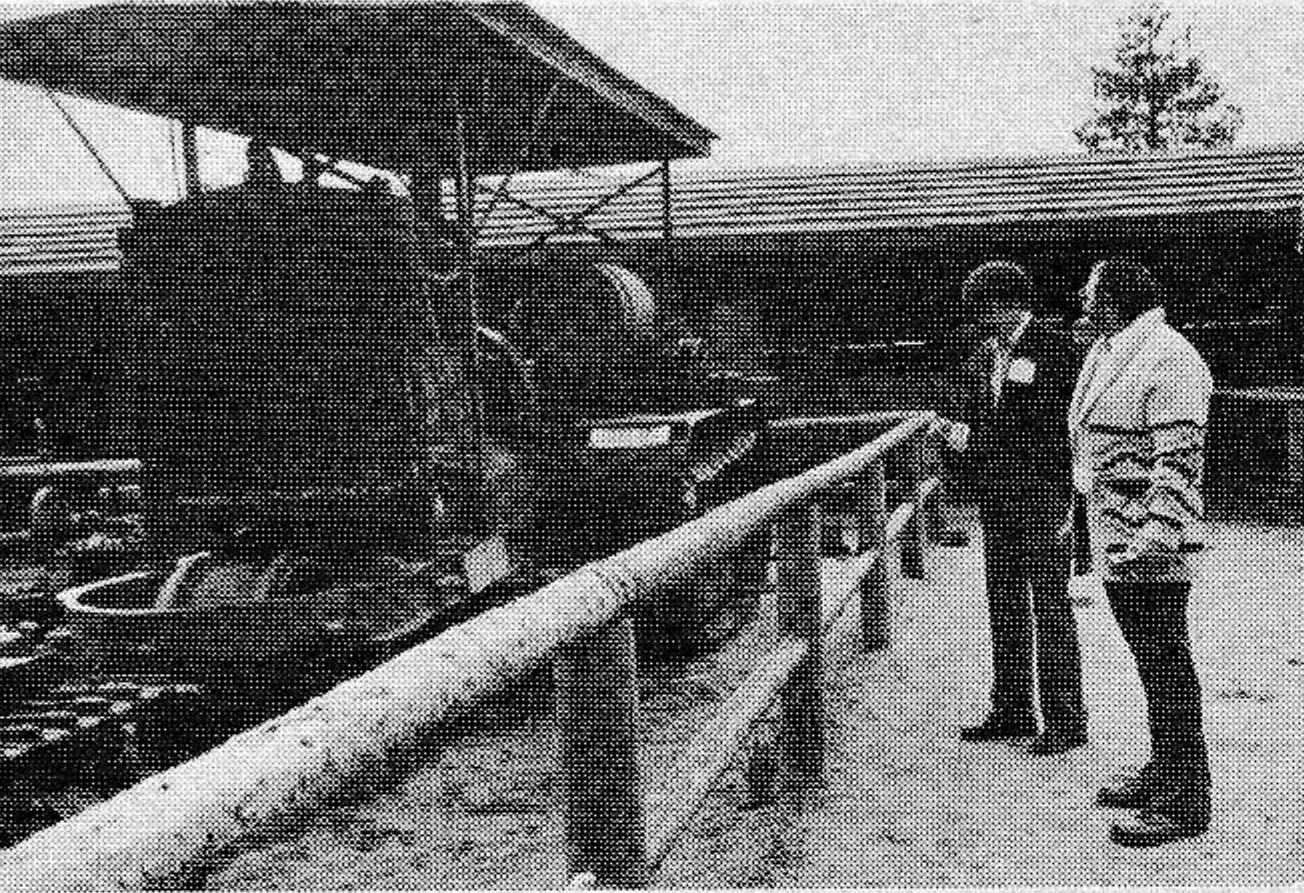
Some brief vignettes: snow storm swirling outside the “tented igloo” and Multorpor’s Carl Reynolds bravely trying to wrestle the tent flaps down, while others in the audience bailed out for fear the entire tent would be whipped into the lake . . . Vic Hall patiently, quietly amassing a huge pile of silver dollars at the blackjack table, gets another ace as his up-card and whimsically offers insurance to the bemused dealer . . . President Jay Price sets the mood for the banquet by leading a procession of “Arabs” to the dais in search of a ski area to buy . . . Tucker’s Don Wilson, the happiest, wackiest craps shooter in town . . . outrageous consultant Jim Branch twits NSAA’s Kathe Dillmann that she has photographed everything at the convention except the men’s room and borrows her camera to complete her coverage. Later she is to be mortified by what the camera store developed on that roll . . . sheep may safely graze department: even the rival snowmakers had nice things to say to and about each other . . . and as for the Ponderosa Ranch evening, it took a whole lot more than a snowstorm to quench the high spirits of several hundred instant Cartwrights.
Yes, it was a winner all the way!
How about a royal trolley?
Looking for something unusual for your area? Arthur Seifert may have just what you’re looking for.
He is restoring a “very rare and historic trolley” which was used from 1898 on in providing transportation from the outskirts of Oslo, Norway, up the mountain to the famous Holmenkollen ski jump.
In winter the sleighs and skis were strapped on the sides. In summer, the line continued operation and carried general passengers and tourists to the resort areas.
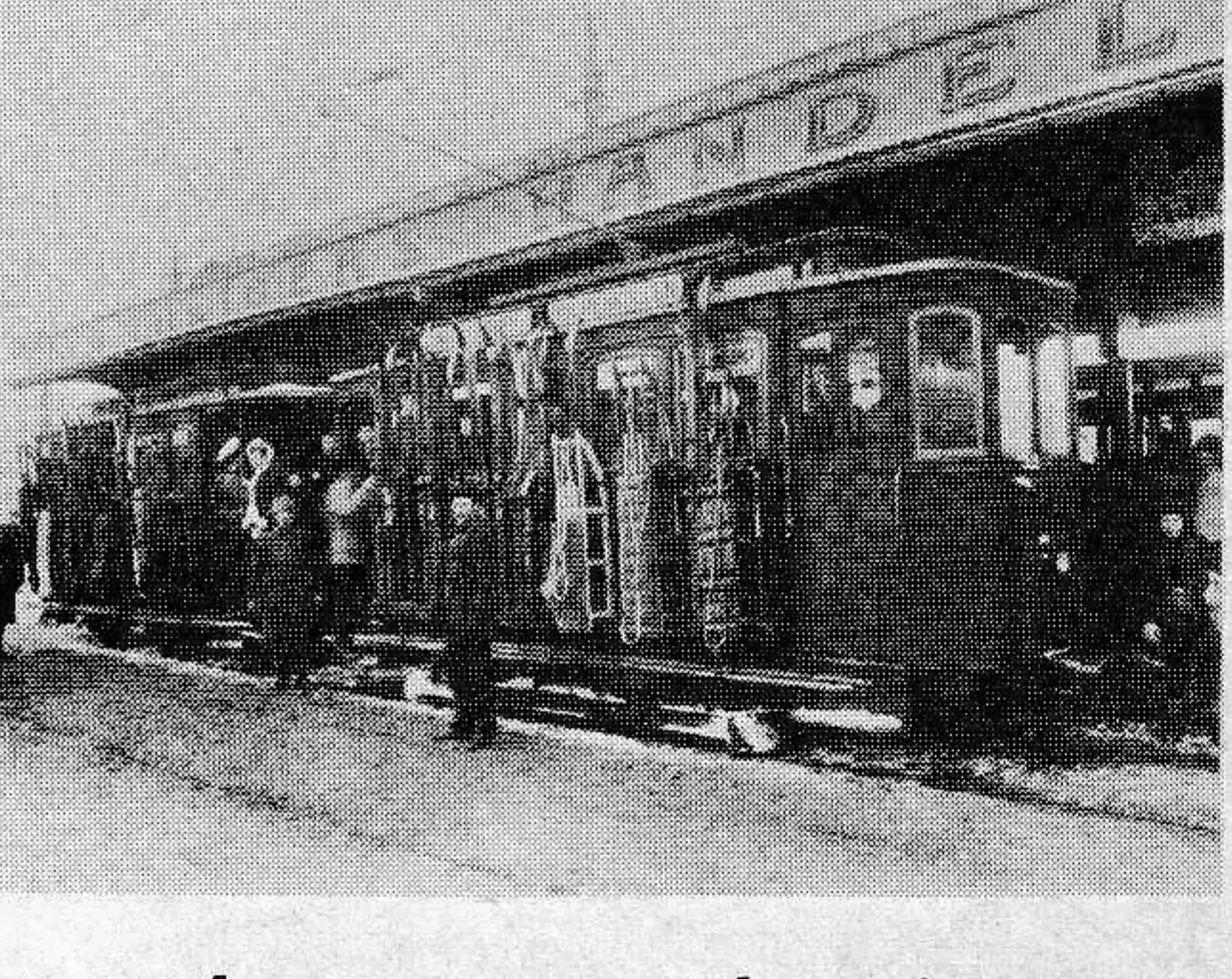
The tram was used by King Oscar II and his skiing party— undoubtedly the only instance of a reigning monarch going skiing by trolley.
Mr. Seifert, whose address is Box 41, Sound View Station, N.Y. 10472, is aware that Aspen and other resorts are investigating the feasibility of trolley (light rail) systems, and thinks his trolley might be a winner.
Kissing Bridge rebates season pass holders
For a great many ski areas across the country, the 1977-78 season was a record, bringing smiles to even the grimmest faced accountants and bankers. But Kissing Bridge, an important western New York ski operation, really turned the tables by giving cash rebates to each of its season pass holders.
In his rebate letter, Bob James, president and co-founder of the resort, wrote, “This has been a vintage ski year with the best average snow conditions we have enjoyed since KB was founded in 1960 . . . We wish to share our extraordinary good fortune with you . . .”
Each rebate amounted to 8 per cent of the cash price paid for a season pass. Rebate checks were mailed out to almost 2000 season passholders, in amounts ranging anywhere from $14.00 for a single passholder, to almost $70.00 for some families.
Rudy Eggert, Operations Manager of the resort, feels that, “It is our way of saying thank you to those skiers that invest in the ski season with us even before the first snowflake falls. Also . . . to the best of our knowledge, this is the first such rebate offered by any ski area in the country.”
ASSOCIATIONS
International ropeway group holds meeting
The North American Continental Section of the International Organization for Transport by Rope held a special business meeting May 25, 1978, at Hyatt Lake Tahoe, Incline Village, Nevada.
The meeting was widely attended by members from Canada, Western United States, and those otherwise attending the concurrent National Ski Areas Association Annual Convention and Trade Show. Business activities centered upon organizational matters with reports from officers and committee chairmen. President Charles F. Dwyer summarized coordinating efforts with OITAF and meetings of FENIT and OPIEEC he attended in Europe last fall.
The meeting’s program centered upon discussion of extraordinary aerial tramway types including funiculars and detachable chairs. Beat von Allmen showed a series of slides on European installations.
OITAF-NACS membership is open to all aerial tramway and ski lift interests in North America. Details are available from the Secretary: Mr. Selden Hannah, c/o Dufresne-Henry Engineering Corporation, Precision Park, North Springfield, Vermont 05105.
SIA moves HQ to Washington, D.C.
Ski Industries America, the national trade association of manufacturers, importers, and distributors of ski products in the United States, will re-locate its national office to downtown Washington, D.C. by November 1, 1978.
The decision to move was made by the Ski Industries America Board of Directors at its meeting on June 8 in Washington.
Ski Industries America President Alex Schuster said that the move to Washington “was necessitated by the ever-increasing involvement of government in private enterprise and will give Ski Industries America the Potomac Power it needs in dealing with political actions on both the federal and state levels that relate to the sport of skiing.”
In a related move, the American Ski Federation, also headed by Alex Schuster, announced that it too would open offices in Washington.
Mountain press association formed
At the Grenoble ski area trade show in April, an organization was formed which must surely be one of the more exclusive in the world, and this magazine is proud to say it is a charter member.
The name is International Presse Montagne, with headquarters in Grenoble. The six members are the six magazines specializing in mountain equipment. In addition to SAM, there are members from France (Amenagement et Montagne;) Austria (Internationale berg und seilbahn rundschau); Spain (Monitor Ski); Germany )Motor im schnee); Italy (Neve International).
One of the first projects of the group is to prepare editorial material on subjects of common interest. First target is slope capacity and fitting the right uphill transportation to the right design capacity. The multi-national approach to this and other subjects will allow each publication to inform its readers on trends and techniques throughout the world.
Rocky Mountain highs reported by Colorado
A year-end analysis of ski area statistics shows some definite trends, according to R. Garrett Mitchell, president of Colorado Ski Country USA. Said Mitchell: “1978 proved to be another record winter season for Colorado ski areas. A total of 6,648,866 lift tickets were issued, representing an 82 percent increase over last season, and an 11.5 percent increase over the record winter of 1975-76.
“According to our estimates,” he added, “approximately $214 million in ski-related expenditures was realized by Colorado communities and ski areas this winter, an increase of 121 per cent over the estimated expenditures of $97 million last winter. The return to a ‘normal’ state of affairs is welcome, following the previous winter’s dearth of snowfall and correspondingly low skier attendance.”
A total of 3,653,409 lift tickets were issued during the 1976-77 winter season, a 39 percent decrease from the prior record season (1975-76) when 5,965,172 lift tickets were issued.
In reviewing the past season’s statistics, the trade association identified some market trends. Among them:
- Midweek, non-holiday business is up one-third in the “front range” and “day skier” areas over two years ago, while it seems to be holding even, generally speaking, at the destination ski resorts such as Aspen and Vail. Midweek business accounts for 50 percent of all lift tickets issued last winter.
- Three specific resort complexes each accounted for over 1 million lift tickets sold: the Summit County complex (A-Basin, Breckenridge, Copper Mountain and Keystone) totalled 1,767,439 lift tickets; Aspen complex (Aspen Mountain, Aspen Highlands, Snowmass and Buttermilk) issued 1,328,865 lift tickets and Vail accounted for 1,048,607.
- For the 12th consecutive year, Vail leads the totals for a single ski area. Second in individual totals was Winter Park with 664,698, followed by Snowmass’s 645,430. Breckenridge, Keystone and Steamboat also exceeded the half-million figure.
- The largest notable increases in skier days, comparing this season to the ’75-’76 season: Winter Park was up 34 percent, Summit County 30 percent and Steamboat 15 percent.
- Colorado leads all other ski states in the nation in terms of lift tickets issued. In general, record totals were reported across the county. California resorts (including ski areas on Nevada shores of Lake Tahoe) estimate attendance at approximately 6 million last winter, and a Vermont ski official estimates between 3.3 and 3.4 million lift tickets issued in that state.
“The Colorado ski industry is on the threshold of a new era,” notes Mitchell. “As in other areas of the country, it finds itself forced to deal more carefully with questions regarding the quality of skiing, expanded consumer service and other factors which comprise the visitors’ experience, simply because the demand for skiing is growing and the supply of new facilities to meet that demand isn’t increasing. Additionally, area operators are facing concerns regarding safety/liability, insurance availability, increasing costs for maintenance and improvements, and the sensitive issue of limiting lift tickets sales at peak use periods. Hopefully we and the consumers who are skiing in greater numbers each year can work together to resolve the supply/demand/quality/value issues which currently exist.”
Des Lauriers gets Vermont award
Ralph R. DesLauriers, president and general manager of Bolton Valley Resort, was chosen Vermont Small Business person for 1978 by the Vermont Small Business Advisory Council.
DesLauriers founded the Bolton Valley Corporation in 1965. Since that time it has become a successful winter and summer destination resort featuring “live-in” ski and tennis packages.
In addition to managing Bolton Valley, DesLauriers is also president of the Vermont Ski Areas Association, Director and former president of the Vermont Hotel Motel Restaurant Association, a member of the New England Council’s Executive Committee, member of the Vermont Travel Advisory Council and Travel Information Council, Commissioner of the Vermont State Tramway Board, and a member of the Town of Bolton Planning Commission.
DesLauriers attended a reception for each of the fifty state winners at the White House where President Carter greeted them as part of the celebration of National Small Business Week.

CAUTION—Merging Traffic
Colorado Survey analyzes marker
According to a 1978 survey of Colorado residents, 46.1 percent of all Colorado Ski Country USA (CSCUSA) was conducted by the Field Research Corp. of San Francisco, and the findings were announced during the recent CSCUSA annual meeting in Steamboat Springs.
“For both political and marketing reasons, we felt it was important to learn how many Colorado residents actuallyt ski or have skied,” said Garry Mitchell, president of the ski industry trade association. “We also sought trend information. For example, we wanted to know if more Coloradans were skiing. How many people had ‘dropped out’ of the sport? How many people go cross-country skiing? If people were not skiers, were they interested in learning how to ski? If not, what was their perception of the sport that deterred their involvement?”
Of the Colorado residents who ski or who had skied at some time in their life, the survey found that: Nine out of ten adults (93.2 percent) have gone downhill (alpine) skiing . . . Two out of five adults (41.5 percent) have gone cross country skiing . . . One-third of all Colorado skiers were “heavy” skiers (12 or more days in a season), and they accounted for 3/4 of all the skiing in terms of skier days this past season . . . Nearly half the lift tickets sold in the state this past season were purchased by Colorado residents.
Of all the adults who have ever skied, more than half (56.8 percent) say they are skiing less (26.3 percent), or had stopped skiing altogether (29.7 percent). Reasons cited were lack of time (27.7 percent), fear of injury (26.2 percent) and cost (24.5 percent). Aging was also cited as a factor (10.8 percent).
Of interest to ski industry officials was the dramatic growth of cross-country skiing, primarily among people who also ski downhill. Sixteen percent of all adult skiers participate in both versions of the ski sport, while an additional 3.1 percent do only cross-country skiing.
Eight out of ten (81.3 percent) Colorado adults who have never skied also have never seriously considered learning. Of the two in ten people who expressed an interest in the sport, the reasons cited as deterrents to their participation were the cost of skiing (42.7 percent of the grtoup gave this reason), followed closely by lack of time (39.1 percent). About one inb five mentioned location (convenience to ski areas) and physical injuries or fear of injury as other barriers.
“The kind of substantive knowledge provided lby a survey such as this,” said Mitchell, “will assist the Colorado ski industry in dealing wity hthe major issues in our business. Our customer are our constituents as well, and we need to work with them in finding solutions to challenges such as improving the quality of the skiing experience, addressing transportation questions, supplying more ski facilities to meet the obvious demand, and dealing with operations problems involving skier/ski area safety and liability. As far as skier ‘dropouts’ are concerned, the industry must continue to work to correct the factors — cost, fear of injury, etc. — which contribute to this problem.”
Forest Service policy on lift prices
The Forest Service is not setting limits for lift prices at ski areas operating on national forest for the 1978-79 season, but is determining if rates are reasonable before approving them.
About 170 ski areas, developed and operated with private capital, exist on national forest lands under Forest Service permit. The Forest Service is responsible for ensuring that prices at those areas are reasonable for both consumers and operators.
Last year a private consulting firm under contract to the Forest Service studied the pricing situation at all winter sports areas on national forest lands and reported that competition usually keeps prices reasonable. The study also provided the Forest Service with procedures to us in monitoring for competition and to use in establishing a price review system when non-competitive situations develop.
Forest Service Chief, John R. McGuire said preliminary data collected last winter shows almost all winter sports areas on national forest lands could have served more skiers. “This indicates to us there was rate competition and that skiers were given a choice within market areas. We will now use this data in reviewing price requests from ski area operators,” Chief McGuire said.
“We welcome public comments on these preliminary findings. We will consider these comments in future adjustments of procedures for monitoring competition in national forest ski areas,” the Forest Service chief said.
Ski film festival Set for September
The best ski films of the year will once again be entered and judged at the Fifth Annual International Ski Film Festival, sponsored by the Samsonite Corporation, in New York on September 18-22, 1978.
The Festival, produced annually by Jerry Simon Associates, Inc., is held to identify the finest new Ski Films for use in the promotion of the skiing industry and the education and entertainment of skiers the world over. In addition to drawing films from many sources in the United States, films have been submitted from such international points as Italy, France, Austria, Canada, Switzerland, Germany, and elsewhere.
Films will be entered in the following categories: 1) Ski Resort and Travel; 2) Ski Equipment, 3) Ski Instruction and Technique; 4) Ski Racing and Competition; 5) Special -15 min. or less; and 6) Special -over 15 min.
To compete, films must be completed prior to the current Festival date, and never have been shown publicly in the United States prior to the festival.
The six winning films will be shown continuously in the “Samsonite Award Theater” at the six Ski Shows/expowinter 78.
PEOPLE
Frank Caccamise is new Lodge Manager for Kissing Bridge . . . Sam Wormington, general manager of the Mt. Spokane Ski Area, has been appointed V.P. . . . Jim Gill is new Mountain Manager for Breckenridge, with Tom Clink the new Life Manager . . . David Bonnickson, formerly with Breckenridge, has become Mountain Manager of Mount Hood Meadows . . . Peter Adam is new area manager of Whitewater Ski Area in B.C. . . . Bill Riley takes on additional responsibilities as administrative assistant for industry relations at the Mt. Mansfield Co. He continues his other jobs as public information officer and manager of company properties.
SUPPLIER NEWS
Ratnik Industries moves
Ratnik Industries is completing a $600,000 facilities expansion program involving the location of all engineering and manufacturing activities in a 7.5 acre industrial park in Victor, N.Y.
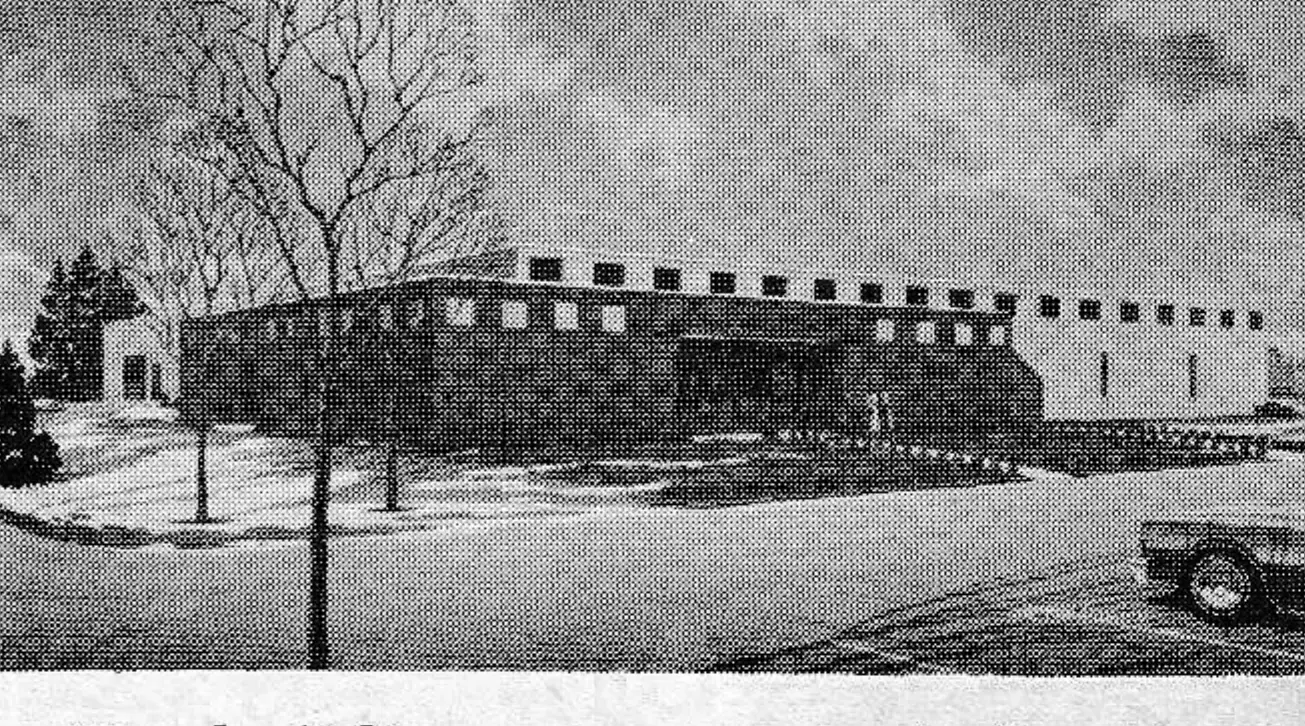
The building program includes 13,000 sq. ft. of manufacturing space and 5,000 sq. ft. of storage.
New machine tools being installed include computer numerical controlled turning and milling centers, resulting, according to Ron Ratnik, in more precision parts and faster delivery.
Ratnik’s new address is 670 Phillips Rd., Victor, N.Y. 14564 (716) 924-9111.
Lockhart named Hall’s Manufacturing Manager
Victor E. Hall, P.E., president of Hall Ski-Lift Company, Inc., has announced the appointment of Palmer Lockhart as Manufacturing Manager, with responsibility for all of Hall’s manufacturing operations. The company operates a job shop in the steel fabrication field in addition to designing and manufacturing ski lifts.
Mr. Lockhart is a Professional Engineer, and has held a variety of manufacturing positions in New York State and in his native Canada.
Trade briefs
Blue Enterprises, Larry Christensen’s recreational development firm, opened new offices on July 1 at 3303 Harbor Blvd, Suite D-1, Costa Mesa, CA 92626 . . . Clark & Todd, Nordic Consultants, was recently established by Tom Clark and Lee Todd “to provide guidelines and tools to maximize your endeavors and profits in the nordic skiing field.” Location is Goshen, Vt., 05733