
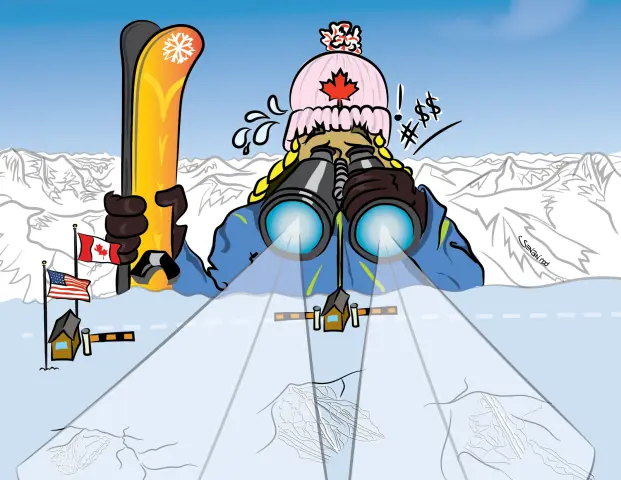

The Vermont Supreme Court, as was expected, affirmed on appeal the Sunday v. Stratton case, with its award in June, 1977, of $1.5 million — now interest-fattened by $130,000 or so.
The original claim, as most readers will remember, was that the ski area (1) negligently maintained its novice slope by allowing brush to exist within the confines of its trail’s under-snow surface; and (2) had failed to warn of a hidden danger—namely the existence of the brush or stubble beneath the snow surface. The plaintiff was alleged to have caught his ski or binding during a very slow snowplow turn which, it is alleged, caused him to fall and hit his head on a rock located a distance off of the trail which resulted in immediate and total guadraplegia.
Since that award was made, the industry has been extremely active in introducing state legislation which attempts to establish a level of defined skier responsibility. This is a vitally important step, but even with such legislation on the books, areas across the country are having to change a lot of old habits and postures in the light of the still-unclear implications of the Vermont Appellate decision. And in addition, there is going to be a lot of testing of the new laws before any degree of practicability returns.
In retrospect, there were some basic mistakes made in Stratton’s original defense, which resulted in its appeal being necessarily weak — and the Vermont Supreme Court commented unfavorably on this.
Essentially, the problem was that the Stratton appeal wanted the best of two worlds, which were contradictory. The appeal tried to invoke the skier’s assumption of risk, but the Stratton defense had been that the disputed bush could not have been there because of the standards of slope maintenance maintained. Indeed, Stratton’s own mountain manager had been subpoenaed by the plaintiff for testimony to the effect that any brush or shrub in the skiable portion of the well-travelled trail should have been eliminated.
The trouble was that the jury believed — as was their right — that a piece of brush did exist as claimed by Sunday, and a determination like that by a jury makes it a fact. In the meantime, the limb that Stratton had climbed out on was their instance that there couldn’t be and shouldn’t be brush in that trail. Only on appeal did Stratton’s attorney say, in effect, “Well one of the risks the skier assumes is the possibility of hidden brush under the snow.” The Court wasn’t buying, and cut off the limb.
One of the most important aspects of the Sunday decision is the holding by the Vermont Supreme Court that even in view of the fact that there are risks which are assumed, still the duty of the ski area operator to the business visitor on his premises, which the court feels includes the skier, is a duty to use “reasonable care” to keep its premises in a safe and suitable condition so that plaintiffs will not be unnecessarily or unreasonably exposed to dangers. Needless to say, the definition of “reasonable care” is one that plaintiffs’ lawyers love to attempt to define, particularly with the help of a jury.
The Court went on to say that while skiers fall — and that this is a matter of common knowledge — still, it does not make every fall a danger that is inherent in the sport. As long as the fall is due to no “breach of duty” on the part of the ski area, the risk of the fall is assumed in a primary sense by the skier, and there can be no recovery. However, where the evidence indicates at all the existence of a duty on the part of the ski area — and I think the judge is initimating that there are many, many areas where we may not feel we have a duty, but where the court will feel we do — or where there is an express assumption of a duty toward a skier (such as the court will find results from advertising brochures) then a breach of that duty and the resultant injury will not be a risk that is assumed by the skier.
It is clear, anyway, that ski area operators now have the obligation to carefully re-think the content of brochures and other advertising aids so that there is absolutely no exaggeration or misrepresentation of trail conditions or, in short, of what the skier (most particularly the novice skier) can really expect once he or she arrives at the area. There is absolutely no doubt that the Vermont Supreme Court found as one of its most important reasons for affirming the decision the fact that ski areas generally, and the defendant in particular, had for many years been making representations regarding trail and grooming conditions which were totally at odds with any claim that brush in a trail was an inherent risk of the sport. Needless to say, that principle applies to all manner of activities at ski areas and to all manner of advertising content.
Another point not to be missed is that the Vermont Supreme Court took the opportunity to telegraph to the skiing community — certainly in Vermont, if not in other states whose judges will be looking to the Sunday opinion—that the duty of the ski area with respect to beginning skiers is most likely greater than its duty to the intermediate or expert skier. This is a concept that is fraught with problems. The grooming of its beginner slopes is likewise a higher duty, and the court also relied upon the fact that the skiing industry in general, and the defendant in particular, have for many years been enticing skiers to the slopes with representations regarding their “fairwaylike” slopes and trails.
The court specifically side-stepped the issue of what dangers are inherent in the intermediate trail, but very specifically said they would not follow the theory that a stump left by the ski area in a novice trail would be an inherent danger.
Of great immediate concern, I feel, is the responsibility of the ski area to do all that it can to educate the skier through every available mechanism. We should be concerned with making skiers aware of what the inherent risks are and advising them of these risks through all available means while refraining from the use of any misleading claims. When we are talking about general warnings of inherent dangers or risks, we must also include warnings of risks that may not be inherent but exist from time to time.
The U.S. Ski Association position is important here, and is summed up by the following quote from Jock Soper in Skier: “USSA believes that skiers take upon themselves responsibility for dealing with many risks when they ski. The responsibility of the ski areas is not just to put lights on snow-cats, but to operate the snow-cat safely. The responsibility of the ski areas is to teach skiers what the hazards are and how to avoid them. Padded lift towers are not safe: well informed skiers are safe.
“There is a ‘new consumer’ in skiing. This is not the guy who grew up on skis when skiing was a mountaineering experience: this is the guy who saw the ads in New York or Boston and thought skiing looked great. This is the skier who needs educating before he gets to the top and points them down. Unfortunately, this is also the skier who will sue if he is hurt. Skiers assume risks all right, but they cannot be held to have assumed risks of which they are ignorant.”
To summarize, the Vermont opinion underscores the need for three courses of action: 1) immediate and continuing legislative efforts in all jurisdictions to enact legislation which is supported by USSA expressly defining the inherent risks of the sport which the skier must assume when he participates in it; 2) Each ski area will have to carefully scrutinize its program and its publications to ensure accurate representations of expected conditions, and careful consideration of risk management within each area; and 3) We must step up our efforts to educate the skier public.