Granted, there was a certain retro charm to Winter Park’s vintage base-area cafeteria, in which the only thing that had seemingly changed in the past 30 years had been the prices. But Colorado’s Winter Park Resort was more than ready to revamp dining options at its primary base area. “It was very, very dated,” recalls Tony Wayland, the resort’s food and beverage director.
Winter Park, which encompasses three peaks, has long been a favorite of Denver-area skiers, as well as the destination guests who make up between 50 and 60 percent of skier visits. An operating partnership with Intrawest, put into place in December 2002, brought an infusion of capital that enabled the resort to embark on a series of long-awaited improvements, including a $1.1 million overhaul of the cafeteria and bar in the skier-services building known as West Portal Station.
Based on this past winter, the overhaul is a success. Though skier days were slightly down (between two and three percent, according to reliable sources), the West Portal food and beverage operations were up approximately 17 percent in overall sales. And the increase at the Derailer Bar verged on 30 percent. “We did a much better job of connecting with our guests,” believes Wayland, who arrived at the resort in June 2003 from Whistler/Blackcomb. “Our ability to serve our guests was challenged by the old set-up.”
The reasons for the improvement? Efficiency, service and style.
Out with the Old . . .
The old configuration was traditional cafeteria-style, with a food-service counter fronted by tray rails (which Wayland terms “almost Pavlovian—they make you get in line and follow along”) lining the room’s perimeter. A large beverage station occupied the middle—a typical layout, but one that created congestion. Adding to the inefficiency, Wayland says, servers had to run from counter to kitchen to replenish their food supplies. “There was a lot of wasted motion,” he notes.
Moreover, “the color was very brown. It looked poor from an aesthetic point,” he says. In other words, the cafeteria was a far cry from Winter Park’s gorgeous log-and-timber Sunspot eatery, with scramble-style food stations (in addition to a full-service restaurant), at the top of the mountain.
. . . In with the New
The new arrangement, which debuted last winter, comprises seven separate serving areas—Wayland terms them “storefronts”—within a footprint of about 4,000 square feet. And though enhancing aesthetics was certainly a factor in the redesign, streamlining the serving process was priority number one. “Everything that we do has to have an efficiency standpoint,” says Wayland. Thus, each serving area is self-sufficient; once the cooks set up in the morning, they theoretically have everything they need at hand, eliminating back-and-forth trips to the main kitchen. Wayland considers the set-up friendlier for customers, too, “since guests can interact more with staff members.” And tray rails no longer separate guests from the food and servers.
Efficiency extended to the renovation process itself—which moved at the speed of a Japanese bullet train. Construction started during the first week of August 2003, and everything was ready for opening day at the resort a mere three months later, November 12. “It was very matter of fact, but high stress,” acknowledges Wayland.
Going in Style
To provide a unifying theme for the food stations, Wayland and his crew expanded on the train motif that has long defined the resort. Trains regularly enter and exit the western portal of the Moffat Tunnel adjacent to the ski area as they travel beneath the Continental Divide. Trail names such as Golden Spike, Brakeman and Trestle reflect the area’s railroad history. Amtrak runs a popular Ski Train from Denver to the resort on winter weekends.
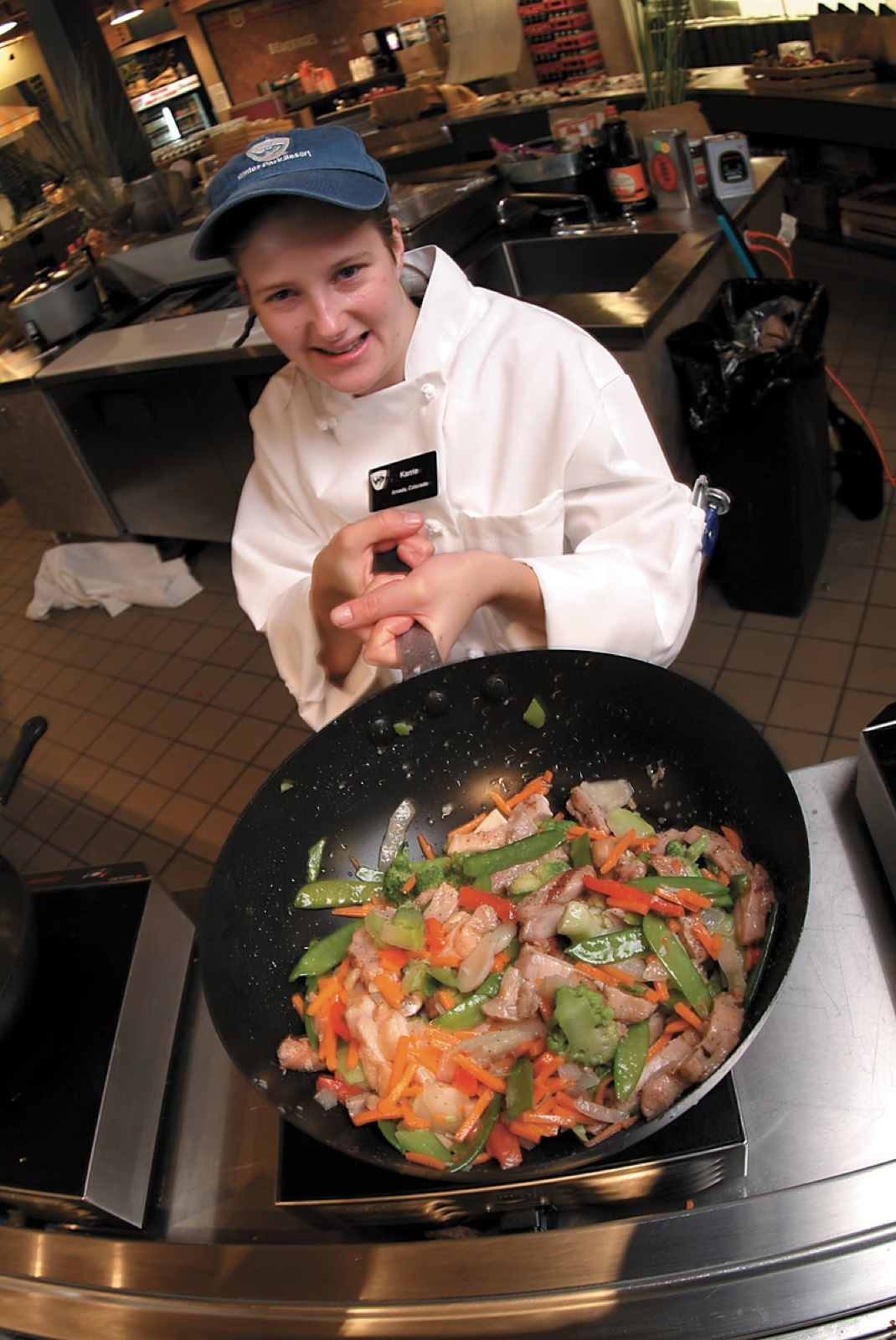
Now, skiers can get their lunch from serving “stations” named Grand Central (New York-style pizza, Manhattan clam chowder); Santa Fe and Southern (burritos, fajitas); Illinois Central (Chicago-style dogs served from a replica hot-dog cart); Moffat Tunnel (burgers, fries); Southern Atlantic (pulled pork, cornbread muffins, brisket sandwiches); Short Line (soups); and Orient Express (edamame, rice bowls, made-to-order stir fries). To reflect these changes, the overall name of the cafeteria was changed, too, from the mallish-sounding West Portal Station Food Court to the Moffat Market at West Portal Station.
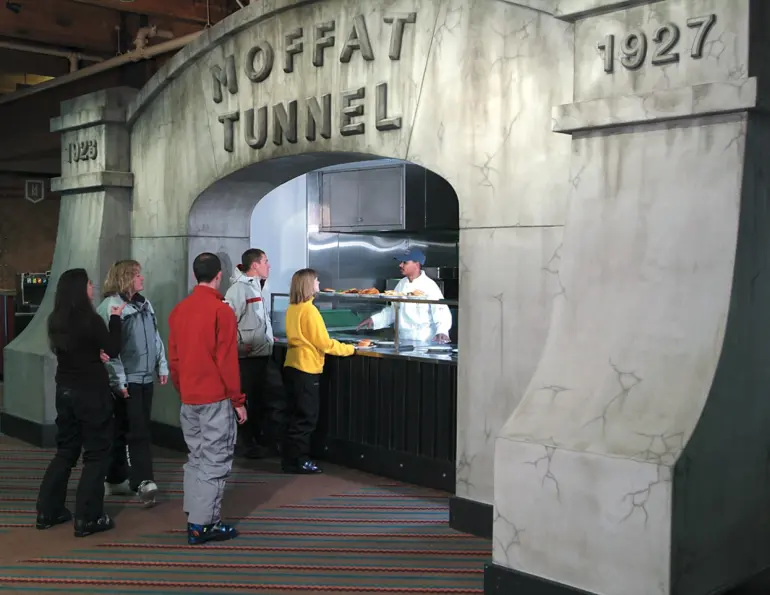
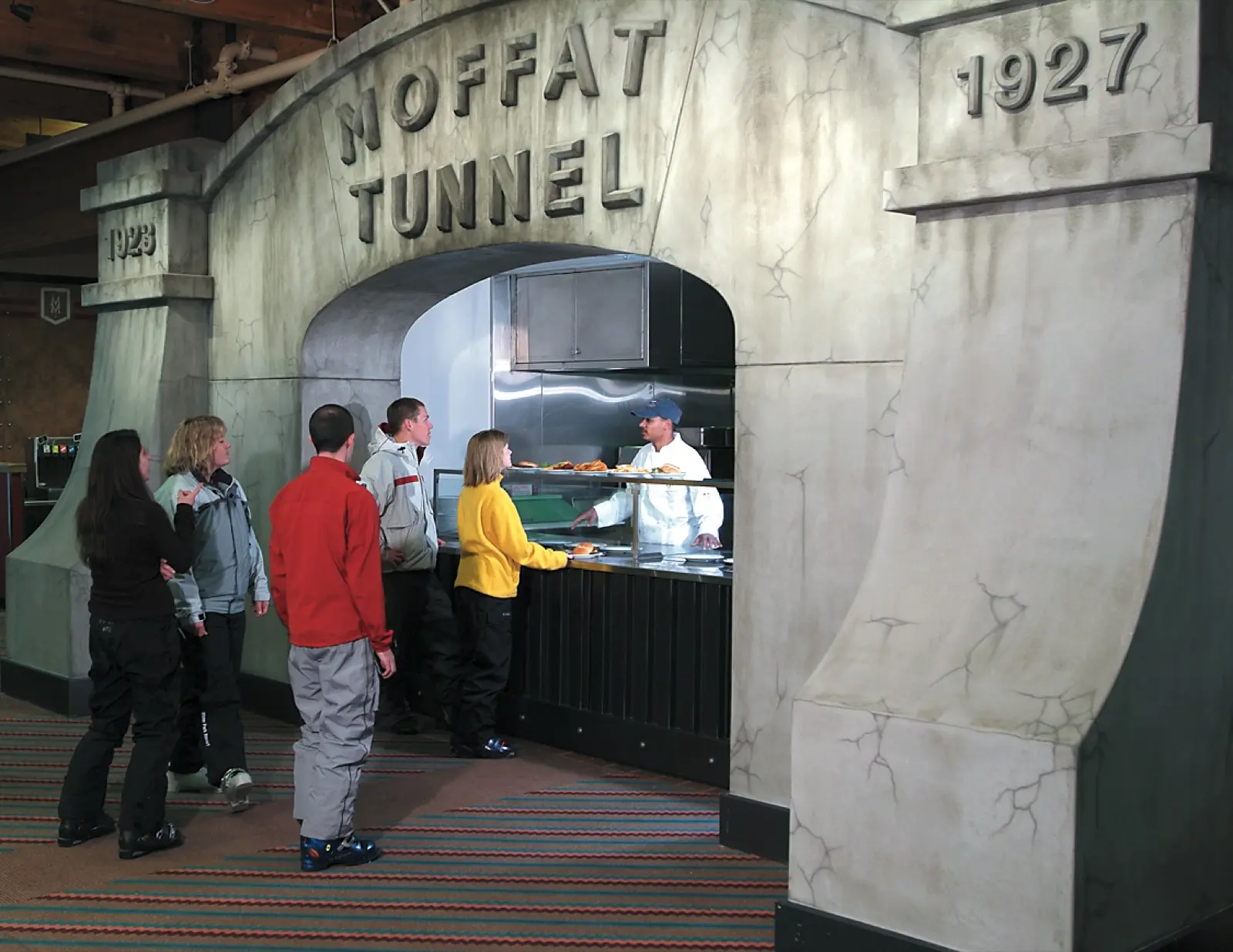
The railroad theme carries over to design elements as well. Wood and iron (“you’d see those in a train station,” says Wayland) are used throughout. The Moffat Tunnel burger counter is demarcated by a large facsimile of the tunnel entrance itself (made out of a thin layer of concrete over plywood), “a grandiose way of presenting one of our most popular items,” says Wayland. Staffers wear railroad-like striped overalls.
The food stations are placed around the perimeter of the food-service area, except for the Orient Express, which anchors the middle. The layout encourages guests to explore their options. “It’s a bit of a journey,” comments Wayland. “You get to go in there and select what you want.” At the same time, faster service means less waiting time. “There’s more of a flow to it now,” says communications director Joan Christensen.
Efficiency notwithstanding, Wayland doesn’t want customers to enter and exit the food area too quickly. For example, beverage stations flank the Moffatt Tunnel storefront on both sides. “If you just wanted to grab a drink, you’d still have to walk the gauntlet of new stations and other merchandising, and be tempted,” Wayland explains. Desserts and impulse items are set up throughout the serving area and at cash registers.

Breakfast, which starts at 8 a.m., is a scaled-down affair, with items such as breakfast burritos and egg plates served from just one of the food stations.
The configuration of the seating area adjacent to the food-service hub remains the same, though overall seating capacity within the the four-level building has been increased by about 200 seats, thanks in part to the elimination of a conference room. But the décor has changed significantly. “We had a real desire to get rid of the ’70s- and ’80s-era brown,” says Wayland. “We added rich red, blue and yellow to the walls to soften up the beige that denoted an old-school cafeteria.” Table surfaces were changed from laminate to wood, and the plastic bucket seats were replaced with pine-topped chairs, with handy baskets underneath to hold mittens and hats.
Upgrading the Bar Car
The other significant part of the renovation focused on the Derailer Bar, adjacent to Moffat Market. Though a popular après-ski spot thanks to its convenient central location, the split-level bar always suffered from a bit of an image problem: Once the bar’s main level filled up, partyers would be forced onto the second level, which was on the same floor as and adjacent to the cafeteria, and virtually indistinguishable from the cafeteria’s old atmospherically-challenged seating section.
A main hurdle, according to Wayland, was “How would we designate that second level as part of the bar and not part of the food service?” The solution included erecting a canopy that sections off the bar area, delineating it from the cafeteria. The floor surface in the bar was changed to wood to enhance the distinction (the food area is carpeted). And a small full-service bar was added to the second level, complementing a brand-new bar on the first floor. Partly in deference to cafeteria guests, since there are no walls between the two outlets, the bar was made nonsmoking.
Food choices at the Derailer also underwent an upgrade. Instead of just pizza, the Derailer now offers a full lunch menu, which includes soups, sandwiches, burgers and pastas, from 11 a.m. to 3 p.m. daily. It also provides base-lodge guests with the option of sit-down table service. For after-ski, the Derailer offers a snack menu; it does not serve dinner. Given that there is currently not a huge bed base at the base area, guests usually linger only until about 6 p.m. or so.
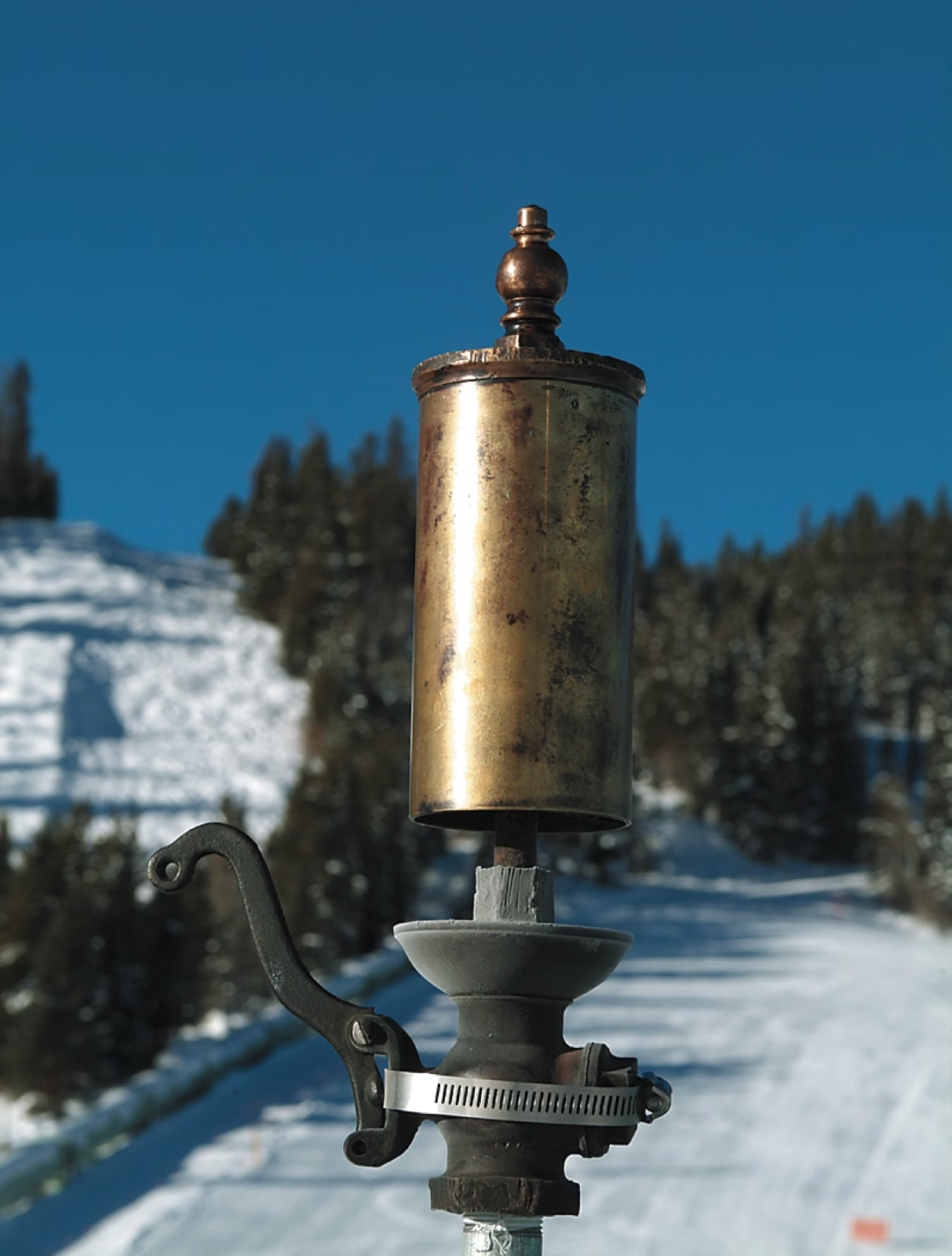
A fun—and again, train-themed—tradition was also introduced last season to signal the beginning of after-ski: A vintage train whistle (found on eBay) is sounded every day at 3 p.m. “You’d hear the whistle go off, followed by the first few bars of Ozzie Osbourne’s Nighttrain,” says Wayland. “We got a lot of very inquisitive looks at first, but it worked out extremely well.”
Finishing Touches
Rounding out the food and beverage operations at West Portal Station are the new Portal Perk coffee counter and the Boxcar Deli. Recognizing the importance of that early-morning caffeine jolt to sleepy-eyed skiers and riders, the resort added a semi-permanent counter and cart serving baked goods and coffee drinks on one of the building’s lower levels. “You used to have to go up three flights of stairs to get a cup of coffee,” notes Wayland. “Now it’s just one flight.”
Meanwhile, the deli, which opened in summer 2002, has a new menu that complements what the cafeteria now offers. Premade sandwiches and grab-and-go items have replaced made-to-order sandwiches. “Packaging and convenience are what we’re looking at there,” says Wayland. “We don’t want to cannibalize our own business.”
This new arrangement also suits Winter Park’s summer business. The resort hums along during the summer, when guests come to ply the resort’s lift-served mountain biking trails, ride the Alpine slide, navigate the human maze or try out the trampoline bungee jump. To serve these visitors, the Boxcar Deli and Derailer Bar remain open (and the 3:00 “après” whistle still sounds). The portable hot-dog cart from the Illinois food station is relocated to the outdoor activity zone. And Penguin Pete’s, which offers ice cream, milkshakes, sundaes, and cookies, operates from a portable counter within the West Portal Outfitters retail store. For now, the Moffat Market itself is open only in winter.
After less than a year, the entire renovation has proved its worth. With some minor tweaks (adding ribs and chicken to the barbecue offerings at Moffat Market, increasing the selection of desserts and grab-and-go food), Wayland and his team are on track (pardon the pun) for even greater returns this season.