
The ski and snowboard print media, long one of the chief resources for readers and advertisers alike, has gone through many changes in the past few years, from Snowboarder’s broadened scope to Freeskier’s redesigned website. To help sort it all out, SAM asked the executives and top editors at the leading magazines to describe their audiences and their strategies for growing their readerships, the sport, and ultimately your market share as a resort advertiser.
Some common threads? Whether the book is produced by a mega media corporation or a bare-bones “boutique” outfit, an enhanced Web presence has become a vital complement to the print products. Corporate partnerships and event sponsorships are also viewed as key components of the marketing package. But there are wide differences in how each company defines and pursues its market. Here’s how the publishing execs themselves describe it. Starting at the top.
Mountain Sports Media (MSM)
By all measures the king of paid circulation, this subsidiary of Time4Media, which in turn is a division of media giant Time Inc., owns Ski, Skiing and Warren Miller Entertainment (WME). Ski, which produces eight issues a year, boasts a paid circulation of 450,000 per issue. Skiing, with seven issues, comes in at 400,000. And Warren Miller’s signature kick-off-the-season ski flick, now in its 55th year, is viewed by 300,000 powder-starved enthusiasts each fall.
MSM managing director Perkins Miller says staying on top of the heap means getting out on the slopes and listening to what skiers want from their magazines. “We’re out there trying to stay in touch with what the readers want to see, keeping it fresh and exciting and new,” Miller says, “and if we do that, we keep the sport that way.”
It also means further differentiating the print brands and their websites: Ski targets an older demographic concerned with kids and real estate, and Skiing is aimed more at the partying, adventure-sport crowd.
Ski continues its foray into the lifestyle of the sport, adding a real estate finder to its revamped website (www.skimag.com), which will launch between Sept. 1 and Oct. 1. The goal is to position Ski as the source for premier mountain properties “with all the authority of the Top 60 Resort Guide,” Miller says.
The typical Ski reader, Miller says, likely has kids and may be looking to buy a vacation home in the mountains. These are destination travelers looking for a turnkey experience. But, Miller adds, Ski remains an inclusive brand, not focused on only the best of the best. “We’re not talking about putting someone on a featherbed on an island. It’s still skiing,” he says.
Skiing , MSM’s edgier brand, seeks to be “representative of all the things that are going on on the hill,” Miller says. Its own resort rankings tend to focus more on nightlife and terrain. The book remains strongly focused on gear—hiring a ski test director and adding a more robust gearfinder to its own revamped website (www.skiingmag.com).
Still, Miller says that even as Skiing continues to attract younger readers, it, like Ski, will maintain its broad appeal. “Our magazines are embracing of skiers; we welcome everybody. We don’t want to appear to be too cool for you to understand,” he says.
In that same vein, Warren Miller’s new film, Impact, will have its share of powder footage and big-mountain segments, but the humor and the storytelling that have made the annual movie an institution will remain the focus. New for this season will be a partnership with Capitol Records to produce and promote the film’s music, including an online playlist—which happens to be a fine way to drive traffic to the WME website. Also, Warren Miller is preparing for the future of film by investing in new lenses and cameras over the next year or two, to provide the ability to shoot in high definition.
MSM has used events and partnerships to extend its marketing reach for decades, and it continues to expand these as well. “We do our best to bring our magazine advertisers and partners the best events we can, and they do the same,” says Stefanie Luciano, vice president of marketing. “They appreciate these events and want us to keep bringing them back.”
MSM’s latest event: the “Warren Miller Experience,” a weekend-long event to be held at three areas this season, with both on-hill and après-ski elements. It includes product demos; a 40-minute film culled from Impact and older footage, shown on a large outdoor screen during après-ski; live bands (thanks to the partnership with Capitol); and product giveaways.
The company’s expertise in events led to the creation a few years ago of Mountain Sports Hospitality, a division that organizes custom events and outings. MSM hosted several large advertisers at the Olympics in 2002, after which, says Luciano, “We got all these calls from people who asked, ‘can you put an event together for us?’ We can provide these experiences because of the relationships we have with resorts.” This provides another avenue for Mountain Sports Media to help market its resort partners.
Ski Press
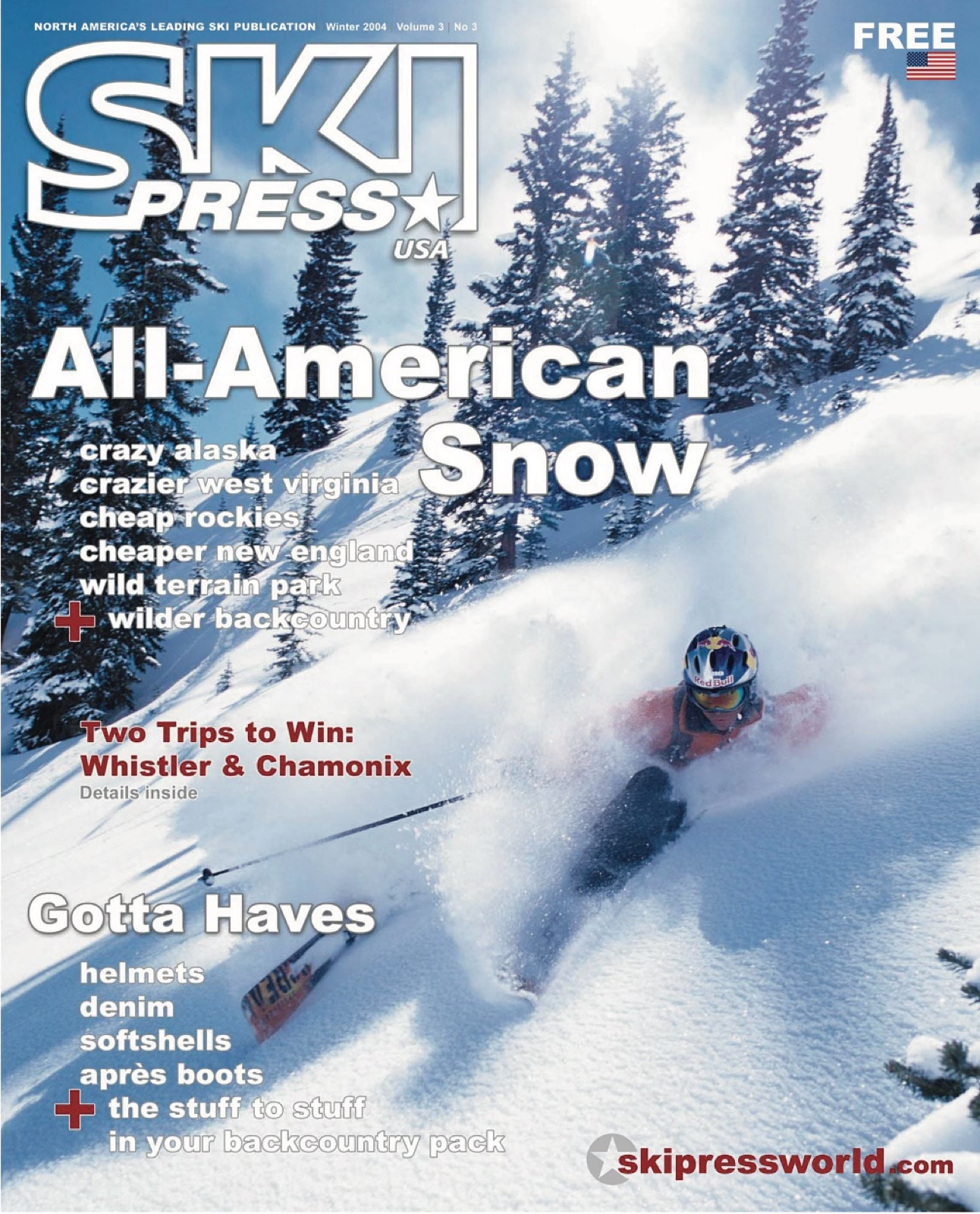
Ski Press started as a newsletter for Jean-Marc Blais’s Canadian tour company and has become the largest free circulation ski magazine in North America. Its three issues a year move to the tune of 625,000 copies at 4,500 drop points in the U.S., and 182,000 copies at 1,500 drop points in Canada.
“We’re the Mountain Sports Media of Canada,” Blais jokes. He claims that his north-of-the-border editions, which are produced in both English and French, garner 25 percent of all Canadian ski publication advertising revenue.
Blais says Ski Press experienced a 50 percent jump in U.S. business last year, and he anticipates another 35 to 40 percent increase this season as the magazine goes to a regional format (East, West, Central), which should appeal to resorts.
The secret to the magazine’s success, he says, is the free, consumer-friendly format, strong Web presence (125,000 unique viewers, and 100 percent of the magazine’s content online), and a business plan that hinges on partnering with the ski industry.
Ski Press has a substantial Web presence. Customers of five major ski retailers—a total of 800,000 e-mail addresses—receive the online version (www.skipressworld.com) free, three weeks before the print version hits newsstands. In addition, in an echo of his tour-company roots, Blais intends to use his online daily news pages to serve as a clearing house for ski travel deals—all-inclusive and often last-minute packages that are increasingly being moved by major consolidators.
Ski Press will continue its aggressive partnerships this season. It produces a special X Games edition and recently renewed its contract to publish a Las Vegas ski show edition for SnowSports Industries America through 2008.
Blais says he’s surprised that resorts haven’t caught onto his “democratization of access” approach to ski industry news on a national and even global level (the company opened a Munich office last season). That, he says, remains his biggest battle. “Everyone’s complaining, but they’re just doing their traditional buy,” Blais says.
“We’re really the underdogs and the grass-roots operators, but that said, we’re trying to grow not just our business but grow the ski business,” he adds. “We’re not just a publishing company, we’re a ski company.”
Primedia Action Sports Group
Primedia’s Action Sports group includes Powder and Snowboarder as well as Skateboarder, Surfer, Bike, Surfing, Climbing, Canoe and Kayaking, and SG (Surf, Skate, Snowgirl). Each of the snow mags has its own distinct niche: Powder moves to become a high-end coffee-table journal, while Snowboarder takes aim at something closer to the mass market (if snowboarders can be thought of in that way).
After a tumultuous period of three owners in four years, Powder has invested in a redesign, larger format, higher quality stock and a new Website. But the magazine’s core philosophy will remain the same, according to Powder publisher Josh Weis: “We’re not really changing the direction of Powder. We never want to be the 200,000- to 300,000-circulation magazine for the masses; we want to stay true to who we are.”
Powder has long been the soulful ski mag for the hard-core expert who skis an average of 42 days a season. But Weis admits the book, which distributes 70,000 paid copies six times a year, had “lost a bit of its soufulness” over the years.
Weis promises the larger format (9 by 12 inches), new look and a higher level of journalism will instill the old energy and bring back the passionate skiers who may have drifted away in recent years. Long known for its photography, Weis says Powder is aiming to better reproduce and showcase those images, both editorially and in advertising, so the magazine will become more of a coffee-table publication with longer shelf life and even higher brand loyalty. The idea is to fill a niche currently vacant in the industry: The high-end journal comparable to Alpinist in climbing and Surfer’s Journal in surfing.
“You can’t ignore the dedicated skiers. They define themselves as skiers, they’re expert skiers, and that’s their passion in life. That should be an essential part of every resort’s campaign,” Weis said. “You have to target the expert skier, and that’s exactly who we reach.”
Powder will also unveil a redesigned website (www.powdermag.com), with dedicated in-house designers, to help bolster its unique viewership of 80,000 per issue. And the magazine will continue its Powder to the People Tour, Powder Video Awards and remains the sole media sponsor for all the X Games qualifying events. “We want to be the highest quality magazine physically, editorially and photographically that there is in the industry,” Weis says.
And for now, it doesn’t come with a higher price tag. Newsstand, subscription and ad rates will remain the same, he adds.
Snowboarder magazine is heading in a somewhat different direction from an audience standpoint. According to editor Pat Bridges, the magazine will “continue our initiative to bring in more broad-based subject matter and less high-end content,” a change that began a year ago. Snowboarder will use pro riders and opinion-makers to provide in-depth profiles of resort regions, Bridges says. It will also present blanket features covering different aspects of the sport and investigative stories exploring the social, economic and political issues inside snowboarding, giving the audience a behind-the-scenes peek.
“Our goal is to be more inclusionary as opposed to exclusionary with our content, while at the same time not making the same mistakes the ski magazines made in the early ’80s,” Bridges says. “They turned their backs on the thrills of skiing. . .the snowboard industry won’t do that.”
Snowboarder comes out eight times a season with an average circulation of 200,000 copies per issue. Its target market is males ages 14 to 22, which makes it imperative, Bridges says, that the magazine delivers pertinent and credible content. “While the magazine has matured as far as back of the house and economies of scale, that doesn’t mean our content has to mature,” he adds.
Snowboarder will also continue its association and sponsorship of popular events such as the Driven to Ride Tour, the Cutter’s Cup superpark event (in Lake Louise this past season) and the USSA Grand Prix Series.
Transworld Media
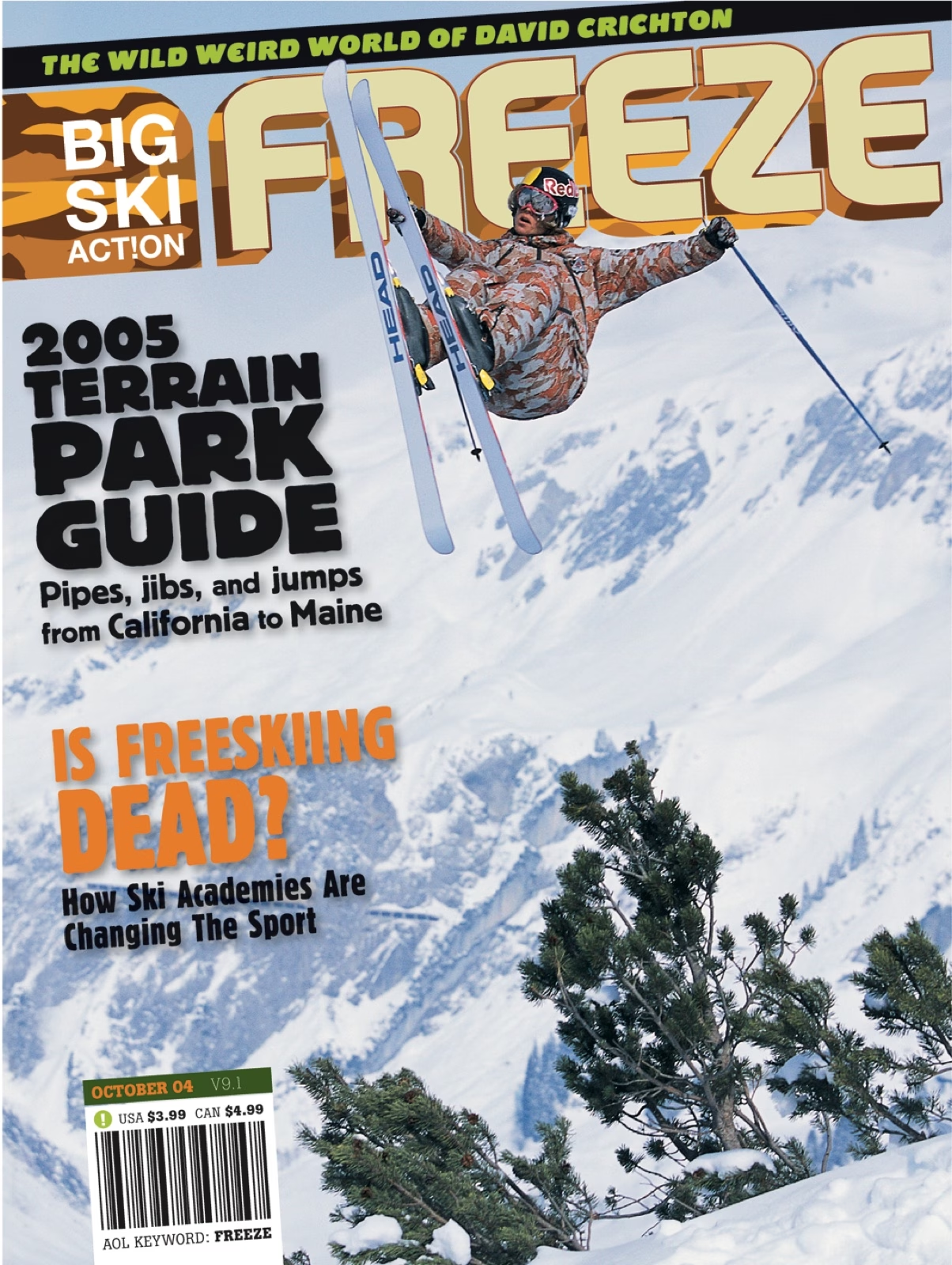
Another subsidiary of Time4Media, Transworld owns Transworld Snowboarding and Freeze magazines, two publications with their sights set squarely on the booming youth market.

“We’ve got the core and the enthusiasts, and our biggest focus over the next few years is to go after the fans and convert them into enthusiasts,” says Transworld’s director of marketing, Mike Jaquet. “We feel at Transworld we have the two strongest and cleanest brands. People understand exactly what those brands are about, and that’s where we’re going to focus our efforts.”
Transworld’s publications speak to the 12-to-24-year-old snow riders who Jaquet says are “the most dynamic niche. And we’re the number-one youth-market buy.” The six issues of Freeze enjoy a paid circulation of about 50,000 per issue and 75,000 overall; its website (www.freezeonline.com) gets about 75,000 unique hits a month. Transworld Snowboarding, which puts out nine regular issues and two specials, has a paid circulation of 130,000 and a total circulation of 240,000. Its online version (www.transworldsnowboarding.com) gets about 300,000 unique hits per issue.
Those are substantial numbers, Jaquet says, but not all resorts feel the need to hotly pursue that market through ad buys. “We need to make the resort industry comfortable in terms of the power of the youth market,” Jaquet says. “We need to keep communicating the differences in their habits, how they consume media, how passionate they are and how we can reach them.” He terms Transworld’s target market more as a life stage than an age group. It’s a demographic with a great deal of discretionary time, he says, which is just as important as discretionary income.
New this season for Freeze is a major network television deal for the U.S. Freeskiing Open at Vail, the magazine’s signature competition, and by far the largest event Transworld still owns and operates. (The company still participates in but has sold such events as the Warped Tour and the Vans Triple Crown of snowboarding.)
As far as events are concerned, Jaquet says, “We can be better partners than we are owners. Our core business is our readership. . .we’re not looking to be the biggest event operator out there.” Speaking of partnerships: Transworld has become the official sponsor of the U.S. Snowboarding Team heading into the 2006 Winter Olympics in Torino, Italy.
Transworld’s Internet goal is to get more and more video on the magazine’s websites—from same-day event video to athlete profiles. “It’s the top consumed content on the websites,” he says. “When new video is up [on the site] our viewership is up, and we become a better advertising source.”
Ski Racing
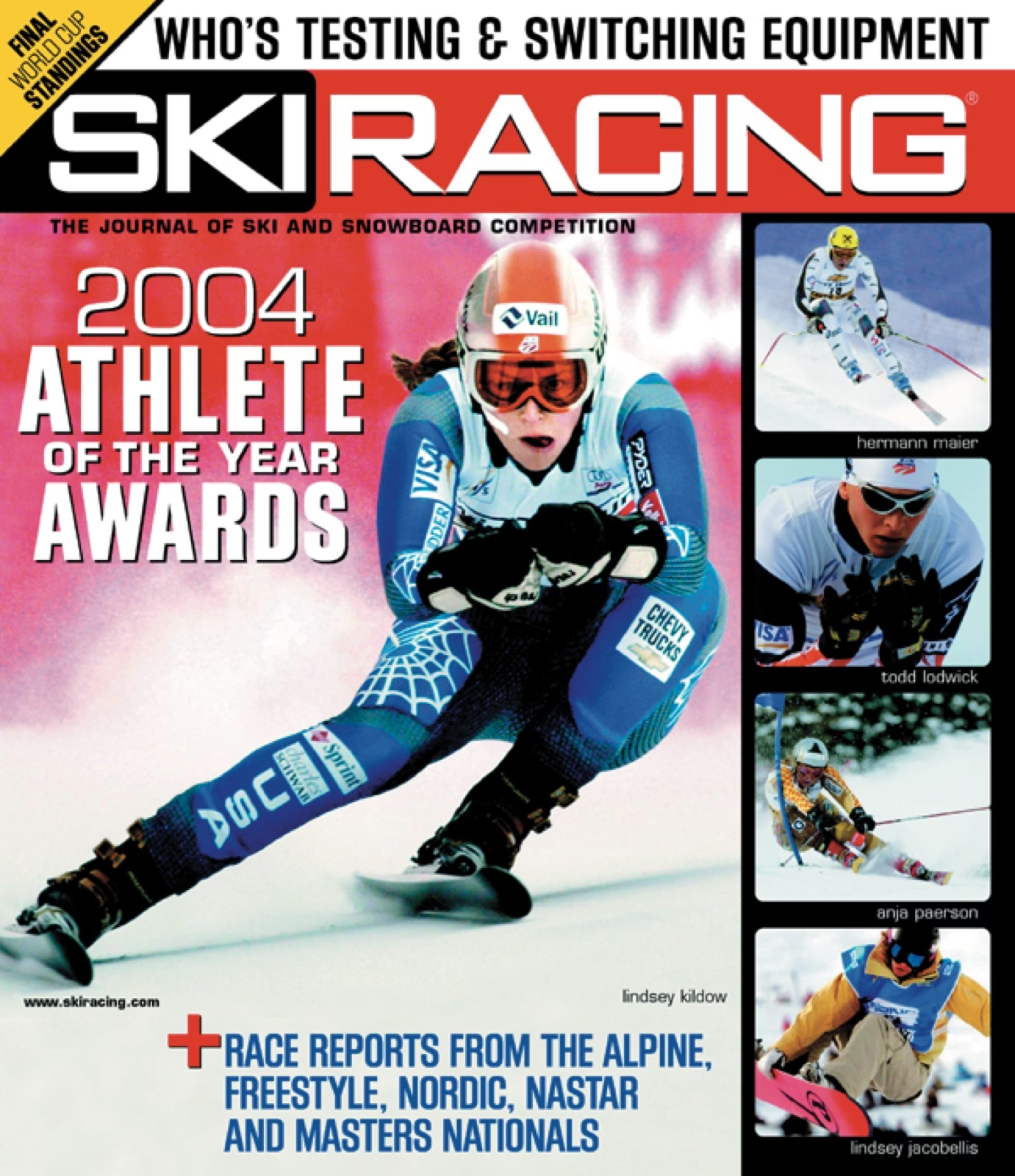
On the other end of the competition spectrum is Ski Racing, produced by Boulder, Colo.-based Inside Communications. Alpine ski racing coaches and competitors make up the bulk of the magazine’s average circulation of about 44,000 copies for each of its 15 issues—approximately 20,000 of them paid.
It’s a mature audience. The bulk of Ski Racing’s readers (63 percent) are between the ages of 35 and 55; less than 15 percent are 18 or younger. “We have the higher-end demographic,” says Ski Racing editor Natalie Kurylko. “Our readers are pretty core. They’re competition people; they care about anything that impacts competition.” With median household incomes of $112,000, 90 percent of Ski Racing’s readers participated in a ski or snowboard competition in the last year.
The magazine is looking to grow that hard-core readership leading up to the 2006 Olympics in Torino. “One of our large pushes this year is to grow the fan base for the sport,” Kurylko says. “I know that [interest in racing] grows exponentially, and for us it’s trying to feed off that and build that momentum.” As part of the effort to increase the fan base, look for an increased emphasis on the growing world of Nordic competition and two special snowboard competition guides.
Freeskier
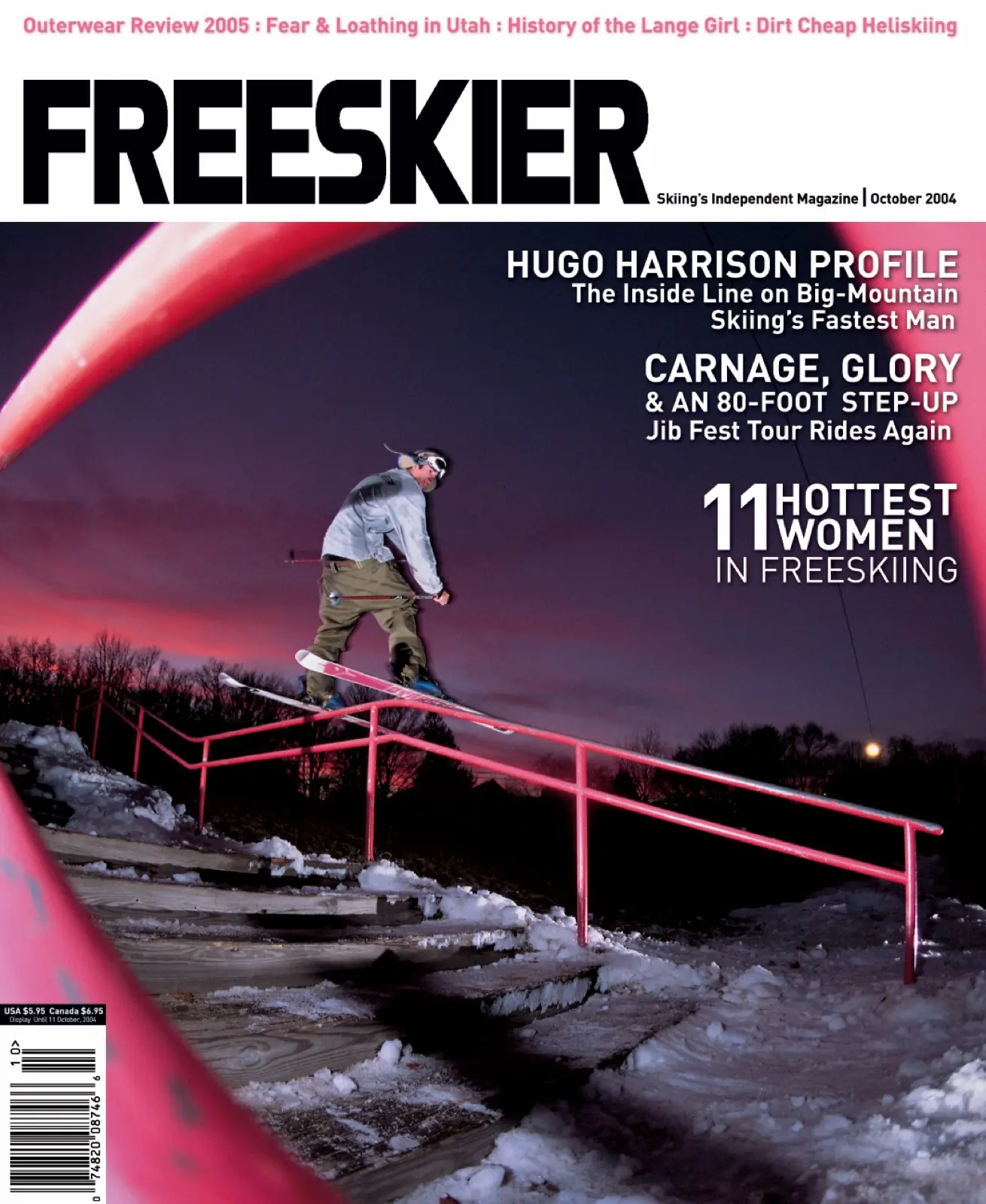
“Our goal is to own the ski world online,” Freeskier magazine founder, publisher and editor-in-chief Bradford Fayfield says. He notes that one independent source www.alexa.com, an Amazon.com company, already ranks www.freeskier.com the top ski-oriented site.
Billed as “skiing’s independent magazine,” Boulder-based Freeskier averages 300,000 monthly hits on its site. This season the site will get a complete overhaul by two of the ski industry’s hottest Web designers, Fayfield says.
That presence will enhance Freeskier’s ability to “deliver the core, progressive ski movement to the mainstream audience,” he says. “We bring the scene and cool factor, and the resorts have embraced that.”
Because the Web reaches a younger audience, Freeskier’s website targets terrain-park junkies, while the print version—five issues between October and February with an average circulation of 85,000 per issue—includes more big-mountain features.
The median age of a Freeskier reader is 24, with the bulk of the readership falling into the 18-34 demographic. “The resorts have traditionally had a challenge marketing to that segment and booking rooms to that segment, but they are staying in hotels, they are buying tickets, they are spending money, and one of our challenges is to help the resorts reach them efficiently,” Fayfield says. By way of competitive comparison, he calls his content “less sophomoric” than Freeze.
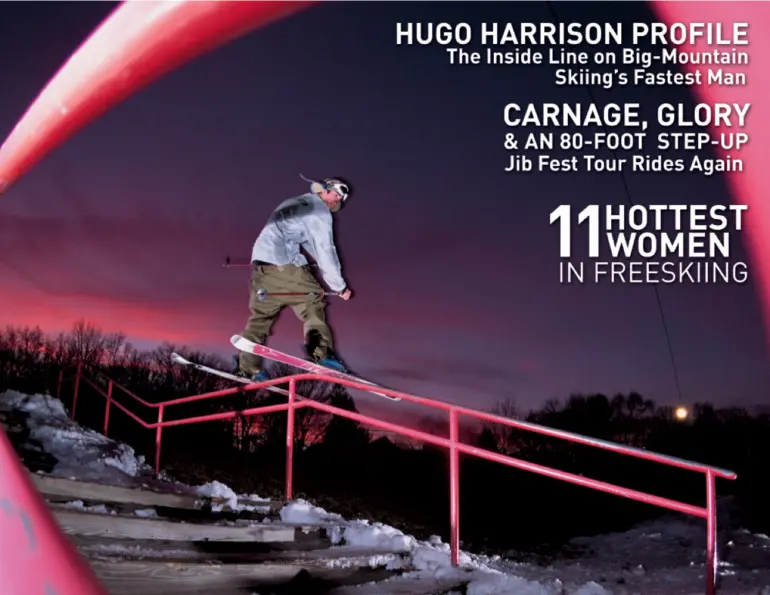
Freeskier will follow up its well-received shift to a larger format last season (9 by 10 7/8th inches) with a redesign starting with October’s “10 hottest female athletes” issue. “We’re doing a total redesign this year with the goal of maintaining that progressive look and feel, and pushing the boundaries of traditional ski magazines,” Fayfield says. Look for more white space, better photo play, more action and new departments and type faces.
Freeskier’s menu of new-school events remains a key part of the marketing package. The lineup includes Glen Plake’s DownHome Tour of Midwestern ski areas, the 4th annual Jib Fest at Breckenridge, and the VT Open at Stratton, billed as the most competitive freeskiing competition in the East.
So there you have it. Nearly a dozen different titles, each with its own particular focus. If you can’t find one that suits your purposes—well, it probably won’t be too long before one of the above, or someone new, will take care of that. Media abhor a vacuum.
The Guest Editor’s Take
The magazines are the lenses that many skiers and riders use to envision how they will experience our sports. Those impressions have a huge impact on their engagement with us. As a regional day-visit resort catering primarily to the under-30 set, we don’t advertise in the national magazines. But they affect our visitors, so we read them with a fairly critical eye.
What we look for: Editorial and photography that is relevant, human, self-effacing, tongue-in-cheek, humorous without always being about attitude, and aspirational. What we’re tired of (especially in advertising): more of the same.
If we were buying MSM, we’d lean toward Skiing—but worry about the hedgy position that “we welcome everybody.” That’s a tough strategic position to stake out. Powder’s photography is always a treat, and the magazine gets a nod for acknowledging a decline in “soulfulness.” Here’s hoping that returns. I also recommend another new coffee-table book, The Snowboard Journal, for its thoughtful editorial and top-notch photo journalism.
Thumbs up to Snowboarder’s Pat Bridges for de-tuning the high-end content. Bringing material to the reader that is relevant and accessible is critical if the issue is going to last longer than a 20-minute look at the new ads. We look forward to “Open Shutter,” too. Transworld Snowboarding is the most closely aligned with our demographic and is undoubtedly the strongest brand name. We love the “Yellow Snow” and “Tiny Type” sections for their irreverent and human touch. That said, the magazine feels elitist and could use some content that’s below the fantasy line for most readers. Still, the Transworld website is a favorite for the latest news and industry intelligence.
As much as these two magazines are staples on the conference room table, I wish they were more engaging. Freeze has definitely improved in this realm and deserves to grow.
Actually, we do advertise in one national mag—Freeskier. It’s won our limited ad dollars by having clear points of differentiation: celebrating the pure goofy joy of skiing at little areas (i.e. the Glen Plake Downhome Tour), effectively leveraging the web, balancing top pro action with the young undiscovered greats-to-be and working as a motivated resort partner.
Ski Press has caught our attention, too, less for content (though it has grown leaps and bounds from its early newslettery editorial) than for its free regional distribution, making this a budget-minded way to get in the hands of potential guests. We’re also big fans of the regional magazines, such as Eastern Edge and DV8 Media’s Platinum and Resolve in the East.
A final thought. As advertisers, we choose the magazines that fit our demo, but our ads should also be appropriate for the audience. It’s important for our ads to stand out and be memorable, lest the good work all these magazines are doing to celebrate and grow the sport be lost in a quick thumb-through of “seen that before” ads.
—Bill Benneyan, Mountain Creek