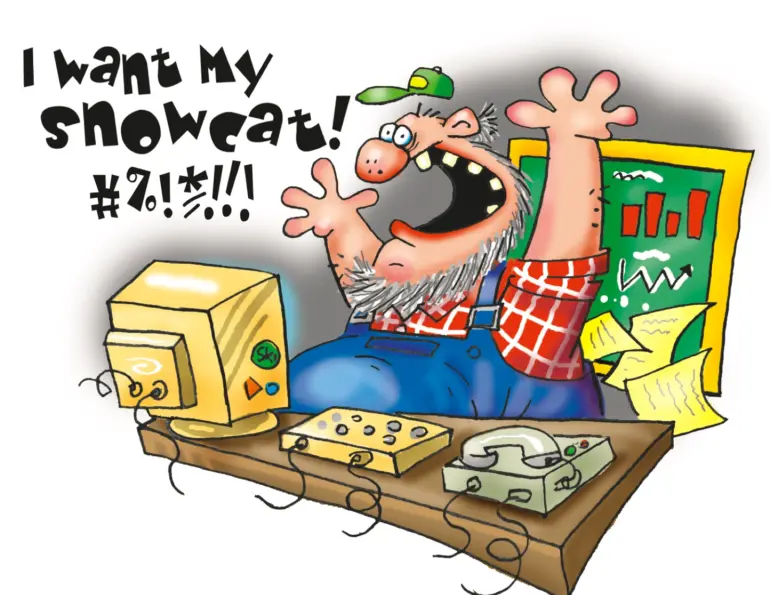

The most critical interface at successful ski areas exists between the two departments that are fundamentally the most dissimilar: Marketing and Mountain Operations.
Think about it. Operations is practical, with straightforward procedures which lead directly to tangible results—the trail is groomed, the lift opens. Marketing, on the other hand, is theoretical. Marketing dabbles in the black arts, creating and managing programs that, one hopes, pay off down the road.
The personalities are different, too. Operations is hands-on and street smart. Ops rewards people who like to address technical problems, see immediate results from their actions and who become bored if things are too routine. Much of the work is solitary or small-group, so introverts are common. Advanced training is essential, but not necessarily formal; some of the industry’s best operations people never graduated from a four-year college. Many ops people grew up near the resorts at which they work—one of the reasons they tend to stick around if they like the work.
That’s quite a contrast to most marketing departments, where MBA degrees are increasingly common. Resorts look for advanced communications skills and at least passing familiarity with financial management in their marketers. Outgoing, extroverted personalities are prized. Organizational structures are clear, but the process tends to be collaborative. And most marketers will jump at a better offer, which means that marketers are more likely to be ‘from away.’
How the heck do you get two such disparate groups to work together? Continued next page
“You can look at the relationship between ops and marketing in two ways,” says Bill Jensen, Chief Operating Officer at Vail. “Marketing makes the promise, and operations has to deliver. Or operations calls the shots, and that determines what marketing can sell. I personally think the first model is the better one, but either way, ops and marketing are married—and it isn’t a 50-50 thing. Both have to give 100%.”
Both departments must understand who the clientele, current and potential, is, and what those customers want. Both departments need to understand the attributes that make the resort unique, strive to enhance that uniqueness, and communicate it to customers through thought, word and deed.
Ultimately, the responsibility for making this happen falls to the general manager. But, when performing the Solomonic task of aligning competing points of view, or simply saying “no,” it’s tempting to uphold the department that’s most familiar—operations, marketing or finance.
“If I have to choose,” notes Jensen, “I always defend the group that makes the 100 percent effort on communication. And if both sides are making that effort, there’s never an issue.”
Talk to Me
Obviously, communication is the key to a smooth operations/marketing interface. But you can’t just tell the two departments they have to talk. They already know that. Rather, resorts must create structures so that those conversations occur on a regular basis.
Planning is essential. “All I ask of marketing is this: give me a warning,” says one ops chief. “Tell me twelve hours in advance that you need a cat for a photo shoot, and you’ll have it.”
Proximity helps, too. One resort houses all senior managers in the same office suite, which facilitates the flow of information. Regular planning meetings—both intra- and interdepartmental, with staffers from all levels in attendance—also help.
This last is vitally important, because ops and marketing staffs really need to understand what their counterparts do, and why. A great relationship between the managers themselves is of little value if the foot soldiers are prepping for battle.
If that’s all pretty obvious, why do ops and marketing work well together at some resorts and not at others? To find out, we spoke with senior ops and marketing people at resorts known for consistently delivering a good guest experience. We promised anonymity to all to encourage candor.
Even at successful resorts, at least one person—the ops boss, the marketing chief, or both—had lingering frustrations with the other department.
Here’s an example. The marketing chief at one resort says, “I can’t get ops to grasp who’s here early and late in the season. In November, I don’t care about having the beginner area open. What I need is the jib park.”
The operations chief says that communication between the departments is completely open, and there is nothing he’d change.
It’s possible that ops has a perfectly valid reason for its decision to open beginner world first. Regardless, there’s a disconnect here, and there are only four possibilities to explain it: 1) Marketing isn’t speaking clearly; 2) Operations isn’t listening; 3) Operations isn’t speaking clearly; or 4) Marketing isn’t listening.
I’m OK, You’re OK——Sometimes
Relationships—stable ones—are critically important. Managers with the longest tenures tend to have the best relationships. But at many mountains, marketing staff turnover is high, and relationships don’t have time to develop.
“I’ve seen a lot of marketing people come and go,” sighs one ops manager. “They all want to make a name for themselves. I don’t know how many times I’ve tried the same old ‘new’ concept generated by a new marketing guy. It gets frustrating.”
Fortunately, his current marketing counterpart is sensitive to that issue. “I’ve only been here a year,” he says, “and I haven’t had time to build the relationships I had at my old resort. There’ve been a lot of changes here, and there hasn’t been a consistent voice and dialog. My challenge is to get everyone thinking the same way.”
To that end, the resort has begun daily planning meetings attended by both marketing and operations managers. Weekly meetings and Intranet sites can also improve communications between department heads.
But how do you facilitate relationships between upper-level marketing and lower-level ops, or vice versa? One ops manager says his resort’s essentially flat organizational structure helped ensure a smooth flow. “You can have too much bureaucracy,” he says.
Recognition is another key. “Everyone’s got an ego,” says one marketer. “We make a point of making our ops guys look great in the media. In addition to promoting the resort, it goes a long way with your snowmakers when they see themselves on television. They’ll bend over backwards for you.”
Several marketing honchos advise getting to know what life is really like in operations. “I learned how to groom and make snow,” says one. “It wasn’t my idea. My neighbor does both, and he convinced me that if I learned I could convey it to the public better. Any marketer who’s scared to ask an ops guy why something is the way it is will never get it. Ask. It’ll help you understand, and you’ll earn respect, because it shows that you consider them part of the big picture.”
Operations people need to be more cognizant of marketing realities, too. “When operations doesn’t tell me when something is going to change,” says one marketer, “I can’t adequately promote programs or events.”
In other words, ops folk: If you decide to cut a trail or change the location of your terrain park, you’d better let your marketing team know before they send the trail map to press.
That doesn’t let marketing off the hook. Marketing has to make the first move, and actions need to be realistic.
Brand Building
Note to marketers: You might think that you’re the steward of your resort’s brand identity, but you’re not. Your operations people are. Brand isn’t your logo, your ad campaign, or your spiffy new uniforms. It’s a promise. It’s what your customers—current and potential—believe they’ll experience when they get there. Your brand is the myriad things people think of when they think of your resort, and your operations department probably has a better handle on that concept than you think. After all, they create the brand every day.
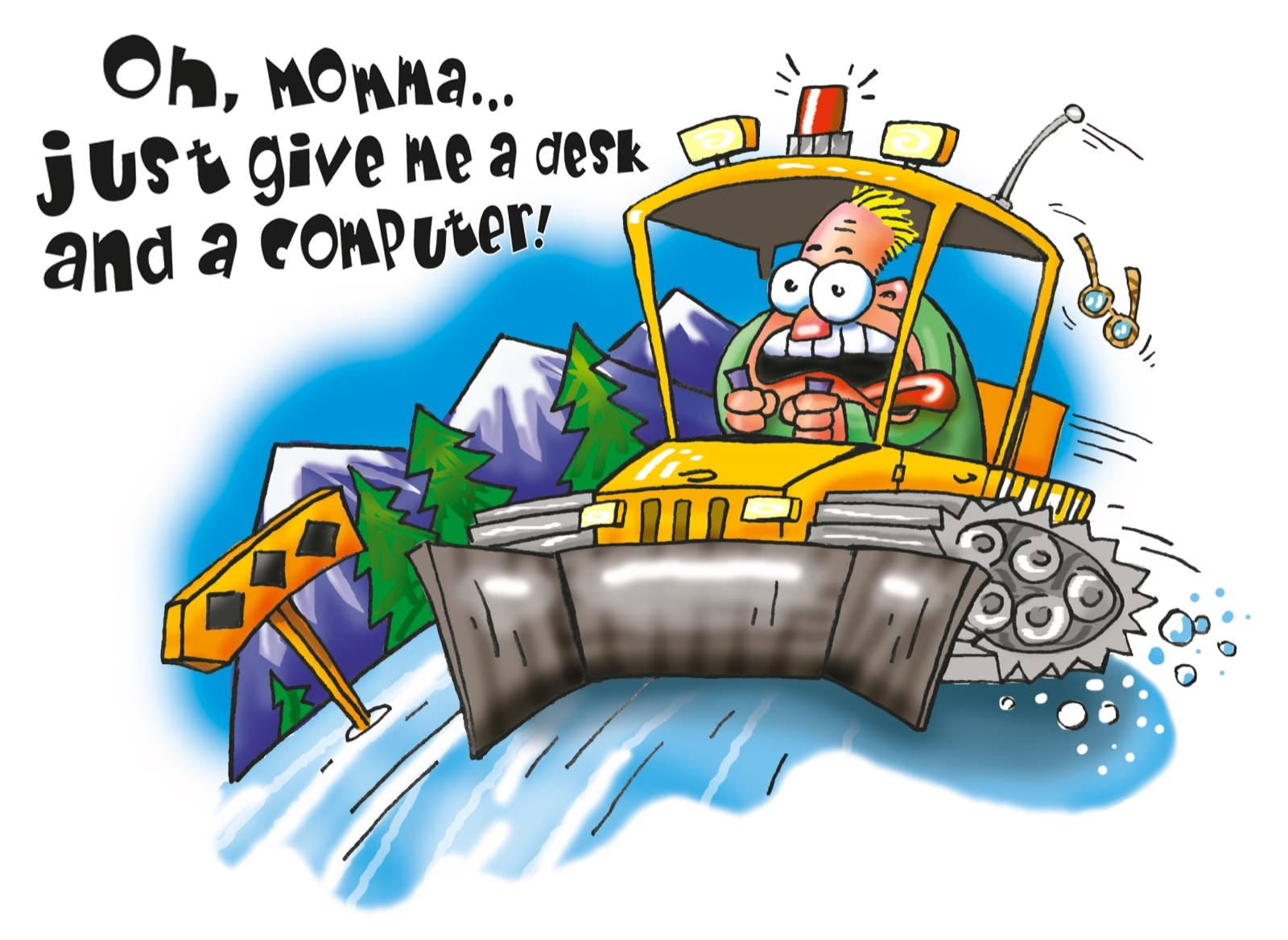
Brand identity leads to a common sticking point between operations and marketing—whether or not specific events support the resort’s image.
“Our marketing guy brought in an event that didn’t match our identity,” says an ops manager. “It drew a huge crowd, but it wasn’t our audience. Some of our customers complained. We have to think about how we’re trying to portray ourselves… are we doing this to please the sponsor, or to improve our image in the marketplace?”
It’s a fair question, and one that is echoed by other ops guys. But operations folks sometimes overlook the obvious. For example, they may feel that youth-oriented events undermine a resort’s family image, forgetting that many of those families might also have teenagers. “They sometimes don’t see the value from a broader perspective,” says one marketer. “They focus on ‘how’s this going to conflict with my daily responsibilities?’”
And buy-in is essential, because most events should be, as Vail’s Jensen points out, an operations responsibility. Marketing has a key planning role, but it’s ops that executes. So marketing’s first job is to sell the event to ops.
From the outset, marketing should provide ops with an unambiguous rationale for each event—including information showing how an event supports the brand, clear budgets and projected ROI (see “Putting On a Show,” SAM, January 2003). Several ops people said that they don’t care whose budget gets dinged as long as it’s a good investment overall.
Once everyone understands the goal, Marketing has ample opportunity to bring operations into the picture. Senior ops should be present at all but the most preliminary discussions.

It’s also important for operations personnel to participate in the events they work so hard to set up, and to make certain that they get to enjoy the festivities. “The more the ops guys understand the publicity aspects,” says a marketer, “the more they get to meet sponsors and guests and get attaboys and see how well an event is received. . .well, the vibe is tremendous.”
Vail’s Jensen also cautions marketers to “share the primo schwag. At most resorts, it comes in through marketing and stays there. We make sure the lion’s share goes to the people who did most of the work.”
The East: Snow Reporting Battles
In the East, marketing and ops frequently conflict over issues surrounding weather and snow condition variables—snowmaking, grooming, and snow reporting.
“Sometimes we have differences in opinion about where to make snow, when and how much,” says one marketer. “There’s a tone of ‘well, what do you know about making snow?’ I know some, but that’s not the point. The point is that I know a lot about what our customers expect.”
Operations, as a department, needs to rely upon marketing as its eyes and ears into customer interests and desires—and the resort’s competitive situation. At properly aligned ski areas, marketing will never promise more than operations can reasonably be expected to deliver. Marketers need to pay close attention to the people who are out there prepping the snow and watching the flow on the mountain. But when marketing’s analysis suggests that opening more trails is the proper course of action, smart operations departments listen.
One ops manager agrees that customer expectations are key, and thinks his resort’s marketing team falls short in managing them. “I think we need an education process for guests on what it takes to recover from a thaw-freeze cycle,” he says. “I know that you can’t say, ‘the snow tomorrow is gonna suck.’ But our guests pay a lot of money and have high expectations. We should tell them what we’re going to do, how we’re going to do it and what they can anticipate while it’s happening.”
Winning Over the Patrol
Another operations sticking point surrounding events that involve additional risk for participants is safety. “Patrol is our biggest recurring problem,” says one marketer. “They really can’t comprehend or fully support some of our events—to them, we’re contradicting everything they stand for.”
Another marketer cites patrol for failing to communicate information about routine trail and park status. “They’ll close stuff and not tell us,” he says. “I can’t get them to fathom how important it is to keep us advised. It affects guest expectations.”
One resort has an intriguing solution: It brings a full-time patroller onto the marketing payroll during the core of its event season. “He’s someone our operations guys respect,” says the marketing boss. “There’s some envy, of course; and some people don’t understand how hard he really works for us. But to have him out there as my eyes and ears is key to our success.”
What We Have Here . . .
It all comes down to communication. Marketing and ops need to constantly remind one another of their goals, both big and small, and help one another deliver on the customer’s expectations. But that doesn’t happen by accident. It takes recognition of the issue, protocols that institutionalize the conversation and a determined effort by all concerned.
“Do we have the market cornered on communication?” asks one marketer. “Not hardly. Are we better than we were? Absolutely, because it was something our customers demanded. We don’t always have to agree. But we always have to work it out.”
5 Things Operations Should Know About Marketing
1) Marketers work as hard as you do. It may not be as physically demanding as your job, but marketers typically put in 10 – 14 hour days.
2) Marketing involves long lead times. Press releases go out weeks prior to an event; radio ads take time to produce; brochures and trail maps require months of work, and changes are expensive.
3) Many marketers don’t know how your world works. Invite them to learn. It’ll be useful during busy times, too.
4) Events generally have a bigger impact than what you see at the resort, via press coverage and radio ads supporting your resort.
5) Marketers hate surprises as much as you do. Let them know as early as you can if something is going to change. Call them at home if it turns out you can’t make snow or groom tonight.
5 Things Marketing Should Know About Ops
1) If something isn’t right today, it’s generally not because Ops screwed up. Mechanical systems and weather aren’t bound by marketing.
2) When things go haywire in Ops—and sooner or later they will—pitch in and lend a hand. Park cars. Check tickets. Drag hoses.
3) Though it generally isn’t true, marketers often give the impression that they live better than Ops people, which leads to resentment. Deal with Ops in a respectful, low-key manner.
4) Anything that happens on the property impacts Ops. Make sure that they know from day one what’s happening and what their role will be.
5) If you do your job well, people will come to your resort for the first time. If the Operations team does its job well, those people will come back again and again. Any question who the real playahs are?
The Guest Editor’s Take
Skip, great article. Long overdue! I really enjoyed the insights and research you put into this.
This is a general manager’s problem, not the marketing or operations manager’s problem. It is the GM’s responsibility to establish a culture and set the tone for all departments to work in harmony.
An interesting phenomena developing in our industry is that our terrain park personnel are maturing and moving into more senior positions in both marketing and mountain ops. Terrain park personnel must understand both the marketing and operational aspects of parks, so they bring fewer conflicts to the table. There will continue to be differences, but they will become less of a problem.
As a GM, establish a culture that emphasizes the importance of both departments working together.
—Karl Kapuscinski, Mountain High