


Okay, thin margins are nothing new in the winter sports business. But despite the substantial television production cost, the past season saw a rapid increase in small screen coverage of freestyle (halfpipe, slopestyle, and big air) competition. For example, for the first time, large parts of the U.S. Open of Snowboarding last March was covered live on the OLN network. And new events such as The Session, created by Vail, and the World Halfpipe Championships created by Park City, have joined the list of high-prize-money, televised competitions.
Primed by their wild popularity in the 2002 Olympic Games, freestyle winter sports are basking in the midst of a virtuous circle. Growing consumer interest since the Olympics, which took place just as snowboarding (and to an extent its upstart little bro, freestyle skiing) was starting to outgrow its core roots and attract the wider mainstream, has led to greater interest from non-industry sponsors. With more sponsorship dollars flowing, television time is easier to support. And this thrusts freestyle even further into the mainstream audience.
This snowball effect will keep on rolling as the audience continues to grow. “Several years ago, brands sponsored the U.S. Open because promoting directly to the live audience helped them reach the grass roots opinion leaders who drive peer marketing,” says Brett Smith, partner in Fuse Marketing, which handles sponsor management for event owner Burton Snowboards. Now, sponsors are attracted by the overall TV audience, not just the core on-site audience.
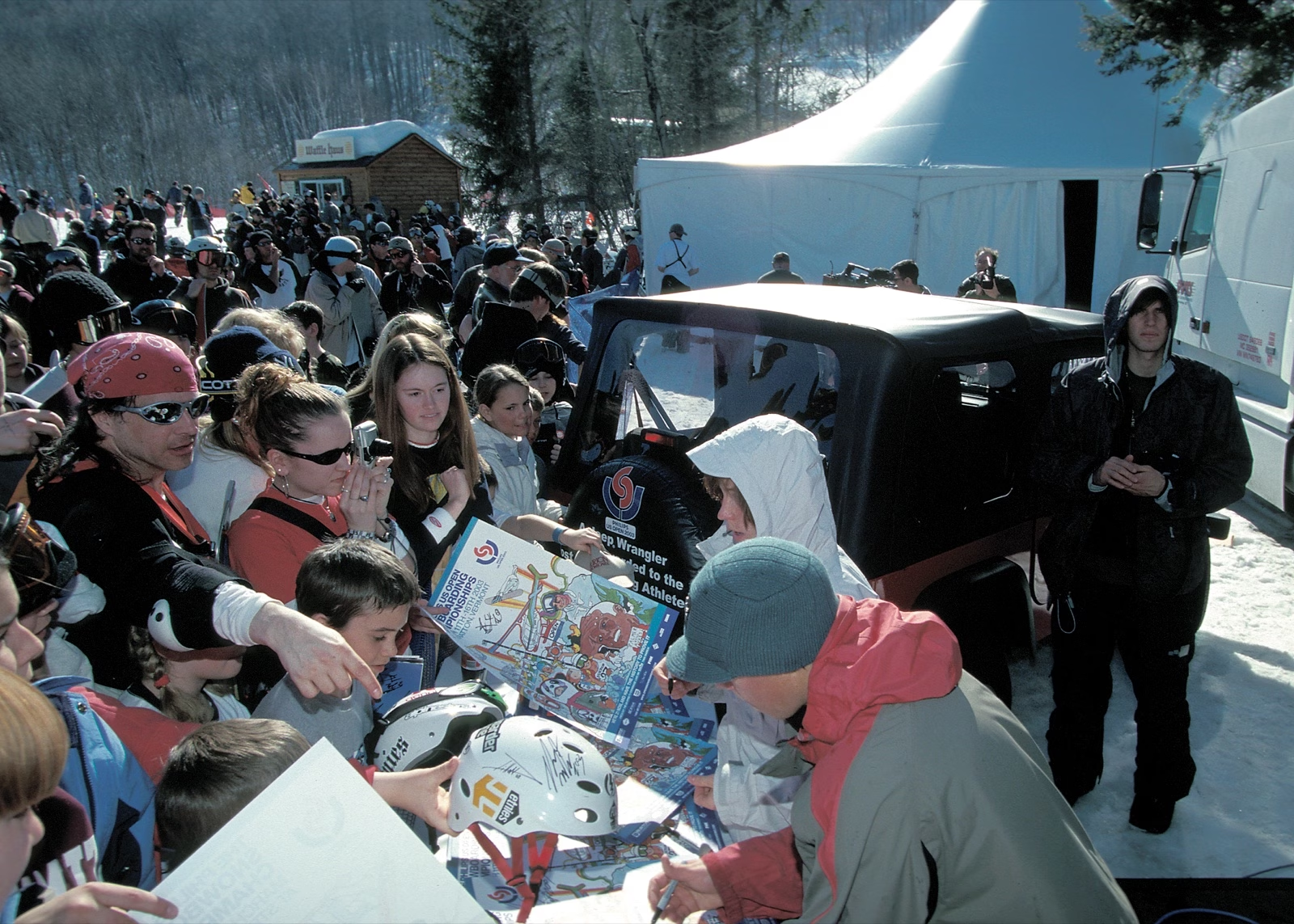
“The more mainstream the brand, the more they tend to be interested in the television coverage,” says Smith. And that’s the key to raising sponsorship revenue. At the U.S. Open last March, total sponsorship dollars increased by 50 percent, Smith said. That was because the Open could prove that it was delivering a far larger audience than in the past, due to expanded TV coverage, greater attendance at the events, and through an increase in Internet promotions. “Our longtime sponsors like Sobe and Gillette were happy to pay more because they were getting far greater value,” Smith said.
And this expanded audience has attracted new sponsors as well. “Five years ago, we were lucky to have one brand per business category looking seriously at the action sports market. Now they are lining up,” Smith added.
Getting onto the Airwaves
As the number of events and the available advertising dollars grow, so do the number of ways in which events become televised. Much of this is closely related to the specific aims of the particular event owners.
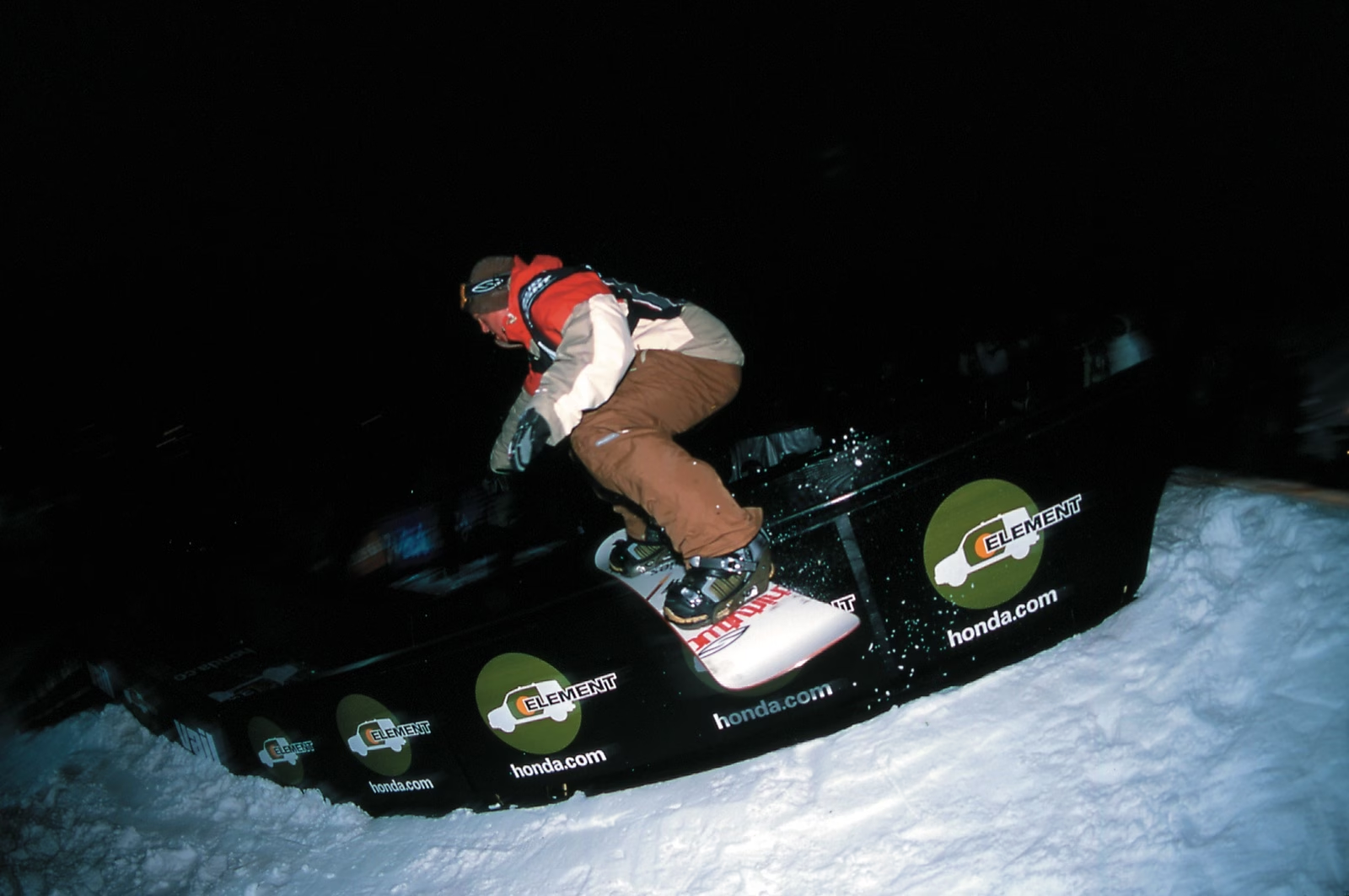
Photo by Jeff Potto/Vail Resorts
For example, a few years back, had you pitched a major snowboard or ski event to ESPN, the channel might well have filmed it and sold the advertising time itself. However, ESPN currently views its proprietary X Games as its primary action sports vehicle. The X Games is the basis for an entire X Games-branded product that, in years to come, will include everything from global “X” events to skate parks. To get your action sports event on ESPN today, you have to produce the show yourself and then buy the air time, just as if you were a regular advertiser. This is expensive, but the costs can be offset by selling advertising slots within the program.
For example, the U.S. Ski and Snowboard Association (USSA) spends around $5 million per year to bring ski and snowboard programs to U.S. television. They buy time on NBC and ESPN (around 27 total programs), pay for production and sell the ads. But, it is not a money-making opportunity. The organization breaks even by selling the ads, but it’s more about the exposure for the team.
Another potential route is syndication. Jalbert Productions, the official filmers/production company for USSA, produced and distributed coverage of Park City’s World Halfpipe Championships. Jalbert agreed to film the event and edit it into four one-hour packages and six half-hour packages. In each one-hour package, Jalbert sells six minutes of national advertising and keeps the revenue. The program packages are then given free, or “syndicated,” to local network affiliates, who have seven minutes of advertising time that they can sell.
Jalbert promises its advertisers that the potential reach of the stations showing their package exceeds 70 percent of the country, but it can’t guarantee how or when the programming will be shown. Some local stations promote the program in a particular time slot and go out and look for local advertisers interested in promoting around winter sports. Others will air the shows as anonymous fillers in whatever holes they have in their programming, and run random advertising they already have booked.
Few entities make a profit from the televising of their events. In most cases, the event host can do little more than expect to break even. The benefit is in exposure—which can amount to free advertising, which has its own value.
For example, Park City will make no money from television coverage of the World Halfpipe Championships. But the resort will gain the exposure benefit, which is one of the main reasons for hosting the event.
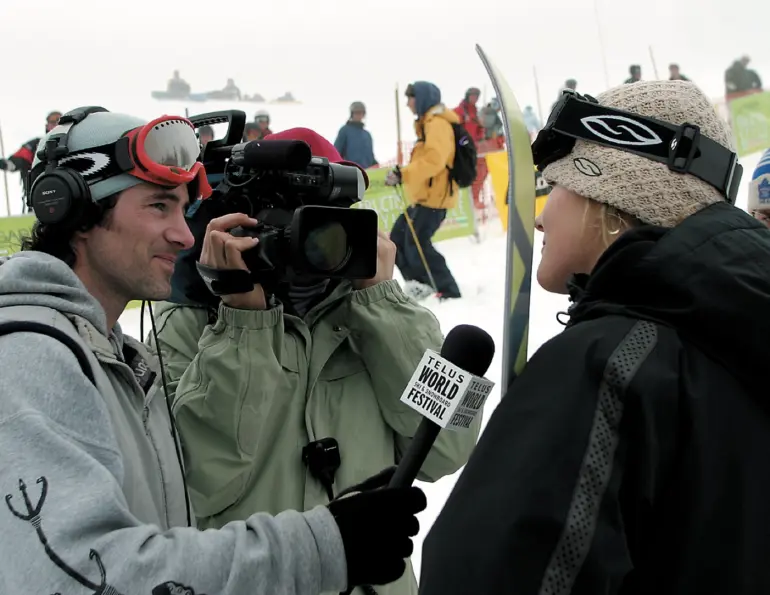
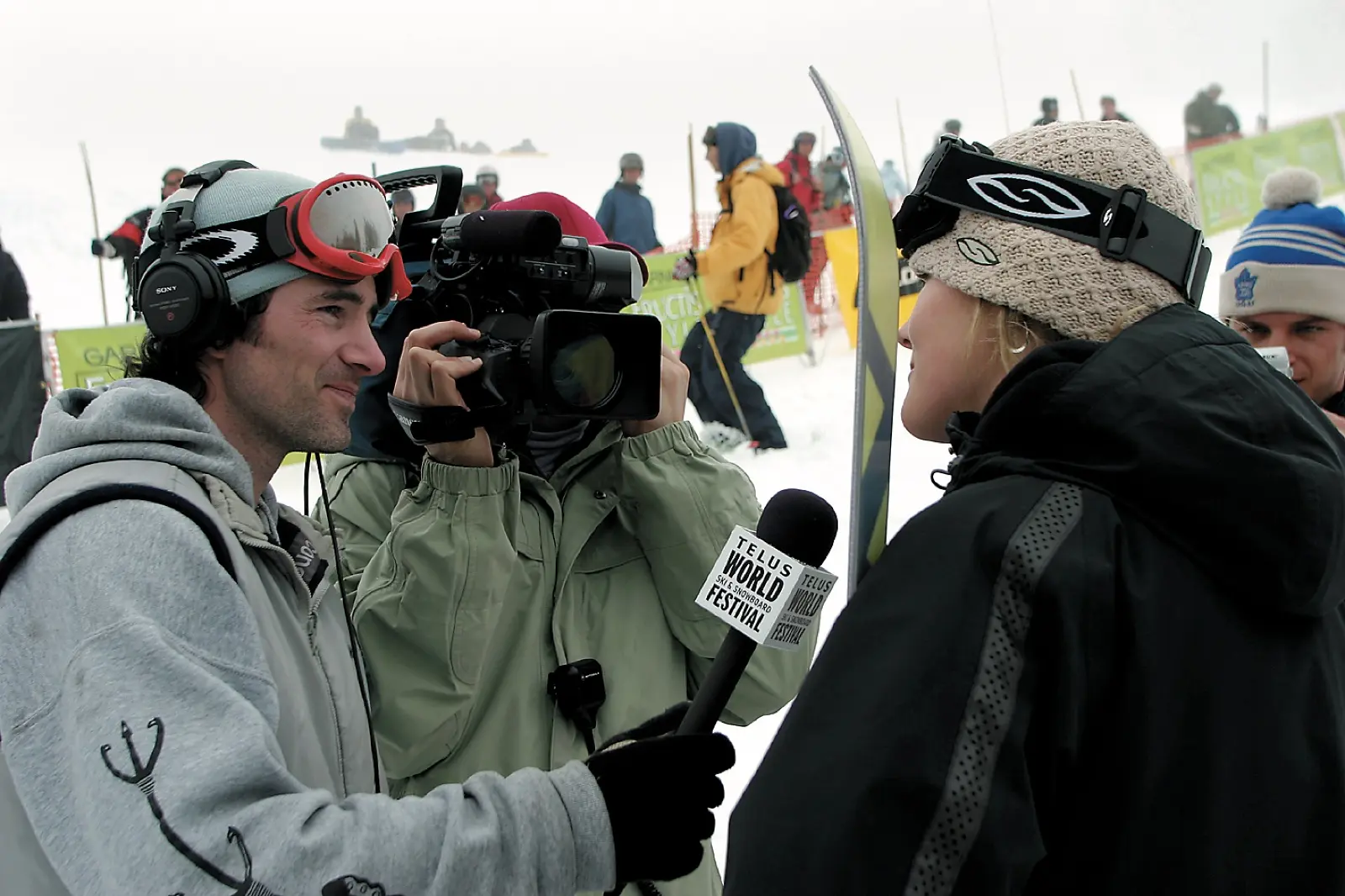
Likewise, the Telus World Ski and Snowboard Festival (TWSSF) held at Whistler looks at its television coverage as revenue-neutral, even though television coverage is vital to the success of the 10-day festival.
The vast majority of the TWSSF’s several-million-dollar budget comes directly from sponsorship revenue. Most sponsors, such as Telus, Pontiac or Garnier Fructus, are from outside the wintersports industry. Like the U.S. Open, sponsorship deals are effectively a media buy based on total impressions which factor in the 250,000 visitor days, numerous opportunities for specific event sponsorship and banner placement, plus the television coverage.
The event itself is owned primarily by an organization of local Whistler hotels and businesses whose main concern is to spread word of the event and pictures of Whistler as widely as possible—and who benefit from the influx of thousands of visitors at what would otherwise be the low season.
The Festival gets widespread TV exposure. “We work with a post-production house to produce four 30-minute segments, one each on snowboarding, skiing, the music and the visual parts of the festival,” says event president Doug Perry. “These then go to Global, a Canadian network who broadcasts them. They also go to a London-based syndication agency that puts the segments out all over the world.”
“We sell domestic advertising, and of course the sponsors get bundled in as part of the overall TV sponsorship package. But we see TV as a marketing cost more than revenue generator, so any return offsets this. Each segment has several minutes just focusing on the resort.”
But that’s just the beginning of the event’s TV exposure. “Because getting as much exposure for the resort as possible is key, we encourage production companies to come and shoot what they want,” Perry adds. “We have CBC shooting a kids’ show. World of Skiing will be here.” In all, more than a dozen production companies filmed last spring’s festival, all doing something different.

Break-even, plus the exposure, is as much as most event owners or resorts should probably aim for from television coverage. “Properties think they can make a few bucks by a direct time buy or self syndication, but then find it’s much harder than they first imagine,” says Fuse’s Smith. “Just because there is a lot of freestyle on television and a lot of sponsors prepared to back it, doesn’t make a good television deal easy to find.”
It’s Not Just TV
All of this TV exposure helps promote winter sports generally, and you can bet that riders and freeskiers will be jazzed, and interest in joining their ranks will continue to grow. But, it also means that there will be increasing interest in local competitions and events of the non-televised kind.
Convincing potential sponsors of the value of local freestyle events is a little easier these days because of the widespread exposure on TV. These events deliver an audience that businesses want to reach. If you run your own events, sell sponsors on the opportunity for direct marketing, sampling, and reaching this very targeted group of opinion leaders and influencers. You don’t have to offer TV coverage to sell sponsorships—the on-site advertising has value, too. —RK
Buying In
Don’t want to host an event of your own but still want TV coverage? One avenue is to buy advertising slots on events that are already going to be televised. The demographic is perfect—eager viewers who are potentially ready to hit the slopes or buy new equipment.
For example, USSA sells slots on its ESPN and NBC programming. Pricing varies depending on event, time slot and whether you choose cable programming or broadcast, which is more expensive. Each spot is 30 seconds long, and is supplied by the advertiser.
As of right now, most of the advertising during USSA programming is non-industry related, a surprise given the audience.
Likewise, advertising can be purchased through Jalbert Productions for its events, the Telus World Ski and Snowboard Festival sells advertising slots and ESPN and the Outdoor Life Network offers several opportunities.
Each outfit will have specific information about its ratings and viewer demographics. For more information, contact:
ESPN/X Games: [email protected]
Jalbert Productions: www.jalbertfilm.com
Outdoor Life Network: [email protected]
Telus World Ski and Snowboard Festival: www.w1.ca
USSA: [email protected]

