
What Berle didn’t address with that remark, pointing out the advantages of assured refrigeration, is that this same cold weather has been one of the factors minimizing Whiteface’s popularity with skiers for the past 21 years. It is a mountain easily labelled, “too cold, too icy, too windy and too steep,” as one observer summed it up.
Whiteface, has never been successful either financially or as a total ski experience. Estimates of the cost to the taxpayers for the state-owned and -run area are difficult to figure, but an audit two years ago indicated that operating costs were not being covered by revenues. Figures like $14 to $20 million losses have been thrown around, but Berle says the three state areas—Whiteface, Gore and Belleayre—together pay for themselves. And, he thinks Whiteface paid for itself last year.
As for skiing at Whiteface, the snowmaking and grooming have not kept up with modern demands, facilities are rudimentary, lift lines have been excessive in some parts of the area while non-existent in others, and the mountain’s first trails (said to have been cut by road engineers) have had too much side-hill lie for comfortable and pleasurable skiing. It is frequently called, “Iceface Mountain.”
“You have to learn to love this mountain,” said one young skier. “You get to know the best runs, you ski around the rocks and you bring your old skis here.”
The question now is: Can changes in facilities installed for the 1980 Olympics reverse this sour reputation? Can the glamourous image that Lake Placid generated in the 1930’s be applied to Whiteface and bring skiers to this big, lonely mountain? Can the Olympic momentum be maintained after the games are over?
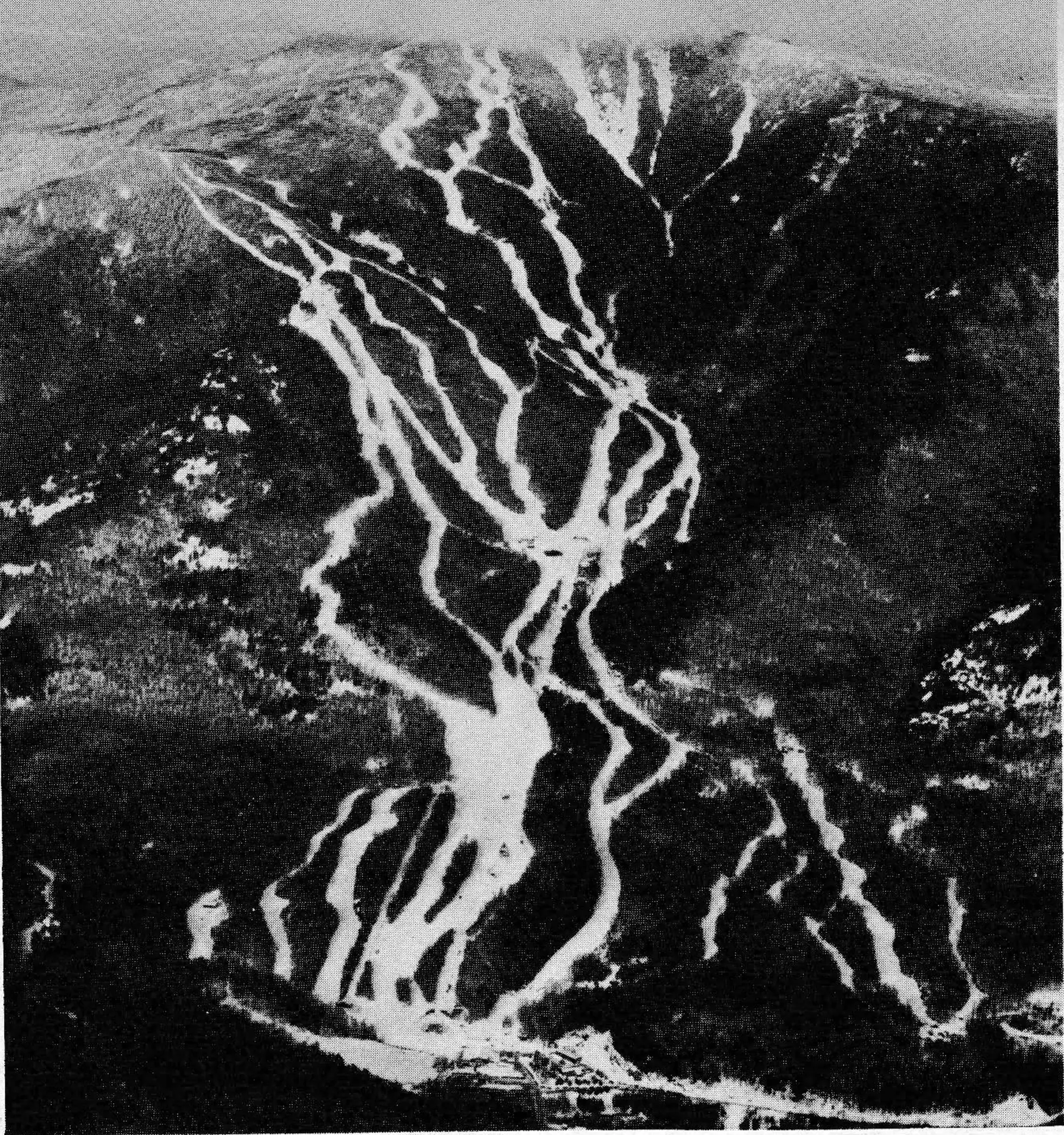
More than $10 million in state and federal funds is being spent to upgrade the skiing and facilities at Whiteface This past season, about 30 per cent of the new snowmaking, which augments a limited system that dates back to 1962, was in working order. When completed, its designers say it will be able to cover the entire downhill course with 16 inches of snow in 16 hours. The system will have a total waterflow of 3,000 gpm and an air flow of 12,000 cfm. It will eventually reach 9.6 miles of the total 16 miles of trails on the mountain.
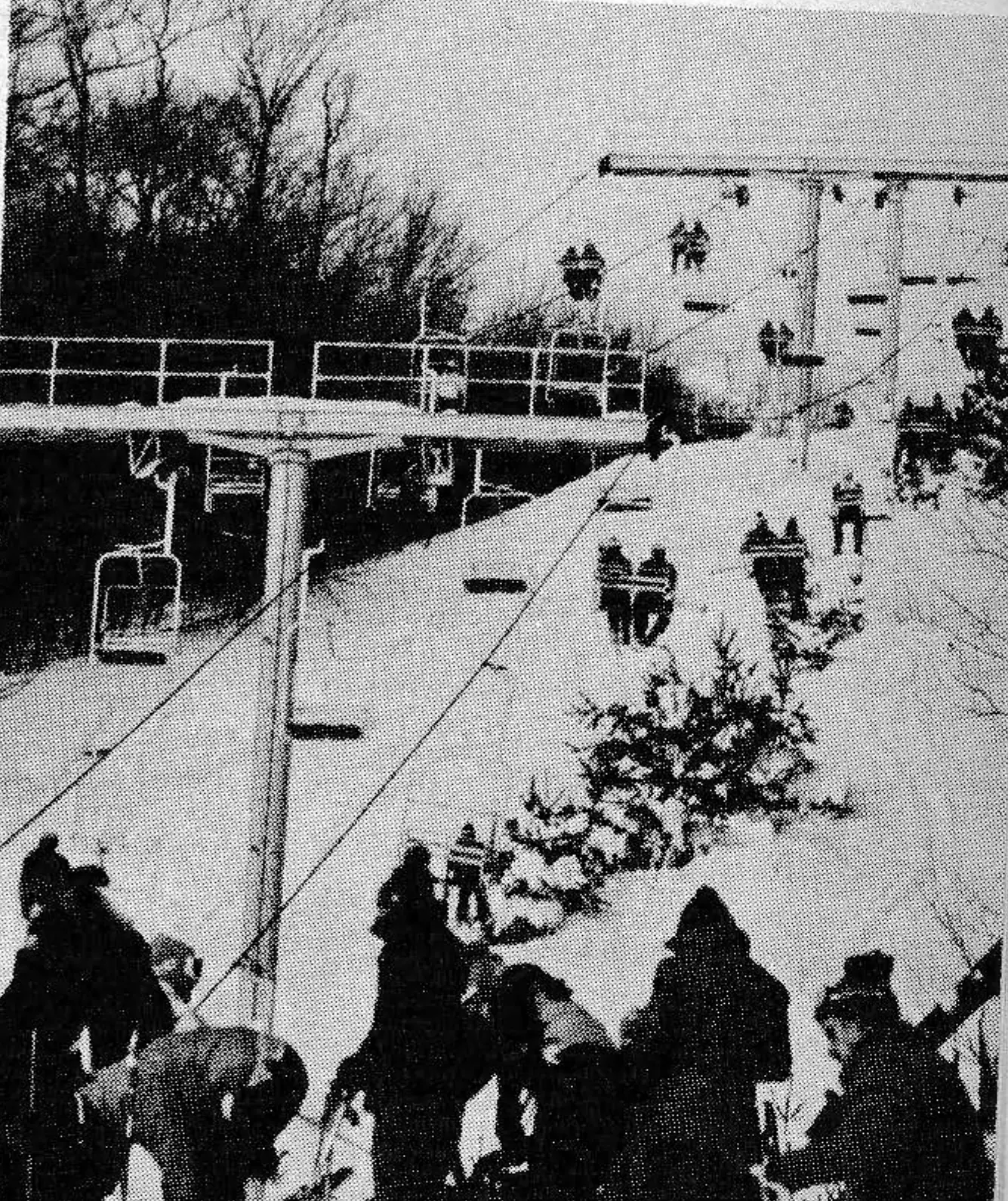
Last year, a new double-double chairlift, half of which goes to a mid-station get-off while the other half goes farther up, was in operation. Lift lines out of the base area serving the easier lower trails were much relieved from previous years. Next season another chairlift, providing access to a new giant slalom trail as well as the current slalom trails, is expected to be in operation. A short T-bar will be installed to the top of the downhill run (providing a vertical drop of over 3,000 feet) where winds had made the chairlift ride too hazardous in the past.
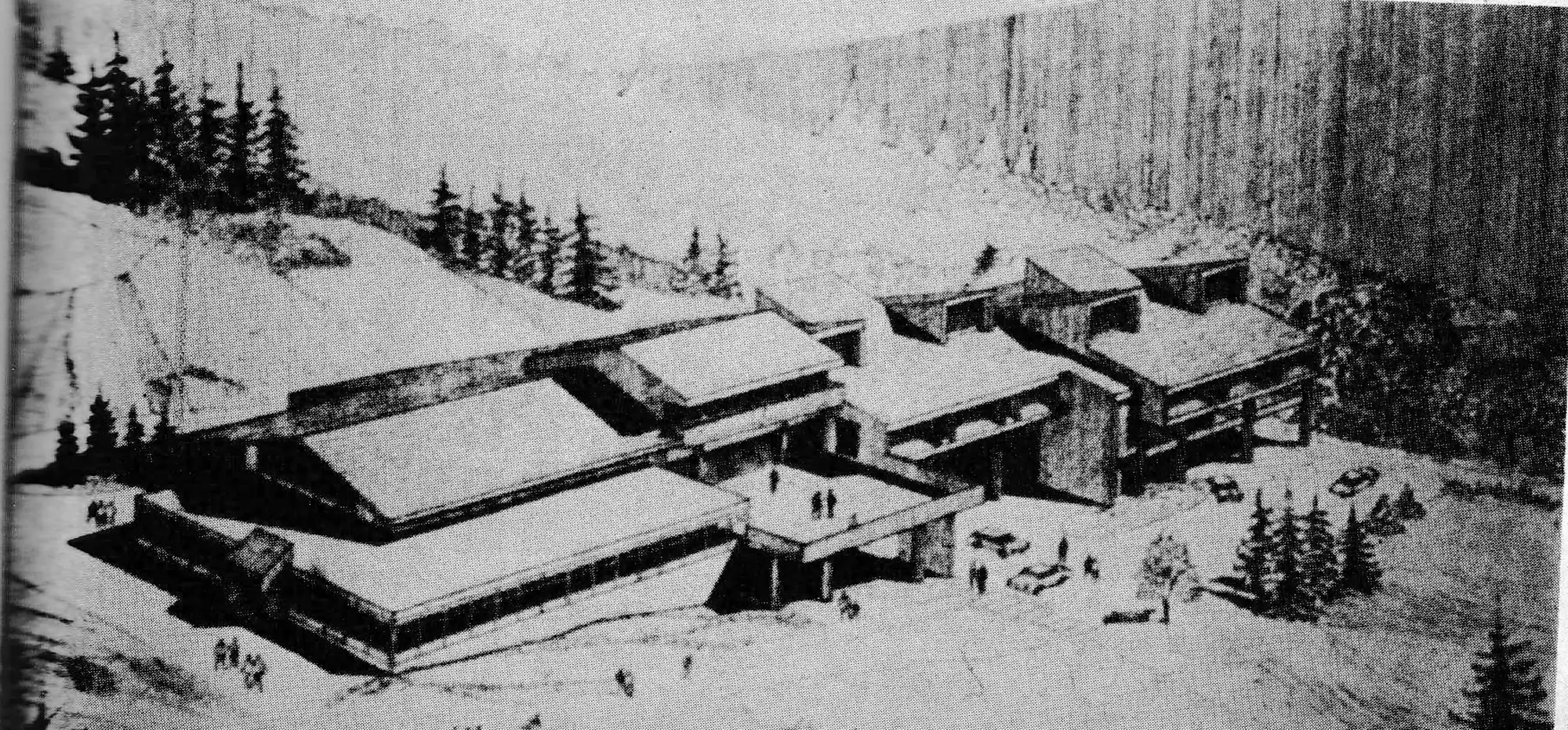
In addition, the base lodge, currently 42,000 square feet, will be tripled in size, there will be new sewage, a new competitors’ building and more trail improvements.
“We think this recreational facility will pay for itself,” says Commissioner Berle. “We feel very strongly that no public dollars should be spent that cannot be used for the public recreational facility.
Answering critics, who claim that public monies are used to support operating costs of the state-owned area, Berle says this is not true and that Whiteface’s revenues are up 35 percent over last season. While he credits snowmaking capabilites as the primary factor in increased business this year, the fact is that extraordinary natural snowfalls increased business at ski areas throughout the East. While snow had been made on the slalom trails two weeks before the U.S. National Alpine Championships in February, skier traffic and cold weather had created huge moguls and very hard cover just two days after the races.
“The state was behind the ski industry in snowmaking,” he continues. “The limiting factor at Whiteface in the past has always been the wind, which created ice on the trails. Snowmaking will eliminate those icy conditions.”
One man who studied the snowmaking feasibility at Whiteface first hand is John King, who managed the area for 10 years in the 60’s and now runs Catamount, N.Y. “Whiteface is a superb mountain when the snow is right,” he says. “And you can put any amount of snowmaking on it to create those ideal conditions—even borrow machinery for one occasion or a temporary situation. But whether it is feasible to sustain that kind of investment . . . I doubt it.”
King says the snow conditions are erratic on the 4,500 foot peak. “It catches the edge of the coastal system to get a couple of inches of snow, while other areas in the south get 8 to 12 inches. From the western storms it gets only an inch to two, while other northern areas get a foot or more. The wind screams down from Canada and there is nothing to break it on that mountain.”
Despite these winds, snow can be made by aiming the guns lower, adding more water to the mix and grooming it before it turns to ice. (Or, as Ski School Director Toni Matt succinctly put it, “You make it toward the ‘hard’ side so it will stick. You need sharp skis, that’s all.”)

But even an abundance of machine-made snow won’t keep skiers coming back to Whiteface, according to Mike Brandt, long-time critic of publicly-owned ski areas and owner-operator of West Mountain, N.Y. “If we want to invest enough money we can keep snow on it,” he says. “It’s feasible to make snow even with the wind, but it’s a question of cost versus return. The winds are so hellish that recreational skiers won’t find it comfortable there. They may go for a while after the Olympics, but eventually they’ll find it too cold.”
Brandt, who himself is in politics as the elected town supervisor of Queensbury, N.Y., says, “Skiing should be a tax-producing industry, not a tax-consuming industry. We don’t have enough money in the public sector to provide for handicapped people and sewage treatment plants—essential services—yet the state is taking this ego trip with the Olympics.
“There is a great deal of capital investment at Whiteface in relationship to the return you get. There is no property tax on the land and facilities, and there is no sales tax on lift tickets sold. The state government borrows money to build these facilities—that’s at six or seven percent interest—and the bonds are tax free, so the government loses on that, too. It adds up to a cost of about 12 percent to borrow.
“The ski industry has a surplus of downhill skiing facilities and has not been running to capacity since the energy crisis. Now, En Con (the state Environmental Conservation Commission) is creating a major increase in recreational facilities.”
Even Brandt doesn’t argue with Whiteface’s potential as a training facility to develop ski racers. No private ski area in the East could afford to provide the downhill terrain needed for that kind of training, he conceded.
Ronald M. MacKenzie, president of the Lake Placid Olympic Organizing Committee, says (after the Olympics), “Many regions wind up with something that is not usable. That is something we have tried to overcome. The training center planned for Whiteface will be a major emphasis after the Olympic games. This will be the most up-to-date, closely related center for training athletes on this continent. We don’t subsidize athletes in the U.S., but this is one way we can train top flight athletes.”
One thing skiers complain about is the closing of trails during races. Yet, at the Nationals this year, the closed trails were hardly missed. “This is an underdeveloped mountain,” said one experienced ski journalist. “The lift to trail ratio—with their long length—is out of proportion. It should be a great place for training racers. The state puts up the money and the area can afford to close a few slopes for race training. The public won’t benefit from the snowmaking, but the racers think the machine-made snow is terrific and consistant.”
Whether or not skiers flock to Whiteface after the Olympics, En Con officials are not sure they can handle the auto traffic created by the 4,000 or so capacity skiers they anticipate. As it is, parking space for about 700 cars is strung out along an access road, necessitating a long hike to the area. A new parking lot to accommodate 15 buses is being planned for the Olympics, and there is an under-used parking lot at the bottom of the beginners slopes, some distance from the base lodge.
The problem, according to Berle, is that parking is located on Forest Preserve lands for which there are severe restrictions on timber cutting and clearing. “In terms of parking,” he admits, “we have a major problem that we will have to face.”
As John King said, “You can put in millions of dollars in state money and write it off as prestige to stage what might be the last of the winter Olympics. If people get enough use out of the mountain it will be worth the investment.”
Mike Brandt is even less optimistic, “God made Whiteface and He’s the only guy who can change it.”