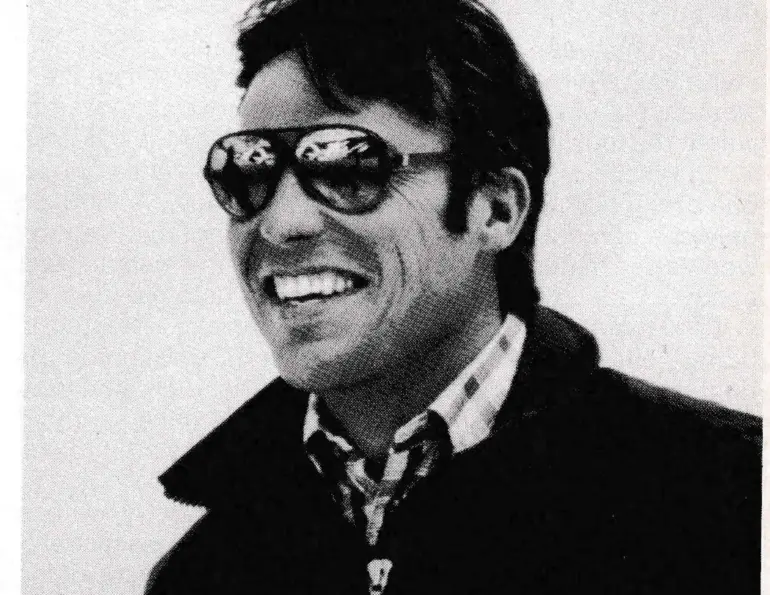
The original entrepreneurs — dynamic and often autocratic pioneers who built the resorts — have given way to a new breed of managers, whose new modus operandi is evident: careful planning often supported by intricate financing, a conciliatory approach to resort-town relations, a concern with motivating employees and the acceptance of sophisticated marketing techniques.
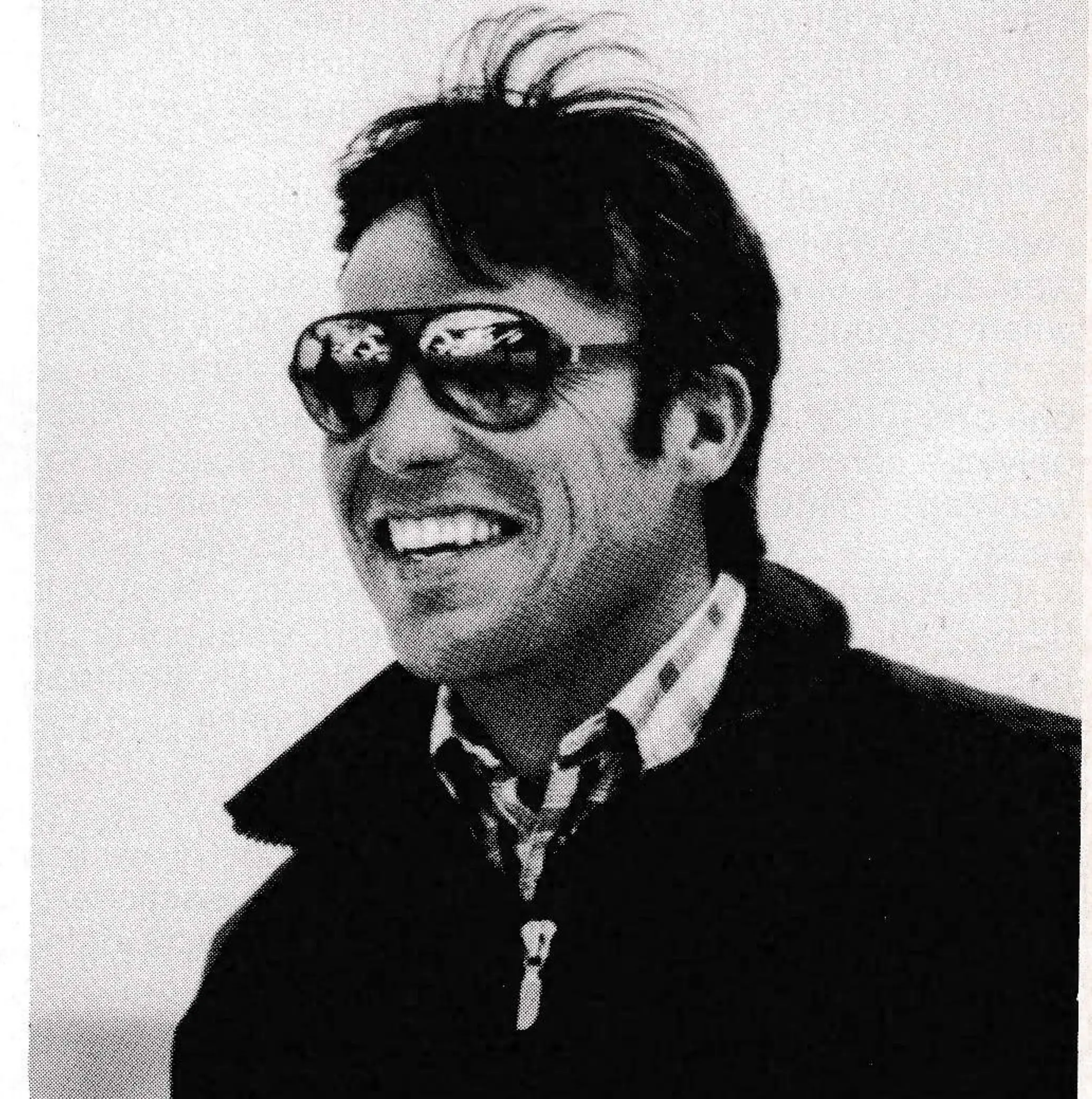
While many of the new managers have gravitated to skiing from other industries, Jerry Blann, born July 14, 1948 in Bend, Oregon, is a true second-generation ski area operator. His father, Cliff, was general manager at Oregon’s Mt. Bachelor. There, at the age of 10, Jerry had his first summer job. Through his teen years, he cut his teeth on trail building, lift maintenance … “almost every aspect of ski area operation.” Now, as president of Aspen Skiing Corp., Blann directs a $30 million enterprise with a peak of 1,500 employees (at Aspen and Breckenridge) in winter, generating two million skier days of business.
Blann and his sister, Sherry, grew up as ski racers. At the urging of coach Willy Schaeffler, and with an athletic scholarship, Jerry enrolled at Denver University in 1966 and pursued a Bachelor of Science, majoring in business. He also captained and raced in DU’s NCAA championship ski team, and made all-American.
Almost immediately on graduation in 1970, Blann started as a trainee in Darcy Brown’s Aspen Skiing Corp. after being interviewed by Tom Richardson. ASC had just bought Breckenridge and Blann went to work on the layout of Peak 9. In 1971-72, he took a leave of absence to hone his skills on a new master plan for Mt. Bachelor where he had apprenticed.
He came back to Aspen in an era when the company’s directors — frustrated by anti-growth forces that promised to limit growth of the town’s bed base — were launching a search for new ski areas. Blann was named director of planning and acquisitions, with the responsibility for scanning 250 potential sites for ski areas across North America. He took a hard look at Snow Basin in Utah and at Independence Lake in California.
In 1974, at the age of 26, Blann was named project director for the Early Winters project in northern Washington. But it, too, did not come to fruition. (“I was beating my head against a wall,” he recalls.) Frustrated, he went to Blackcomb in British Columbia, where ASC did win the bid to develop a new mountain next to Whistler, and Blann basked in the cooperation between government and ski resort development north of the border. ASC still owns 50 percent of Blackcomb (with the Federal Business Bank of Canada).
When Darcy Brown, who had shepherded Aspen through 30 years of growth, retired, he chose Tom Richardson to replace him. Then, in 1978, the company was sold to Denver magnate Marvin Davis, and Richardson eventually moved out. Harry Holmes, who once ran Sun Valley, was ushered in as president of Aspen Skiing Corp., but he, too, left. In mid-1984, at the age of 35, Blann took on one of the biggest jobs in the ski industry.
“In the years of most rapid expansion, ASC survived with a centralized, but not very communicative management,” says Blann. “It was also a financially, goal-oriented company. That’s still the number one priority, but we have shifted to a further emphasis on marketing and guest relations.
“The change has been to a more participative management. We’ve turned the pyramid upside down. Where there was once a single direction from on top, we’ve moved to where the individual guest sits at the peak of the pyramid.
“In the ski resort business, I see management’s role as one of support. As president of the company, I can touch only one percent of the people who use our facilities. So I work on creating support systems for the people who come in touch with every one of those customers.”
The Blann approach to this orientation is reflected in hiring policy and retraining existing staff. Developing the right attitude among employees is critical. By contrast, Blann cites a past manager at Aspen who once said that his lift operations worked fine until the guests started getting on and off the moving chairs.
“As one of the older companies in the industry, we had people who’d arrived in supervisory positions because of their technical skills. That’s changing. Now we’re doing everything possible to supply them with skills to motivate the people under them and to keep them fresh on a daily basis.”
“We’ve developed a training program,” continues Blann, “along the lines of the Wilson learning theory that incorporates the Disney approach to employee training in guest relations. We’ve modified it to our particular operation. We identify a group of employees who need that kind of training — lift operations personnel, ticketing people, patrol. We rotate them through these programs in the Fall months. We have 20 to 25 trainers.
“It gives our employees tools to deal with customers. They have to learn that by the time some guests reach our ticket window, they may have experienced a difficult time with transportation or at a hotel. By the time these guests get to the lift operator, they may be ready to unload their emotional baggage on him. Our operator has to know how to deal with that.”
Blann believes in an open door policy for employees and agrees that qualified people are turned off today by companies that don’t offer an environment of participatory management.
“There’s a whole different attitude in the job market today, and I’m looking for different skills than 10 years ago. Where we once looked for people with specific operational experience, we now want executive talent who can talk to, and get the most out of, their department heads. We want people with human resources skills who can move people in the direction the company wants to go.”
Blann, by way of illustration, hired a director of guest relations who has no background as a ski instructor but who has three ski school managers under him.
“He wasn’t hired because of his technical skills,” comments Blann, “but because of his ability to work with people. We’re in a people business.”
In dealing with staff, Blann schedules monthly management meetings and employs an array of communications. He applies “MTM” — Mainline to Management — a system that allows employees to record questions on tape. Once a week, Blann goes through the tapes and answers their questions.
“We also have individual meetings on the mountain to discuss their concerns. We try to provide opportunities for feedback. You can never have enough communication.”
Blann was schooled in business administration, but is cautious about the need for MBA’s in today’s ski area management.
“They tend to be somewhat stereotyped in the patterns by which they approach problems. But there aren’t any stereotyped problems in the ski area business.”
Admitting there was a time when ASC and other ski resorts focussed on hiring MBA’s, Blann believes it coincided with a period when large corporations were buying ski areas and looking for instant ways to increase profitability. The new corporate owners were insecure about existing management, and the response was to hire business school grads.
“There’s no question that my own hard experience in area operations got me the job,” says Blann of himself, “but those skills also can be developed through training.
“There’s no particular secret to good management. It’s never black, it’s never white. It’s always gray. We look for intuitive ability and responsiveness to changes in the market.”
Blann’s own personality is reflected in ASC’s new approach to relations with town and county — once acrimonious. A short, muscular man, with a wide face and open smile, Blann talks directly to issues. He is not upset by controversy, believing all issues can be reduced to practical considerations. Conciliation is his strong suit. Susan Michael, editor of the Aspen town magazine, wrote of him:
“Jerry Blann is a thoroughly nice man. That simple, incontrovertible fact runs through everyone’s comments about him.”
Blann might bridle at the term “nice,” but his own behaviour reflects a reasonableness in dealing with people, both inside and outside the company.
“The relations between Aspen and the Skiing Co.,” says Blann, “are as good now as they’ve ever been. It has taken a lot of effort on the part of management and myself.
“When you’re the largest business in a small community — a very vocal one — there are going to be conflicts. They have to be brought out, communicated and discussed.
“When a ski area doesn’t communicate with a town and its political entities, it’s wrong. Or it doesn’t work.
“Most ski area operators like to work outside their communities, not internalize with the community. But, unfortunately, things don’t always work out that way.”
Blann encourages his management people to become involved in community functions. A political action committee of ASC employees is active, particularly at election time. Blann is gratified by new ordinances and zoning regulations that have led to upgrading more than a third of the lodging in Aspen.

ASC announced earlier this year a $27 million expansion of facilities over three years, financed by industrial development bonds. It wants to build a 100-unit hotel at the base of Little Nell (where No. 4 lift is now) and is studying the feasibility of constructing a high-capacity gondola from there to the top of Aspen Mountain.
ASC’s historic focus on operating lifts and staying out of the hotel business (“We’re in the transportation business!”) appears to be eroding. Blann notes that the company’s proposed Little Nell hotel, and also the building at the base of Peak 8 in Breckenridge, would enable the company to supply a quality experience for ski customers, reinforcing the experience it tries to provide with the mountain operation.
“We don’t have the real estate to put together a vertically integrated resort, but we do intend to influence the offmountain experience. Little Nell is such a step. At Breckenridge, most likely what we’ll do is design a good product, develop the commercial and skiing core, and then sell parcels to other developers.”
While skier days, nationally, have shown little growth in recent years, the same is not true of Aspen and of destination resorts like Aspen that can market nationally. ASC is banking on further growth, but Blann would be happier if the Forest Service were to rectify the “archaic” 80-acre and 30-year limitations surrounding permits.
“When we went to look for financial backing and guarantees for our industrial development bonds, banking institutions and underwriters said: ‘You’ve got 80 acres, you’ve got your facilities, but the remainder of your trails and everything associated with skiing are outside of that footprint area and the annual permit to operate them can be taken away at any time.’
“We say, ‘Yes, but it’s never happened.’ And they reply, ‘If it’s never happened, why don’t you get it changed?’ So we go around in circles. It has to be changed to enable the ski industry to deal with the government in a normal lessee-lessor relationship.”
Noting that 36 new lifts were under construction in Colorado this past summer — many of them financed with development bonds — Blann wonders whether there won’t be some losers as well as winners. “There’s a lot of debt service that will have to be paid.”
Even though resorts like Aspen are raising prices partly to pay for expansion, he is relatively unconcerned that the higher lift ticket price will get in the way of the increased volume of skier days needed to justify the expansion.
“Only 12 percent of the dollars spent per day in Aspen are for lifts, riding up the mountain. The rest is spent outside of that. So a lot depends on the ability of the area and the resort as a whole to put together effective packages. The ones who can do that will be the winners.”
Blann does not believe that area-to-area comparative advertising in Colorado has been unhealthy for the image of skiing in the state.
“The State Tourism Board and Colorado Ski Country have directed dollars at generic marketing to attract skiers to the state. Once we get ’em here, yes, there’s been aggressive marketing, but I can’t recall advertising that’s been derogatory.”
The greatest challenge Blann sees is to market the sport nationally. “ASC, for example, doesn’t have the resources to change people’s vacation habits from going to the Caribbean or Hawaii.”
Would he favor a tax or levy on lift tickets to fund joint ski area industry promotion?
“That’s exactly what’s happening in Colorado to fund the State Tourism Board. If the same mechanism were used nationally — through NSAA or a separate funding mechanism — I think the industry would jump at it. We just haven’t yet come up with the right program and the right funding mechanism.”
The succession of ownership changes at Aspen seem not particularly to upset Blann, or at least leaves him with a sense of philosophical resignation.
This past summer, the hitherto joint owners of ASC — 20th Century Fox and managing partners Miller-Klutznick-Davis-Gray — each sold half of their interests to Chicago’s Crown family. This gave the Crowns a 50 percent interest in ASC, to 25 percent each for 20th Century and Miller-Klutznick.
A few months later, when publishing magnate Rupert Murdoch bought Marvin Davis out of 20th Century, Davis hung on to Pebble Beach and Aspen Skiing Co. He then added the Aspen holding to Miller-Klutznick-Davis-Gray which, as a result, now owns 50% of ASC, while the Crowns own the other half. Murdoch no longer owns a piece of ASC, so that the ownership of the resort company, to some extent, has been simplified.
While Lester Crown, who has a house at Aspen, now has an important decision-making role, the managing partners are Miller-Klutznick. Blann reports to Tom Klutznick in Chicago.
“It’s a clean and simple relationship, not encumbered by large boards and executive committee meetings,” says Blann. “They’re very entrepreneurial, forward looking people. It’s easy to make decisions. Also, the Klutznick and Crown families have worked together previously, so there is good rapport there.”
Last summer, ASC lost the Supreme Court anti-monopoly decision that awarded $11.4 million to Aspen Highlands. According to Blann, the cost of the decision will not affect operations or expansion plans. ASC’s owners have dug into their ample pockets and paid the money to Whip Jones’ Highlands which is now several million dollars richer and eager to get on with a base development plan of its own.
Blann’s ultimate management goal for Aspen is “To try to be available, to make people understand through communications what our goals and objectives are, and to be out in the field where I can exemplify those objectives.”
To what extent is that kind of management prevalent in the ski industry today?
“It’s becoming more prevalent,” responds Blann. “You see more professional managers, as opposed to people who’ve been trained in specific disciplines.”
People technically skilled in ski operations will have to shape up in other areas of management, or ship out.
“Nobody is too big or too small to undergo a review — from lift operator up to the president. We’re undergoing that now.
“Today’s ski area management has to be entrepreneurial. And we have to become more aggressive in marketing. You’ll see more of it.”