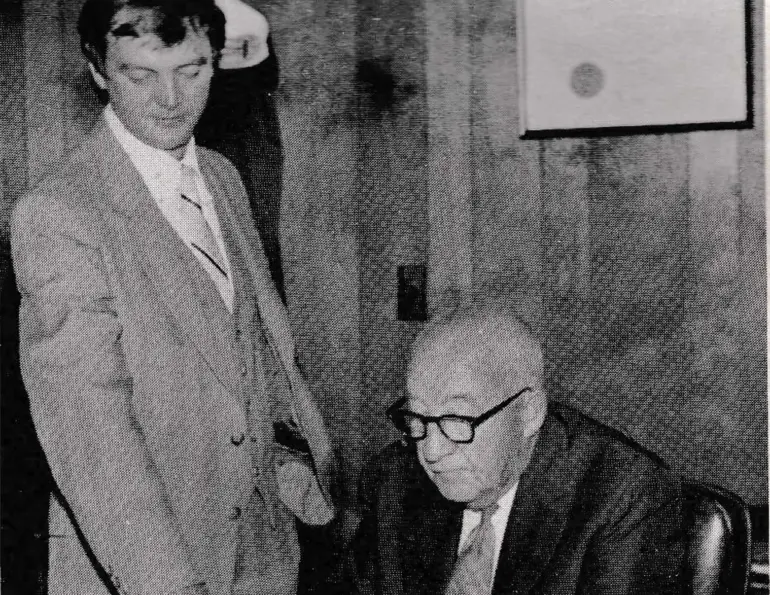
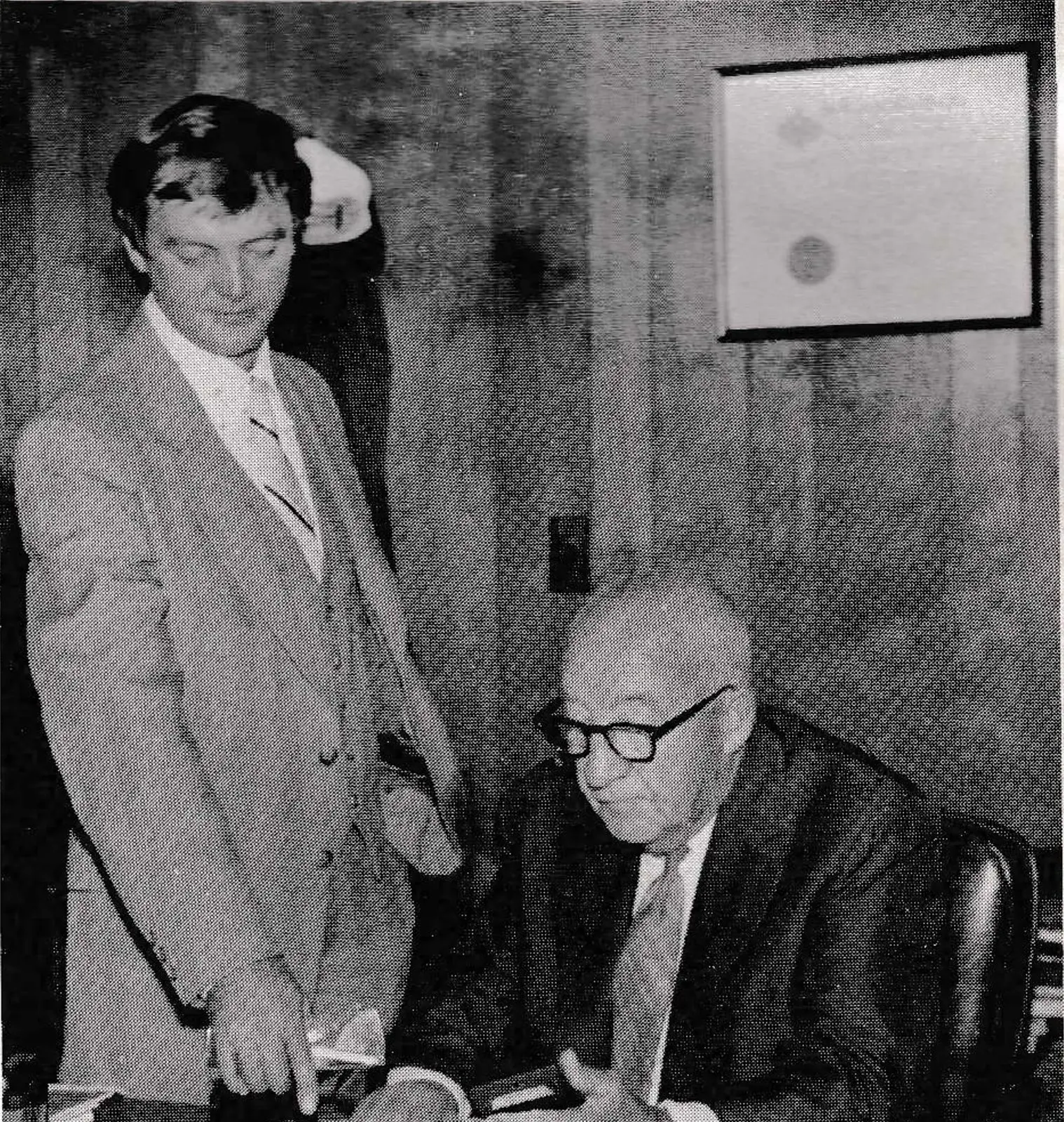
This remarkable record has its beginnings in 1945, when Victor E. Hall, then a product manager for a large industrial equipment company in Syracuse, N.Y., became interested in helping a customer, Lawton Williams, construct a ski tow. This soon led to a sideline of constructing preassembled rope tow drives.
Hall watched the market, studied the patents. One of these was a tightly-written one covering T-bars, and it was held by Ernest Constam, a Swiss engineer living in Colorado. The patent expired in 1954, and it was no coincidence that Victor Hall built two T-bars that year for old rope tow customers at Highmount, N.Y. and Snow Ridge, in Turin, N.Y. The Snow Ridge installation, some 20 million turns of its bullwheel later, is still in operation.
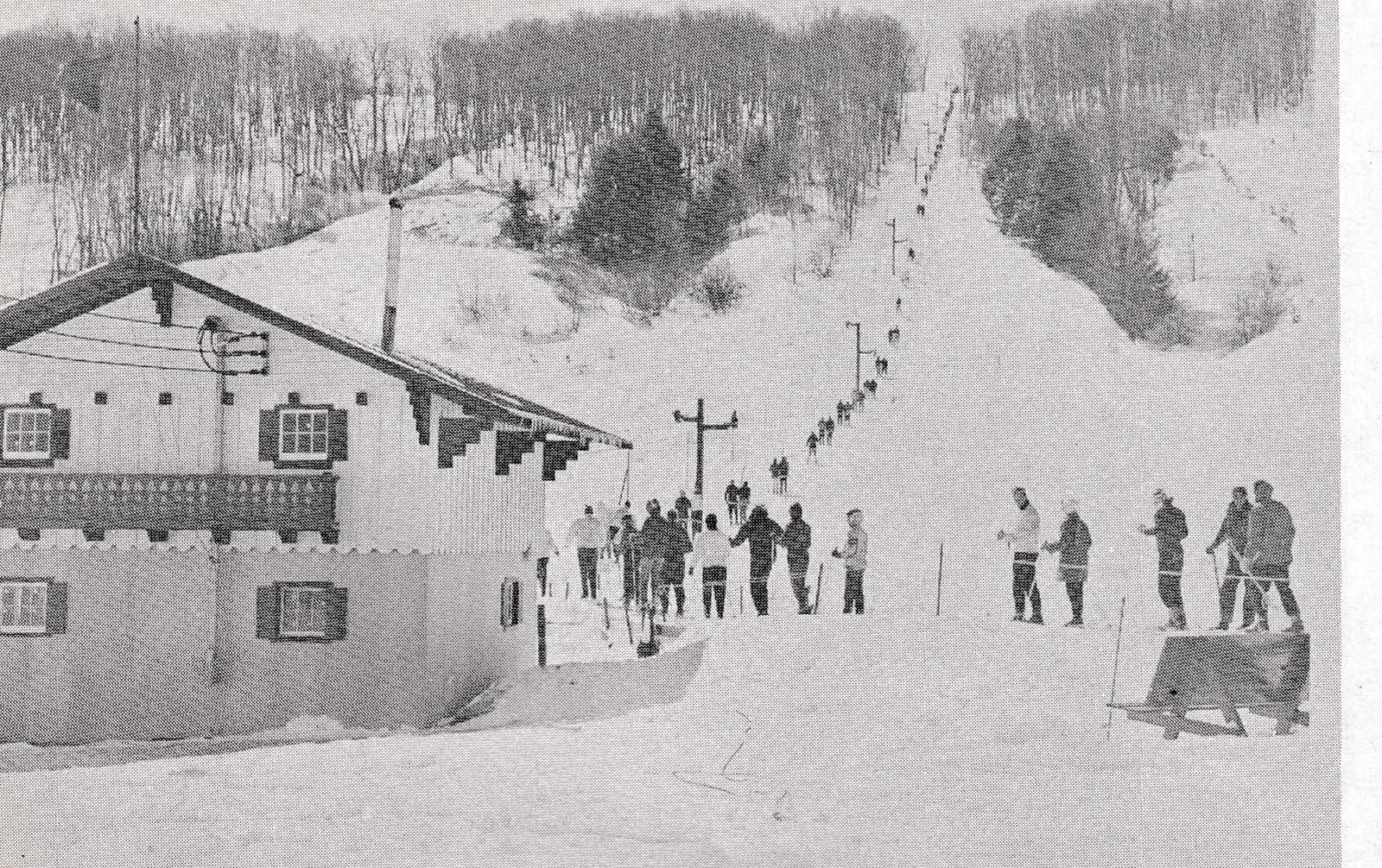
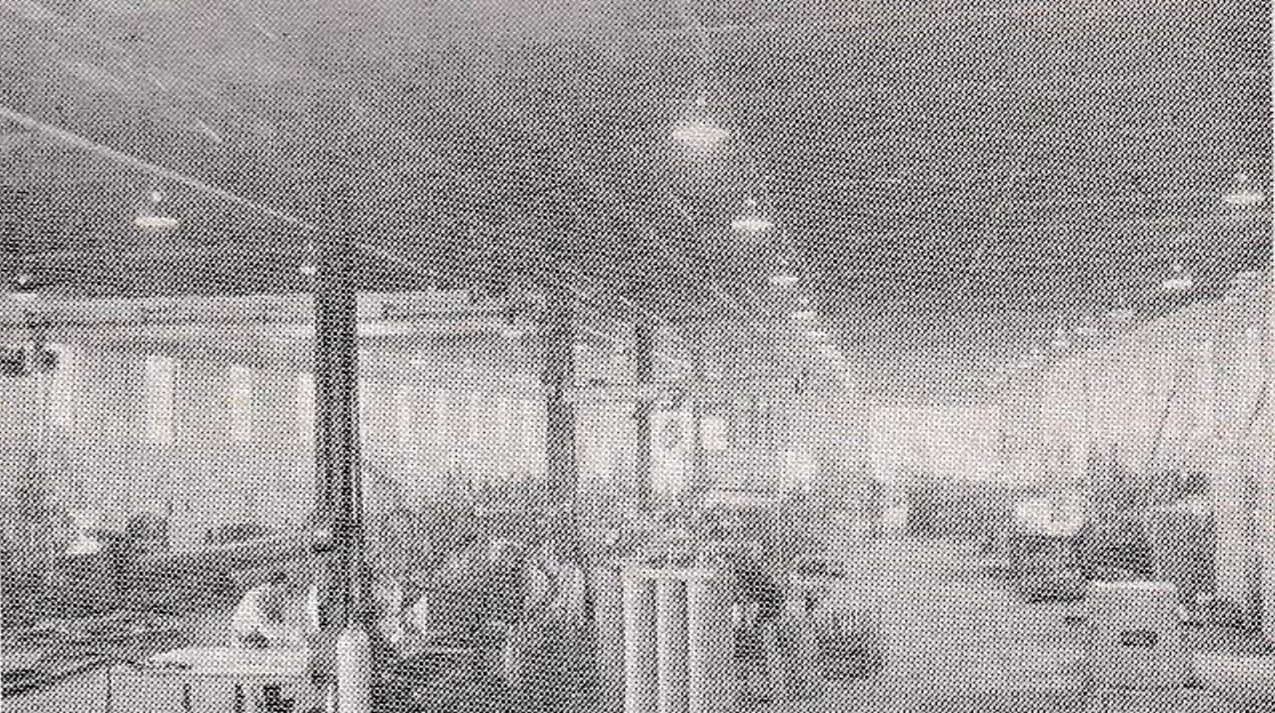
The fabrication of those lifts had been subcontracted, but Hall was convinced that to maintain the necessary quality he would have to control the manufacture directly. A small shop was rented in Turin, the services of “a mechanical genius” named Clarence Curtis were retained and two more lifts were built in 1955. The business was on its way, and Hall Ski-Lift Company was formed.
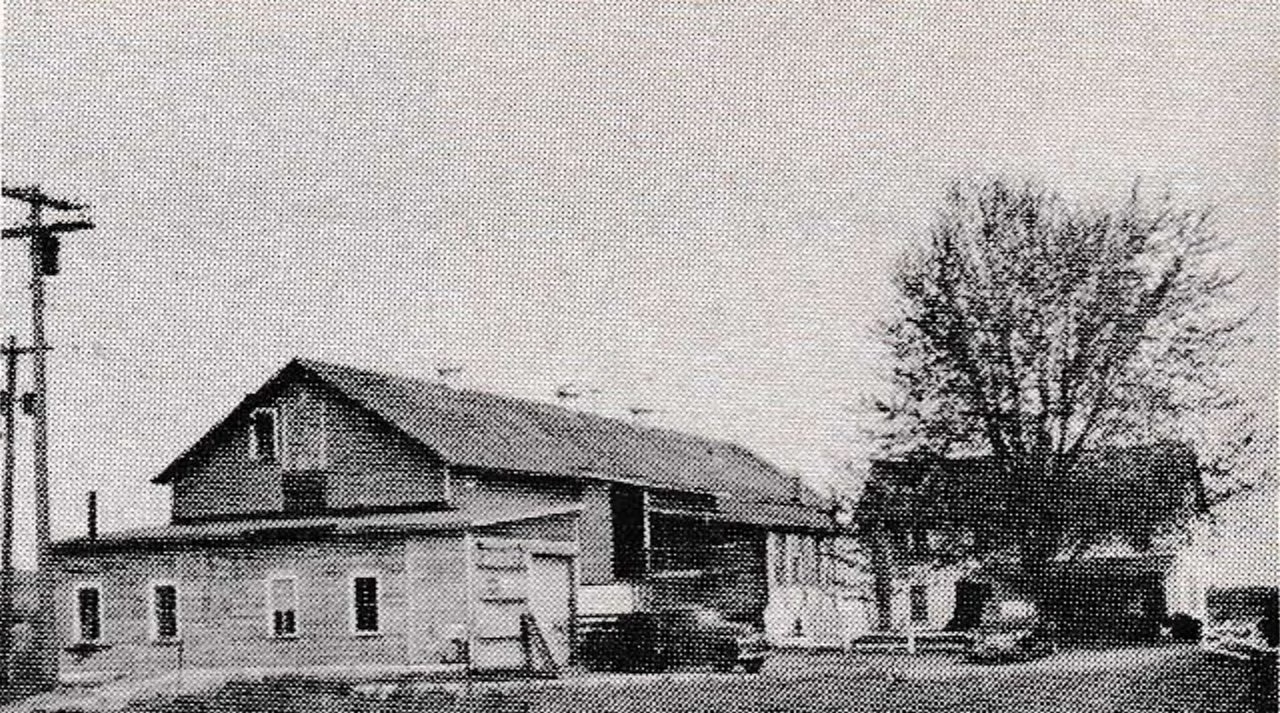
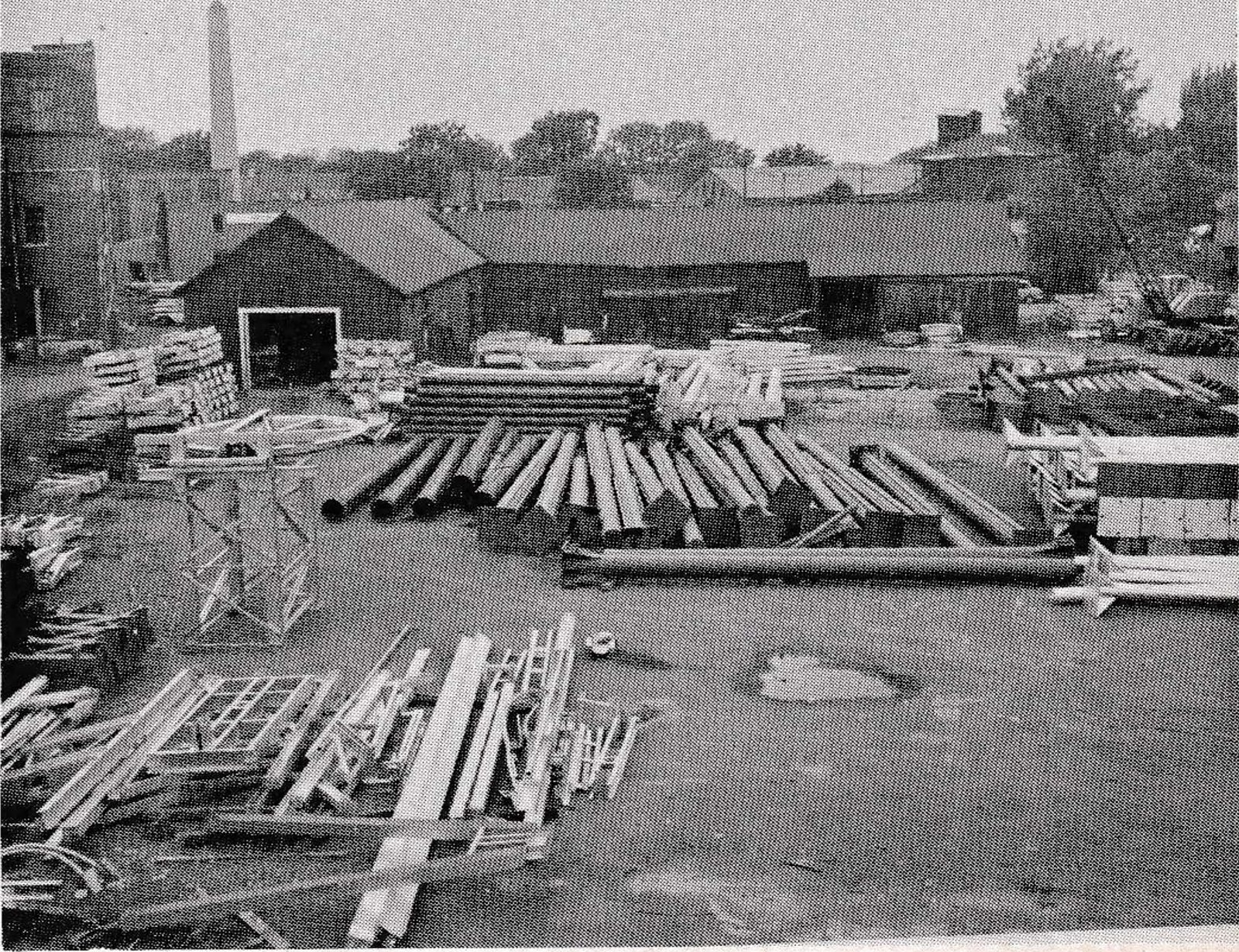
By 1957, the Turin shop had been outgrown, and operations were moved to an old milk plant at Burdick’s Crossing, which Hall had bought for the purpose. This held the fast-growing company for five years, when Hall moved it to its present location in Watertown, N.Y. in 1962.
The story of Hall Ski-Lift Company is inevitably the story of Victor E. Hall, complete with Horatio Alger trimmings of self-education, night school to get an engineering degree, hard work, an entrepreneurial urge, and ultimate success based on hard work, ingenuity, persistence and integrity. Timing helped, of course, but that is not a function of luck as some would have it—but of savvy.
Certainly this young company was out of the starting gate at a heady time in the history of ski area expansion. The pages ofSki Magazine record that Hall built 11 new lifts from 1959-69; for the next year the total was 27, from Maine to California, including two chairlifts. In the Fall of 1962, the Hall ad in Ski Area Management bragged about the 127 Hall installations across North America, including 12 chairs. And the pace still quickened. The Fall ’63 issue of SAM recorded 54 Hall lifts new for that season, including 14 chairs, 32 T-bars and 8 J-bars. By 1968, Hall was advertising in SAM that they could count 418 installations at 266 ski areas.
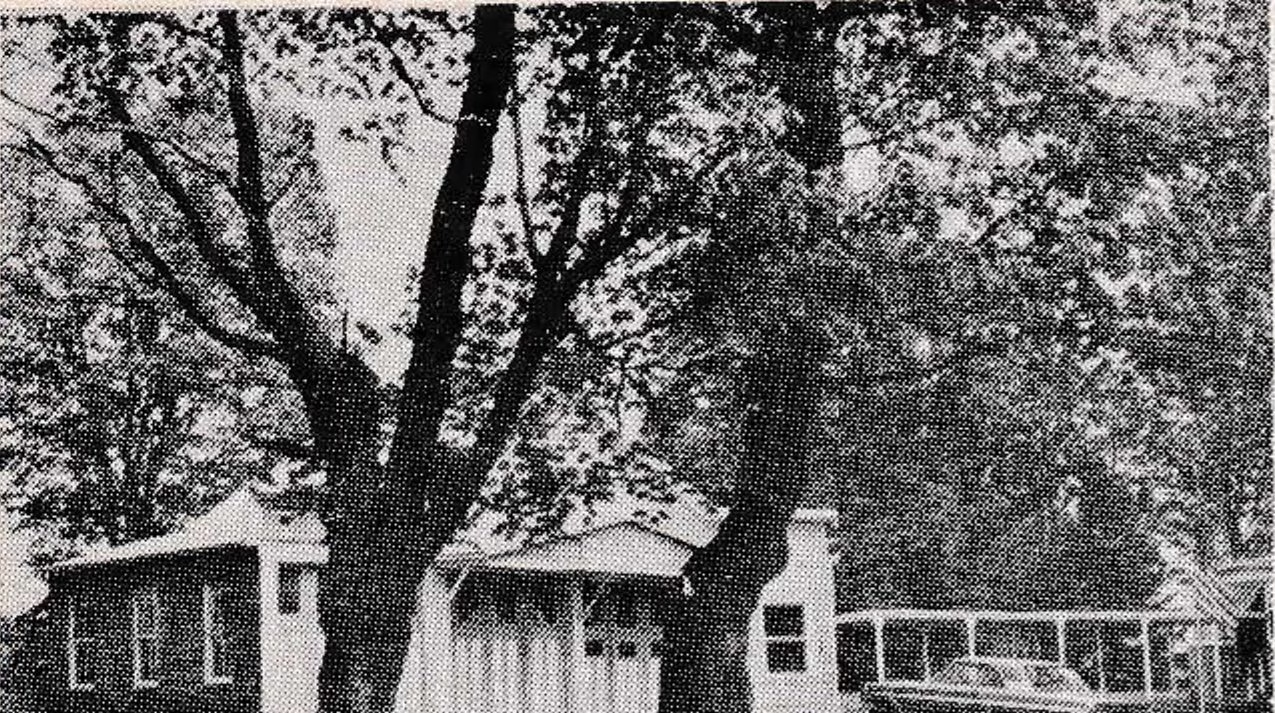
Helping Vic Hall keep the expansion on track were his skills as a multi-engine pilot. His company plane, with Hall at the controls, logged countless hours criss-crossing the country. For many years he was Commander of the Syracuse Group of the Civil Air Patrol, with the rank of Lt. Colonel, and served as search and rescue coordinator.
The man responsible for that meteoric growth was not, as one might expect, a hotshot or a firebrand. He was no fast-talking snake-oil salesman. Rather, Vic Hall was—and is—a rather courtly man, completely unpushy, almost retiring. True, there is an undeniably warm twinkle to his personality, but despite this, his natural dignity discourages a backslapping relationship. In fact, most people, including staff, find it more comfortable to call him Mister Hall. It just seems to fit.
Indeed, this writer remembers with chagrin the time he turned to Vic Hall for help in a Park City, Utah, parking lot in 1964. I had mislaid the keys to my rental car, and was running out of time to catch a plane.
“Well,” said Vic slyly, “I suppose we could re-arrange some wires. I haven’t done this in some time,” he worried, “and you might make sure none of my competitors see me.”
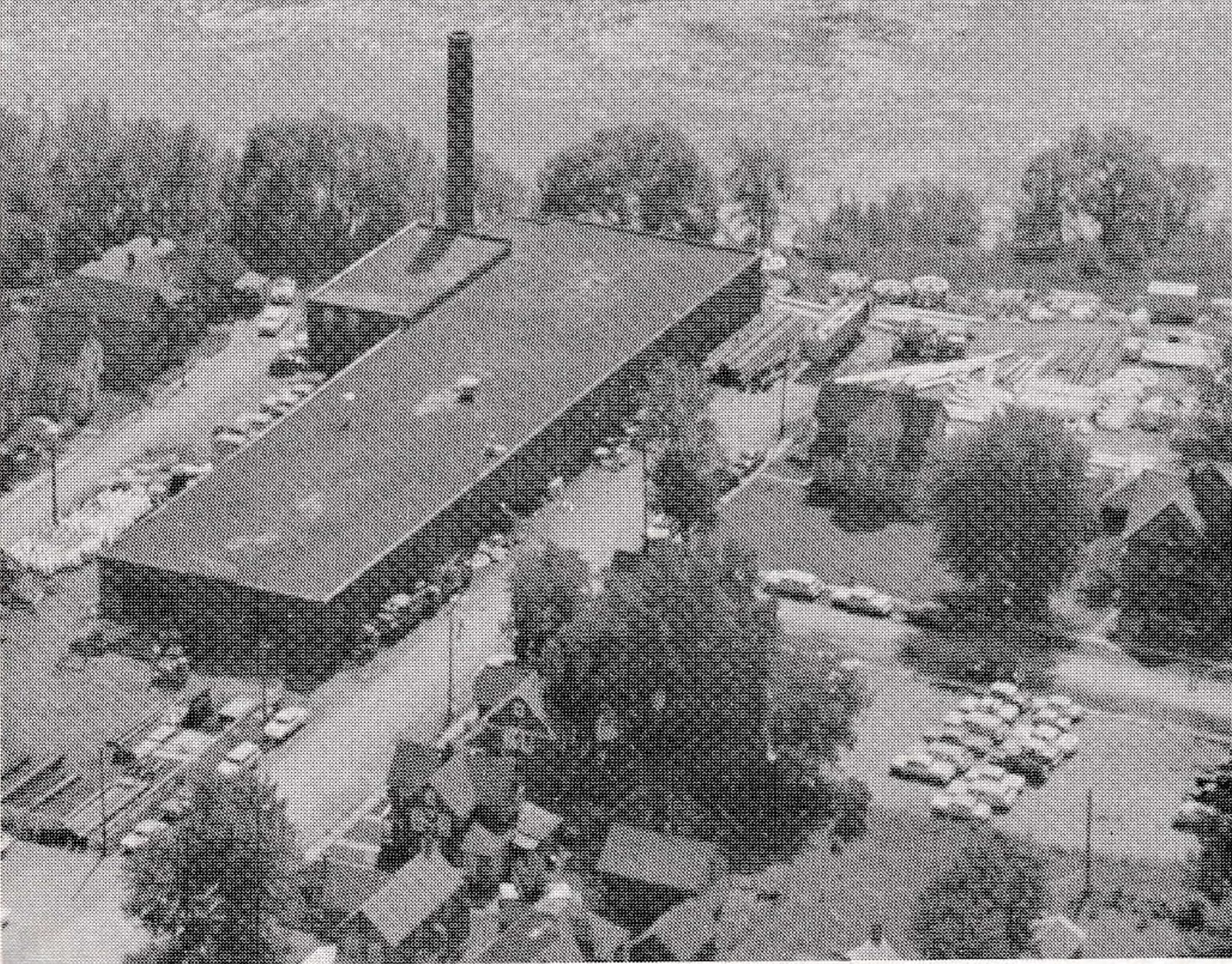
Photo by Nils Ericksen
With that, grinning from ear to ear, but with dignity intact, Mr. Victor E. Hall, P.E. proceeded to hot wire my car, chuckling with delight as the engine started. I don’t think I would have ever asked him for this favor had I known then that this was the National Director of the National Society of Professional Engineers, Chairman of its Ethical Practices Committee, Bank Director, Vestryman of St. Paul’s Episcopal Church and member of the Watertown Boy Scout Executive Committee. I’m just glad he wasn’t betrayed!
Behind the conservative exterior, however, is a competitive, innovative and solution-oriented man. Looking back over his years in the ski business he is particularly proud of his company’s “firsts” on the North American scene. Among many he cites are: 1. Bullwheel unloading in 1964 (“We had one helluva time getting it approved!”); 2. First use of derailment switches; 3. Air snubbing (air in tube) on T-bars; 4. First use of aluminum in lift construction; 5. First use of adjustable tower arms; 6. First with bullwheel backstops; 7. First to use self-loading T-bars.
Hall is also proud of his contributions to skilift safety. In 1958 he started work with Phil Robertson, Blair Birdsall and Harold Thorne on writing a standard for lifts in New Hampshire. ASA (later ANSI) and USSA and ASME were brought in, and, with the Eastern Ski Area Operators as sponsors, the original set of standards were developed. Later, in 1964, Hall became an original member, and permanent fixture, on the N.Y. State Advisory Council for Aerial Passenger Tramways—a body which works with the Department of Labor on the safety, design and opertional standards for passenger tramways in New York.
Tough Hall Ski-Lift Co. had been formed in the late ’50s, it was not incorporated until 1963. Hall served as president until 1970, when he became chairman.
As with the whole ski area industry, things started going sour in the early ’70s, climaxed by the oil embargo and recession of 1973. The company pulled in its horns and cast about for ways to diversify and generate cash flow. Fabrication subcontracting was one answer, as was construction and marketing of woodburning stoves to meet America’s new mood of energy conservation. Compounding the problems caused by the tough market conditions was the “brain drain” that saw Hall lose some of its valued engineering talent.
Today, the company sees itself as “reborn” and dates this new feeling of rebirth from 1977-78.
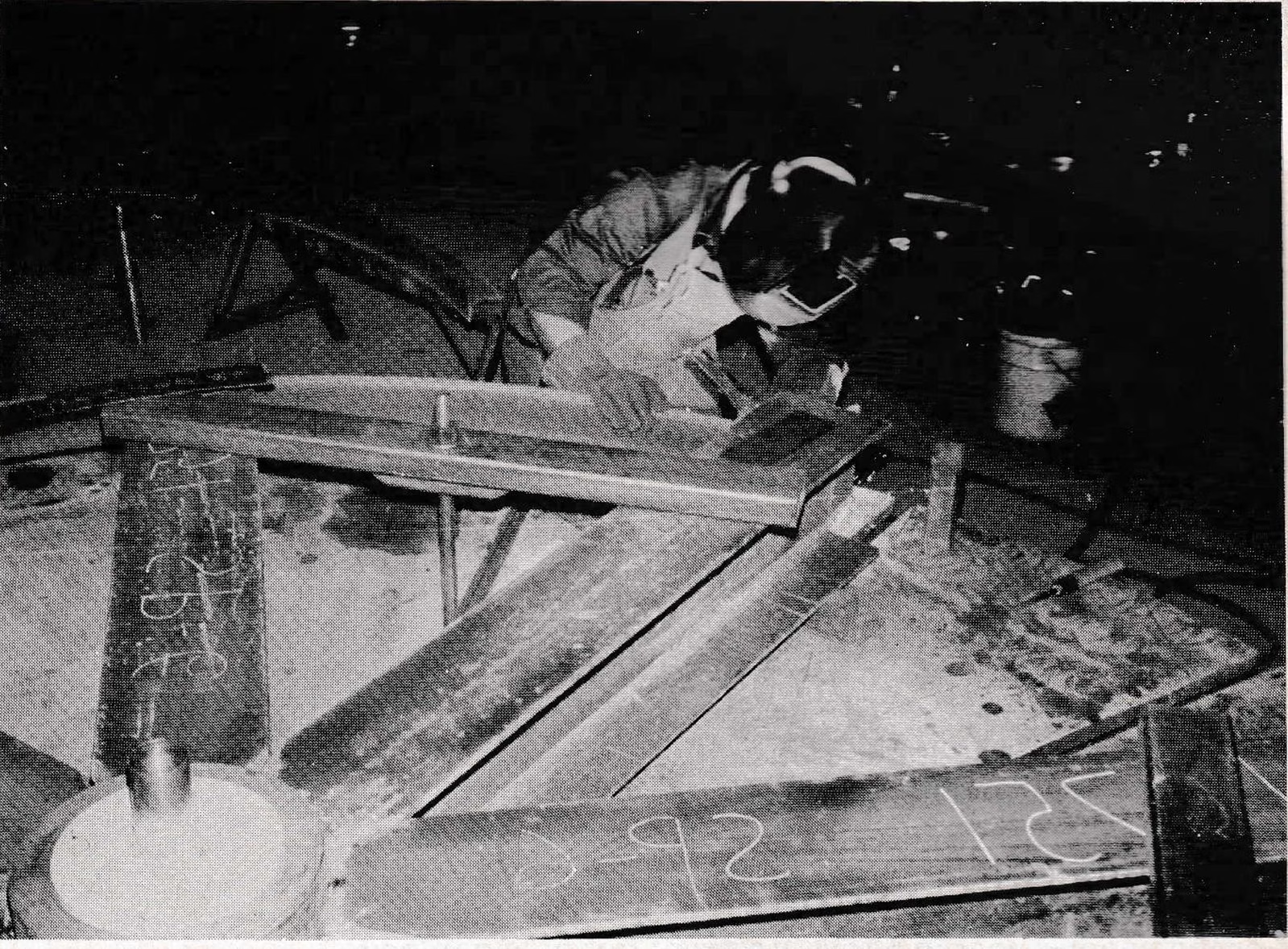
“We’re rather closely knit—almost like a family,” said one department head. “There’s a man who’s been with us for 23 years, another for 21, and half for over ten years. We not only have the strengths of all that experience—and that includes Mr. Hall—but we’re also a young company, with a young president, young engineers, young salesmen and new thoughts.”
At the helm as president is Rand Timmerman, a lawyer who married the Halls’ only daughter, Patricia. How is it starting out at the top by marrying the boss’ daughter?
“Believe me, it was difficult for Rand,” says an associate. “Rand was young, he was hot out of law school and knew nothing about the business, and he had his father-in-law looking over his shoulder at every turn. And he had to face us every day.”

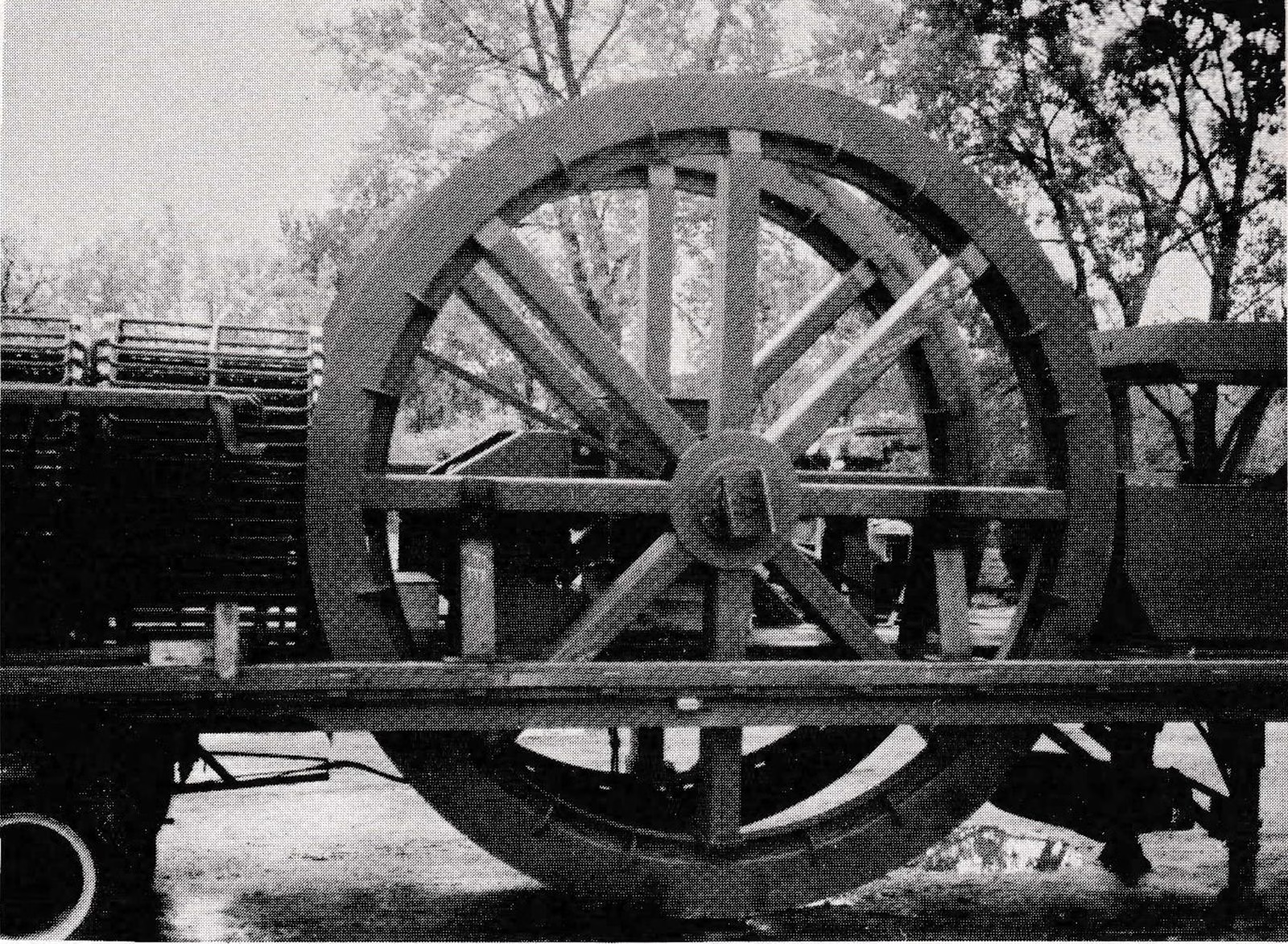
But, this same executive acknowledges, Timmerman never looked back, “but with tact, firmness and fairness, developed a team that pulls together.”
“I very much believe in giving authority to the department heads,” says Timmerman, “and my job is to help them and keep them working together.” Among his priorities:
Employee morale—”We have a non-union shop. It’s extremely important that we listen to them, and that we keep them informed. We have regular meetings. Our 4-day work week was originally suggested by the employees, and we went along.”
Efficiency—”We are big on computers. We were among the first to use them for preparing profiles for the Forest Service. We still use some GE timesharing, we have an Apple III for sales and we are currently installing a Data General System 32.”
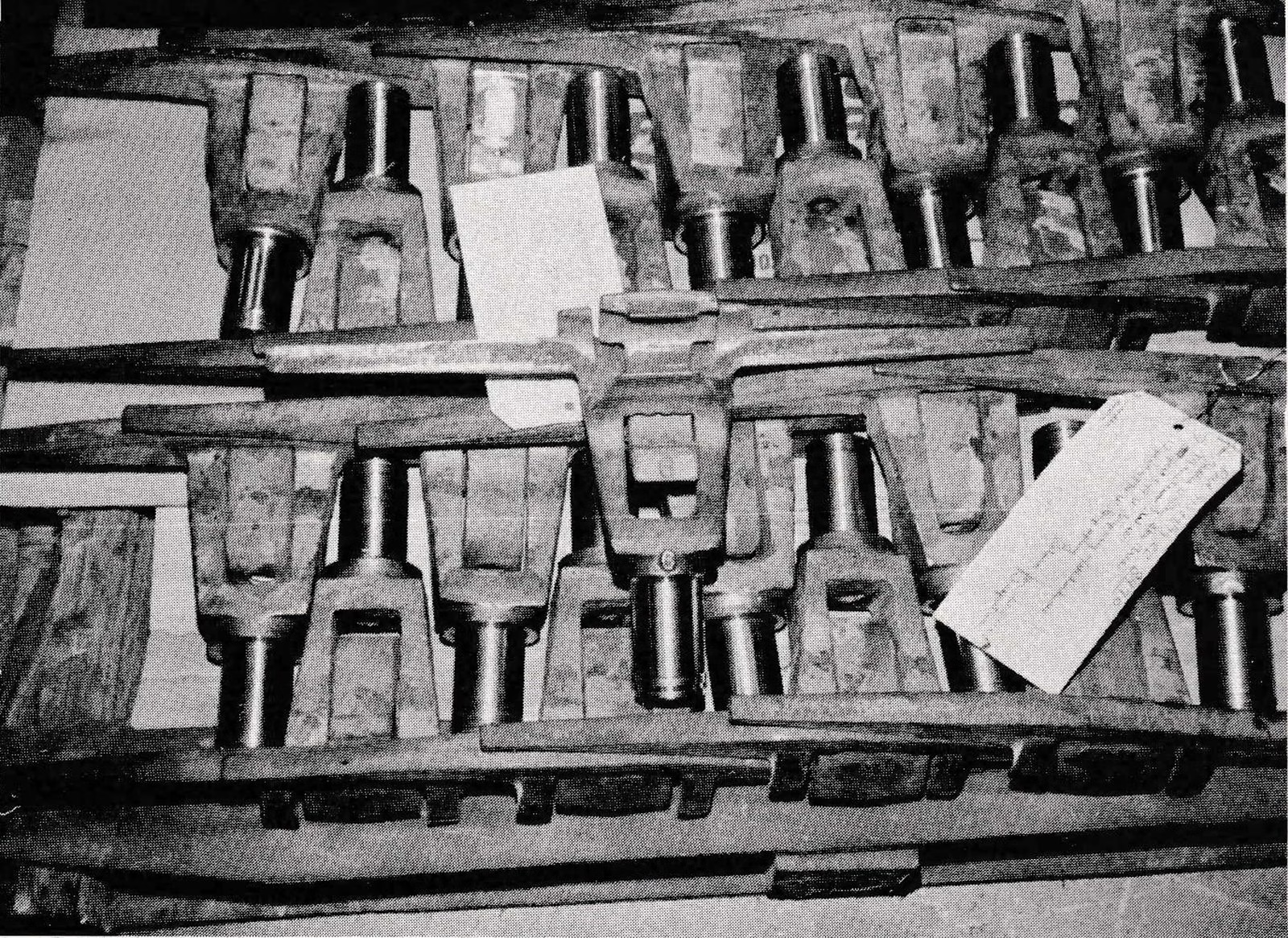
Stability—”We have learned some hard lessons in the financing field. You’ve got to try not to be affected by swings in the market. We’ve had our cash flow problems, and we’ve eliminated them. We also are pleased by our low turnover of vendors. You need reliable sources, and we have them.”
What about today’s and tomorrow’s market for the lift manufacturer?
First, there is the leveling of demand, according to Vic Hall. He points to the scarcity of new areas, and the apparent slowing down in the growth of the skier market itself. He also points to the increased foreign competition which is coming in with attractive financing packages, and he points to the continued high cost of money. “It’s a bad time for innovation,” says Hall.
A biproduct of this is that it is hard to attract and then hang onto engineering talent when other industries offer careers in new and expanding technologies.
On the other hand, with all those 750 Hall lifts in place, there is a steady and growing market for replacement parts and engineering for relocations and lift modifications. “It is about 25% of our volume now,” Hall notes.
Hall sees more detachable chairs and more gondolas in the future. “If you analyze it, the extra costs won’t justify them in most cases, but that doesn’t always guide expenditures. There’s lots of prestige involved. And there’s glamour. Also,” adds Hall, “I’m sure the public will like the idea and the ease of loading of the detachables. From our point of view, the engineering is not that much more complicated. We have rights to use the Giovanola grip, and there are at least four other grips available.”
From a marketing point of view the Hall sales department under Ken Charlebois puts great emphasis on lead time. “When I joined Hall it seemed to me that far too much of the business came in far too late. When you’re scrambling like that you can’t pass back to the customer the savings that are possible with timely planning. The situation is better today, but could still be improved. And that’s why we came up this year with our ‘Order tomorrow’s lift at today’s prices’ promotion.”
Now in his 78th year, Vic Hall continues as chairman of the company he started. He may have turned the reins over to younger management, but he is still there every day, working on engineering problems, encouraging and suggesting, and goading the industry on safety matters.
“There’s no selfishness in the man,” sums up Phil Savage, Hall protege and one-time president of the company, and now sales engineer for Paulsen Wire Rope. “He is always willing to give up the advertising advantage for good, sensible design and safety. At company expense he would make corrections in the field to bring a job up to standards he would have liked had he known about it. He wasn’t grandstanding when he did this—he just knew it had to be done.”
Ultimately, that philosophy is what underlay Hall’s growth, and will serve it well in the future.
Engineer of the Year
In 1971, Victor E. Hall was named “Engineer of the Year” by the New York State Society of Professional Engineers, with the following citation: “For technical and business leadership in the development of aerial passenger lifts and tramways; for devotion and service to the profession of engineering; and for wide-ranging interests and achievements in the public welfare.”