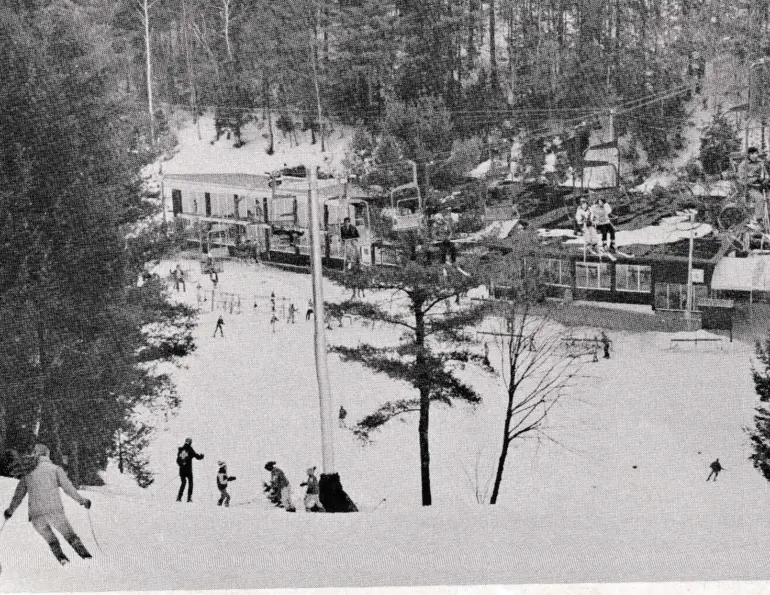
Lost Valley, home of the Powder Maker, Valley Engineering and Otto Wallingford, celebrates two anniversaries this season. Both say a lot about Maine’s ever-profitable “little” ski area. This December, the 240-vertical foot ski hill inside the Auburn city limits was 20 years old. So was its snowmaking, illustrating the kind of forward-thinking management that has brought a decade of profits to the local area, despite some hard times and snowless skies.
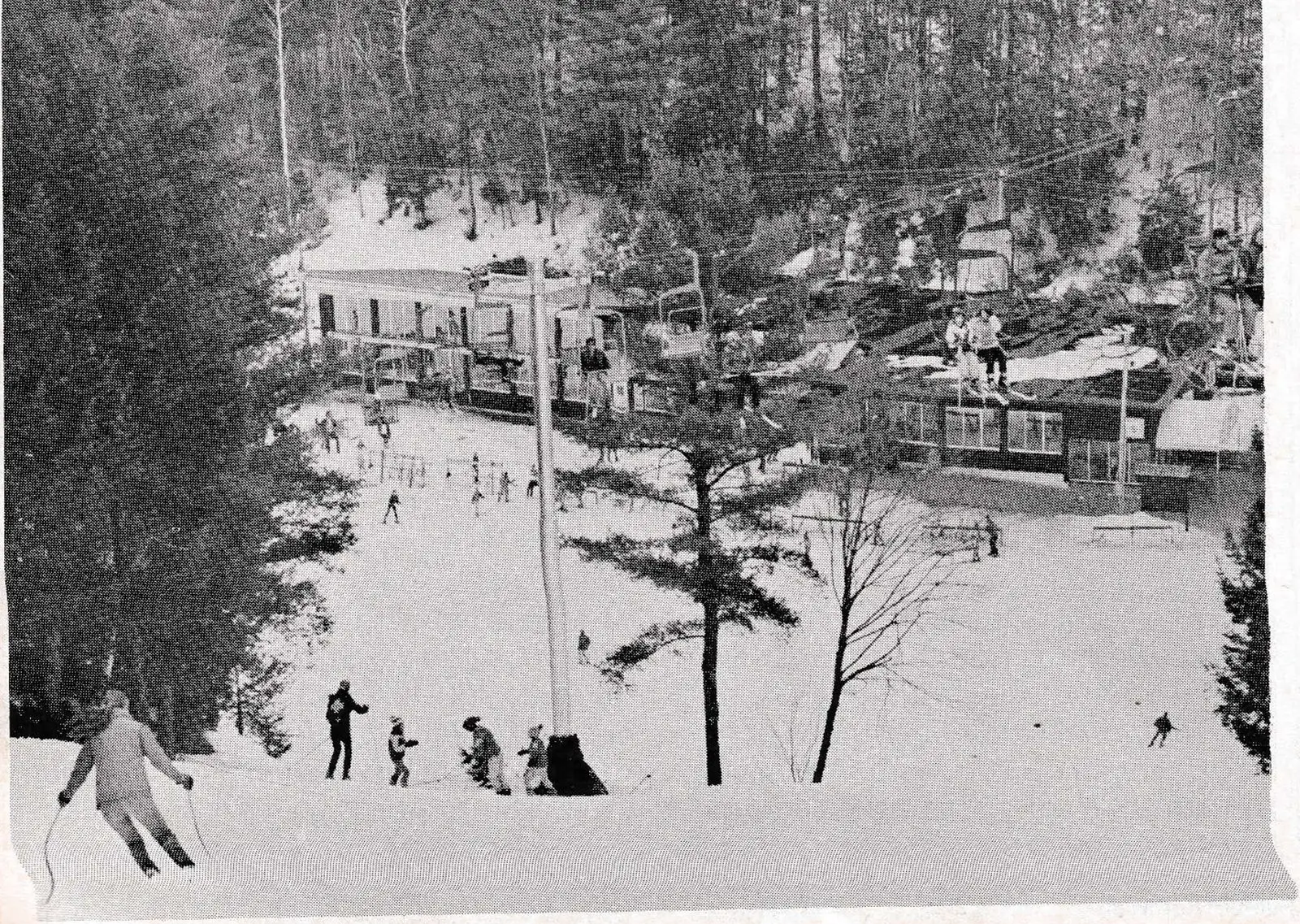
Lost Valley opened in 1960 not only as Maine’s first snowmaking ski area but perhaps the first such operation “upcountry” in the Northeast.
Of course, founder, inventor and inveterate tinkerer Otto Wallingford always was looking to see how to do things better. His snow-grooming inventions like the Powder Maker soon began to appear at ski areas all over the world and led to the formation of Valley Engineering in 1967. Ten years later it was sold for what in Maine understatement would have to be called “a tidy profit.”
One of Lost Valley’s three owners, Wallingford is now a “consultant,” and that can set off alarm bells for fellow-owner and manager Fern Pontbriand.
“The worst thing is when Otto’s not busy,” smiles Pontbriand. “Then he starts thinking.” Pontbriand jokes that in part Valley Engineering came about because “every week we were losing a few feet of shop” as Otto tinkered.
Now, between “idea man” Wallingford and mountain manager Wendell Nason, who is the “practical” builder around the place, Lost Valley’s latest impressive invention is a new snowmaking nozzle mounted on the back of a Sprite. Oscillating and rotating, it spews wondrous quantities of snow, according to Pontbriand.
Forward-thinking management is only part of the Lost Valley success story. Location, carefully thought-outcapital expenditutes, a conservative fiscal policy, savvy marketing and a labor pool that would be the envy of any super-resort have all played important roles.
Sitting just north of Maine’s “snow line” obviously has helped. So has being only 30 minutes north of Portland, the state’s biggest (and only) metropolis. The combination has meant maximum use of snowmaking without being continuously washed out by rain, while offering convenient “short-time skiing” to most of Maine’s ski-oriented citizens.
Perhaps as meaningful as any advantage is Lost Valley’s access to a tremendous labor market—one that combines the commitment and continuity of a full-time staff with the flexibility and economy of part-time employees. Most of the area’s 110-plus seasonal employees and 90 ski instructors have other jobs but “moonlight” on a regular basis at Lost Valley. Because they live nearby and because the ski area is open 14 hours a day, it’s possible for many of them to put in full shifts when they are needed. But when they are not, management can easily trim the payroll. The icing on management’s cake is having a non-union shop in a state with a relatively low wage base.
Portbriand acknowledges his only “full-time commitment” is to his department heads. But commitment can be expressed in many ways and the entire labor force appears committed to Lost Valley, which says something about the quality of labor relations practiced there.
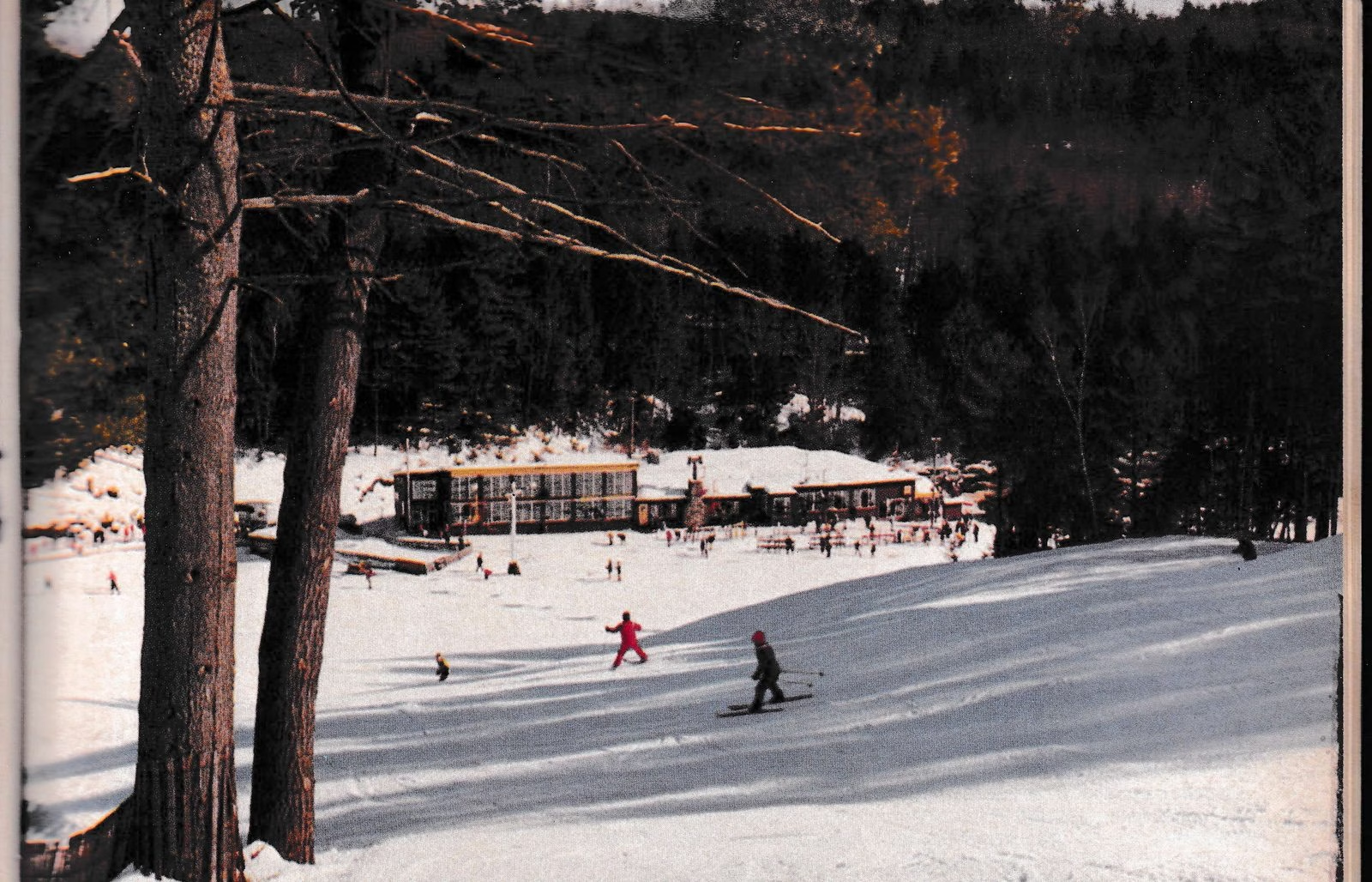
“We’ve had a lot of continuity in the operation,” says the manager, whose secretary and assistant, Shirley Brackett, has been with him 16 years. She now is in charge of signing up the 27 schools and recreation departments that have contracts with the ski area.
“Department heads come back year after year—rental shop, food service, operations, ski patrol . . . I don’t think I have anyone on the staff who has the attitude ‘this is not my job,’ ” says Pontbriand. “We have lift attendants who work in the rental shop in the early-morning rush, before moving to the lifts. Snack-bar workers assist ticket sellers answering phones and questions, then go to the snack bar.
“Shuffling people around is good for the operation because it’s economical. For employees, it’s good because they get as many hours as possible. They can also see the total operation and feel that much more a part of it. Oh, occasionally I’ll get a bit of flak from an employee, but I just say, ‘Look what will happen when you need help.’ “
Being a Maine operation, Lost Valley does not spend money frivolously. But Pontbriand has learned that well-trained, experienced employees pay off, particularly during busy Holiday and February vacation periods. “That’s the one time I won’t get upset by overtime,” says the manager, who otherwise checks the overtime “first thing.”
If there is one overall guideline the ski area has followed in its decision-making, it is to be honest with itself and its customers. “To realize who we are and what we have to work with, and not to try and be something else. We’re no Sugarloaf . . . We can’t have long runs, but we can have the best surface possible,” says Pontbriand, who also has learned that Maine skiers on the whole do not go in for “frills” like “lesson and lunch” packages. But they do want an area that makes and grooms snow as well as it claims it does.
Generally novices and intermediates, Lost Valley skiers have shown they want to feel comfortable and safe. And being practical Mainers, who may drop in for as little as two hours of skiing, they want fast, efficient service. If a potential expenditure won’t answer any of those three needs—comfort, safety or speedy service—Pontbriand says it doesn’t get funded.

Three years ago, $250,000 was invested in a base lodge expansion. (With its lounge and bar, Lost Valley’s restaurant can seat 500 and is the site of many summer receptions and functions. Advance bookings reach into 1986.) Two years ago, the sewage system was revamped ($40,000). In the past year a new Pisten Bully snow grooming vehicle was purchased for $85,000. (“I didn’t realize I had to have stereo in the cab,” laughs Pontbriand.) Snowmaking pipes were up graded from three to six inches and the system made to cover 62 of Lost Valley’s 64 acres ($12,000). A modern, complete first aid room was also built ($20,000).
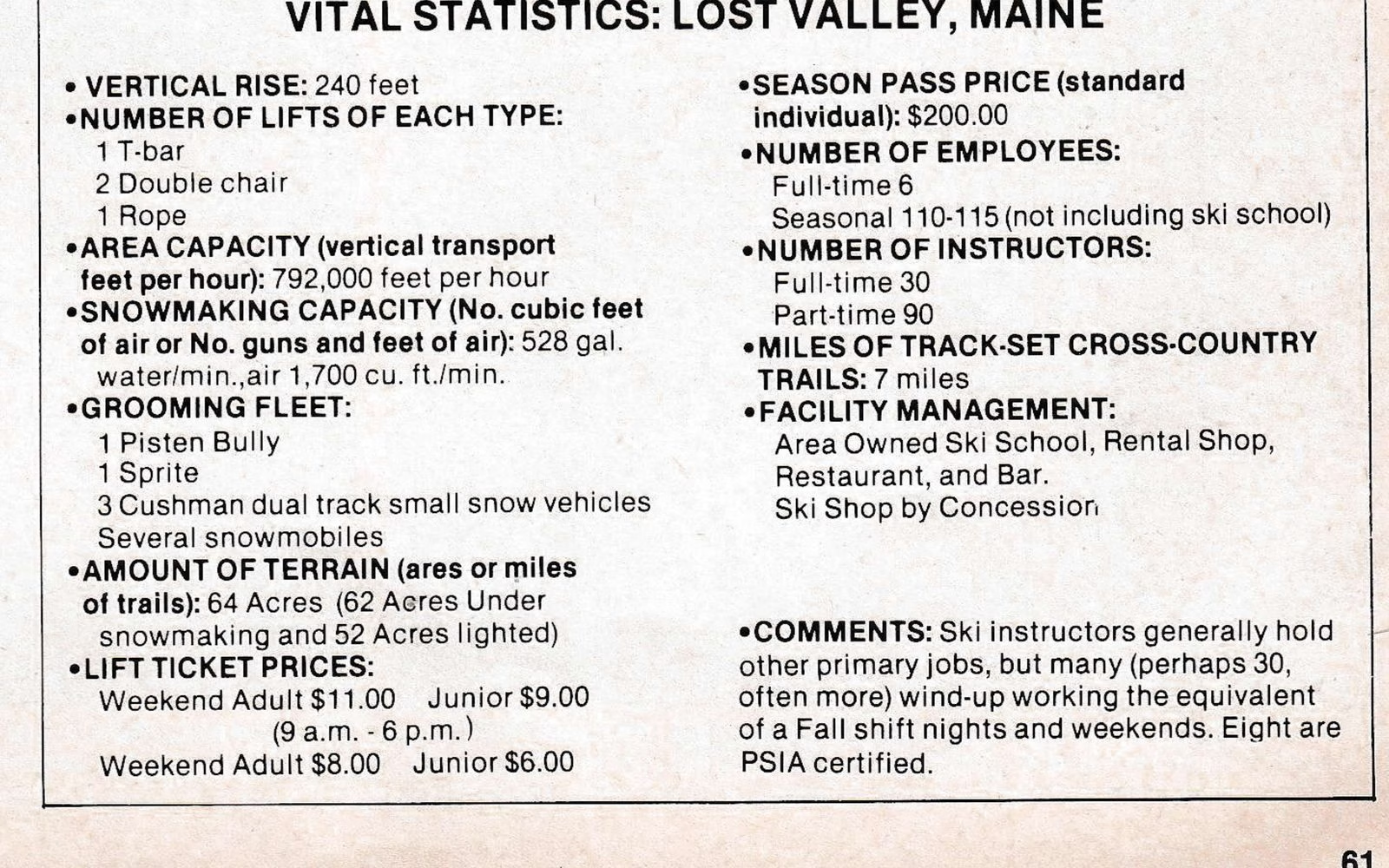
The latter not only fills the need for safety but for comfort also. A bright, cheery and well-equipped facility can mean about as much to a frightened new skier as an experienced ski patrol like Lost Valley’s. Pontbriand gets letters from parents who comment on the fine treatment their children received in the area’s first aid facility and often promise to return to ski Lost Valley again. The manager says that providing first-rate first-aid facilities pays off.
The area also has installed a semi-computerized, mechanically dispensing ticket system ($24,000). Management can now rapidly issue lift tickets for some 10 different time periods during the 14-hour day. Rentals are tied in through point-of-sale terminals. The investment has allowed Lost Valley to offer many attractively priced “short-time” ski periods to metropolitan Portland and beyond.
“I promote the area very heavily as something to do at night. Also on weekends for people who can’t take the whole day off,” says Pontbriand. Sixty percent of advertising dollars goes to local television, 10 percent to newspapers and 30 percent to radio. Much of the latter is aimed at commuters’ “drive time” (“Hey, what are you doing tonight? How about hitting the slopes?”). Total advertising budget is about 3 percent of gross volume.
Success in recruiting schools (and now physical education classes from three colleges) began with the Auburn recreational department, which was having problems getting a volunteer instructor program off the ground. Pontbriand offered the use of Lost Valley’s ski school, and 300 children were taught the first winter. The program expanded to schools and recreation departments within 60 miles until 600 children are now taught every week for six weeks beginning the first week in January. Late afternoon programs for local youngsters, evening programs for adult and midweek women’s programs also keep instructors busy.
School programs have helped the area break into new markets, too. Because Mainers traditionally resist going south to ski, Pontbriand couldn’t crack the nearby Augusta market until he got the Augusta recreation department into a program. Once the kids started, he says, the parents followed.
Pontbriand believes a major reason for the loyalty of Lost Valley skiers is because employees are trained to cater to the novice and intermediate skier. “Remember how you felt when you were starting skiing?” he asks. “Kind of nervous. I see somebody buckling up, we’ll try to give ’em a pat maybe, say, ‘Hey, how ya’ doing?’ Anything you can do to make them feel comfortable we work at, including remembering names. I tell our employees, ‘Mr. Jones loves to hear his name, and Fern loves to see a $20 bill coming over the counter’.”
At the same time, not a trick is missed to make things speedy and efficient, including extra lift line monitors to double people up and make sure no chair goes up empty.
With the advantage of having installed its last new chairlift in 1970, before inflation heated up, Lost Valley has been able to show a modest profit for most of its second decade. At times, Pontbriand says the area has carried a fairly heavy debt (current debt-equity ratio is 1.36) although Lost Valley’s balance sheets reflect “ultra-conservative” accounting.
Three years ago, the area started “escrowing” some 10 percent of annual profits into a reserve for “bad years.” Last year for the first time, owners took down some of the profits themselves (3.2 percent). Everything else has gone back into the ski area, according to the manager.
As everywhere else, cost efficiency has grown in importance. Pontbriand works much harder than he used to at making his department managers conscious of labor costs. Since the hike in the minimum wage, bringing in part-time help has been monitored particularly carefully.
And for the first time this season Lost Valley will remain open in March only when conditions and traffic warrant. Pontbriand notes that March has usually been unprofitable because night skiing tends to become icy after daytime thaws, and regular skiers often head north to the mountains for spring skiing anyway.
So happy birthday, Lost Valley. You’ve shown that a small local ski area not only can be successful just by being itself; in such critical areas as grooming and snowmaking it can also be an innovator and leader.