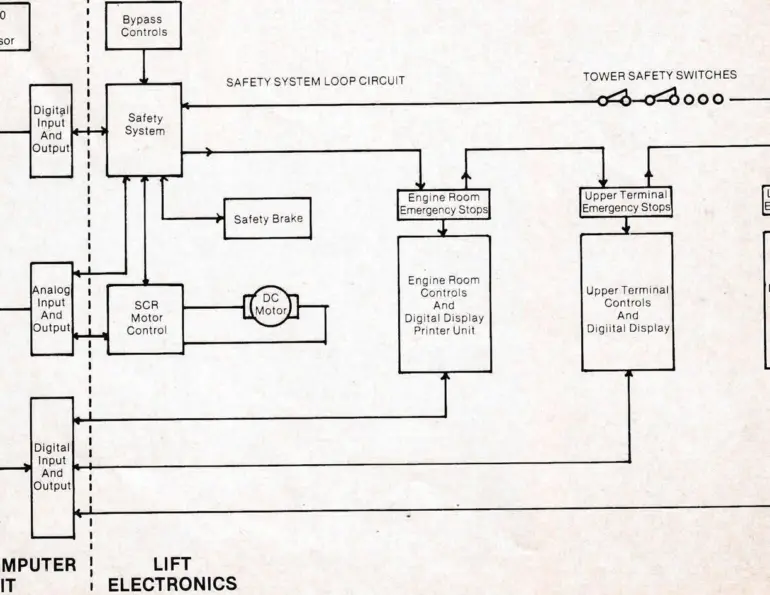
One such pioneering effort was successfully implemented by electrical engineers at Steamboat Ski Resort in Colorado. In 1976, Jon Banks, Jamie Bunch and Dave Herman began investigating the feasibility of using a micro-computer-based lift control system. The reasons behind their efforts were based on the requirements and needs for greater lift control and safety to respond to problems before they become serious. The lift control and safety systems on the market at that time provided adequate control and monitoring of lift functions, but did little to aid maintenance personnel in locating problems which developed in the system itself. Sometimes these system problems were more frequent than actual problems with the lift hardware.
The Steamboat engineers reasoned that a micro computer could monitor and report the condition of the safety system. The computer could provide instant feedback to the operators and maintenance personnel via a digital display when problems developed in the lift hardware or the control and monitoring circuitry, as well as when control commands were given.
In the spring of 1977 the proposed micro computer system was presented to Steamboat president, Glen Paulk. He approved the concept for two new lifts being installed that fall. For the successful completion of the project two separate, but closely related tasks, had to be performed. First, the safety and control system hardware had to be designed and manufactured to interface with the micro computer hardware. Second, the software, or computer programming, had to be developed for the micro computer. The three engineers worked on the planning and then Bunch was given the task of hardware design and Herman that of software development. Eight months later the engineers unveiled the industry’s first micro-computer-based ski lift control system.
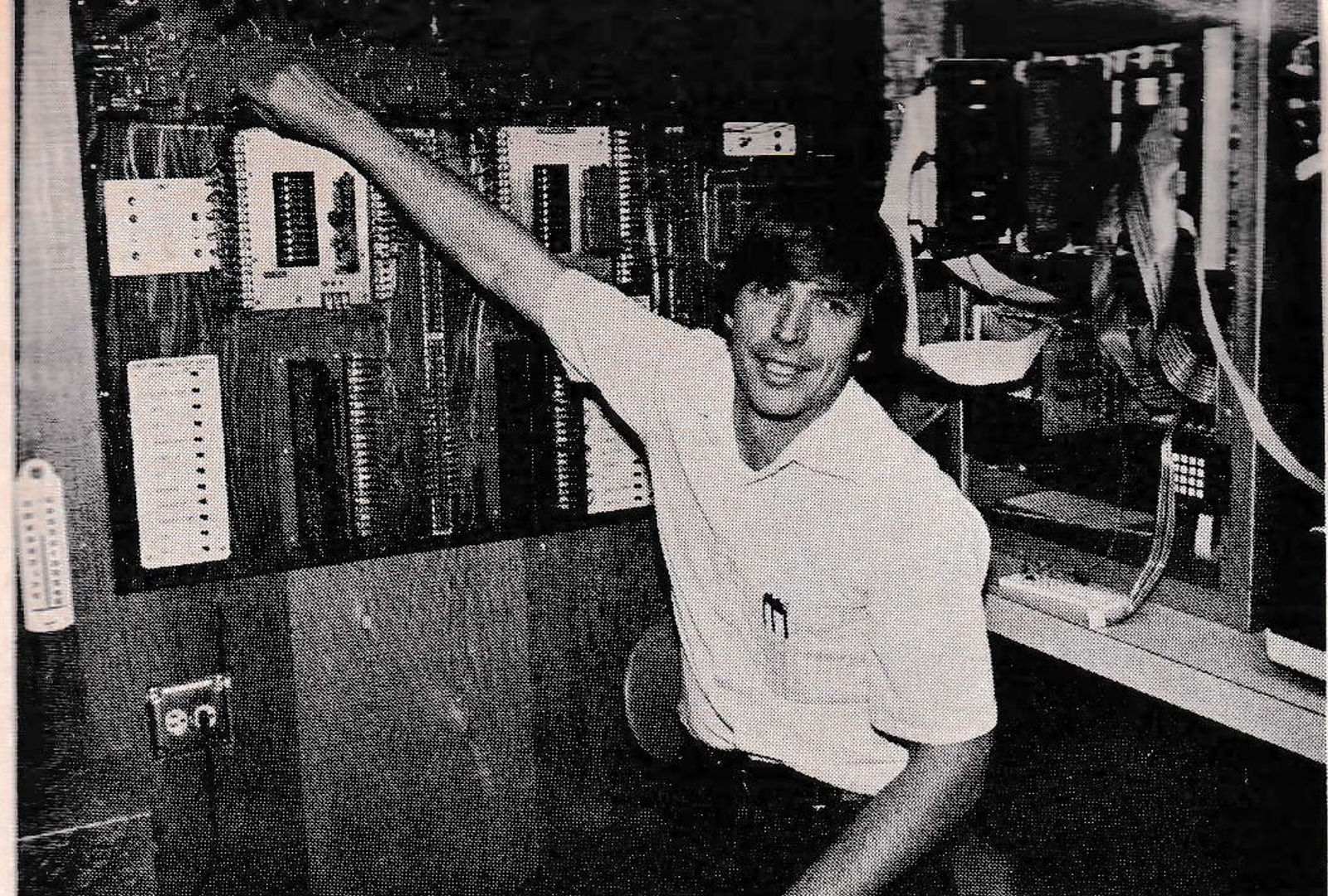
These first two systems were not without problems, but they performed well enough to prove that micro computers can be valuable tools in solving safety and control related problems. For the past three years the system has been undergoing continuous improvements in both hardware and software, including the addition of a printer and a clock which allows the micro computer to maintain an accurate daily log. By the end of 1981, Steamboat installed the system in eight of the resorts sixteen lifts.
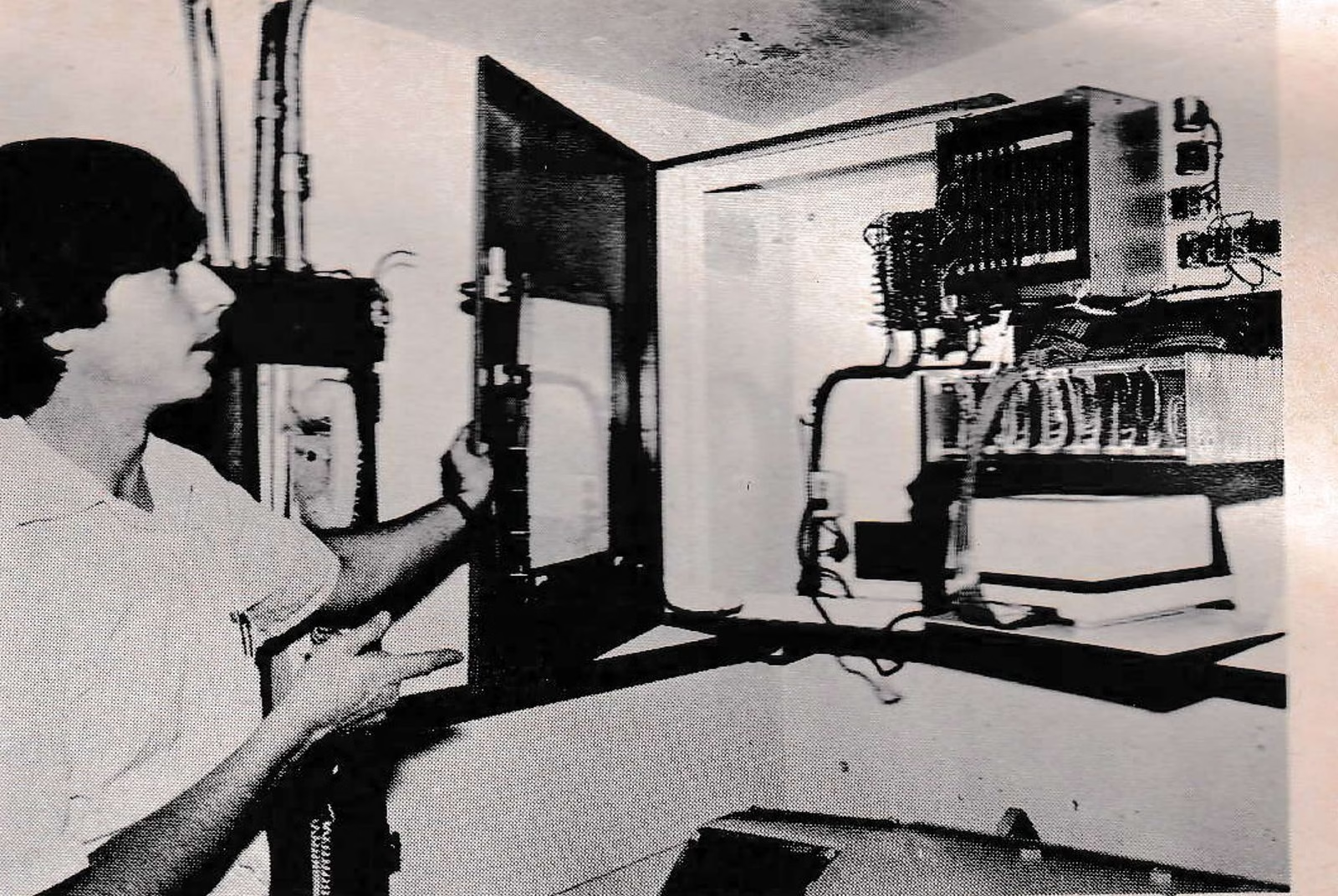
A fully operational prototype, which contains all the components and performs all the functions of the actual lift control and safety systems, is maintained in the Steamboat electrical shop. This model allows testing of new software and hardware before installation on the lifts, and is also a training aid to operators and maintenance personnel.
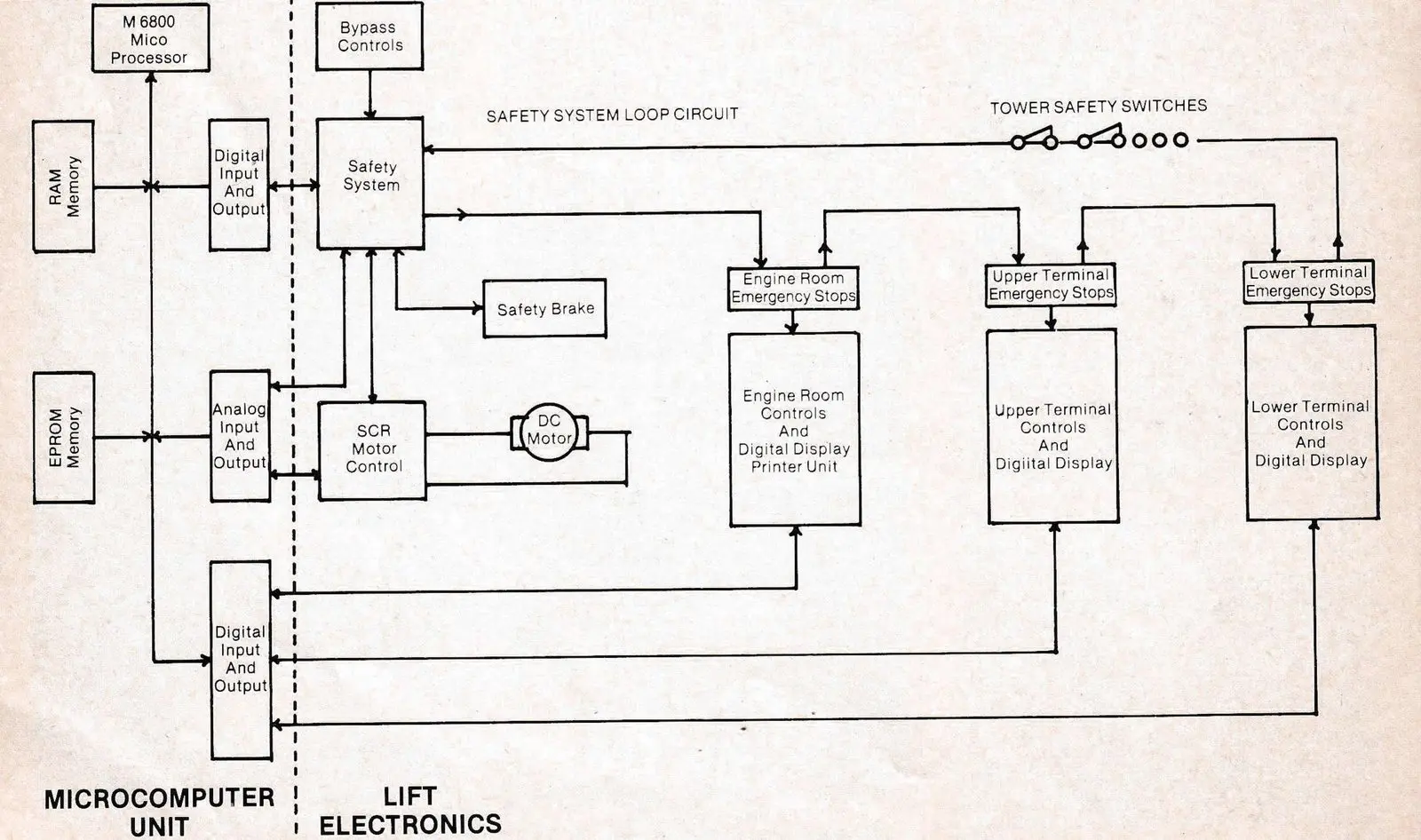
The basic task of the micro computer safety systems is to stop the lift if a problem arrises in the hardware or at any of the operator stations. There are 28 switch locations plus the tower derail switches in the safety loop. If any of these switches open, the lift stops and the computer informs the operators at the top and bottom terminals on a 32 character single line digital display, which switch is open. The display, which is mounted in each operator’s control console, also provides the operator routine information such as lift speed, time and previous command given.
The safety system can also stand alone in the event of a computer failure. If the computer should fail, the lift can be operated from the engine room control panel while allowing the safety switches to function normally.
The computer provides a redundant check of the safety system which enables it to stop the lift in the event part or all of the safety system circuitry fails. Operator control inputs are monitored by the computer and if invalid commands are given, the operator is informed and the command is ignored. For example, if a bottom operator gives a “SLOW” command, the top operator cannot make the lift run fast. An attempt to do so will result in the message: “REQUEST DENIED.” Only a “FAST” command given at the station giving the “SLOW” command is accepted and executed.
One feature provided by the micro computer system which has proven to be valuable to the Lift Operations and Maintenance Departments, is the printout of the daily log. The printout gives an accurate record of down time, reasons for stops, length of each stop, time the lift opens and closes and a record of various electrical test points if a problem developes in the safety system.

The micro computer, which replaces the conventional hard wired logic found in most control systems, has the advantage of being extremely versatile. This allows for easy expansion and modification as changing requirements dictate.
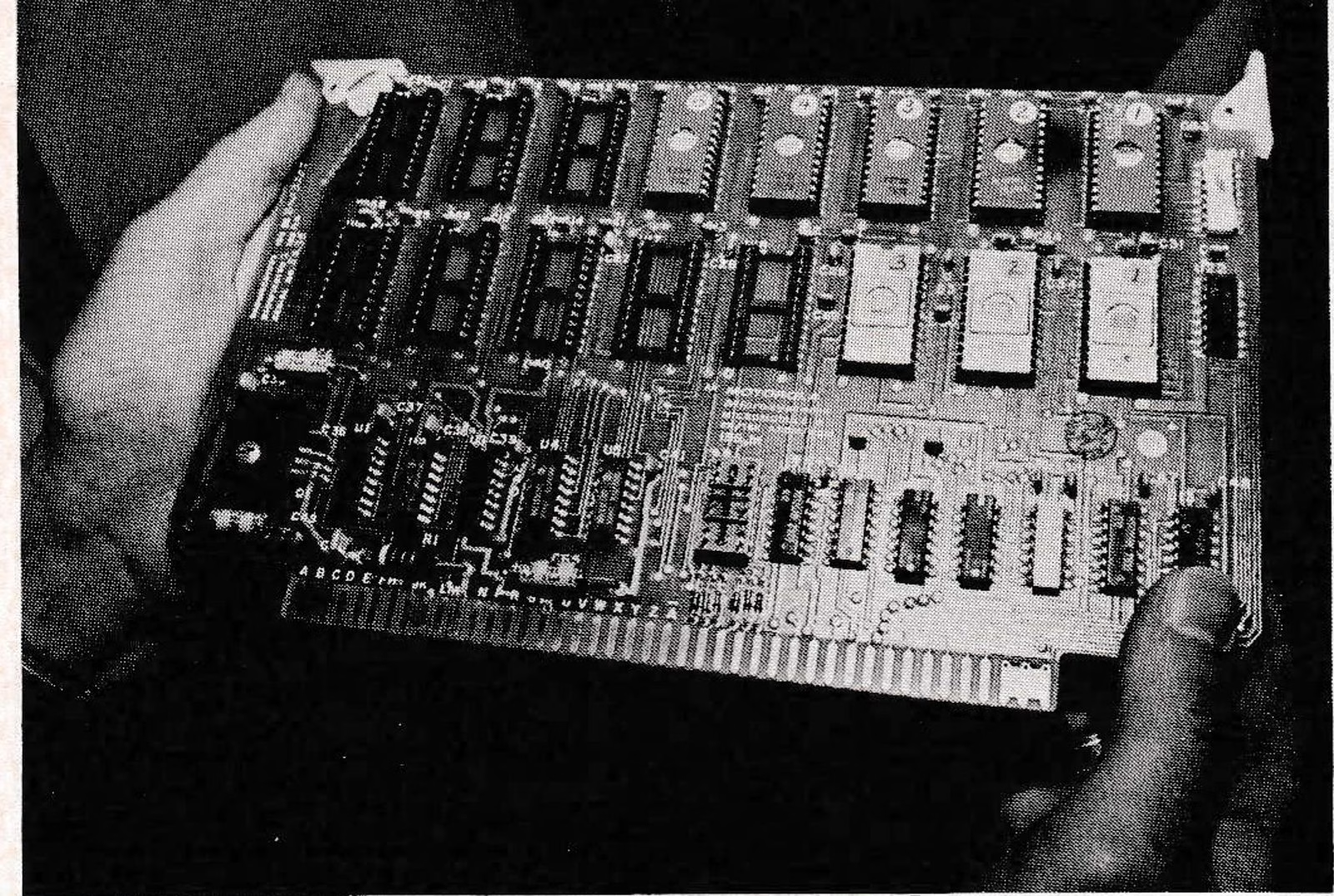
Three basic building blocks comprise the micro computer. First, the microprocessor is the heart of the system and responds to a set of instructions it reads from memory to perform logic functions, math operations and control of output signals based on input signal patterns. To change the way the processor performs, only the instructions contained in memory must be changed, unlike its hard wired counterpart.
The second building block is the computer memory which is comprised of two types: Random Access, (RAM), and Erasable Programmable Read Only (EPROM). The only difference to the processor is that it can store and later recall information from RAM, but can only read from the EPROM. The RAM is used for temporary data storage called a “scratch pad.” The EPROM contains the system’s operating program and can be changed only after erasing by exposure to ultraviolate light and then re-programmed using a software development system, which is another micro computer dedicated to the generation of system software.
The third building block is Input/Output devices (I/O), also divided into two types: digital and analog. The digital I/O lines are by nature either on or off with no in between. This allows the processor to do such things as open the service brake, input operator controls and output information to the digital display. The analog I/O allows the processor to measure and output a range of voltage levels, not just on or off. Using this type of I/O the processor can output speed reference values to the DC motor SCR drive and measure such functions as lift speed, motor current and critical voltages in the safety system.
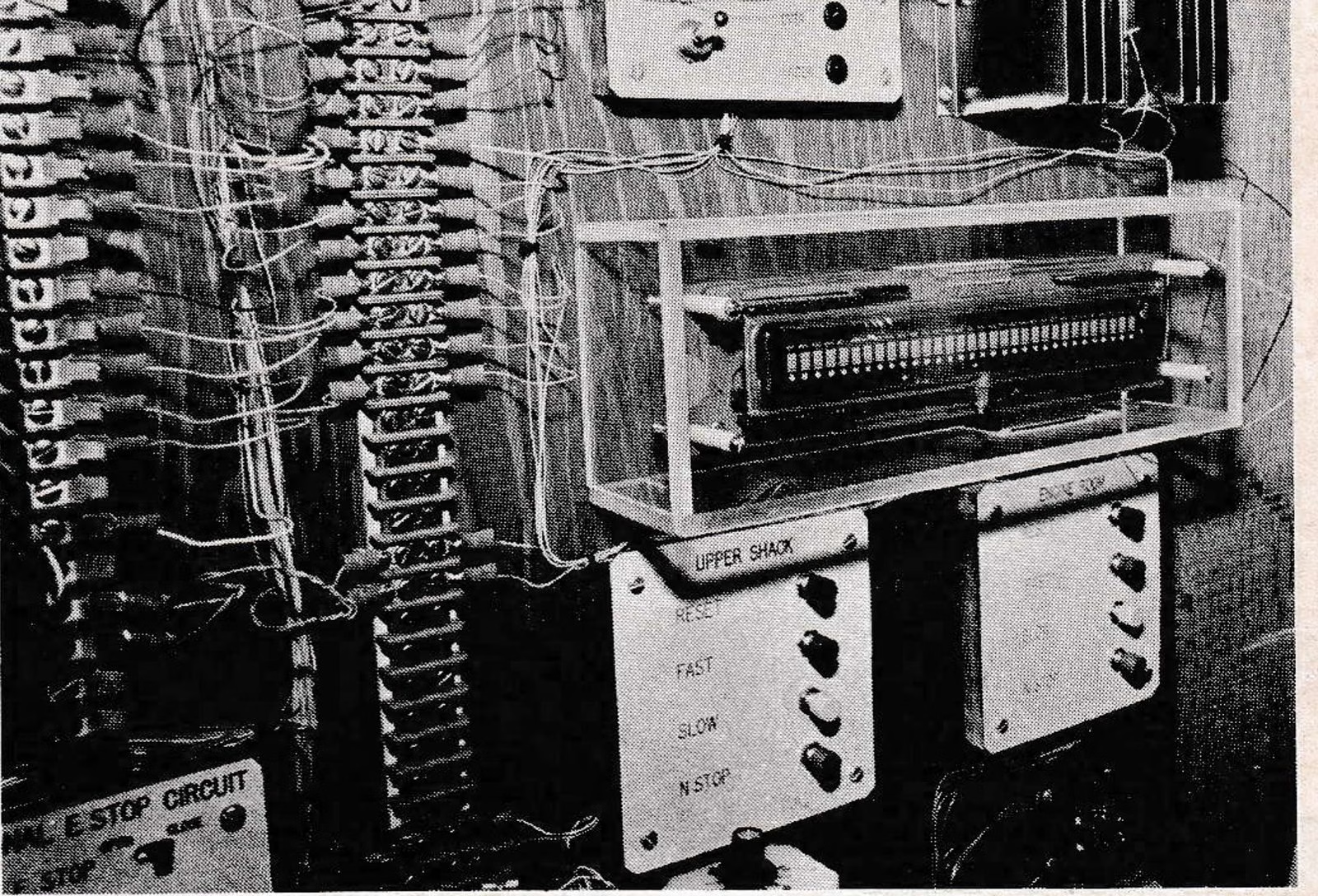
The following example demonstrates how the system was improved through changing the software. Occasionally during severe icing conditions, the outside controls stick when pressed and this goes unnoticed by the operators. In the past, the stuck command input caused all the other normal controls to be ignored by the computer (i.e. reset, slow and fast). Only the emergency stop buttons continued to work. After the lift had stopped it could not be re-started until the frozen button was returned to normal. This resulted in a few minutes down time while maintenance personnel made their way to the lift to correct the problem. While this is not too serious, it is down time nonetheless. With the micro computer programmed to know where the operator commands are coming from and what command it is, two small changes were made in the software to enable the processor five seconds for the problem to be cleared and then if the condition continued, it informed the operator which button had jammed. If a “FAST” button jammed, then after five seconds the lift would be forced to run slowly by the processor. Programming the micro computer to inform the operators of the frozen button allowed them to correct the problem with no loss of operating time. Performance such as this would be difficult, and certainly not economical to achieve with a hard wired logic system.
After working with a micro-computer-based system, one of its many advantages becomes obvious: it communicates with people in their language, not requiring the interpretation of a series of indicator lamps or the indication on a meter. This alone allows problems to be corrected in much less time. The computer components have demonstrated excellent reliability, which is to be expected since similar devices are responsible for successful space flights and many other critical tasks.
The management and engineering staff at Steamboat are convinced that through the use of the micro computer in their lift control systems, they can achieve a greater degree of safety, a more efficient operation and enhanced skier enjoyment.