


“Our winter resorts have been very successful,” he continues. “The success is due, we think, to our development of a ski vacation package that includes everything so people know what they will be paying for their vacation. Add to that, the quality of the instruction in the Club Med ski school and the value of the ski week for a family. Our occupancy rates in Europe run 90-97% in wintertime.”
Last winter, Club Med opened its first “built-to-order” U.S. ski village at Colorado’s Copper Mountain. Probably because of the low snow situation, the resort did not meet first season projections, but Club Med is pleased with the acceptance of the Copper Club Med by guests and journalists and says bookings look strong for the 1981-82 season.
Why Copper Mountain? According to Trigano, Copper Mountain was a relatively new resort when the Club
began its search for a site in the Rockies. Furthermore, it was the first resort to accept the concept of the separate Club Med ski school and the first to indicate a strong interest in working with Club Med—strong enough to sell a piece of property to an outside interest (a first for Copper).
“People don’t expect to find Club Med in ‘snow country’,” says Trigano. True. The Club evokes images of palm trees and scantily clad, sun-tanned beautiful people in tropical settings. The ninth largest hotel chain in the world, Club Mediterranee, S.A., and its subsidiary Club Med, Inc., operate 88 self-contained vacation villages in 26 countries. Thirteen of its villages are located in the western hemisphere; by 1985, the Club projects a total of 25 villages in this hemisphere. The future growth of the 32-year-old organization is primarily in our back yard, though other frontiers will be explored as well. For instance, a new Club in Canton, China, is scheduled to open in the next few years.
Indeed, the Club holds an option on a “beautifull site” for a second village in Colorado at Breckenridge, but is in a “wait-and-see” posture, pending the results of Club Med/Copper’s second winter season. Other potential ski station locations might include Canada and Chile.
The Organization
Serge Trigano is the chairman and chief executive officer of Club Med, Inc., a wholly owned subsidiary of Club Mediterranee, S.A., and has full responsibility for the management, operations, development and sales of all Club Med resorts in the western hemisphere. Assisted by Jean Luc Oizan Chapon, director of operations, they oversee 13 operating villages and the plans for 12 more, scheduled to open in this hemisphere by 1985.
Club Med, Inc., was responsible for $91.2 million gross revenues during the fiscal year ending October 31, 1980, representing a 23 percent increase in revenues over the prior year and 15 percent of the total Club Mediterranee gross revenues of $589 million, an increase of 24.4 percent in worldwide sales over the previous year.
Club Mediterranee was founded as a sports association in 1950 by Gerard Blitz, a Belgian, along with a group of friends. Gilbert Trigano who today is chairman of the board and chief executive officer of the parent company, joined the group in 1953. Since 1966, the Club has been a publicly owned company with its stock listed on the Paris stock exchange (Bourse).
In 1950, Club Mediterranee opened its first vacation village on the Spanish island of Majorca. Today the Club operates villages throughout the Mediterranean countries, in the Caribbean, Middle East, Africa, Mexico, the Bahamas, South Pacific, South America and Asia. Accommodations range from Polynesian-style thatched huts in “traditional village” settings with communal sanitary blocks to the “bungalow” and “hotel villages,” which provide private bathrooms and range from modest to luxury hotel standards. All villages in the western hemisphere fall in the latter category.
When staffing a 600-bed village, the team of G.O.’s (gentils organisateurs), headed by the chef de village (village manager), averages 100 people, working along with approximately 200 local, permanent personnel. The G.O.’s spend six months at each Club.
The Clubs run their own kitchen and bakery, preparing all the food for what are bountiful luncheon buffets, continental and American-style breakfasts and continental light dinners. The bakery produces up to 1,000 croissants for every breakfast, plus all the other bread consumed daily. The luncheon buffet will feature 20 to 30 meat, fish and salad dishes, two fruit tables, a salad bar, a cheese board and dessert table. Wine, and often beer, are free with lunch and dinner. The chefs, bakers and sous-chefs are hotel, school or Club trained.
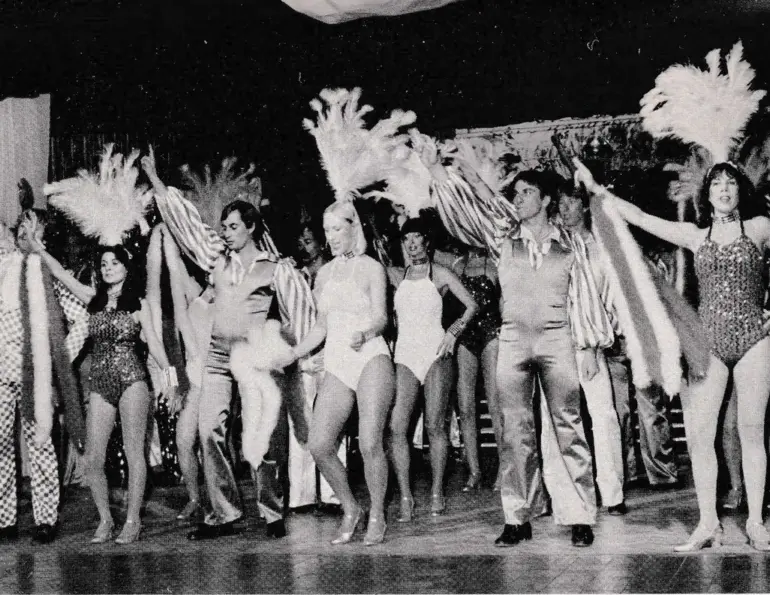
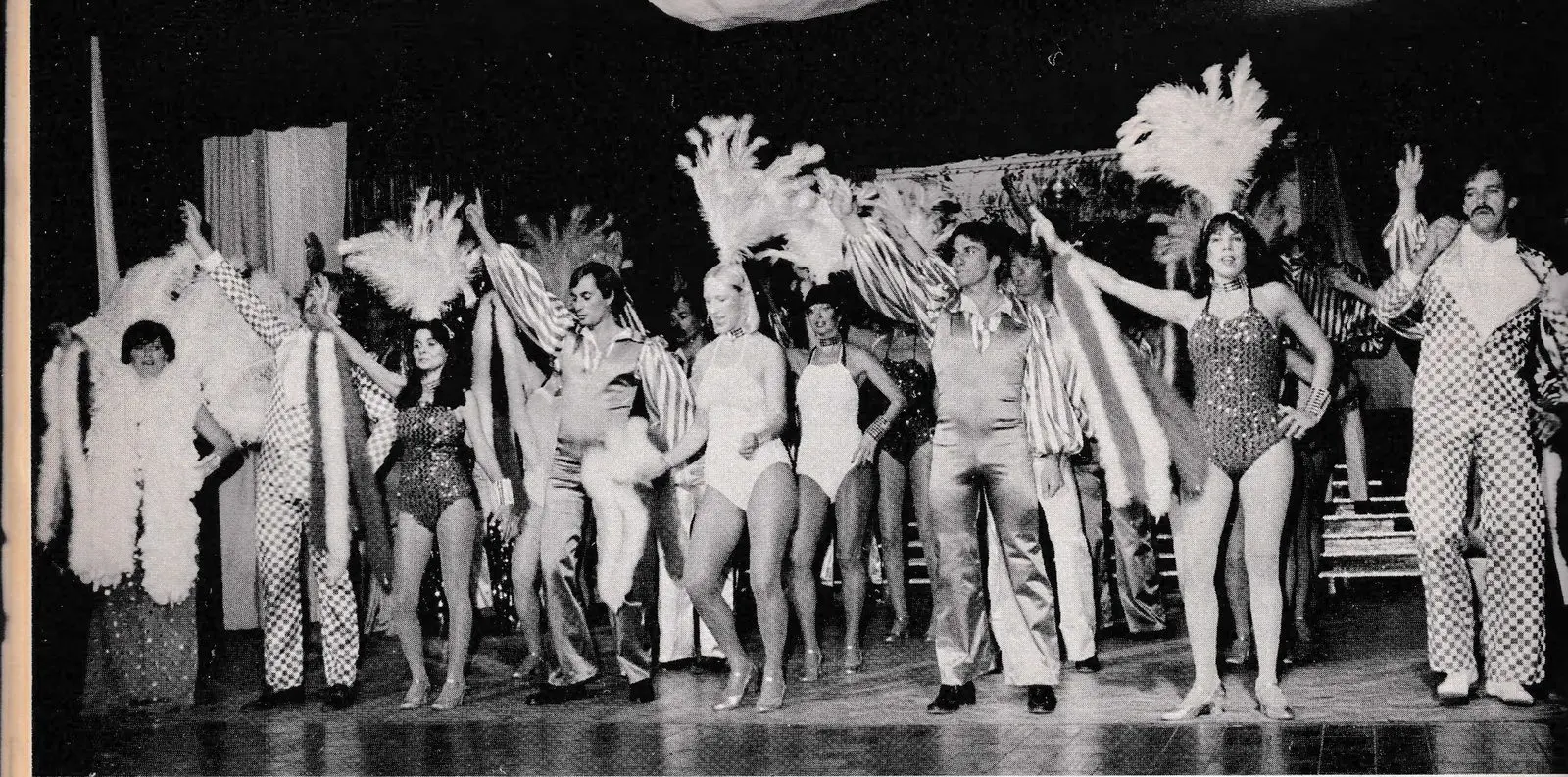
Other specialized personnel include choreographers, set designers and builders, lighting engineers and custumers for the cabaret shows.
The Product
Abundant sports and recreation facilities, attractive social gathering places—lounges, lobby, poolside, bars, discos and the dining room—live entertainment and the organizing skills of the G.O.’s promote continued interaction among the guests. The G.O.’s orient the G.M.’s (gentils membres) to the routine of each club, integrating them only as much as they wish to be, into the daily activities.
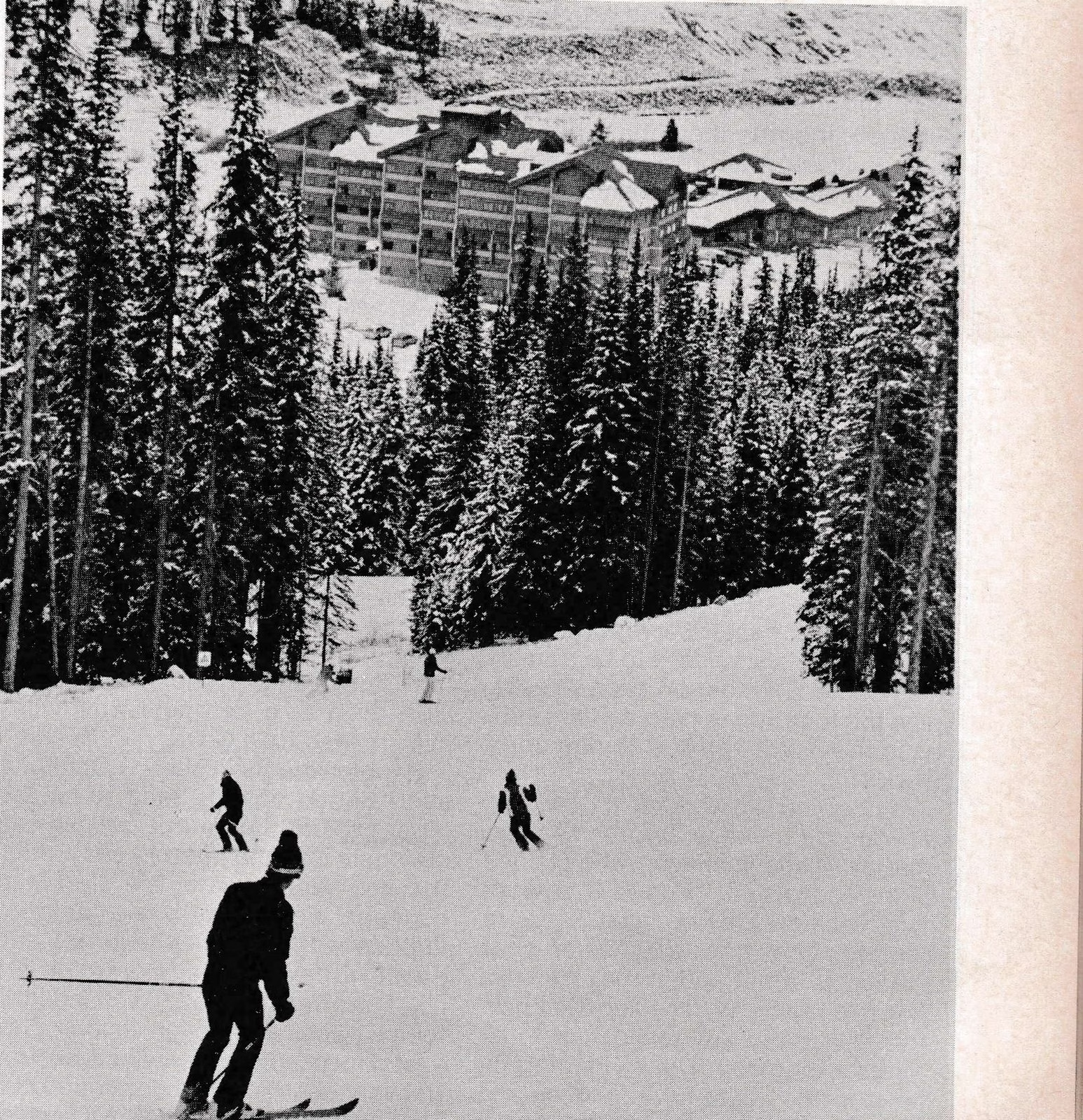
The winter clubs concentrate on alpine and when available, crosscountry skiing, although Copper Mountain offers swimming, French lessons, yoga, bridge instruction, nightly dancing and entertainment as well. A new feature at Copper this year is the Mini Club for five-to-twelve-year-olds, with special ski classes twice a day. The G.O.’s will keep the kids entertained from morning through dinner with skiing, games and other activities.
European winter clubs are open in the summer with strong family attendance. Activities include hiking, tennis and, in St. Moritz, sailing. Coppers Club will be open in the summer of ’82 for the first time, with rafting, golf, horseback riding, tennis and hiking options.
The all-year and summer clubs include such activities as sailing, water-skiing, scuba diving, tennis, windsurfing, yoga, snorkeling, fencing, archery, volleyball, ping pong, basketball, dancercise, backgammon and other activities. The activities, instruction and equipment are all part of the basic package. Exceptions are riding, deepsea fishing and rental ski equipment.
The Club is beginning to experiment with various “theme club” concepts. For instance, the new Club on Sicily has a circus theme, and guests can learn to be a clown, among other activities. Paradise Island in the Bahamas focuses on tennis. At Pompadour, in the Limousin country of central France, the Club has an equestrian center, with all forms of horseback riding and instruction available to G.M.’s at no extra charge. Theme weeks are also being tried: last spring at the new Haiti Club, a “Discover the Difference Week.” co-sponsored by Perrier, was held and 500 people showed up for a series of special programs developed by consultants on sports medicine, nutrition, racewalking, beauty and disco exercise. Fitness was obviously the theme.
The Clubs do not provide television, newspapers or radios and telephones are rare and only available at certain hours. “The Club believes that a vacation is a time to escape from the cares and distractions of everyday routine,” says Trigano.
Clothing is not important. Bathing suits and a pareo (a unisex sarong) are all that are necessary at year-round
clubs; ski clothing is obviously important at the winter stations. The rooms aren’t locked except when the occupant is inside (no keys available), so it isn’t wise to bring jewelry unless one plans to wear it all the time, or to check it—along with air tickets, passports, cash, credit cards, etc.—at the casse. (Reportedly Club Med insurance rates are low because of this policy.)
How do you spend money at the Club, given that your vacation is prepaid? You sign for the extras: expenditures in the boutique (from post cards to bikinis to pareos) and in the bar, where the currency is poppet beads (remember them?). Two whites, two oranges and a brown might buy you a “Coco Loco” at the bar. Since it’s inconvenient to wear cash, and convenient to wear beads with your bikini or pocketless ski pants, beads are indeed more handy—until the batch no longer stretches around your neck, ankle or wrist and you get creative about carrying them for times when you need them. Or, you sign for more beads, knowing you’ll settle it all at check-out time, probably with a credit card.
The plethora of activities available to the G.M.’s is overwhelming. You can’t possibly do everything. You have the feeling that everything is available depending on your impulse of the day, but that’s not so. The schedules are actually strict. This probably has to do with the number of staff available at any given time. Still, it’s nice to feel that you have unlimited choices—if only you had the time.
Marketing the Package
What does the consumer buy when they buy the all-inclusive vacation package of one or more weeks? After buying a membership—$25/adult, which is easily purchased from any participating travel agent—the package includes:

- Round trip transportation on charter or specified group flights, including airport-village transfers.
- Accommodations in hotel rooms or bungalows.
- All meals (including free table wine with lunch and dinner).
- Free use of the Club’s sports facilities.
- Free instruction in all sports activities.
“Ninety six percent of our business comes from the travel industry,” says Serge Trigano. “The surprise for us in the United States was that many ski groups are booking business on their own, rather than working with the travel industry.”
Who are the customers? Trigano says that there are many more family members in Europe than in the United States. He adds that a recent membership survey disclosed that 40 percent of the Club Med, Inc. members are married; 60 percent are single, divorced or widowed; 58 percent are between 30 and 60 years of age. Their estimated mean income is $45,000, with 52 percent having an income over $30,000, and 31.7 percent over $50,000.
Club Med does occasional market surveys. They have learned that the American guest has different expectations from guests of other nationalities—they want more friendliness, personal greetings, more activities. Americans generally plan a one-week visit; Europeans, four weeks and Canadians three weeks. Club Med enjoys a 95 percent repeat visitor for a once-ayear vacation. That statistic is easy to believe because one of the Club Med customs is “collecting Clubs.” Bar and dining room conversations between G.M.’s often consists of club comparisons. This is reinforced by the nightly G.O. team show, where other “hot” Clubs are mentioned, and by the conversation of individual G.O.’s who describe the other Clubs at which they worked and their attractive features. It becomes de rigeur for a G.M. to “name drop” the Clubs visited in the past, or to ask about Clubs one theoretically would visit in the future. At Ixtapa, Mexico, last summer, the name Copper Mountain was mentioned frequently during nightly shows in conversations with G.O.’s—very effective “word-of-mouth” advertising.
Jean Luc Oisen Chapon says their research indicates that Europeans would like a package that includes three days in New York City and one week in Copper. They look upon the trip as an opportunity to learn English and to discover U.S. skiing. Some, he says, stay two to three weeks. However, Europeans primarily patronize the Mediterrainean and Alpine clubs; Americans and Canadians, the Caribbean and Mexico clubs; and the primary customer in Asia is Japanese. All seem to be found in Tahiti, however.
The Philosophy
“We know what people expect from ski resorts,” says Trigano. “It’s the same all over the world. Our American guests are somewhat surprised at the Club routine the first day, but they fit in very quickly. Everything, including the lift tickets, is handed to you. We try to provide everything for the guest, but if they want to leave the Village, we will help them to do that on shopping and sightseeing tours.”
He adds: “We try to be close to the people of an area, and are sensitive to architectural and environmental constraints. We work for money, but for good public relations as well. If we don’t feel comfortable doing business in an area we prefer to leave.”
The Club experience is very social and “classless” by design. Breakfast and lunch are self-service from buffets and the guest takes all the time he wants at the table. At dinner, waiters deliver soup, entrees and dessert to the table, where self-appointed G.M. “hosts” take over the serving chores. All tables seat eight people, and G.M.s are directed to share tables. It is impossible not to meet people.
Says one San Francisco travel agent: “You have to know your customers. If they’re finicky, this is not for them.” She adds that she has sent hundreds of customers to Club Med.
“There are a lot of people watching us,” says Trigano. “We bring to a resort the special touch of Club Med long after their visit. We bring in journalists and guests from all over the world and we create jobs.”
“We are not as interested in demographics as we are in staying in touch with tomorrow,” he adds. “Our customers share the real elite. They are clever, open and they want to discover new things as well as meet new people. That is the customer that is important to us.”
The G.O.—The Ultimate Resort Employee
They are the “G.O. Team.” Approximately 16,000 of them work in the 88 self-contained Club Mediterranee vacation villages in 26 countries. Employees of the ninth largest hotel chain in the world, they come from all over the world. They are generally young men and women who have decided to take time out from “normal” educational and career paths in order to travel, meet people and to learn skills—to literally see the world while they are young. Their experience is described as a “working vacation,” but they do work hard at recreation, guest services, resort administration. They are employed as sports instructors, hostesses, entertainers, chefs, administrators, activities directors, bartenders—all the typical resort jobs. And, every six months they change locations and jobs. A ski instructor at Copper Mountain becomes a windsurfing instructor at Ixtapa, Mexico and, probably, will spend the following winter in Switzerland or France.
The G.O.’s enjoy the privileges of the G.M.’s—”gentils membres” or guests. They live and eat with them, participate in all activities—e.g., a chef can go to ski school or to scuba or tennis lessons on break time. Their approximate salary of $1,000 per month includes room, board and bar beads. Take home pay may equal $500/month. They are not permitted to accept tips, because the Club considers tips a token of the master-servant relationship in what is supposed to be a classless society. Transportation to each new job location is paid by the Club, as is the ticket home, if things don’t work out.
“Either you like working at Club Med or you don’t,” says Jerome Clavier, chef de village (manager) who opened Club Med/Ixtapa. “The G.O.’s work hard, because they do what needs to be done. They have a sense of what a resort is about and, if they want to, they rise rapidly (in the Club Med heirarchy)—or they are quickly out.”
It is a long day. The swimming instructor who might have morning and afternoon classes and midday pool games, eats three times a day with the guests. That evening she or he may be a part of the cabaret show, followed by the disco which runs into the wee hours—or will rehearse a new cabaret show until 1-2 a.m. Rehearsals may continue the next day during break time. The reward: varied work experiences, learning and teaching various sports, meeting people of varied cultures, travel world-wide, and, obviously, staying in good physical shape.
The job appears glamorous to many G.M.’s and some often apply on the spot. But they can’t always handle the routine. During opening week at Ixtapa last spring, the Mexican staff walked out, protesting a split shift schedule. All the G.O.s, dressed in Mexican costume for Mexican night ended up in the kitchen cooking and serving food—doing what had to be done.
The G.O.’s must mix well with the guests, while not crossing a fine line in what is, basically, as Club Med puts it, “a society in which there are no barriers, rules or restraints, and in which human contacts are made sincerely.”
With the growth of Clubs in the western hemisphere, many more Americans are working as G.O.’s—and bringing some Western values to their jobs. Some say that, until recently, American G.O.’s were on the low end of the status totem pole, until the Clubs started catering to more American guests. Others talk about unionizing the Club’s employees. There is no such thing as a forty-hour work week at Club Med for a G.O.
People who have been G.O.’s for a short period of time tend to be the most critical. Long-time employees obviously love the life and are protective and supportive of the Club Med concept. Few resorts are able to duplicate the guest-with-guest and guest-with-employee interaction encouraged by Club Med. To change the format, whether through unionization—or Americanization—would destroy the very essence of the unique Club Med experience, they say.

