

What’s the most effective way to convert first-time skiers and riders to core fanatics? Three areas on the Left Coast—Mt. Hood Meadows and Anthony Lakes (Ore.) and Dodge Ridge (Calif.)—provide examples of different approaches. Meadows and Dodge Ridge are NSAA Growth Initiative test sites. Anthony Lakes has simply achieved spectacular results.
All, to varying degrees, touch on the key factors of the Growth Initiative: Give people three shots at enjoying the sport. Give them guides through the base, the rental area and into the ski school meeting area. Give them small classes and experienced instructors. Make the classes fun. And provide roving instructors to help those not in ski school enjoy the day and coax them into ski school.
Third Time’s the Charm
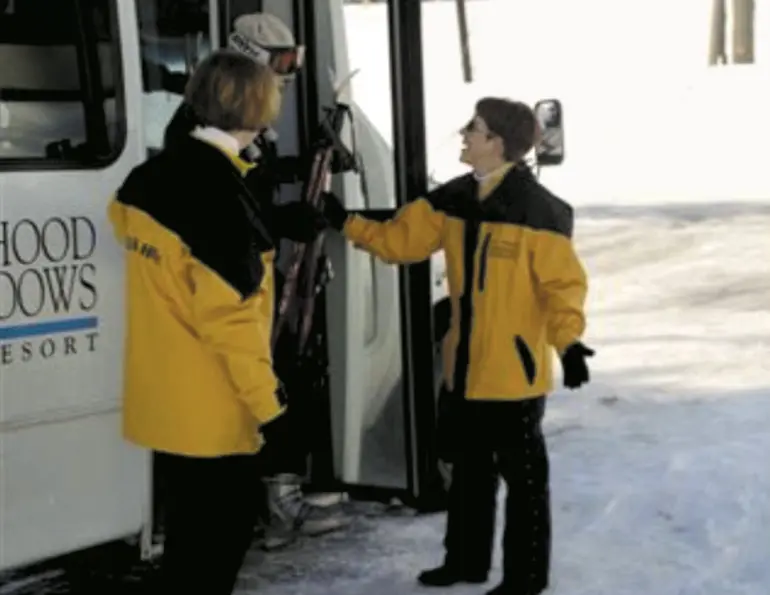
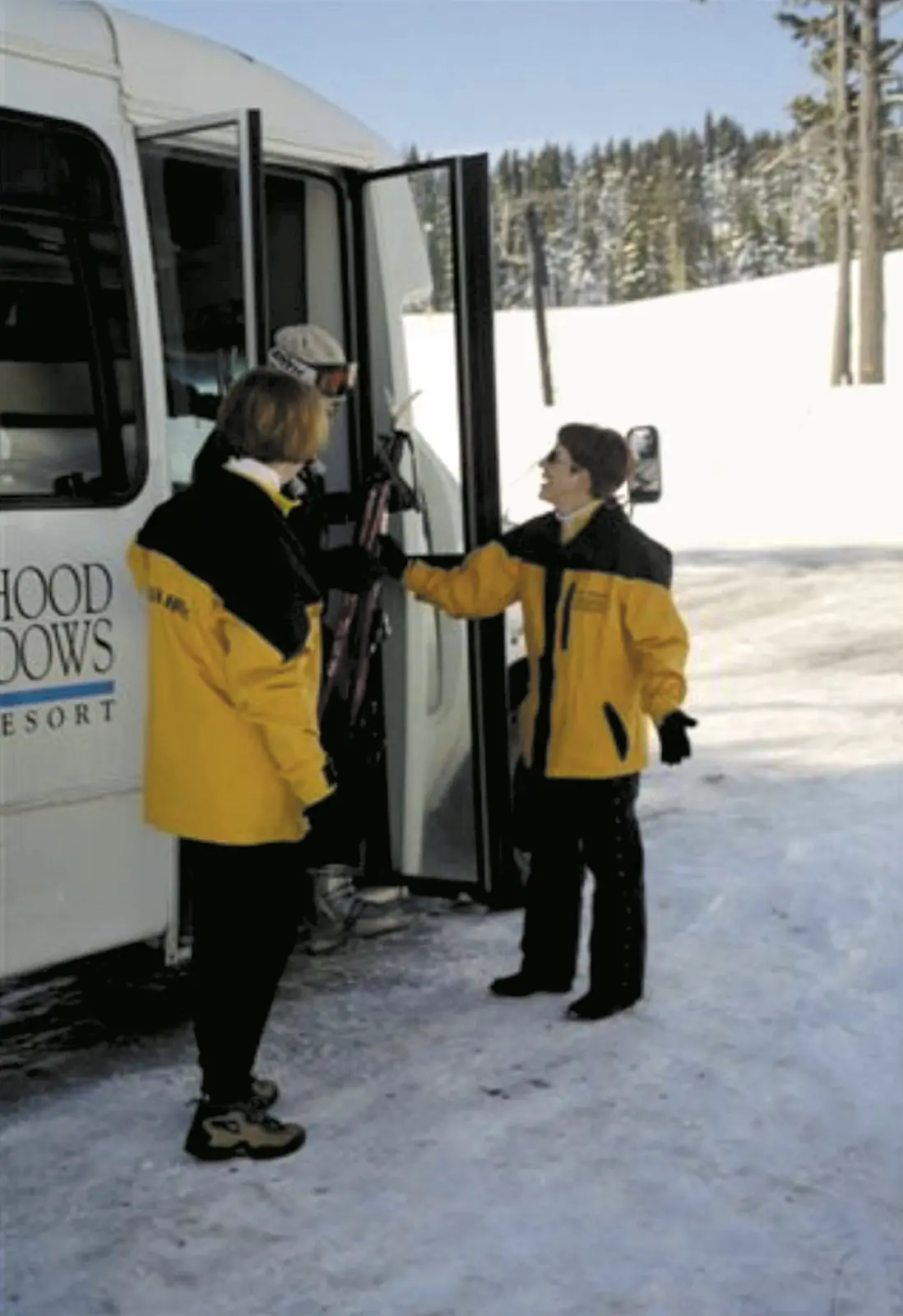
As you turn onto the Mt. Hood Meadows access road, a blue-jacketed mountain employee motions you on. A mile up the road, another employee points you toward the active parking area. Two employees guide you into a space. As you leave your car, a Guest Host in a bright yellow jacket greets you and asks, “Do you need a Snow Park Permit?” If you do, another Host will sell one before you even think about gathering your gear and walking to the shuttle waiting nearby.
Before stepping on the shuttle, five to seven Mt. Hood Meadows employees interact with every arriving group, easing entry to the mountain base complex.
And the handholding continues. The driver makes sure you know where to go. In the base lodge, at the bottom of every stairway and at each hall junction, a Guest Host in a black Mt. Hood Meadows staff vest with a name tag stands ready to guide any lost soul with half a hesitation as to which way is what.
Mt. Hood Meadows, where I teach skiing in my spare time, lies just 55 miles east of Portland, Oregon on the flanks of Mt. Hood. One of five day ski areas on the mountain, competition in the Portland market is extreme. Mt. Hood Meadows and Timberline Lodge compete with destination quality service, a wide variety of guest offerings and constant upgrading of mountain facilities with detachable quads and state-of-the-art grooming equipment. The other three areas compete primarily with a lower price point.
Vice president and GM Dave Riley says, “Two years ago at the NSAA conference, Michael Berry delivered an impassioned plea to develop three-time lesson programs. It resonated with us.” Riley and marketing director Dave Tragethon already believed in multiple-visit packages. Historically, the Mt. Hood Meadows Ski School operates as a “program” ski school, with the vast bulk of lessons being multi-week programs. More often than not, the Mt. Hood Meadows programs deliver a completely self-contained experience, from an early morning bus departure in a Portland metro community to a return drop off in the early evening.
For years, the ski school offered a three-time lesson plan, but sold it only at regional ski shows. The walk-in first timer received the industry standard—a rental/lesson/lift package. “After the conference, we decided to totally de-emphasize the one-day package,” says Riley. “Now, as you walk into the rental shop there is a huge 6-foot banner for the three-peat program. At the bottom, in little inch and half letters, we mention the one-day package at $50.”
For the last two seasons, Mt. Hood Meadows has offered first timers a 3 Peat—three days of rentals, beginner lift tickets, and an hour and a half lesson each day for $99. The student gets a passport booklet with coupons for each segment and may participate at their leisure. Last season, 72 percent completed the second day of the program, with 40 percent completing a final third day. The Mt. Hood Meadows program allows the unused day to be carried over to the following year and, in the past, the redemption has been over 70 percent.
The reason for this return rate is obvious: Ski and snowboard students taking a series of lessons are far more likely to continue in the sport. Three lessons develop the skills the rider/skier needs to take off on their own to enjoy the mountain.
Despite its success, Mt. Hood Meadows has a solid understanding of the program’s shortcomings. Resistance to a three-day package is one—due to price, Riley believes. “Fifty percent of the first timers take the one-day package. We have to convert them on the hill,” says Riley. He continues with the problems of selling the package. “People don’t want to make a three-day commitment. They just want to try it.”
This customer hesitation discourages the sales staff from aggressively pushing the 3 Peat; after two years, the program still does not have full acceptance by the consumer or the staff. The proposed solution is to develop a harder sell for the 3 Peat in the rental department.
My experience (and that of other instructors at Meadows and elsewhere) indicates price is not the issue—fear of the unknown is. Skiing/boarding is an unknown experience for the first timer: Will I like it? Will I end up on a cliff like in the Warren Miller movies? Once on the hill, having fun, the upgrade was a no brainer. (“For just what you spent today, you can come back two more times and really become grounded in your skills.”) As an instructor at the mountain, I converted every one-day first timer into a 3 Peat customer. Other instructors experienced the same easy conversion.
This experience suggests that areas should accept the hesitation and sell the one-day package. People are unwilling to commit three days to a completely unknown experience. The essential idea is to place the person on the mountain having a good time. When they return at the end of the day, they are very likely to trade up for the full “passport.”
Another critical weakness of many learn-to lessons (at Meadows and elsewhere) is a too-short first lesson. The new skier, as an end goal, expects to be able to turn left, right, and stop, and to comfortably ride the lift. With a single hour-and-a-half or two-hour lesson, this is not possible. Do the math: The first run takes 25 minutes—5 minutes on the lift and 20 on the hill. It takes 10 minutes to get the class to the lift, explain the lift and gear them up to load. This leaves 55 minutes for an instructor with a class of 6 to 10 students to teach everyone a gliding wedge, turning left/right and stopping. Unless the class contains all-American gymnasts, it’s not happening.
As a result, students either do not go up the lift, or they go up the lift before they are ready. Without the needed skills, the experience is not “fully positive” (failure). To build passionate skiers, the first day should end on a positive note: Skiing and riding the lift with ease. Creating new skiers on the first day on the mountain requires a full-day lesson.
The flexibility of the 3 Peat coupon booklet allows the student to do this at Mt. Hood Meadows—students can take their lessons consecutively on their first day—but this feature is not promoted in either the rental department or ski school.
The last problem at Mt. Hood Meadows is more complex and concerns the on-mountain management of employees. While guests arriving at Mt. Hood Meadows experience careful shepherding, once on the mountain, they are on their own. There are few roving guest hosts, and ski school employees are expressly prohibited from skiing in uniform when not on duty (to reduce workman’s comp liability). As a result, the roving instructor concept is little-used. Perhaps areas like Meadows can find a middle ground between the need to reduce workman’s comp payments and the potential benefit of the positive impression rovers can make.
Despite its shortcomings, the 3 Peat program is tremendously effective in building repeat customers in never-evers and in bringing people back to the sport.
Pay $139 and Pass “Go”
Dodge Ridge sits high in the Sierras on the way to Lake Tahoe. The closest ski area to the Bay Area, the area carries a long tradition as a family ski area. Substantially smaller than the big Tahoe areas, Dodge Ridge competes on personality and convenience. NSAA’s Growth Initiative caused Sally Helm, the president of Dodge Ridge, to examine how the area approached beginner (and lapsed) lessons. “We’ve got to do something that makes this easier,” she says.
The Dodge Ridge solution is an EZ Unlimited Pass. For $139, skiers receive a pass for unlimited beginner lifts, rentals and lessons.
An EZ Pass looks very similar to a traditional season pass. When beginners arrive at the area, they check in with Guest Services and receive coupons for lessons and rentals. Helm says, “The pass makes you feel like one of the club.” Paul Jones, guest services and ticket manager, adds, “We build relationships with the EZ pass holders. When they arrive at the mountain, they deal with one of three or four people every time they come up. We learn their names. We greet them. We build a relationship.”
Dodge Ridge also instituted an EZ Free lesson to augment their traditional EZ Learn 1 2 3 Program. Snowsports school director Ted Roberts found first-timers built adequate basic skills in the hour-and-a-half lessons, but their lift riding ability was shortchanged. So, at 2 p.m. every day, morning ski school students receive an additional free hour of instruction, primarily on lift loading and unloading. Says Helm, “The EZ Free got rave reviews. People really want to learn.”
Most EZ Unlimited Pass holders use the pass six to eight times—often enough to become strong intermediate skiers able to ski roughly 50 percent of the mountain. “We take a person at the very beginning and teach them about the sport. By the end of the season, they will want to buy a season pass,” says Helm. And that, too, is discounted—the area cut its pass price from $699 to $299 ($259 in the spring) in 1997-98.

The EZ Pass is sold all season, and buyers are a mixed group. Says Jones, “Roughly half buy the pass because it’s a good deal for a few days of skiing. The other half splits evenly between never-evers and people coming back to the sport.”
Helm and Paul identify three significant factors in developing a strong skiing guest base at Dodge Ridge. The first is the high level of individual customer service. Second, they believe that by building skills within their skiers/riders they will build longtime participants. Third, there must be a clear perceived value for the guest. The EZ Pass succeeds on all three points.
Freeing the Skier
“Ski school is not one lesson. It’s about the life you create,” declares Amy Barnes of Ski Anthony Lakes, Baker City, Ore.
In the spring of 2002, marketing manager Barnes presented GM Rick Pignoe with a radical idea: Everyone renting gear at the ski area should be offered free ski or boarding lessons. First timers, returning skiers, visiting skiers, everyone renting receives a free lesson no matter what the ability level. Free.
Barnes had done her homework. In examining the packages offered at Ski Anthony Lakes and other areas, Barnes saw that there was no culture of continuing learning, of individual pacing and constantly improving as a skier/rider. She was acutely aware of how many skiers took lessons as beginners and never darkened the ski school door again. In fact, a negative social stigma exists in being “taught” when people believe they should be able to “just do it.”
“As a culture, we don’t want to be told what to do. We want it easy. We want immediate gratification,” says Barnes on how she developed the concept.
The program removed all the traditional barriers. For lapsed skiers with some days under their feet, taking a lesson became a “why not” instead of another step (or four) in getting out of the lodge and on the hill. Taking a lesson became simple. Show up at 10:30 or 1:00 with your rental skis/board on your feet and become a better skier/rider.
Barnes also believed any program must be revenue positive. So instead of a lifts/lessons/rental package, she created a simpler, less-discounted lifts/rental package. She developed an internal system to allocate a portion of the rental revenue to ski school, and tracked the increase in beginner ski lessons.
The first year saw a 20 percent increase in beginner skiers, and rental/lesson/ticket revenue rose eight percent. Beginner skiers the second year increased a remarkable 64 percent, and rental/lesson/ticket revenue jumped 29 percent.
Employee buy-in was a key factor. Everyone thought the free ski lessons were great—from the cafeteria to the lifties to the ski school. Ski instructors roamed the mountain talking to guests, giving tips. If the guest rented equipment, the instructor always mentioned the free lessons.
“With the openness of the ski school, instructors interacting in and out all day, people began to connect the face with the name. We became a community of learning,” Barnes says.
By dropping barriers, making it simple and fun, Ski Anthony Lakes is building a community of skiers. And making money at it.
Journalist Keith Liggett has taught skiing at both Mt. Hood Meadows and Breckenridge, Colo.
The Guest Editor’s Take
It’s sometimes frightening how little we tell beginners about what they can expect next. I liken it to the feeling of being rolled about on an ER gurney: Tell me a little something about my status and what’s coming next, and I guarantee my blood pressure drops a few points.
To this end, Mt. Hood Meadows is on the right track in getting every employee engaged in identifying, welcoming and pointing beginners in the right direction. The warmth and reassurance that comes with a proactive welcoming approach is even more important than killer product deals. Liggett’s experience reinforces my suspicion that it’s easier to convert a first-timer in the field or as an on-site follow-up than to sell in advance.
I’m a big proponent of providing roving, readily available on-hill help to offer tips and pointers. Personally, I can only take the focused pressure of a lesson for so long, but I’d welcome the chance to get mileage and try it on my own if I knew I could get some simple guidance along the way. Whether it’s on the hill, a wave or the 1st tee, it takes lots of trial and error before new muscle movements start to make sense. Too few of us recognize the value of having a few floating instructors on the hill who can make the difference in retaining that fragile prospect. We should think of it as a marketing expense.
I love the follow-up session on lift loading that Dodge Ridge offers. In my beginner days I was always more nervous about getting on the T-bar and the chairlift to get up the hill than getting down it. I’ve seen some nifty chairlift practice rigs in my travels that also help ease the transition from snow to lift.
I also love the free-lessons deal (with rental and ticket). It underlines the customer-relations idea that “we’re tickled and thrilled that you’re going to join our sport, and as your new adventurous friend, we’ll teach you everything you need to know.” I bet that with “free” lessons, return renters are more likely to take tune-up lessons, resulting in more engagement, better skills, more fun, and more visits.
Kudos to Barnes, Helm and Riley for stepping back into the shoes (or boots) of the beginner to shorten the steps to the simple freedom and fun that skiing and riding brings into our lives.
—Bill Benneyan, Mountain Creek

