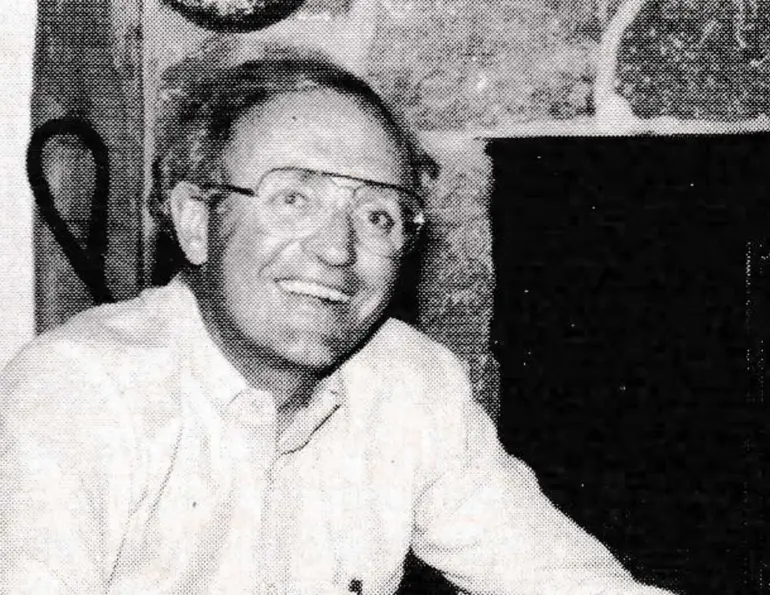
Chuck Lewis is known in the ski area industry as the possessor of one of the sharpest financial minds around. He was associated with the early growth days of Vail, was responsible for the birthing and early flowering of Copper, and has recently been a partner in the investment firm of Boettcher & Co., specializing in real estate investment opportunities. He also served two years as Chairman of NSAA. We sat down with Chuck recently to get some of his insights into the churning and confusing world of recreational real estate.
Q. Chuck, let’s say I have a small ski area some place—it doesn’t matter where. I have private ownership of land that has unrealized real estate development potential. I also have a hill or mountain that I can develop further. What are some of the cautions you would give me in thinking about expanding my operation and taking advantage of what real estate potential I have?
A. There are obviously many factors that enter into it, but if you’re going to start looking at the real estate for development potential, you are going to want to ask yourself if your mountain is on a sound financial basis—not overleveraged and carrying itself nicely. If so, you can afford to do some things in the base area that you might not otherwise be able to—meaning you can start a slow development process with pre-sales of units, and perhaps a little bit of infrastructure, hopefully being able to tie in to a community system of some sort. I would hope you wouldn’t risk all of the apples by all of a sudden going out and saying, “We’re going to build a town.” Do it slowly. Make sure that you can carry anything you build for a year or two years—whether it’s empty retail space or unoccupied units. If you can do that, then you’re a very lucky operator, because you’ll eventually do very nicely. It may be a slow process—slower than you’d like—but ultimately you’ll get there. Now that assumes that you start with a healthy mountain operation.
On the other hand, if the mountain is not going well and you say, “The real estate is my salvation,” my suggestion would be that you’d be better off asking if there isn’t someone else with a lot deeper pockets who would like to take on the whole thing. I really think that if you are looking to real estate as your salvation you ought to be looking for a buyer. When you put a whole lot of dollars into it because you think “my salvation is the real estate,” and the market turns and it doesn’t sell, you really risk it all. Unfortunately, I think that’s a mistake that many have made.
Q. Are there developments that are being done where skiing becomes just an amenity, and if so, what are the problems?
A. Yes, I think there may be some, and I think there are a number of inherent problems. One is that if you look at any kind of resort and say the economic viability is solely real estate, my observation would be that it’s a very risky business to be getting into. If you are saying it is an element of a resort development, so that the viability of the whole thing will stand on its own, then I think that real estate is a very important part. The problem is that obviously there are a lot of opportunists out there who say, “Do I know how to sell real estate!” and so they package real estate with skiing as an amenity, and in many cases I think they are bound for disaster.
Q. Why?
A. Let’s back up, and recall what one of my old competitors, Darcy Brown, used to say (and I didn’t always agree with him): “Let me take the uphill transportation business and give the crazies all the land.” Darcy understood that the skiing and uphill transportation business can be a very viable one. Many have the perception that real estate is the reason to develop a ski mountain and that real estate is where all the money is to be made. I think that is a basic fallacy. For proper balance you’ve got to have a mountain that can make money (not all mountains do have that capability) and can ride through the storms of economic trends—the economic ups and downs that real estate will be subject to. That is where you start to get to the economic viability. So that when Darcy said, “Give me the uphill transportation business,” I’d say, “Give me the uphill transportation business and control over the real estate.”
Your mountain business is ongoing business; it is a nondepleting asset. The real estate is a wasting asset. It’s an inventory item, and each time you build/sell you’ve lost a part of your inventory, and you can’t replace it. Not only is this a depleting asset, but more than that, it is subject to far more cycles. Skiing in the U.S. has certainly felt the shifting economic trends over the years, but it has not been wiped out by those economic trends. In other words, it doesn’t come to a standstill. But the real estate stops. Those who have built on the premise that they’re going to make their money on the real estate all of a sudden are in deep trouble, because they can’t service this debt: they don’t have the income flow at that point. If the ski operation won’t stand on its own, and hasn’t been set up as an economic unit, and the real estate doesn’t go, then you’ve got a disaster. You can look around the country in the last 15 years, through ’74, ’78, probably the ’80s when there were down markets in real estate, and you can find a number of developments that have changed hands because the economic viability wasn’t there. And I would venture to guess that most of those were set up by the senior management of the corporations involved on the basis that the land sales and land profits would carry those operations, and all of a sudden they didn’t.
Q. What is the big picture right now in the country in real estate—commercial, industrial, recreational—especially in the light of proposed tax changes?
A. Well, first, you must remember that recreational real estate is the third one out, and the third one back in—meaning that commercial and resident real estate in the metropolitan markets are the other markets affected. Recovery in resort markets is behind these. I remember in the last few years a number of calls from people saying, “Would you be interested in doing something with a resort?” And I would say, “Hey, number one, you’ve got metropolitan markets that are still good—meaning good from a buying and selling standpoint, and in that situation you don’t go for a resort market. You go to a resort market when everything has gone crazy, and the prices in metropolitan areas are way out of whack compared to the commercial and residential. Then you go to the resort market. I can tell you, commercial real estate is going through a blood bath in some ways right now.
Q. Is that tax-oriented, or is it cyclical?
A. Tax, sure, but also partially cyclical. Right now it happens to be tax-oriented. The vultures are working well in the commercial real estate area right now. Those with money are buying real estate at bargains they haven’t gotten for years. And that’s in commercial real estate, and it’s fueled by the threat of impending tax legislation.
Q. Isn’t that risky?
A. No! The vultures are buying gold-plated deals. They are buying top-end, quality product for the best prices they’ve seen in years. Now take that and tell me what’s going to happen in resort properties. Who is the buyer in resort properties? For many years I bet that 90 percent of the salesmen out there would take their buyer and say, “Let me tell you what would happen if you rented this 40 nights, or 50 or 60 nights a year.” The people were basically buying on a tax-oriented basis. They understood they would use it less than the 14 days a year, they would meet all the tax qualifications; it was a great tax shelter. Now throw in the thought that any portion of the pending tax legislation goes through —whether it be second home interest, or various types of deductions or extended life—and who’s your buyer then on resort property?
Q. Who has been the buyer?
A. Any number of people: there was the investor; there was the person who wanted to use his condo/home but didn’t really care about the benefits; there were those who were lured in otherwise, maybe with time-share. But now you may be left with a person who is looking and saying, “Hey, I could care less about the tax benefits. I want the place. I like the skiing at this area. I like the feel of the condominium. Gee, I could get my family here in a hurry. Sure, we may use it for 10, 20, 40, 60 days a year.” That’s going to be the buyer.
Q. That’s a real user.
A. It is a user. But how deep is the market? I think that’s the real caution at this point. I don’t know how deep that market is.
Q. If it were deep, that would be the best market to have, wouldn’t it?
A. If it’s deep. But I think we may see a change in the whole product mix. I believe there are some awesome situations out there. I can show you a resort with five to six hundred units under construction where the low end is about $350,000 and the top around $1.3 million. I don’t care how you cut that market, it’s a thin one. I’m not absolutely sure the buyers are there, and I’ll bet you that not 10 percent of the units are pre-sold.
Q. Whose money is out on the line?
A. Developers’. Banks’. I think they’re building them “on the come.”
Q. You mentioned “viability” earlier. For resort viability, does each amenity have to be looked on as a profit center and not be built unless it can be made to show a profit?
A. You bet! It’s really the conglomerate theory, and if you’re going to spend your money wisely you take your conglomerate and say that every piece is going to add to the bottom line. That may not be as of Day One, but it’s being able to confidently predict that each part is going to contribute. You’re not totally dependent on real estate, you’re not totally dependent on anything, but each part is going to contribute to the whole. Now, going back to the ski resort development, if you’re going in and saying, “The ski area will always lose money,” it seems to me you’ve got a ski area that “ain’t going to be there” in a few years. The houses and condos may still be there, and you will see where the lifts were before they were sold off, and the old ski trails. I can show you situations where this actually happened—like Stagecoach—and others where it came very close and some where they are still not out of the woods. Some of them represented the worst sort of sales scam on the public you can find.
Q. Are you suggesting that amenities shouldn’t be built as loss leaders? Isn’t there a concept that you can’t have a total winter resort without having a full range of amenities, even if some of them—perhaps like cross country skiing or a figure skating rink—were loss leaders?
A. How about break even? No matter how small the profit contribution is you should figure out a way to make it at least break even. It may take years. And it may be a very small loss that is incurred, and you say, “Well, we can stand it.”
Q. You’re applying company overhead to it?
A. No, I’m saying you take a gross profit margin. In other words, its revenue carries its direct expenses, and it’s at that level that it contributes.
Q. Should every lift and every little sub-complex be profitable?
A. No, when you break it down to that microcosm they won’t all be profitable. Certainly there are lifts in most areas that are not carrying their weight.
Q. Okay, but let’s say you’ve got a mountain with several different faces. The next project is to open a new complex with three trails and a chairlift on one of the undeveloped faces. Because you need it. Because the world is saying you are a minor resort because you don’t have enough terrain. So, should you open it up for the world to see you’ve got more terrain, or should you only open it because it is profit-based?
A proven skier item in the French Alps— successfully used by such international resorts as Val d’Isere, Chamonix, Deux Alpes, Les Arcs, Courchevel and many more. And now available in North America.
A. Yes and no. I happen to think that’s what a lot of people are doing: they’re opening terrain far beyond its time. They’re listening to the press. What they should be saying is, “Let me tell you about my business: I’ve got this nice little operation. . .very profitable. I want to keep it profitable instead of expanding and all of a sudden sucking the tube.” I think you’ve got to be able to justify expansion very quickly on the basis of it being profitable. Restraint is not a bad virtue. There are many situations where you ought to say, “Hey, guys, I don’t think I can compete with what the competitor next door has done. And if I can’t compete, hey, let him make the additions. If I can do my 300,000 skier-days, and I can do it well, and I can keep my staff and costs under control, I can make a fantastic living. If I have to go and try to figure out how to boost it to 400,000 and run a deficit. . .”
Q. Yeah, but in a market place where ski areas are dropping out, and the ones getting wiped out are the small and middle sized areas, aren’t people concluding that there’s a historical trend—that if you aren’t big enough you’re not going to attract people. And you may be the next one to go if you can’t raise yourself into the image of the big survivors.
A. Okay, but what about asking yourself, “Where is my niche?” I would take a couple of areas back here in the East that I’ve always marveled at every time I’ve wandered through. Something like Round Top or Liberty. I’m sure they were bought out of bankruptcy. But that was because the first guys through were throwing money at them. You get the second guys through who said, “We can nurture these little suckers. We can show you how to work the big city populations.” They are survivors down there. They work every day and night for 90 days and all of a sudden they’ll see their crowds go down in March, and they pull the ski school bell and say, “All employees go home.” There are 10 employees left. Places like that, that are well run and give the skier good value, will always make money. I don’t think you can put people who are savvy enough to take that approach out of business.
Q. All right, we have a viable resort with the ski operation making good money; we have handled our real estate as a valuable contributor to the profit mix. Now, what about the secondary development?
A. (laughing)— You mean the “leaches on society?” Look at Vail Valley. . .look at the Roaring Fork. To me it’s absolutely mind-boggling how you can have each leach up and down the valley sucking off the poor cow. It’s unbelievable.
Q. What happened?
A. Hell, I don’t think it’s any different from any other resort. Look at Florida and the beaches. The difference is the modern resort can be controlled—saying, “How can I prevent some of this secondary development from happening?” It takes will power and commitment. It is the enlightened developer who goes out and creates the controls. I can tell you that when I was in Vail in the early 60s, we never thought about going to the county and asking for different types of zoning laws. Because there we were, sitting in hog heaven, owning 1,500 to 1,800 acres in the Vail Valley, and not being able to imagine it was going to extend beyond the borders of a couple of our Greek rancher neighbors. There was no way it could possibly get any bigger! Then we watched Snowmass come around and development start to sneak down the Roaring Fork valley. By the time I got to Copper, the first thing I did was to go to the Summit County manager and say, “Lee, we’d like to go in and zone the whole thing— not spot zone. Can we get the county to pass a PUD ordinance?”
Q. What does that mean?
A. Planned Unit Development—meaning you take the whole area and get all the land owners to agree on densities, controls and other things, and then lock it in. That’s the difference between developing in the 60s and the ’70s. The county agreed to work with us, and then we went out and stole the most progressive ordinances we could find— from Boulder County, a zero growth county— and a few others, taking bits and pieces that we wanted. By having the hindsight of Vail and Snowmass we could go out and borrow ideas, and one of the things was zoning control.
Q. Would you agree that in the ’60s it was lack of forethought, and more recently the whole thing is greed?
A. I don’t think it was a lack of forethought or desire. Nobody’s crystal ball was good enough to tell them where they were going. . .unfortunately. But a lot of people did some pretty damn good things, too. It was a very high-speed learning curve. But as you go to the second stage, yeah, I think it is a matter of greed or perceived greed in some cases. There have been a lot of people who have made big amounts of money in the greed factor in real estate. But there have been some big losses, too, and some major failures.
And I heard so many times during the whole period, “Hey, don’t tell me about the mountain: just tell me about the real estate.” Investment bankers have said to me, “All the money’s in the real estate, right?” No, wrong! You still have to have a good product, and that’s a total product. Yes, a lot of it was greed-driven at that one point.
Q. You think we’re getting out of it right now?
A. No. And I think the worst example of this is looking at an exhibit at a trade show and seeing all the mountain master plans and base village plans and I said, “Gee, those are all very interesting. Who does your mountain planning?” And the answer came, “Hey, no sweat on that. That’s the easy part. It’s the land planning that’s tough!” And I looked and I thought: that is really sad. That is the whole greed factor—where you have people who can make a living saying “Don’t worry about the mountain; we can design the mountain” (which I don’t believe you can) and asking, “How does this relate to this ground that we can sell for unbelievable prices?”
Q. I wonder if you want to end on that negative note of greed?
A. No, certainly not. I’m as optimistic as I’ve ever been about the ski industry. We’ve got a fantastic product to sell, and with all the experience we have I see no reason for our industry not to prosper provided we grow soundly and keep our total recreational product a well-balanced one.