



SAM Magazine—North Powder, Ore., Sept. 18, 2026 (updated)—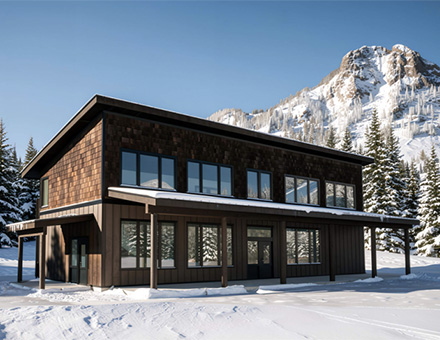 Anthony Lakes Outdoor Recreation Association (ALORA) has secured a $650,000 loan from the U.S. Department of Agriculture to help fund construction of a new rental and repair facility that will also provide housing for seasonal employees at Anthony Lakes Mountain Resort. Nonprofit ALORA operates the ski area in the Wallowa-Whitman National Forest.
The $1.8 million project is replacing the ski area’s roughly 70-year-old rental and repair building with a new two-story facility that will house rental and retail space, a repair shop, and accommodations for up to 10 seasonal employees.
The employee housing is a significant addition for Anthony Lakes, where the nearest towns are 20 to 35 miles from the ski area. Anthony Lakes currently offers RV sites with electrical hookups for some winter employees, marketing director and controller Chelsea Judy told SAM.
The USDA financing was awarded through the Rural Economic Development Loan and Grant Program in partnership with Oregon Trail Electric Cooperative (OTEC), which administers the program locally and facilitated the funding. Under the program, USDA provides zero-interest loans to local utilities, which then pass the financing through to rural businesses for projects designed to create or retain employment.
Anthony Lakes has separately raised 50 percent of the $1.8 million project cost through local donations and larger grants, not including the USDA funding, according to Judy. The ski area has received support from Travel Oregon, the Leo Adler Foundation, Baker County, and the Wilson Family Foundation, among others. Judy said other pending grant applications will hopefully fill the current funding gap of roughly $250,000.
After breaking ground in early April, the project is currently on schedule for completion by mid to late November, Judy told SAM. The new building will support Anthony Lakes’ rental operation as well as its youth programming.
“[The USDA funding] makes a little rural ski area like us be able to invest in much needed capital projects while still continuing our regular programs—like our growing low-to-no-cost youth ski programs—and keep skiing affordable for our rural community,” said Judy.