



SAM Magazine—Happy Valley, Ore., Jan. 8, 2026—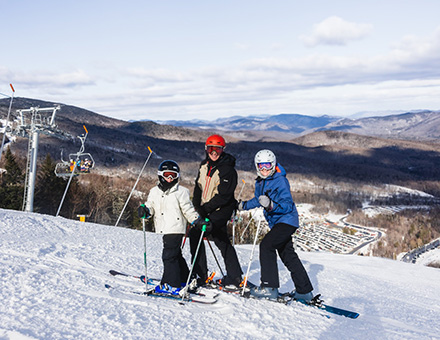 Killington Resort The two-week 2025-26 holiday period was a tale of haves vs. have-nots. While the East, Midwest, and Canadian Rockies set records with big visitation numbers, the Western U.S. navigated a complex weather pattern that delivered atmospheric rivers in some areas and historically low snowpack in many others.
East: A Record-Breaking “Boom”
The Northeast emerged as the undisputed winner of the holiday cycle. Fueled by sustained cold and consistent natural snowfall, the region captured its reliable drive market while attracting destination travelers diverted from the Rockies.
New York posted a banner holiday across the board. “It was a rare holiday season with snow in backyards from Westchester County (bordering the Bronx) to the Canadian border and west to Lake Erie,” said SKI/NY president Scott Brandi. While performance in a state with more than 50 ski areas usually varies by region, Brandi noted that, “This was not the case this holiday, everyone was busy and parking lots were full.”
 Mountain CreekStatewide, skier visits increased an average of 10–15 percent, with some ski areas reporting gains of more than 20 percent. Ski schools and rental shops sold out completely on peak days.
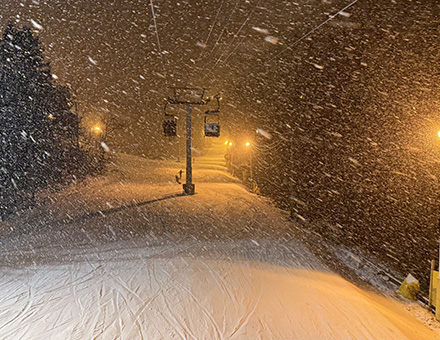
Mountain Creek, N.J., experienced early cold and a Dec. 26 snowstorm that covered the drive market's backyards. The resort caps daily visitation, said CMO Hugh Reynolds, limiting visit growth to 27 percent, but yield management drove revenue up a staggering 67 percent year-over-year.
Jay Peak, Vt., president and GM Steve Wright reported record visitation, revenue, and net profit, fueled by 236 inches of natural snow so far in this young season. Lodging occupancy was at least 98 percent for eight consecutive days. Both lodging and food & beverage surpassed budget and last year’s records.
“Bright spots were the service delivery scores even during a very compressed campus,” said Wright, also noting that Canadian visitation was “up over what we expected and roughly flat to last year’s index,” a critical win given the current sentiment and exchange rate.
Killington Resort and Pico Mountain, Vt., communications manager Josh Reed reported visitation close to double digits over last year at Killington, with Pico Mountain seeing a “double-digit increase.” Reed noticed more destination guests from markets like Florida and Texas who he said may have typically headed west.
Ski NH president Jessyca Keeler reported strong holiday results across the state. Several ski areas posted double-digit growth in both visits and revenue year-over-year; one bested last year’s revenue by more than 70 percent. Keeler said New Hampshire ski areas had up to 30 percent more open terrain than in recent years.
 Cranmore's new "Arctic Lights" nighttime tubing.Creative activations also paid dividends: Cranmore Mountain Resort saw gains from its new "Arctic Lights" nighttime tubing, Loon Mountain sold out its New Year’s Eve events, and Crotched Mountain broke attendance records for its first “Midnight Madness” session of the season.
Ski Maine Association executive director Dirk Gouwens called the holidays “solid.” A promising trend for the future was the strength in ski school and rental volumes. “This is good news. We are seeing beginner and novice skiers getting out there,” Gouwens said. He also credited early-season cold for enabling more open terrain than normal, which elevated the guest experience.
Farther south, the growth narrative continued despite a very different weather profile. At Sugar Mountain, N.C., vice president Kimberley Jochl reported that skier visits were up 10 percent and revenue up 12 percent year-to-date through Jan. 4, despite warmer weather between Dec. 23 and 28.
The warmth was no deterrent; Southerners, Jochl said, “love to ski in warm weather.” Strong visitation came from extended drive markets like Texas, Alabama, and Louisiana. Children’s programs grew 15 percent, a spike Jochl attributed to the implementation of online registration. “Guests previously lined up early to secure spots,” she noted, but the digital shift reduced friction and complaints.
The Midwest: Historic Momentum
Little Switzerland, Wis., 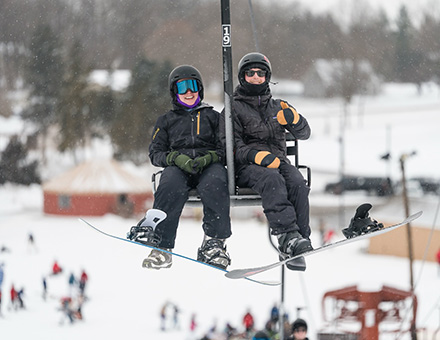 Little Switzerlandtracked significantly ahead of the previous year. “Total visitation was up 5 percent and paid skier visits were up 8 percent year-over-year,” said general manager Greg Fisher. Revenue finished up just shy of 20 percent, driven by a record-breaking Saturday, Jan. 3—the highest revenue day in the resort's history.
Fisher credited the operational grit of his team after a Dec. 28 rain event, saving the lucrative New Year's stretch. As the system changed to snow that night, the grooming and snowmaking teams worked tirelessly to resurface the hill over the next 24 hours. The rental department also shined, strategically managing inventory to, at one point, there were just two adult snowboards left.
Snow—both at the ski area and in the backyards of people its primary markets—was the primary catalyst for what Trollhaugen, Wis., marketing director Marsha Hovey called “one of the busiest” holiday periods in Troll’s history. The dry start to the season out West, along with the national profile of the area’s terrain park also contributed to a busy 17-day stretch. “We saw everything from families from Texas, pros from Utah, diehards from Colorado, and college kids from the Mid-Atlantic making the trek to find snow,” she said.
The Highlands, Mich., also capitalized on the region’s momentum. President and GM Mike Chumbler reported visitor numbers surpassed last year’s holiday figures. He credited early-season snowmaking that ran ahead of schedule, reinforced by natural snowfall that kept conditions “near perfect.” Marketing efforts highlighted the early opening and mid-season conditions and helped drive visitation.
Ancillary revenue rose with the increased traffic. “Ski school had an outstanding holiday period across all programs,” Chumbler noted.
Pacific Northwest and Northern Rockies: Resilience vs. Historic Lows
The Pacific Northwest and Northern Rockies faced historic weather challenges. On Jan. 2, Portland, Ore., meteorologist Mark Nelsen said that the Mt. Hood, Ore., snowpack was tied for its lowest level ever recorded up to that point in the season, matching the infamous drought of 1976-77.
 Mission RidgeIn Oregon, the struggle was universal. Mt. Bachelor opened Dec. 23—its latest opening since 1976. “Our business levels were down significantly, greater than 50 percent lower because of that,” said president and GM John Merriman. “We got some rain over the break, which was difficult as well.”
Nearby Mt. Hood Meadows fought similar battles. MHM farmed enough snow to open three high-speed quads for the peak holiday days, then had to pause operations for two days (Jan. 2-3) to allow its saturated 20-inch base to drain. Conditions were even more restricted at Willamette Pass, which operated just one beginner lift and a magic carpet for the 10-day holiday period. Mt. Hood Skibowl offered holiday nighttime “Cosmic Tubing” and a conveyor lift for beginners. Mt. Ashland paused operations indefinitely on Jan. 1 as it awaits more snow to reopen.
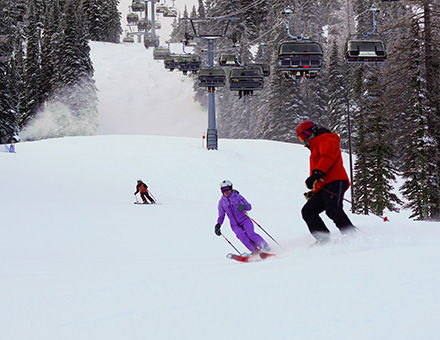
Further north, Mission Ridge, Wash., logged 19 operating days season-to-date—more than many others in the region—despite a Dec. 9 storm that delivered torrential rains, uprooted 100 trees and decimated the early snowpack. “We basically hit reset on prep for the season from a snow standpoint,” said chief marketing officer Tony Hickok. The resort’s readiness paid off, though: F&B revenue was up 6 percent versus budget, and Net Promoter Scores for “likelihood to return” were two points higher than the previous season—guests appreciated the opportunity to get on snow.
According to Ski Idaho, only six of the state's 19 destinations managed to open 50 percent or more of their terrain for the holidays; seven areas remained closed.
Silver Mountain Resort general manager Jeff Colburn reported a 40 percent drop in skier visits compared to the prior year’s record numbers. Silver battled a dual threat: an atmospheric river that forced a shutdown two weeks before Christmas, followed by a windstorm that knocked out power and gondola operations Dec. 17-22. Despite the chaos, lodging was only slightly down, thanks to the resort's indoor waterpark. “Tubing sales were solid... but [we are] glad that is behind us,” Colburn admitted.
Bogus Basin 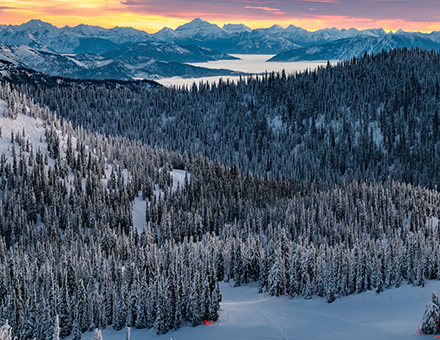 Whitefish Mountain Resortmanaged to secure a critical holiday product thanks to innovation. Although operating with just 6 of 92 trails, the resort opened its beginner lift thanks to a pile of snow it stored from last winter. “The snow that we stored over the summer is what we opened on. It wound up playing a vital role in us getting our beginner run/lift open with less snowmaking, since snowmaking temps were very hard to come by,” said Austin Smith, director of innovation and marketing.
In southern Idaho, Pomerelle Mountain Resort fought a perception gap. While the resort opened 100 percent of its terrain—one of only three in the state to do so—warm valley temps suppressed demand. “It’s the perception,” said marketing director Gretchen Anderson. “When it’s 55 degrees in the valley, many believe the snow can’t be good.” While business was down, Anderson said, “The parking lot was full, just not as overflowing as normal.”
In Montana, Whitefish Mountain Resort had good snowfall and 90 percent of its terrain open leading up to the holidays, but that wasn't reflected in pre-holiday business. “The general perception was simply that ALL of the West was bad,” said marketing director Matt Gebo.
Strong marketing eventually overcame that perception. As of Dec. 19, Whitefish was down 38 percent in total skier visits and 15 percent in revenue; as of Jan. 4, the resort was only 6 percent off in visits and 6 percent ahead in revenue compared to last year.
“Clearly a wildly successful holiday period,” said Gebo, adding that the resort got about 2 feet of snow in that time, driving two all-time record days for skier visits.
The Rockies: Innovation Amid Scarcity
Deer Valley, Utah, 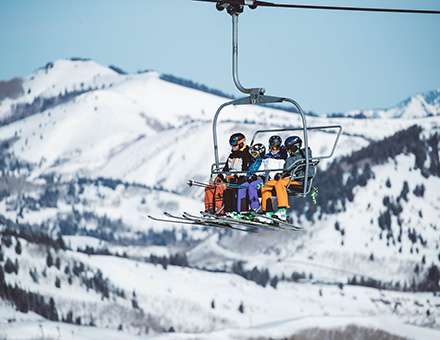 Deer Valleyleveraged its massive expansion to create momentum. “Timely natural snowstorms during the holiday window allowed us to incrementally expand terrain and open two new lifts within our historic expansion, including the 10-passenger East Village Gondola and Pinyon Express on Park Peak,” said communications director Emily Summers.
With terrain limited, the resort pivoted to on-mountain activations, keeping ski school and F&B performance strong.
Snowbasin opened the new Becker detachable quad, increasing uphill capacity out of the base area to mitigate holiday congestion.
Telluride, Colo., was closed through the holiday week due to an ongoing ski patrol strike. The Telluride Tourism Board reported on Jan. 1 that lodging occupancy in Telluride and Mountain Village dropped to 56 percent for the holiday week, down from 72 percent during the same stretch last season.
With such a challenging start to the season, it’s understandable that we didn’t hear back from most of the ski areas we reached out to for this report. Snow has thankfully begun to touch down in many areas of the West as of press time.
California: Feasts and Floods
Ski California president John Rice characterized the season as a quintessential La Niña “up-and-down story,” defined by atmospheric rivers and wild temperature swings.
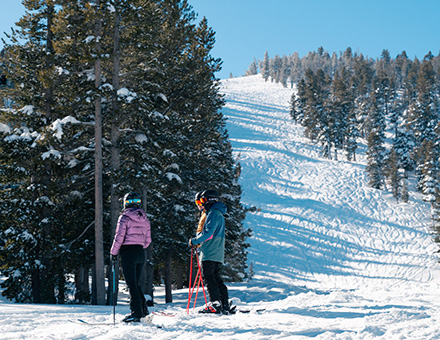 Heavenly ResortFor Southern California and Nevada resorts, a promising early start was washed out by pre-holiday rain that caused erosion and road closures—a challenge operators are now recovering from as snowmaking windows return for some. “They are still making snow when conditions allow and expect to see strong demand,” Rice noted.
After a pretty good start to the season, Mountain High got 11 inches of rain in 12 hours on Dec. 23, creating mud flows down the mountain (and into the base area buildings) and deep washouts from erosion, exacerbated by burn scars from last year’s Bridge Fire that came through the resort. The weather has remained warm and wet; Mountain High has recorded 30 inches of rain since Nov. 1, said CEO Karl Kapuscinski.
“There’s no sugarcoating it: Southern California is the worst I’ve ever seen it,” he said.
That led the ski area to direct skiers and riders to California Mountain Resort Company’s three other California ski areas—China Peak, Dodge Ridge, and Bear Valley—all of which had decent business during the holidays, said Kapuscinski.
In Northern California and Tahoe, the script was flipped. With zero snow at most base areas leading into the break, a “Christmas Miracle” storm cycle delivered more than 100 inches by New Year's Eve. “It reinforced the reality of the Sierra—that it literally takes just one storm,” Rice said. He noted a critical operational win: staffing. Resorts reported their best hiring in years, ensuring that when the pent-up demand for ski school and services arrived, the teams were ready.
Canada: A Strong Start
Lake Louise Ski Resort in Alberta reported its snowiest December on record with roughly 200 inches (more than 500 cm) falling, which translated to big business during the holidays. “The Canadian Rockies are a little 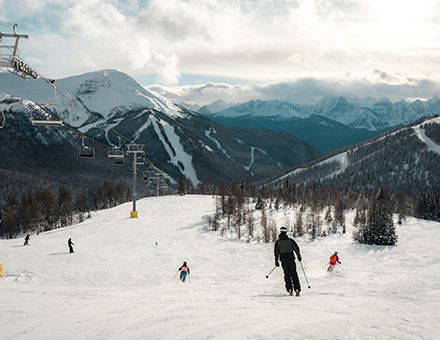 Lake Louise Ski Resortbubble in the West that have been getting hit with tons of snow this season,” said Lake Louise VP of strategy and corporate affairs Kim Locke. “We were expecting a very strong holiday season and even these expectations were exceeded—we had our busiest holidays ever, with record breaking skier visits.”
Locke also noted that Lake Louise and Banff Sunshine Village (part of the Ski Big3 along with Mt. Norquay) saw a large increase in international visitation over the holidays.
Whistler Blackcomb in British Columbia topped 121 inches (300 cm) of December snow, a sharp contrast to its PNW neighbors to the south. Social media chatter during holiday week from Seattle-based skier forums revealed that many passholders headed north to Whistler to escape the rain-impacted conditions in Washington.
In Eastern Canada, Québec Ski Areas Association (ASSQ) president and CEO Yves Juneau reported good news across the board from his member ski areas who have experienced abundant snowfall and great snowmaking conditions, which fueled strong visitation during the holidays.
“The holiday period traditionally represents 12–15 percent of total seasonal visitation, and this year performed at or above expectations,” said Juneau. “Many resorts reported significant year-over-year increases in skier visits, with some exceeding 20 percent growth from last year.”
Several resorts saw a high number of first-time participants, indicating continued growth among beginners, families, and new market segments—something ASSQ has long championed.
Report by Dave Tragethon