


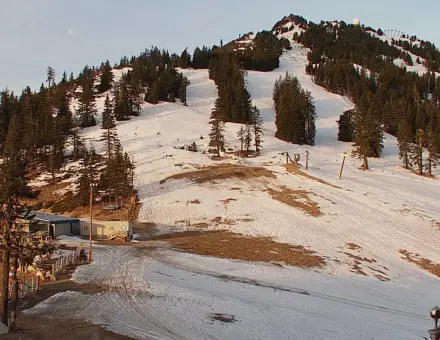
SAM Magazine—Happy Valley, Ore., Feb. 6, 2026—The historic snow drought gripping the Pacific Northwest claimed more operational days this week as four of Oregon’s ski areas announced indefinite suspensions or significant reductions in operations, leaving lift chairs empty and slopes bare across the lower Cascades and Siskiyous.
With unseasonably warm temperatures and rain eroding an already fragile snowpack, resort operators at Hoodoo Ski Area, Mt. Hood Skibowl, Mt. Ashland, and Willamette Pass have been forced to adjust operations or hit “pause” on their seasons.
Hoodoo Ski Area, located on Santiam Pass, officially suspended operations indefinitely on Thursday, Feb. 5, following a closure for terrain assessment on Wednesday. In a statement released to social media, resort management confirmed that despite cold overnight temperatures, the base depth at Santiam Junction (currently hovering near 5 percent of historical average) was insufficient to support safe skiing.
“We have surveyed the terrain many times over the last few days and, sadly, have to make the call to close until Mother Nature blesses us with more snow,” said the resort. The resort has indicated it will offer full refunds or account credits for pre-purchased tickets affected by the closure.
Mt. Ashland Ski Area, in southern Oregon, remains in a holding pattern. The community-owned nonprofit has struggled to launch its season, operating for only 10 days total this winter, and on an indefinite hold since January 15.
“We are stuck in limbo,” said board president Adam Reiss regarding the stop-start nature of the 2025-26 season.
Despite the lack of revenue, the ski area remains financially solvent due to conservative fiscal planning. According to its most recent annual report, Mt. Ashland maintains cash reserves sufficient to weather two non-operational winters without laying off year-round staff. Currently, maintenance crews continue to cycle lifts and machinery daily to prevent icing and ensure the area can open immediately if the forecast holds. Management estimates the resort requires at least 12 inches of new dense snow to reopen safely.
Mt. Hood Skibowl suspended all downhill skiing and snowboarding operations on Tuesday, Feb. 3, after rain at the 4,000-foot level decimated snowpack.
“The safety of our guests and the preservation of our base is the priority,” the resort noted on its conditions page.

While the lifts have stopped, Skibowl is keeping its doors open, pivoting to activities less dependent on deep cover. The Snow Tube and Adventure Park remains open daily, and the resort plans to operate the West Rope Tow Terrain Park on a limited Thursday–Sunday schedule, conditions permitting.
Willamette Pass Resort will pause operations mid-week to conserve snow. The resort closed Wednesday and Thursday, Feb. 4-5, with plans to reopen for Friday through Monday operations starting Feb. 6. By consolidating traffic to the weekend, Willamette Pass aims to extend the life of its current base while waiting for the weather to turn.
While some lower-elevation ski areas are forced to idle, Oregon’s higher-elevation destinations, Mt. Hood Meadows and Mt. Bachelor, remain open. Both ski areas are utilizing snow harvesting techniques, physically hauling snow from parking lots and catch zones to lower lift-terminal areas to maintain connectivity. Mt. Bachelor reported roughly 50 percent of its terrain is accessible, benefiting from its higher base elevation, which has kept precipitation as snow rather than rain during recent storms.
On the Northeast side of Mt. Hood, Cooper Spur Mountain Resort, which is owned and operated by Mt. Hood Meadows, has yet to open for skiing and riding this season. The 400-vertical-foot ski area has a base area elevation of approximately 4,000 feet. It is currently offering lodging guests discounted mid-week tickets to Mt. Hood Meadows.
A low-pressure system forecast to hit the region could deliver a season-saving refresh beginning next Thursday, Feb. 12. Early models are split, but some suggest the system could bring colder temperatures and significant frozen precipitation.
Report by Dave Tragethon.