

(This the third stop on Andy Bigford’s Revival Road Trip, where he is offering reports from the road as he works on the third installment in the Ski Inc. book series.)
March 5, 2026
When Little Switzerland recently announced it was investing $4 million to build two new Skytrac quad chairlifts, replacing the historic “up-and-over” Lift 1 and 2 and doubling its uphill capacity, news of the upgrade was absorbed by more than 350,000 pleased (or potential) customers on the ski area’s social media channels. Besides the penetration, the viral moment was remarkable for its history, timing, and irony.
The circa-1964 lift is believed to be the oldest in Wisconsin, and no one can recall a Midwest ski area installing two new lifts in one season since the Hall building boom of 60 years ago (excluding, of course, Boyne Resorts). The U.S.-made Skytrac lifts, with the terminals painted in the ski area’s signature red, will be more reliable and provide guests a smoother, faster ride to the top.
The announcement also came just as Little Switz launched its critical spring sale for 2026-27 season passes, with the bonus to newcomers of free skiing to close out the season.
“A marketer’s dream,” says 27-year-old Brandon Wagner, who manages marketing for the three Schmitz Brothers Resorts ski areas and has stepped up to serve as assistant GM at Little Switzerland, which offers him a glimpse into how the sausage gets made. The young terrain park denizens—the “backbone” of the consumer base—will mostly continue to yo-yo the ski area’s high-speed rope tows, while the new lifts will energize an older but critical constituency, including the parents who fund the park kids.
From Zero to 100,000
Little Switzerland was among the first ski operations in the Midwest, opening on Pearl Harbor Day, Dec. 7, 1941, and setting the tone for Milwaukee skiing for decades. From 2007 to 2012 there were no visits, except by the few who raided the place for spare parts. Like hundreds of others, Little Switzerland had been pronounced dead as a ski area—until the Schmitz brothers bought it, invested heavily in snowmaking and infrastructure, and reopened it for the 2012-13 season.
With 50 acres of terrain on the north and south (front and back) sides of a hill with about 200 feet of vertical, Little Switz now attracts 100,000 skiers annually and boasts a healthy 40,000 followers between Instagram and Facebook. That ever-growing audience is treated to a variety of content, from the high-energy park scene to behind-the-scenes peeks at snowmaking and grooming operations—while constantly reminding guests that there is plenty of white stuff now at Little Switzerland, even if their backyard is turning green.
The growth of the ski area’s on-hill and digital audiences is the result of constant, thoughtful improvements and clear communication. Investing in two new chairlifts and documenting the project via a dedicated blog page on Little Switz’s website should fuel further growth in both visitation and social media following.
And there’s plenty of potential for growth. The target market of greater Milwaukee claims 1.1 million people, so perhaps a quarter of them read about the new lifts. Chicago, more distant, is almost 10-times as populous—and there may be a few more Bears fans mingling with the Packers faithful on the slopes next season.
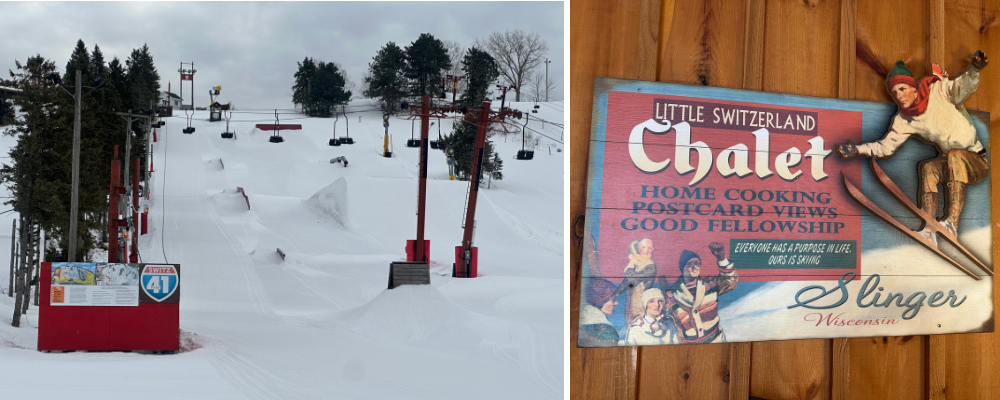 Left to right: Little Switzerland terrain park; Little Switzerland chalet sign
More Impactful?
Despite all the public adulation on the new lifts, a business decision by owners Rick and Mike Schmitz a few years earlier may have been even more impactful, though it arrived with little fanfare or social media engagement. When the two met to finalize capital improvement expenses for the 2022-23 season, they agreed to spend $1.5 million to retool and pave Little Switzerland’s 800 parking spots.
Mike’s always been “the parking lot advocate.” After the make-or-break snow surface, where and how customers park is arguably the most critical ingredient for a day area. In years’ past, Little Switzerland at its peak would deliver on all the promises—except for the nightmare when customers came and went. One reviewer glowingly praised virtually every aspect of the experience before concluding, “I do pee blood when I have to drive through your lot.”
“It’s their first—and last—impression,” Mike says. “It sets the tone, and (fixing) it solves so many problems.”
For the staff, Mike says the parking lot chaos tended to “ruin our day,” even when everything was smooth on the hill and in the lodge.
So, the brothers hired a civil engineer to rethink the configuration, and a local contractor did the work, furthering an already tight and important relationship with the town of Slinger (the ski area is located in a largely residential neighborhood). The staff is adamant about plowing and cleanliness, so visitors can follow the parking spot lines, which means no labor expense for attendants. The new drop-off areas work seamlessly, and seven or eight buses can be handled simultaneously.
Does Free Parking Pay?
There was still one major stumbling block. “How do you measure the ROI of a parking lot?” Mike asks. “You can’t.” But improving a big part of the guest experience often leads to measurable returns elsewhere.
It was similar to when Little Switz adopted Terrain Based Learning a few years ago, which Rick describes as “the way people want to learn.” The Schmitz’s bucked industry consensus by making lessons free for the newbies who previously paid the highest cost of entry—just to determine if they liked the sport. The owners knew there would be an immediate and significant drop in first-time lesson revenue. But in the long term, there would be a better experience and ultimately more converted skiers and high-end lessons.
After tweaking the program to position its most experienced instructors on the TBL frontlines, that long-term strategy is now paying off with more season-pass sales, more private lessons, and more revenue.
So, too, is the gold-standard parking lot. What was once Little Switz’s Achilles heel, where you could lose a small car among the ruts and potholes, is now a strength, providing a paved path to those shiny new lifts.
“Why didn’t we do this sooner?” asks Rick.
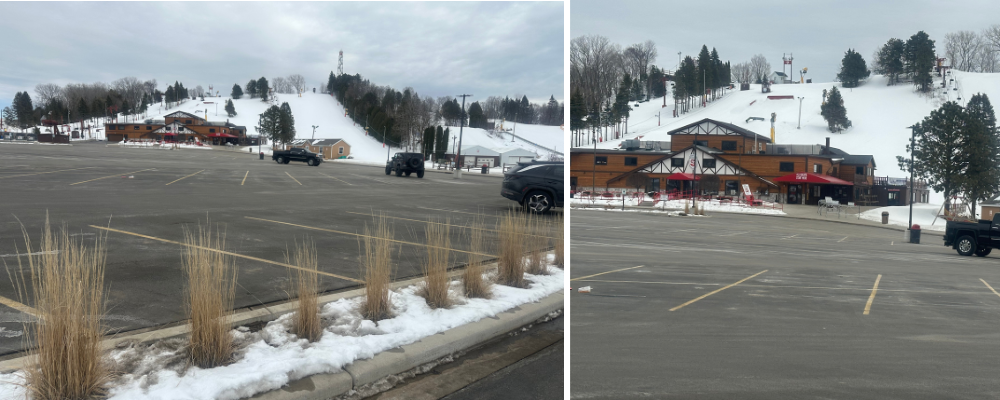 Little Switzerland parking area.
Young Buck to Industry Statesman
Rick Schmitz was once that naïve 22-year-old college grad who followed his passion to a dozen banks, all of whom showed him the door on his crazy proposal to buy an almost-defunct ski area in rural Wisconsin in 2005 and bring it back to life. He’d found the sales listing online during class, and if there had been predictive markets back then, the “Yes” outcome for any success might have been a dime for a dollar.
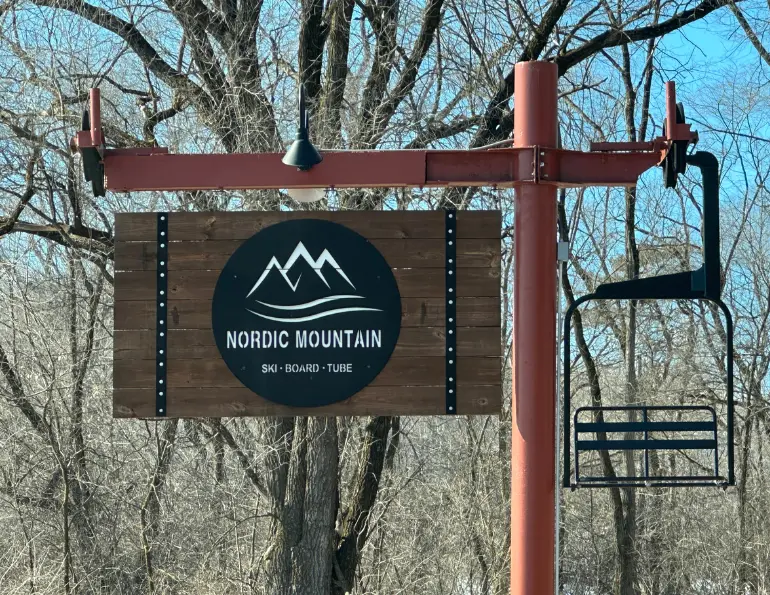
One lender finally bit. Along with the $100,000 he borrowed from his parents for the down payment, plus grants from the state and SBA, he now owned Nordic Mountain, a rural, nostalgic retreat an hour west of Appleton (the Fox River Valley population is 200,000), in the heart of Amish Country. He had just graduated with a finance degree from Washington University in St. Louis, and while interning with the usual money institutions, he’d concluded this kind of stuffy career was not for him.

Now, after more than two decades and as the owner of three ski areas, the 43-year-old is an archetype for future resort stewards. The youngest of five boys in a tightknit Wisconsin family, he is the 90-percent owner of Nordic, which has seen a sixfold increase in revenue and now draws about 50,000 visitors in this, its 50th anniversary season. Shunning common advice, Rick rewarded his longtime colleague and GM, Bill Ringenoldus, who became a part-owner and treats Nordic “better than if it were his own.”
Rick has a 50-50 split with his brother Mike in crown jewel Little Switzerland, where the Schmitz family grew up skiing, and the smaller Crystal Ridge, closer to Milwaukee (and Chicago) and with an emphasis on tubing and the urban park vibe.
The trio of ski areas employ 750 seasonal workers and about 20 full-timers; this is a family affair, and over the years, mom ran the ticket office and dad drove snowcats while providing advice.
The areas offer a diverse, three-resort season pass synergy, with woodsy, winding, bucolic Nordic up top; sweet spot Little Switz balancing the old and new; plus, youth-driven Crystal, where the staff likes to say, “the tubing supports our skiing habit.” Another brother, Dave, has also been very involved along the way, but Mike makes it clear: “Rick is driving the bus.”
How Does He Do It?
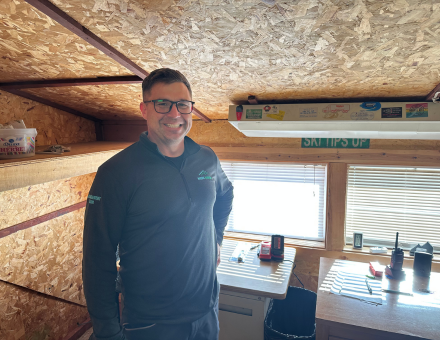 Rick Smitz at old office.Rick has evolved from a bootstrap ski area owner who lived in his parents’ house to being one of the most respected stewards in the country. He is the chair of the MSAA board and secretary of the NSAA board, where he also serves on the executive committee.
He’s proof that you can be extremely successful if you’re smart, strategic, hold a keen eye for finding and cultivating staff talent, embrace the customers and the culture, and, at least in the beginning, are willing to work long hours for little pay. He has a passion for the sport and its people, and he views it all with an accountant’s rigor—not just for this year’s results but the ones that will come down the road.
Also critical is what he does not do, such as chasing destination customers by building hotels and condos that open a pandora’s box of amenity costs and liabilities. Or sinking big dollars into summer operations (beyond a few weddings and concerts) that aren’t smart in the long run.
Perhaps most importantly, he invests in the future: In the past four years alone, he’s greenlighted $8 million for capital improvements, including a new $2.5 million lodge this season at Nordic (with spacious second-floor offices for him and Ringenoldus, meaning the two longtime partners no longer share a cramped,100-square-foot attic cube). There is a good lender and favorable rates involved, but the operating income pays for many of the improvements (especially when spring pass sale cash is handled wisely). The customers will become lifelong and visit in increasing numbers, particularly when the product is good and only getting better.
It’s the Staff, Stupid!
Greg Fisher, who served as the marketing VP for the 17-area Peak Resorts (which sold to Vail Resorts in 2019) and has helmed two other Midwest ski areas in a distinguished career, was lured to bring his talents and experience to become GM at Little Switz. (This also gives Mike a chance to step back from day-to-day duties and look at the big picture.) Some of the young leaders—savvy marketing chief Wagner, who was hired fresh out of college from University of Wisconsin-Lacrosse, and Nordic Mountain snowsports school director Kyle Wilson, have been honored among SAM’s annual “10 Under 30.”
The GM at Crystal Ridge, Riley May, was also a SAM “10 Under 30.” He started as a marketing intern, became marketing director and then assistant GM, and now, at age 29, has been running the ski area for five seasons. Crystal Ridge is in Franklin, 15 minutes from downtown Milwaukee, at the Rock Sports Complex, which emphasizes baseball and music.
The ski area there was called The Rock Snowpark for a dozen years, but May led the rebrand back to Crystal Ridge in 2024, honoring the original, circa-1987 founder John Kaishian, who pushed dirt in a former landfill to create the 230-foot hill and served as the pied piper for skier development in Milwaukee.
The Schmitz method is to give leaders all the necessary tools and training, then set them on a path for success, with an emphasis on relating to and thus motivating the staff. Riley has made the right moves while also earning the staff’s respect with his own work ethic.
Being humble is important, and despite his lofty standing, Rick is viewed as a regular guy who everyone wants to befriend, not someone to fear. The boss’s leadership at the Midwest and national levels motivates managers to learn more about the snow business—where they fit in, how they can grow, what others are doing, and what more they can do to make their ski areas better.
Adding It Up
Rick Schmitz offers no details, but it doesn’t take an accountant to realize that his ownership equity in three successful ski areas with strong EBITDAs is worth a significant amount. Rick looks at virtually every resort that comes up for sale in the Midwest and even the country, but those analyses must be strategic, realistic, and tempered. For now, he wants to be a good husband and father to his kids, see a few junior hockey games, and make the most of a busy day (and night) job.
“I ski every day at one of my hills,” he says. “I notice something every time.”
Being on-site regularly, not as an absentee owner, is critical, and inherently restrictive for acquisitions. He also learned a lesson when he invested in and operated the Blackjack Ski Resort in Michigan’s U.P.: A bigger hill is not better when it serves a smaller market.
All those nights spent sleeping on a couch, rising before dawn, and scrounging for parts are paying off. “Now I’m making money and I love my job,” Rick says, surveying his ski areas and how they are positioned for the future. “There is no better investment.”
Chronicling big and small resorts for more than 40 years, Andy Bigford is the former editor-in-chief and publisher of SKI magazine and the GM of Warren Miller Entertainment. He has written and/or edited six books, including collaborating with the late Chris Diamond on his Ski Inc. book series. He is at work on a third Ski Inc. edition for publication in late summer 2027; the fourth and final stop in his Revival Road Trip is with Erik Mogensen at Black Mountain in Jackson, N.H.