



The idea, sketched out hastily in the late fall, was to visit four ski areas whose futures were, at some point, endangered. How did they get there, what did they do to change the trajectory, and how could their lessons be applied? Their stories, gathered under the “Revival Road Trip” banner, were told in monthly special reports on saminfo.com through the 2025-26 winter.
Of course, the focus of much industry analysis tends to gravitate toward the Big Two: publicly traded Vail Resorts and private equity-funded Alterra Mountain Company. Their passes and mountains dominate, and for a time, their exciting acquisition and growth stories created a renaissance, especially as they avoided the traps of the failed conglomerates that came before them.
The focus here, however, is on the other owner-operators making it work today, and on the participants rather than the participation.
There were four main destinations, but 15 ski areas visited on this 13,000-mile road trip: Only two required a mega-pass, while there were a half-dozen Indy Pass redemptions along the way. Other than the speeding ticket on South Dakota’s I-90, the parking infraction in Morrisville, Vt., and the diverted plane landing in Rockland, Ill., all travel went smoothly.
Two of the destinations were in the Midwest, where the cold and snow offered a stark contrast to the tragically warm and dry West, particularly the critical Rocky Mountains (a clear reminder that wild, erratic, and unprecedented weather is here to stay).
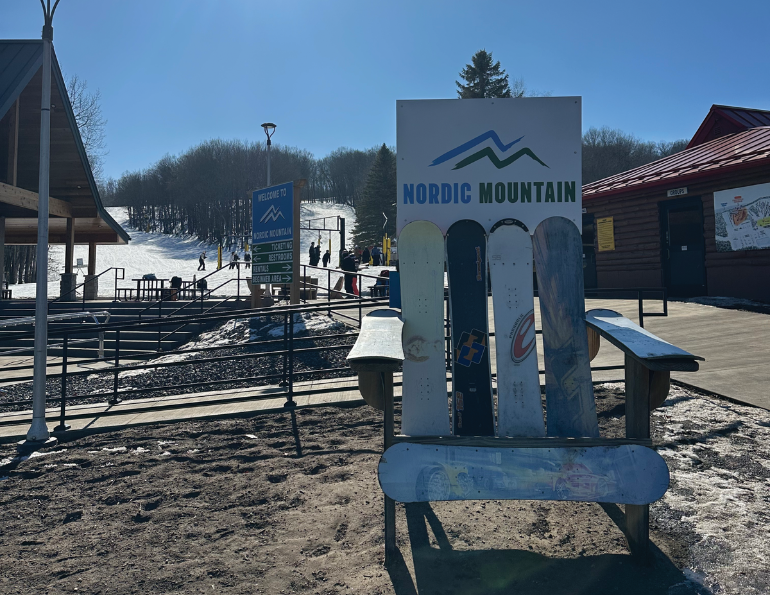
Little Switz and Nordic. Wisconsin’s Bavarian roots infuse it with an alpine culture, but Milwaukee and the state’s towns to the north wouldn’t have many ski options if it weren’t for Rick Schmitz. Fresh from college, Rick bought ailing Nordic Mountain two decades ago and transformed it. He then rescued circa-1941 Little Switzerland from five years of closure in 2012, eventually drawing 100,000 visits a year. Where others saw headwinds and headaches, Schmitz invested in infrastructure and tapped into the financial power of lift passes, always with a keen understanding of what his customers wanted and his staff needed.
Swiss Valley. The hill where I grew up, Swiss Valley in southwestern Michigan, was open for just 49 days in the weather-challenged 2023-24 winter, and it seemed permanently on the cusp of closure. Now, it is humming, and the uninviting rope tows that were such a deterrent to first timers have finally been replaced by conveyor lifts.
It was the patience and perseverance of Jamie (neé Wiseman) Stafne, one of three daughters of the first-generation owner, that paid off. Swiss found its future, and new owners, in the Perfects, the family behind Perfect North Slopes, the well-run and capitalized resort in southeastern Indiana and a business that knows how to make snow. With dramatically increased snowmaking and wintery weather, Swiss was set to record a 90-day season this winter, a near 50-percent increase over the operational average of the past 10 years.
Sundance. Utah’s scenic Provo Canyon is next door to the state’s highly trafficked mega-pass resorts, but its solitude puts it on another planet. Sundance Mountain Resort has balanced its worldwide appeal (and high-end draw) as Robert Redford’s longtime sanctuary with the need of catering to day visits from Provo Canyon and its two universities, which together supply perhaps 90 percent of its skier traffic. Sundance is unlike any others, but the basics it applies to the ski area’s operations are applicable to all. Private equity backed the dream, industry veteran and ownership partner Bill Jensen provided the direction, and president and GM Chad Linebaugh and mountain operations director Czar Johnson are making it happen.
Black Mountain. Historic Black Mountain in Jackson, N.H., seems to create more content per skier visit than any resort in North America. Under the leadership of Erik Mogensen, it is arguably the most newsworthy revival of them all, particularly since the owner is actively disrupting a small ski area business model that he believes is badly broken. After publicly performing infrastructure upgrades, Mogensen has created a culture, community, and future at Black.
His plan for an innovative ownership co-op model, which would have raised $16.25 million, didn’t fly. But there is increasing interest to see how this unfolds as he becomes Black’s permanent owner and declares it as his laboratory, concentrating on creating less expensive lifts and more affordable insurance. As the owner of Entabeni Systems and the Indy Pass, both of which have fully relocated to Jackson, N.H., all eyes will be on this juggling act.
Collaboration over consolidation. If there is another industry where the “competitors” share their knowledge so openly and warmly, and where relationships really do matter, I don’t know of it. Here are a few of the basic tenets that were confirmed en route:
- Success starts with a reliable, quality snow surface.
- The financial power of the lift pass (in whatever form) cannot be overstated.
- This complex business depends heavily on investment. You can’t make a buck unless you can spend a few, and then a few more.
- Technology is king, but the personal touch is key.
There are many flowers in this resort garden. All require constant attention, many need further tending, but most are blooming.
The discoveries from this road trip and more will be included in the planned fall 2027 publication of Ski Inc. 2030, the next installment of the Ski Inc. book series created and written by longtime resort leader Chris Diamond, who died in 2023 and always insisted that the Ski Inc. legacy go on. The “Revival Road Trip” stories on SAM can be found at saminfo.com/ski-inc-series; the author is at andybigford@gmail.com.