



SAM Magazine—Happy Valley, Ore., Jan. 21, 2026—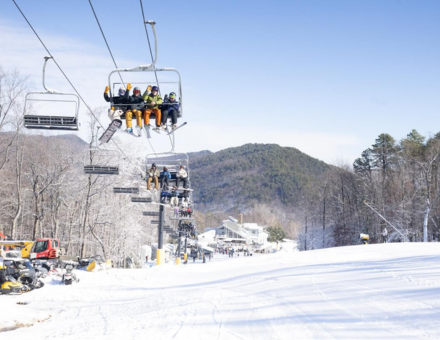 MassanuttenThe 2026 Martin Luther King Jr. holiday weekend presented a stark geographical divide across North American ski areas. Based on a cross-continent survey of operators and regional associations, the weekend was defined by record-breaking snowfall and “all-time” attendance in the East, contrasted against a historic snow drought in the West that forced creative operational pivots and a reliance on non-skiing revenue.
The Mid-Atlantic
In the Mid-Atlantic and Northeast, perfectly timed snowfall turned the holiday into a historic success, though it tested infrastructure and staffing.
In Pennsylvania, Bear Creek Mountain Resort saw record-breaking volume, according to marketing director Gary Kline. “Thanks to the perfectly timed snowstorms on Saturday and Sunday, we officially set an all-time attendance record (since installing RFID gates) this past Sunday and almost matched that number again on MLK Day,” he said.
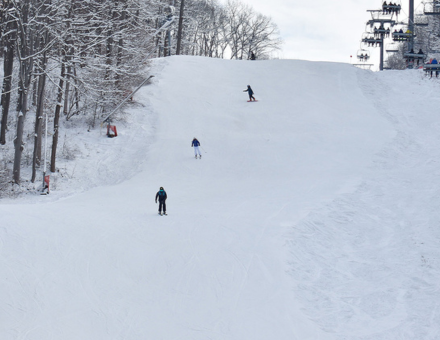
Shawnee Mountain received more than 8 inches of snow over the weekend, which drove high engagement in family programming. “We [had] our best children’s program numbers in at least four seasons,” said marketing director Rachel Wyckoff.
Ski Big Bear saw sales increase 6 percent over last year's holiday, but lessons were down a little despite being sold out nearly every hour. Why? “If we would have had more instructors, we could have possibly been closer to last year’s numbers,” said general manager Lori Phillips.
Mount Pleasant of Edinboro general manager Andrew Halmi described a fantastic weekend where guests “responded by showing up in force.”
 Shawnee MountainIn the New Jersey and New York City markets, significant natural snowfall on the Saturday and Sunday of the holiday weekend catalyzed a massive surge in both beginner and destination traffic.
Ski NY president Scott Brandi summarized the statewide mood as “Happy days in New York,” noting that the holiday followed a strong Christmas season.
This was confirmed by the Olympic Regional Development Authority (ORDA), which oversees Whiteface, Gore, and Belleayre. Communications coordinator Darcy Norfolk reported that visitation across the three mountains was up by an average of almost 5 percent.
At Belleayre, general manager Alexandra Sines reported the resort’s first 6,000-visitor day of the season on Sunday. Despite slick roads and accidents causing traffic backups on the main access routes, Sines said demand was relentless. "Despite online sales showing we were sold out, we still had a fairly large number of people show up at the ticket window to purchase rack rate tickets with a sold-out fee on top of it," she said.
Whiteface general manager Aaron Kellett reported that visitation was "slightly up" over the previous year, but the victory was operational. After high winds swept loose snow off the mountain leading into the weekend, the operations team "put it all back together Friday night," salvaging what Kellett described as a "fantastic weekend of skiing."
Hugh Reynolds, CMO of SNOW Partners, reported record-setting figures for both indoor and outdoor operations. At Mountain Creek, N.J., fresh snow combined with clear roads resulted in the busiest single day of visitation since 2015 on Saturday. Total weekend visitation was up 21 percent with an 18 percent increase in revenue. Reynolds said, “Our top selling product of the weekend was our Triple Play Card (three anytime use tickets) showing people's intent to get out and ski more this season based on the strong weather start.”
Big SNOW American Dream indoor ski and ride facility benefited from snow outside, too, logging an 8 percent increase in visitation and a 23 percent jump in revenue over the previous year, driven by higher yielding rental packages and multi-visit card purchases.
The Northeast
In New Hampshire, Gunstock Mountain Resort logged the highest revenue day in its history on Saturday. President and GM Robert Drake said that while visitation was up 1 percent year-over-year, the “vibe” was significantly bolstered by 8 inches of fresh snow and proactive capacity management. Drake shared feedback from a guest that underscored the success of the resort's daily ticket cap: “Even though the mountain was sold out, at no point did it feel overly crowded. It was clear that the cap on the number of skiers truly works.”
Cranmore Mountain Resort reported a very successful weekend, with Saturday marking a single-day revenue record. Director of marketing Becca Deschenes noted that the resort was “up across the board,” with the new Arctic Lights night tubing experience driving the resort's best-ever MLK tubing attendance.
At King Pine Ski Area, regional GM Amanda Buswell reported a strong and steady performance that paced ahead of historical averages. "We also reintroduced several guest-favorite activities, including the Silly Slalom, Gold Rush, and s’mores by the fire, which added to the festive atmosphere." Lessons filled due to high demand from both first-timers and returning families. "We continue to see guests arriving earlier in the day and spending more time on-site, particularly families booking lessons and rentals," Buswell noted.
Ski Vermont director of communications Bryan Rivard reported that “several areas shot the moon.” Jay Peak set all-time records for revenue, attendance, and occupancy across the weekend, while Magic Mountain set a record for skier visits. Smugglers' Notch reported 95 percent occupancy. Even Killington, which faced a brief power outage at its Peak Lodge on Saturday, finished up year-over-year, with its sister resort Pico posting a 6 percent increase. Sugarbush had its busiest MLK weekend since 2018, with all business units beating budget by an average of 20 percent.
Wachusett Mountain, Mass., was busy all three days with more than 14,000 visits between Saturday and Sunday, a significant rebound from last year's rain-impacted holiday. PR manager Chris Stimpson noted that the resort's new six-pack lift helped manage the volume. External factors like Sunday’s Patriots game and guests digging out from a Sunday night snowstorm for a slow start Monday influenced flow.
The Southeast
In Virginia, Massanutten Resort saw a very solid holiday that remained consistent with last year’s record-breaking numbers. Mountain sports director Kameron Tucker noticed a significant shift in guest behavior, saying, “Pass-holder visitation was up about 37 percent, and we saw pass-holder perk utilization increase nearly three times. Sixty-eight percent of guests booked in advance, which is a 55 percent increase over our five-season average.” Tucker also noted major operational wins, including a 38 percent drop in rental shop processing time and zero guests missing lessons due to line waits.
Timberline Mountain, W.Va., GM Tom Price noted that Timberline scored its "busiest single day in our six seasons of operation" on Saturday.
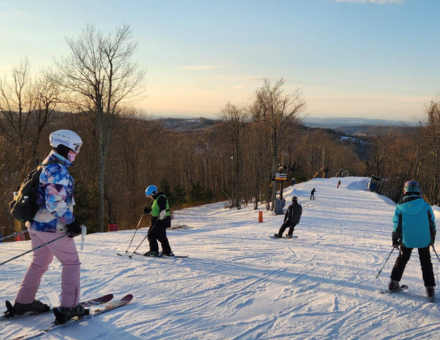 Winterplace Ski ResortHowever, neighboring Winterplace Ski Resort saw the opposite trend. Despite excellent conditions, GM Josh Faber reported that visits were down compared to last season, though revenue was only slightly down, indicating improved yield per visitor. Faber noted a significant year-over-year decline in pre-bookings and advance ticket purchases. “Guests are increasingly waiting until the last minute, largely driven by a lack of confidence in the weather forecast,” he said.
Farther south, Sugar Mountain Resort, N.C., had 15 of 20 trails open and saw skier visits rise 6 percent and revenue jump 9 percent, including a 63 percent increase in children’s program participation and 20 percent increase in night skiing. VP Kimberley Jochl attributed the success to ideal winter weather versus 2025’s bitter cold.
Cataloochee Ski Area, N.C., reported its “best MLK weekend ever,” according to president Chris Bates. “We picked up snow Friday and Saturday. People were out in force. Rentals and ski school were very strong, and our children’s program sold out two weeks before the weekend.”
The Midwest
Perfect North Slopes, Ind., general manager Jonathan Davis said MLK weekend visitation finished up 5.8 percent year-over-year thanks to normal winter weather (15 degrees warmer than last year). Investments in technology and changed operating hours were keys to handling the surge. "Direct-to-lift RFID and paperless rentals have nearly eliminated ticket and rental lines. Opening an hour early, now in our third season, has meaningfully spread arrivals and reduced early-day congestion," Davis said.
Davis also noted that limiting group reservations helped preserve the guest experience during peak volume. This was critical given the massive influx of beginners: Perfect North taught 800 beginner group lessons and served another 1,000-1,200 in its free guided learn-to areas.
Snow Trails, Ohio, was up about 10 percent in both visitation and revenue. “We limit our ticket sales to optimize the guest experience and sold-out Saturday, Sunday, and Monday’s day tickets,” reported GM Scott Crislip, noting that single-digit temperatures on Monday did not deter crowds.
Crislip commended the outside operations teams, “Including ski patrol and especially lift operations, that endured less than ideal weather conditions all weekend with frigid temperatures and winds, and performed admirably.”
Colorado
The Rockies saw a split between destination giants and regional teaching hills. Vail Resorts reported a 20 percent decline in visitation season-to-date prior to the MLK holiday, citing a 47-year snowpack low at its flagship Vail Mountain, Colo., and other Front Range properties.
Conversely, smaller Colorado resorts saw a holiday surge driven by “pent-up demand.” Granby Ranch beat visitation projections by 71 percent on Saturday and 90 percent on Sunday. “While we’re at less than 50 percent open terrain, the snow we have is in great condition,” said marketing director Brad Moss.
A lack of natural snow at Powderhorn Mountain Resort, just 47 inches this season, forced a shift in guest engagement, “Away from snow-dependent messaging toward events, dining, and the overall guest experience,” said general manager Ryan Schramm. “MLK visitation was driven primarily by recent snowfall and resulting terrain opening, which had been delayed until recently.” Schramm said that while the numbers were challenging, team resilience and strong events and F&B operations created some wins.
Arapahoe Basin took a creative operational approach to the low snowpack by launching “limited and directed” skiing, using ski patrol to guide small groups into closed terrain to help keep the natural snow.
The West
In California, John Rice of Ski California noted a tiered experience. “The north state/Tahoe had great snow,” said Rice, “that carried them through the MLK holiday with great conditions and lots of open trails. In the southern part of the state resorts were able to get a few more trails open with snowmaking, but are still looking for an extended cold window.”
Karl Kapuscinski, CEO of California Mountain Resort Company (CMRC), reported that his four-resort portfolio was up just over 20 percent overall during the three-day weekend, with strong demand for learn-to-ski programs.
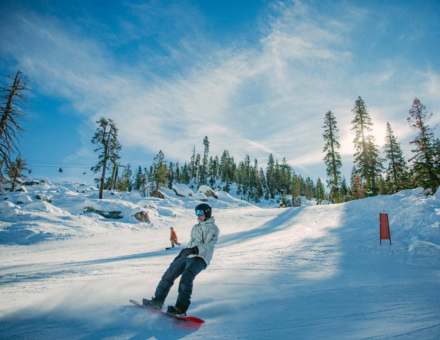 Dodge RidgeThe standout was China Peak, which saw visitation jump roughly 50 percent over last year. Kapuscinski noted a unique driver, “The Valley was fogged in for weeks, so a lot of people wanted to get up to the mountain.” Dodge Ridge (up 20 percent) and Bear Valley (up 35 percent) also posted strong gains, with essentially 100 percent of terrain open across the three northern properties. The lack of storms ironically helped this segment. “There was no worry about chains or anything like that,” Kapuscinski said. “So, I think that really helped bring out the beginner learn-to crowd.”
In Southern California, Mountain High fought what Kapuscinski called the “worst weather for snowmaking I have seen in 30 seasons,” with Disneyland hitting a record 86 degrees nearby. Despite this, the resort (which reopened Jan. 10 after devastating December floods) matched its three-year MLK holiday visitation average. “Pleasantly surprised across the whole portfolio considering a two-week dry spell and warm temps in the market,” Kapuscinski concluded. “Lessons were sold out across the board.”
At Mt. Rose – Ski Tahoe, Nev., GM Greg Gavrilets noted that while year-to-date visitation was slightly down, “January has been strong so far,” with high capture rates in ski school and F&B. Visitation was up 50 percent over last year's MLK weekend.
The resort had to dig out from an 8-foot storm ahead of the holiday. Gavrilets described a “Big win for mountain operations dealing with 8 feet of snow from a single storm and getting the mountain fully opened and dialed.”
The Pacific Northwest and Canada
The Pacific Northwest remained the hardest-hit region. In Government Camp, Ore., local businesses reported revenue down 50 percent due to unseasonably warm temperatures. Mt. Hood Meadows filled its upper parking lots offering mid and upper mountain terrain, but ran the Hood River Express (it’s lowest elevation lift) for uplift only for overflow parking. Mt. Hood Skibowl was restricted to night-only skiing and tubing operations to conserve snow. Mt. Ashland in southern Oregon paused operations before the holiday, awaiting more snow.
Lookout Pass, Idaho, (on the Idaho/Montana border) faced a challenging weekend despite strong numbers on paper. With 232 inches of snow this season and 88 percent of terrain open, the resort still saw visitation and revenue drop 25-30 percent. Director of marketing Matt Sawyer attributed the decline to a “guilt by association” effect, speculating that people in nearby towns where there’s little snow didn’t feel it would be worthwhile go to the mountain, or recent visits to other ski areas “soured enthusiasm when the users saw and experienced significant thin areas.”
Bogus Basin, Idaho, faced the lowest MLK weekend snowpack in its history, with only 20 percent of terrain open. General manager Brad Wilson said holiday weekend visits were off 28 percent and revenue was down 34 percent year-over-year, noting, “Revenue was heavily influenced by a $59 lift ticket, reduced due to the limited terrain.” However, “The vibe has been great,” he said. “Our guests understand we’re doing all we can to provide skiing.”
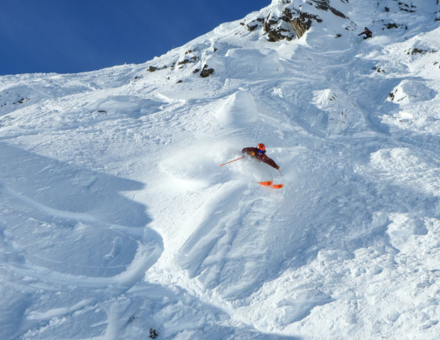 Lake LouiseJust north at Brundage Mountain Resort, however, business was booming. General manager Ken Rider said visitation was 28 percent ahead of last year, driven by 100 percent open terrain despite just 67 inches of snow on the season (compared to 160 inches at that time last season) and mild spring-like weather. He noted a trend of displacement travel from snow-starved regions. “We saw a lot of people from Colorado and Utah. I talked to people on the chairlift who took direct flights from Chicago and the East Coast, who looked at snow reports on Wednesday and booked a flight on Friday,” Rider said.
Whitefish Mountain Resort, Mont., also reported strong results, beating budget by 10 percent and last year’s figures by roughly 35 percent. Matt Gebo, director of sales and marketing, attributed the win to reliability, writing, “While we’re in a bit of a dry spell right now, we still find ourselves in a fortunate position with nearly 100 percent of our terrain open.” A sunnier-than-normal holiday weekend also helped drive strong weekend business.
Lake Louise, Alberta, continued a “charmed” season. According to CEO Richard Burkley, “Our challenges have been backed up traffic, snow removal and overfull parking lots, all related,” he said. “While we don’t celebrate MLK, we did have a strong weekend.” Burkley noted it has also been warm by Alberta standards, which seems to be contributing to the heavy snowfall.
Hilltop Ski Area, Alaska, a small 30-acre nonprofit ski hill in Anchorage, reported a significant rebound, with guest numbers jumping almost 50 percent, from 2,343 in 2025 to 3,359 this year. Marketing manager Rob DeBerry credited the success to the Freedom Shred Partnership, an event focused on lowering cost barriers and increasing diversity. Unlike last year, when warm temps prevented full terrain opening, Hilltop was 100 percent open with bluebird skies and a festive atmosphere bolstered by partners like Oakley and Red Bull. “It takes a village for sure, and our village is amazing,” DeBerry concluded.
The Bottom Line
The 2026 MLK weekend reinforced that natural snow remains the ultimate driver of holiday visitation. In the East, resorts were capped by staffing and infrastructure. In the West, while the subscription model of season passes shielded lift revenue, the true cost of the drought was seen in ancillary losses.
However, ski school, particularly beginner lessons and children's programs, reported a strong turnout in every region. Regardless of natural snow conditions, these programs remained a primary revenue driver, often fueled by moderate temperatures that encouraged families to come to the mountain.
Report by Dave Tragethon