



SAM Magazine—Happy Valley, Ore., Feb. 18, 2026—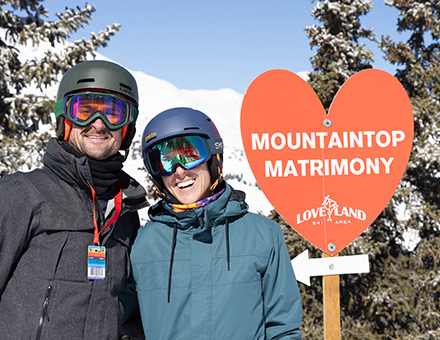 Loveland's Annual Mountaintop Matrimony.From record-breaking revenues in the East to "miracle" snowfalls in the West, the Presidents’ Day long weekend continued the trend of a ski industry defined by extreme contrasts. While the East Coast basked in one of its strongest seasons in a decade, the West navigated a high-stakes transition from historic drought to a season-saving storm cycle.
Here is a regional roundup of the highs, lows, and operational pivots that defined the 2026 Presidents’ Day long weekend, Feb. 14-16.
The East: A Historic “Feast”
The Northeast and Southeast delivered the most consistent operational performance of the holiday, driven by deep snowpacks and favorable weather that shattered year-over-year records.
Massanutten Resort, Va., reported a staggering 75 percent increase in visits year-over-year. Mountain sports director Kameron Tucker credited a shift in weather patterns—last year’s Saturday washout versus this year’s bluebird skies—and a team-wide rally. “Our grooming crew absolutely delivered—corduroy for days,” Tucker said. The resort also hosted the USCSA Southeast Conference championships, adding collegiate energy to a weekend that felt like a festival.
In New Jersey, Mountain Creek GM Evan Kovach reported that visitation doubled compared to the same three-day period last season. A timely Sunday night snowfall blanketed the New York metro area, driving a surge of Monday traffic. Nearby, indoor ski center Big SNOW American Dream saw visits rise 23 percent, but the real story was retail. CMO Hugh Reynolds noted retail sales were up 40 percent, led by hardgoods like goggles and helmets, a signal that guests are committed to the sport for the long haul.
Vermont saw similar strength. Ski Vermont communications director Bryan Rivard noted statewide ticket sales were up between 10- and 20-percent, with lodging occupancy in the mid-to-upper 90s. Magic Mountain, Vt., sold out on Sunday. At Jay Peak, president Steve Wright described a “perfect” weekend with zero wind holds, setting a single-day record for admissions and revenue on Sunday. Rivard expects the momentum to continue through next week when Vermont and New Hampshire schools are on break, Feb. 23-27, with bookings tracking ahead of previous seasons. He added the staggered schedule allows resorts to manage capacity while catering to families seeking non-ski activities like tubing and indoor climbing.
King Pine, N.H., regional manager Amanda Buswell reported the ski area is pacing ahead of last year’s Presidents’ week performance, driven by a return to full daily programming. Family engagement was high for Olympic-themed events like “Silly Slalom” and “Belly Bag Races.” Buswell noted solid growth across lessons, tubing, and lift tickets, reinforcing the strength of the regional drive market.
Sugar Mountain Resort, N.C., vice president Kimberly Jochl reported a 10 percent revenue increase and a 9 percent jump in skier visits compared to last year’s holiday weekend. Group business surged 49 percent, while children’s programs saw a 41 percent spike. Jochl noted that despite rain on Sunday, ideal cool and crisp weather on Friday, Saturday, and Monday kept the ski area 100 percent open with a base depth reaching 99 inches.
The Midwest: Capitalizing on Warmth
While snowpacks varied, the appetite for winter travel remained robust, with some ski areas benefiting from the drive market economy.
Nub’s Nob, Mich., tracked its best Presidents’ weekend ticket sales since 2007. Planning and documentation manager Brian Boeckl attributed the surge to a 123-inch snow base and an economic shift, explaining, “When skiers prefer a road trip over flying ... we often see an increase in first-time or infrequent guests.”
At Detroit Mountain, Minn., general manager Tom Thiel said unseasonably warm temperatures in the 40s and bluebird skies drove strong visitation, marking a significant financial turnaround from last season, which was lost to extreme cold.
Crystal Mountain, Mich., director of communications Brittney Primeau reported a “fantastic” holiday weekend with strong visitation, though not record breaking. Temperatures hovered in the 40s, creating a spring-like atmosphere until a brief lightning delay on Monday paused operations.
The resort deployed an all-hands-on-deck strategy, with executives filling shifts as parking ambassadors. One shift revealed a classic industry mix-up: A driver presented pre-paid tickets for Crystal Mountain, Washington. Staff directed the guest to the ticket window to purchase access for the Michigan slopes. The weekend also featured the annual Teddy Fest, a fundraiser held since 2006 for the Teddy Knape Foundation and the Crystal Community Ski Club, which was recently featured on Good Morning America.
The West: The Salvation Storm and Operational Balance
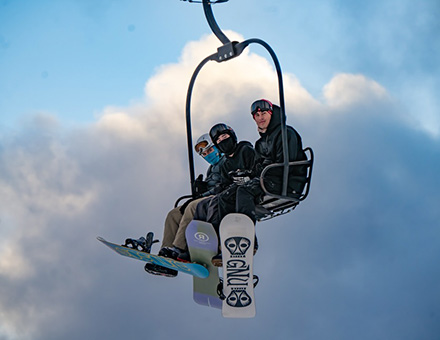 Brian Head ResortFor much of the West, the holiday narrative shifted from drought to deluge. A massive storm cycle arrived toward the end of the weekend, bringing relief but also diverse operational experiences.
Utah resorts, including Snowbird and Alta, faced a pattern flip that brought much needed snow before the holiday, and then delivered heavy snowfall starting Monday night. While the fresh powder ended a weeks-long dry spell, forecasts for high winds and rapid accumulation forced operations teams to balance pent-up demand with avalanche-conditions warnings and anticipated safety closures.
Brian Head Resort, Utah, saw visitation increase over previous weekends, aided by unique programming. Marketing manager Amber Palmer highlighted the resort’s first-ever “Chairlift Speed Dating” event on Valentine’s Day, which drew more than 50 participants and even spurred a marriage proposal on the Giant Steps lift.
In Colorado, Loveland Ski Area marketing director Loryn Roberson called it the “best week of the season so far,” noting that clear roads on the I-70 corridor were a distinct advantage over past storm-plagued holidays. Loveland also hosted its 35th Annual Mountaintop Matrimony on Valentine's Day, where 125 couples tied the knot.
Grand Targhee, Wyo., senior marketing manager Jordan Wilsted reported business was on par with the norm, aided by the resort’s 8,000-foot base elevation that has kept 100 percent of terrain open despite a low-snow year. With no snowmaking, the resort relied on grooming teams to harvest snow and maintain low-elevation traverses. The resort also celebrated local Olympian Jaelin Kauf, who won two silver medals in Italy to become the most decorated female Olympic mogul skier in history. Wilsted noted a trend of skiers arriving from Utah and Colorado seeking reliable high-elevation conditions.
Idaho: A State Divided
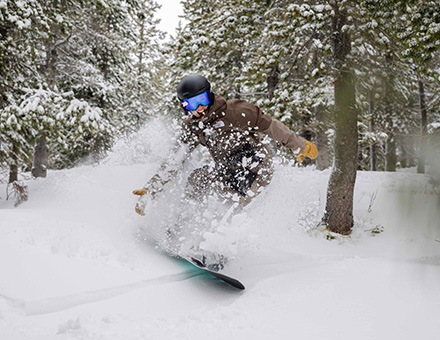 Schweitzer Mountain ResortIdaho illustrated the localized nature of this season’s weather patterns.
Brundage Mountain defied a low snowpack to post strong growth. GM Ken Rider confirmed visitation was up 11 percent and revenue up 19 percent year-over-year, aided by a timely “Any Season Pass” promotional $65 ticket for any pass holder from another resort for the month of February, excluding Saturdays. “The pent-up demand for snow and powder is noticeable,” Rider said.
Schweitzer Mountain Resort issued its first official powder alert of the season on Tuesday, Feb. 17. With 7.5 inches of “ultra-fluffy” snow falling overnight, the resort reported a 24-hour storm total of 13 inches, pushing conditions from “better” to “glorious.”
Tamarack Resort COO Kara Finley noted the storm arrived just in the nick of time, with 10 inches falling Monday night. The resort kept guests engaged with “Ski with an Olympian” events and a Disco on the Deck party (complete with flame throwers), proving that programming can bridge the gap during low-snow periods.
However, the famine persisted elsewhere. Lookout Pass (Idaho/Montana border) marketing director Matt Sawyer reported visitation was down considerably, despite impeccable grooming efforts. “Guests not seeing snow in their backyards [in Spokane] have led them to be quite skeptical,” Sawyer noted, highlighting the challenge of overcoming perception in drive markets.
Magic Mountain (Twin Falls) has yet to open for the season. Snowsports director Jessica Wojack Kluth described a winter where staff are weeding sidewalks instead of shoveling snow. Some instructors have volunteered to help teach or coach at other areas for nonprofit organizations.
“Our thoughts as a team: This too shall pass … chin up … make good decisions … brainstorm on other opportunities and improvements … and most importantly, count your blessings!” said Kluth.
Far West: The “Godsend” Storm
In California, the narrative was one of perfect timing and long-term relief. Ski California president John Rice noted that the major storm system held off until Monday morning, Feb. 16, allowing resorts to harvest full weekend crowds without wind holds. While Monday was “perfect timing” and record crowds, Tuesday was a complete shutdown of Tahoe ski areas and others down the Sierras, including Mammoth Mountain, due to an intense winter storm dumping 2 to 3 feet in 36 hours. The storm also led to a developing tragedy: a group of 15 backcountry skiers, including guides and clients, were caught in an avalanche near Donner Pass Tuesday morning. Eight were found dead and one was still missing as of Wednesday afternoon, making it the deadliest U.S. avalanche in more than 40 years.
For the California Mountain Resort Company (Mountain High, China Peak, Bear Valley, Dodge Ridge), the holiday was a tale of recovery. CEO Karl Kapuscinski reported that while overall numbers were down roughly 15 percent due to aggressive storm warnings, Sunday rebounded to become Dodge Ridge’s best day of the season. Kapuscinski noted a surge in beginner lessons and called the incoming 3-4 feet of snow a “godsend” that secures the season, and he expects this Friday through Sunday will be the best weekend of the winter.
Mt. Rose–Ski Tahoe, Nev., experienced record visits, leveraging its high-altitude base and the success of its new 25-lane Wildslide tubing center.
Pacific Northwest: Survival & Rebirth
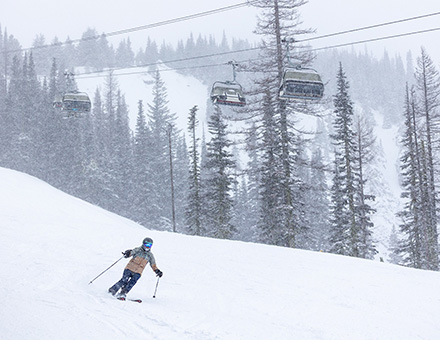 Mission RidgeNo region has faced a tougher battle this season than the Pacific Northwest, where a historic snow drought forced creative pivots.
Mt. Hood Skibowl, Ore., suspended downhill skiing but kept revenue flowing by keeping its Snow Tube Park fully operational and opening a hike-to terrain park for rail jams. Farther south, Mt. Ashland remained closed through the weekend but announced a dramatic turnaround Monday, setting a reopening date of Thursday, Feb. 19, after receiving 14 inches of new snow.
While smaller neighbors faced closures, Mt. Bachelor “really popped” for the holiday. President and GM John Merriman said business returned to, and potentially exceeded, normal levels, driven by recent storms. “Lots of visitation from Northern California,” Merriman observed, as skiers traveled north to chase the fresh snow. Mt. Hood Meadows advised on its website Friday that ski and snowboard rental equipment could sell out over the weekend due to heavy holiday demand.
Mission Ridge, Wash. Chief marketing officer Tony Hickok saw significantly slower holiday traffic than normal, though numbers were the best of the current season. The ski area relied heavily on snowmaking to maintain limited open runs until 6 inches of fresh snow arrived Monday. A sold-out Valentine's Day dinner at the Midway Lodge required an altered snowshoe route due to conditions, but guest sentiment remained high.
The Extremes: Alaska and the Southwest
In Arizona, Sunrise Park Resort relied on divine intervention. “I prayed to every deity there was... and they gave us snow on Friday,” said special events manager Krista Warner. The fresh coating allowed the resort to host a planned DJ festival and rail jam.
In Alaska, Ski Land rebounded from temperatures reaching 40-below to host a “Ski Dating” event on Valentine’s Day. General manager Bryson DeRonde credited his team for keeping the 50-year-old diesel lift spinning in sub-zero conditions.
North of the border, the holiday weekend coincided with “Family Day” in Alberta. Lake Louise Ski Resort CEO Rich Burkley described the weekend as “upbeat,” tracking slightly ahead of expectations with help from strong performance at neighboring British Columbia resorts.
Report by Dave Tragethon