




The early returns were decent at Antelope Butte Mountain Recreation Area during the 2023-24 ski season. But John DeVivo didn’t uproot his life for decent.
During his first season as general manager at the small nonprofit ski area in Wyoming’s Big Horn County, DeVivo saw both skier visits and revenue increase about 9 percent from the 2022-23 season—encouraging improvements, DeVivo says, but it didn’t provide Antelope Butte with any promise or solution for long-term growth. The area still lost about $240,000 that season, not including the $81,000 it owed various vendors and creditors.
“We can’t grow incrementally or we’re just never going to reach a path towards sustainability,” DeVivo says. The opportunity to shepherd Antelope Butte down that path to prosperity is a big part of why DeVivo moved to Wyoming in 2023, 2,300 miles away from his family in Bethel, Maine. Big moves needed to be made, and made quickly, to get the ski area on sound financial footing.
Remote Rescue
Located in the Bighorn Mountains, due east of Yellowstone National Park in north central Wyoming, the 500-acre Antelope Butte offers 30 trails of mostly intermediate and “incredible advanced terrain,” according to DeVivo, including a bevy of hike-to side-country terrain accessible from the lift-served summit. There is no snowmaking. With a base elevation of 8,400 feet and 1,000 feet of vertical, the ski area sees around 200 inches of annual snowfall.
But close to anywhere Antelope Butte is not. The nearest town is Shell, 20 miles away with a population of 73 (as of July 1, 2024). Jackson Hole Mountain Resort is some 300 miles to the southwest, yet a world away from Antelope Butte in terms of terrain, visits, marketing, and, most importantly, survival.
A labor of love. Antelope Butte shuttered in 2004 after 44 years of operation and remained dormant until a local coalition formed the Antelope Butte Foundation in 2011 with the goal of reopening the ski area as a nonprofit. In 2016, the foundation received U.S. Forest Service approval to renovate the base lodge and the two Riblet chairlifts. After years of work and millions of dollars in fundraising, Antelope Butte reopened in 2018.
It has since operated at a loss, but the future looks brighter thanks to savvy, guest-focused management and one unique offering that spurred other improvements, all of which show promise of future financial sustainability.
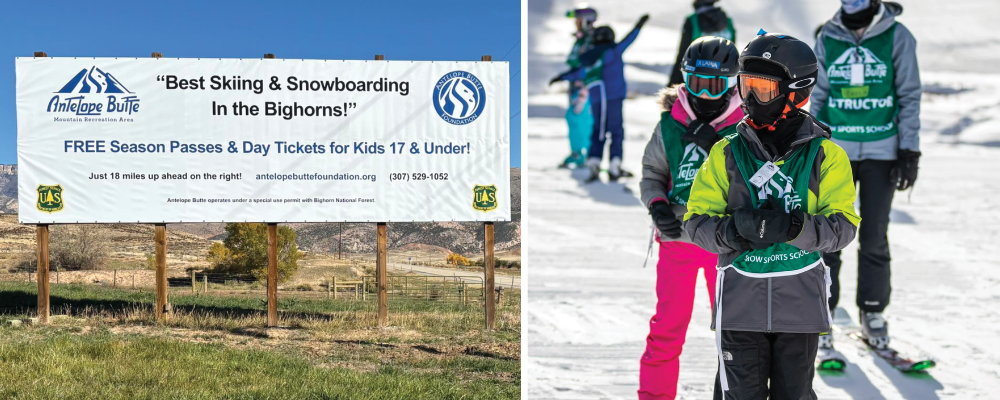 Left to right: Antelope Butte doesn’t need to be fancy in promoting its free, no-strings- attached season passes for kids under 18, an offer that has helped double the nonprofit’s annual revenue and grow visitation; More than 6,000 kids signed up for the free season pass in 2024-25, and adult pass-holders more than quadrupled; the mission to get more people on snow is working—early figures for 2025-26 show a 25 percent jump in snowsports school volume and revenue.
A Move for the Mission
When DeVivo was general manager of state-owned Cannon Mountain in New Hampshire, which he led for more than 16 years, he had a “lightning rod moment” after watching the total number of ski and snowboard participants in the United States remain stagnant for years at between 9 million and 10 million people (or around 3 percent of the U.S. population), according to National Ski Areas Association data.
That statistic prompted DeVivo to think about what he could do to get more people into skiing and riding. “So I started looking around at prospective opportunities to be able to help our industry,” he recalls.
A growth opportunity. That’s why, when Antelope Butte Foundation board member (and Indy Pass owner) Erik Mogensen suggested the Cannon GM apply for the open position at Antelope Butte, DeVivo was torn. He couldn’t imagine uprooting himself from his family and moving to remote Wyoming. But the opportunity to lead a ski area where growing the sport was paramount (and that’s in the West) couldn’t be ignored.
“Realistically, it came down to the love for the mission and the fact that it was a gig out West,” something he thinks a lot of people in the East shoot for at some point in their career.
With his family’s blessing and promises of plenty of FaceTime calls, DeVivo took the job.
He was in for some surprises.
“When I first rolled in here on Labor Day of 2023, we had $5,000 in the bank,” he recalls.
So, DeVivo had to dive headfirst into raising money for the ski area, which was made easier by “an unbelievable philanthropic vibe in northern Wyoming and southern Montana,” he says. A recent mailing was sent to nearly 300 past corporate and individual donors.
A Big Idea
In February 2024, DeVivo and Mogensen decided they had to do something significant to create a profitable model. They needed a landmark reason for skiers and riders to visit Antelope Butte. Since the future of skiing relies on the younger generation, that’s what they focused on.
“If we’re truly going to meet our mission of getting more kids and families outside during the winter months, and we talk so much about affordability and accessibility, especially for the kids in this region (i.e.. within a three- to four-hour radius), what if we literally just gave them free season passes?” DeVivo recalls asking. “I mean, who the hell would do that?”
Free kids/teens passes. Two months later, after approval by the board, Antelope Butte made headlines when it announced it would offer any child under the age of 18 a free season pass for winter 2024-25.
Yes, other ski areas have offered free youth passes, typically with the purchase of an adult pass. “There’s always been a catch in the industry—you’re going to get this, but you have to do that,” DeVivo says. Antelope Butte, however, attached no strings or fine print. It is believed to be the first offer of its kind in the ski industry, launched on three pillars:
- Any kid on the planet under the age of 18 is eligible for a free season pass.
- The pass has no restrictions and there is no other purchase required.
- Youth can sign up for the season pass until the day before their 18th birthday, giving them an extra “bonus” season.
Charge less, earn more? Wading into unchartered territory was a big risk, says DeVivo. “Once we launched, we were all sweating bullets, saying, ‘OK, how the hell are we gonna pull this off?’”
DeVivo and the board hoped the venture might account for a 25 percent increase in visits and revenue in 2024-25. The returns were much loftier: Visits increased 60 percent; revenue (including fundraising) zoomed 100 percent.
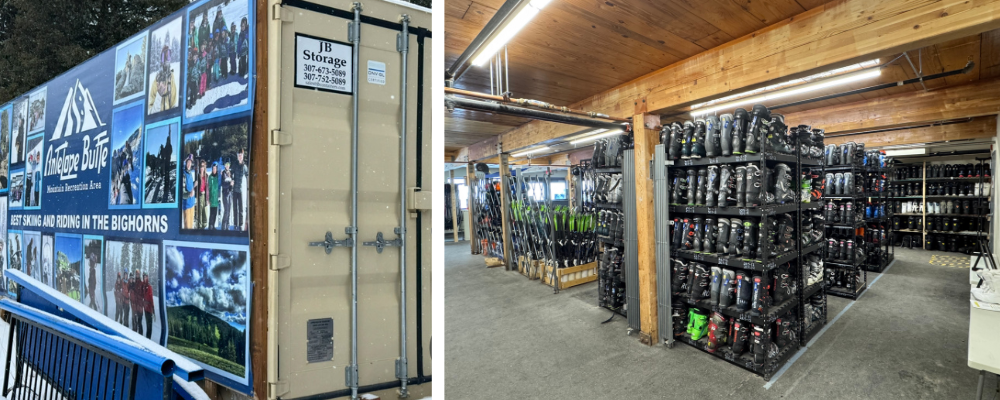 Free season passes led to increased visits, so Antelope Butte pieced together a 60 percent increase in rental stock, reconfigured the rental shop, and added an 8 x 20 trailer to help store it.
Making Adjustments
Even assuming just 25 percent visitation growth, Antelope Butte needed some upgrades ahead of 2024-25 for the ski area to effectively handle more visitors.
To start, the rental fleet needed to expand. “We had 330 sets of gear, and we knew that wouldn’t be enough. We needed probably 50 percent more, because, typically, roughly 25 percent of the people that come on your property go through the rental shop,” DeVivo says. On a busy Saturday, that number can reach 50 percent at Antelope Butte.
Donated rental gear. Bolstering the rental fleet would have cost about $50,000, DeVivo says, money the mountain did not have. That prompted the GM to seek help elsewhere. In October 2024, he reached out to Boyne Resorts CEO Stephen Kircher: “Do you have anything that you’re willing to part with, stuffed away in a warehouse somewhere in Michigan?”
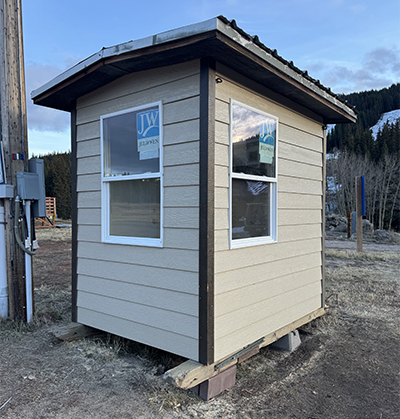 A local contractor renovated an old, out-of-use ticket booth at no cost; it helps reduce indoor lines.Said Kircher: Indeed we do. I’ll have my guy call you.
Boyne Resorts came through with about 100 sets of mostly ski equipment, just for the cost of shipping ($1,500). Vail Resorts provided roughly 50 sets for the cost of shipping, too.
Around that same time, while the Elk Fire was en route to burning nearly a million acres of land in the western U.S., road closures one day forced DeVivo through Buffalo, Wyo., where he stopped at a popular shop called The Sports Lure. He left with a deal for the shop to donate about 50 sets of snowboard and kids’ gear.
“[Boyne Resorts, Vail Resorts, and The Sports Lure] know that we’re sort of a feeder program, of course, but they did it because we’ve got a great industry and a budding, passionate ski and snowboard community here,” DeVivo says.
Creating extra space. With the additional equipment, Antelope Butte had to reconfigure the rental shop and add an 8x20-foot trailer nearby to store everything.
There were other areas that needed attention to absorb the extra visitors, too. “We knew we had to improve on parking. We knew we had to improve food and beverage as far as service time; base lodge, as far as capacity,” DeVivo says. “We couldn’t cook pizzas fast enough, so we added a third pizza oven.”
The GM is a parking guy at heart, so he manages parking on busy days, keeps it tight, greets everyone with a smile and asks where they’re from. F & B service was quickened by adding another point-of-sale and a third person in the kitchen on weekends.
This winter, the lodge has 35 percent more seats (going from 168 to 228). And an old ticket booth that hadn’t been used for years was renovated by a contractor at no cost and is being used to reduce the indoor ticket/rental line by at least 25 percent, DeVivo estimates.
“It’s all these little changes, but they’re big changes when you’re a small operation,” DeVivo says.
Visits on the upswing. And those changes are necessary: More than 6,000 kids signed up for a pass last winter, and adult season pass sales jumped from roughly 250 in 2023-24 to more than 1,100 in 2024-25. As of early December, 2025-26 pass sales were up about 10 percent. DeVivo reported in early February that visits and revenue were tracking 30 percent ahead of 2024-25, and snowsports school was up 25 percent in both volume and revenue.
With more than quadruple the number of adult pass holders, the ski area is offering more adult programs, including “Goods in the Woods,” a 90-minute tour of the mountain’s newly cleared glades.
It’s Working
While out managing the parking lot last season, DeVivo got tons of feedback from guests. “What I was hearing a lot from people last year was, ‘We came because of the kids’ program, but wow, this place is really cool.’ And so our visitation circle grew from like 90 minutes to three to four hours away.
“Every visit counts when you’re trying to create more visits,” DeVivo says.
In some cases, people came from even farther. “In fact, we were seeing families from Florida, North Carolina, Texas, and California,” DeVivo says. “Everybody knows somebody in Wyoming.” Plus, it’s economical. With advance-purchase adult lift tickets only around $54 for 2025-26, a day at Antelope Butte for a family of two adults and two kids costs less than one adult lift ticket at many other ski areas.
On its busiest day last season, the ski area welcomed about 650 skiers and riders, and the line for the summit lift maxed out at around an eight-minute wait.
Almost there ... Even with the 100 percent jump in revenue, the ski area still lost $40,000 in 2024-25, but that is a significant improvement from the nearly quarter-million of the prior campaign. Such a turnaround has the Antelope Butte Foundation now seeing a three-year path toward financial sustainability, albeit with some very aggressive targets for revenue and budgeting.
“If we can hit those numbers and continue to receive philanthropy over these next three years, we believe that we’ll get to a point of being essentially net-zero and probably even start building toward lift improvements and lift additions,” DeVivo says. “That’s the goal; that years from now, we want to be at a point where we can have a true discussion about adding a lift on the West Side, potentially doing some small-scale snowmaking.”
That is indeed the sort of revival DeVivo signed up to lead at Antelope Butte.
SAMMY Guest Editor says …
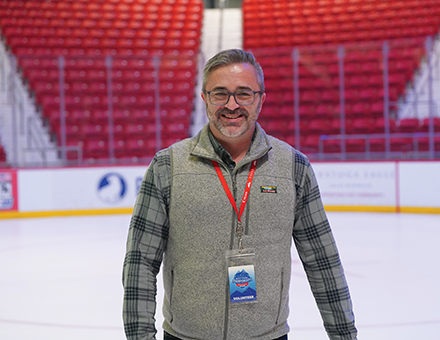 Antelope Butte reminds me that long-term success in the ski industry does not come from trying to be everything to everyone—it comes from knowing who you are and focusing on what matters. When Antelope Butte faced financial problems, its leadership recognized that small changes would not be enough and chose to focus on access, participation, and mission. That decision gave them the foundation to build for the future.
Clearly understanding its role in the market is key, too. Antelope Butte did not try to compete with destination resorts or corporate pass products, but instead leaned into being a community-based operation with a focus on families and youth. That clarity allowed it to offer a free pass to anyone under 18—a bold and risky approach, but it fit who the ski area is and aligned with its long-term goals.
Like many ski areas here in the Midwest, where I am based, Antelope Butte cares about the fundamental aspects of the guest experience as much as anything else. Rather than expanding or adding amenities, it focused on improving rentals, parking, food service, lodge capacity and guest flow. The basics matter. When visitation grew, the ski area was ready to deliver on a good experience, which is leading to repeat visitation and ultimately financial progress.
Being a welcoming and accessible place for kids and families is part of what makes small ski areas successful and sustainable businesses. Another part is building relationships within the community. Parents, volunteers, donors, and partners have become invested in the mountain’s success. Support from industry partners and local businesses helped create a network that works.
The organization leaned into community. Community is now part of how the organization works.
Antelope Butte’s experience shows that you don’t need to be the biggest to be successful—you need to be disciplined, authentic, and committed to bringing the next generation into the sport.
— Bo Bigelow, Executive Director, Midwest Ski Areas Association and Minnesota Ski Areas Association
2025 SAMMY Leadership Award Honoree