



Successful project management is more about people than it is about timelines, budgets, and deliverables. The strongest leaders understand that the highest productivity is achieved by fostering an environment in which people feel motivated, not pressured, to get the work done. This happens when a leader can connect with people on a human level and allow those people ownership of their work and the opportunity to learn.
SAM’s Summit Series leadership development platform offers mountain resort professionals at all levels the opportunity to learn from industry leaders, peers, and experts, and gain tangible takeaways to apply to their careers, operations, and teams. Learn more at saminfo.com/the-summit-series.
In today’s workplace, leaders often feel torn between driving results and nurturing relationships. According to Lex Curtis, founder of Field of Play Consulting, this tension is unnecessary.
“Leadership isn’t about choosing empathy or accountability,” said Curtis. “It’s about learning how to lead with both,” and they don’t have to be competing forces. When leaders can balance accountability with care, they create conditions where people do their best work.
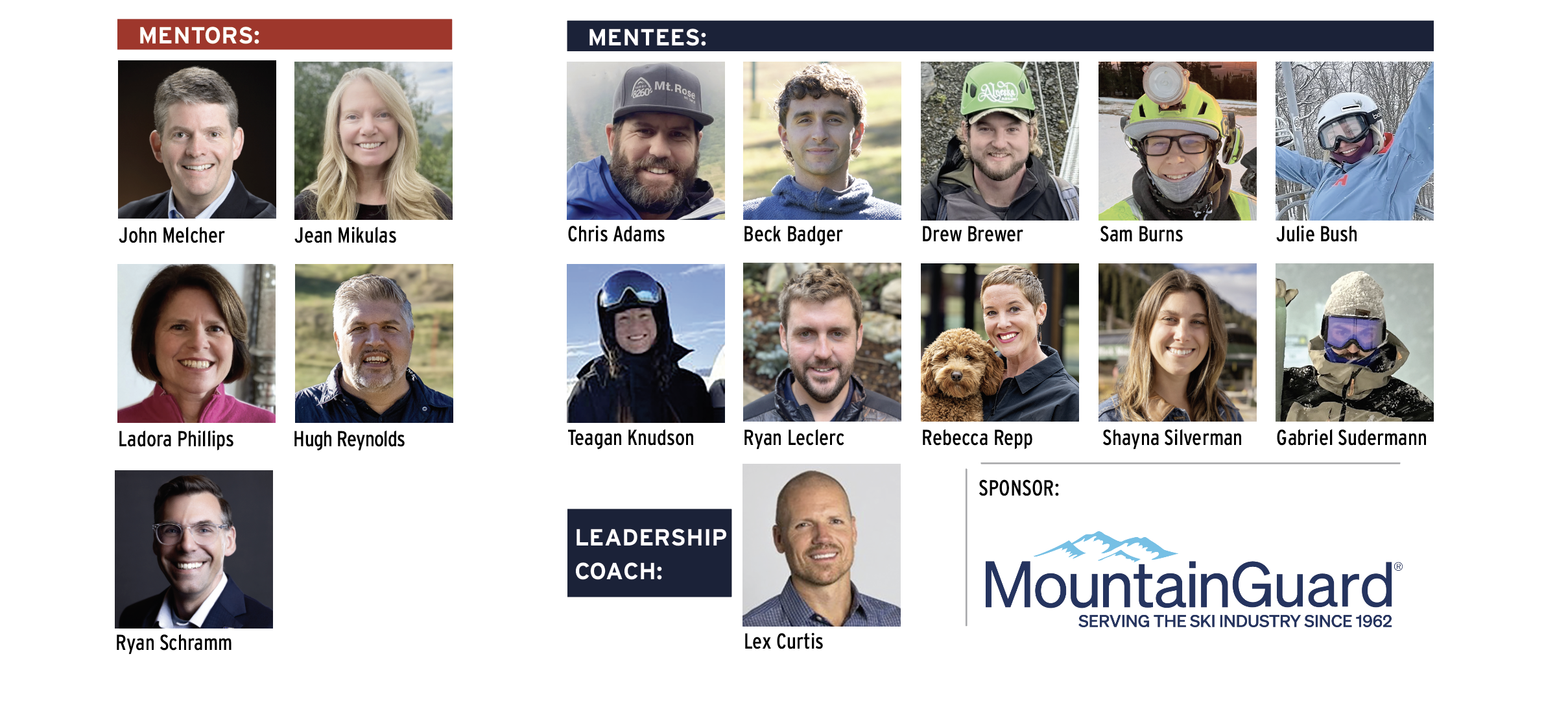
Curtis was the guest coach for a SAM Summit Series leadership development course that focused on practical ways to balance managing people and projects. The session also included industry mentors Ladora Phillips, GM of Ski Big Bear, Pa.; Ryan Schramm, GM of Powderhorn, Colo.; Hugh Reynolds, CMO of Snow Partners; Jean Mikulas, GM of Red Lodge, Mont.; and John Melcher, CEO of Crystal Mountain, Mich. All shared their insights on the topic with 10 mentees who are emerging leaders at ski areas across North America.
Shift From Doer to Manager
Rarely does anyone start their career in a leadership role, managing people. “Early on in our careers, oftentimes our value comes from the technical skills that we have or our ability to deliver or the output that we create,” said Curtis.
But when someone moves into a leadership role, it becomes less about what they can produce and more about helping others perform. “It’s a shift from being that technical expert in what we’re doing to providing and creating conditions to enable the work to happen,” which is a big mindset shift for many people moving into leadership roles, he said.
Doer vs. delegator. For some leaders, the tendency to be a doer never really goes away, and that’s especially true at smaller operations like Ski Big Bear that don’t have as deep a bench as larger resorts. Phillips, who recognizes her natural tendency as a doer, fosters an environment where multiple staff are part of, for example, implementing and using a new software system, which allows staff to grow and learn and take ownership of their work.
Sometimes, though, when time is short, Phillips needs to step in. “I just have to balance out when I can give coaching and guidance and when I need to actually step in and take over the situation,” she said. That can’t happen in every crunch time, of course, “So, we all have to stretch ourselves and figure it out.” This provides good learning opportunities. “One of the things I try to enforce with my team is when you’re uncomfortable, that’s when you’re learning.”
Motivational Theory: Self Determination
Knowing when to step in and when to give people space to do it themselves is part of the balance of leading with both empathy and accountability, which creates better work conditions. The aim is to motivate staff, because motivated people are happier and more productive.
How do we know this? Look no further than the “Self-Determination Theory,” a well-established motivation framework that suggests that people thrive when three core psychological needs are met:
Autonomy — Having ownership and a sense of control in how work is done.
Competence — Feeling capable of doing a good job and developing mastery of their work, which leads to growth and maturity.
Relatedness — Experiencing connection to a team and a greater purpose, and a feeling of belonging via relationships that makes people feel valued.
“When we as leaders create conditions where autonomy, competence, and relatedness can exist,” Curtis said, “we enable the work to happen through others. … It allows people to do their best work and actually be motivated towards that work.” And when that happens, both people and projects will succeed.
The art of leadership lies in learning how to foster these needs depending on the situation and the individual.
Nurture growth. Going back to the balance of driving results and nurturing relationships, said Curtis, “too much focus on outcomes will kill the sense of autonomy and connection; too much focus on the people oftentimes will limit someone’s competence, especially if we’re avoiding challenges or we’re over-accommodating for others.”
Curtis advised creating stretch assignments for people to grow in their development by turning daily operations into development opportunities. “Bring people into the work by creating opportunities that foster autonomy,” he said, adding that 70 percent of development happens on the job.
Balancing People and Performance
Build trust. Schramm, whose culinary degree led him to be a sous chef at a busy New York City restaurant at just 20 years old, discovered the importance of relying on others to get things done in the high-pressure environment of a fine-dining kitchen. “There was no way I could do it all,” he said.
So Schramm learned to trust team members’ skills, promoting competence and mastery, along with autonomy. He balanced holding people accountable when timelines were tight while investing in relationships by fostering an environment that enabled everyone “to come and ask a question [about something they didn’t know how to do] in a space that was free from judgment.”
That was a way of building trust among his team. “When we lend ownership and enable people to feel trusted, they can do their best work,” said Curtis. Empowerment builds autonomy by allowing people to have a sense of control over what’s happening, he said.
Be visible. For Red Lodge’s Mikulas, being visible, or “leading by walking around,” is critical to keeping staff motivated—spending time on the floor and being around for one-on-one check-ins. “Make sure people know you care,” she said, which is especially critical mid-season when staff fatigue can start setting in. That’s when she tries to be “very present and to deliver energy,” she said.
Mikulas noted that since staff are generally competent in their jobs by the middle of the season, she leans more into connecting with them—or relatedness—to keep morale up by being present and celebrating small wins with appreciative gestures like giving staff breakfast burritos in the morning. “Food goes a long way, as we all know,” she said.
Team dynamics. At Crystal Mountain, a leadership development class the resort started four years ago for middle managers (and now other staff members) has been successful in strengthening collaboration and peer coaching, among other skills. “It really helps people understand their leadership styles and tendencies,” Melcher said.
The program has strengthened Crystal’s team dynamics, too, since managers meet regularly and serve as resources for each other. According to Melcher, if a manager needs help dealing with a situation, “there’s probably somebody in another department that’s had the same situation and can give you some great advice on what they did to overcome that challenge.”
Hard choices. Maintaining strong team dynamics is important for the element of relatedness, and sometimes leaders must make hard choices for the greater good. Snow Partners’ Reynolds encountered a situation where a high-performing team member produced great work and lots of it, but their negative attitude “created a bad dynamic with the rest of the team,” he said.
“I worked hard to balance the needs of the person and support them,” Reynolds shared, but the behavior continued and it came down to prioritizing results or the team dynamic. “Ultimately, we made the decision that the team dynamic is what’s most important,” and the staff member was let go.
Both/And Leadership
In addition to the “Self-Determination Theory,” the concept of “both/and” in leadership can help emerging leaders to solve problems, make decisions, and motivate their teams. This concept centers on shifting from an “either/or” mindset to embracing the idea that two seemingly opposing options or needs can be blended for a better outcome.
For example, Arizona Snowbowl snowmaking supervisor Sam Burns must balance production goals to get trails open with maintaining safety while performing one of the most dangerous jobs on the mountain. But by balancing the competing needs rather than choosing one over the other, “I can focus on achieving strong results and supporting my team’s wellbeing at the same time,” he said.
When Camp Fortune, Ont., mountain manager Gabriel Sudermann first stepped into his role last year, his team was pretty set in their ways, so he felt the pull between wanting to introduce his own processes and ideas and trying to respect how things were done before. “Finding that balance between new ideas and their comfort zone has been a challenge,” he said.
Instead of choosing one way or the other, he aims to do both. “I can show the team that I value their experience while still moving us forward,” Sudermann said. “It helps build trust and makes change feel more like a team effort instead of something being handed down. In the long run, my goal is that kind of balance makes us stronger and more connected as a crew.”
No either/or. As these examples illustrate, the “both/and” mindset is about balance. Rather than getting stuck in the idea that every decision needs to involve a tradeoff—choosing one thing and forgoing another—leaders can instead approach situations with the mindset that different ideas, tasks, or approaches can coexist.
With these strategies in mind, teams across the ski industry can thrive and deliver amazing winter seasons for skiers and riders everywhere.
Listen to the entire conversation on PodSAM, the podcast channel of SAM magazine, available on iTunes, Google Play, and Spotify.