



On a busy winter morning at southwest Colorado’s Purgatory Resort, the guest journey begins with the rush at the ticket office. Then those guests flow toward rentals. Later, they may need retail, demos or help finding their next stop.
Purgatory calls it “the pig in the python.”
The traditional response is to build separate teams around each stop. Ticket sellers sell tickets. Rental employees stay in rentals. Retail employees remain in the shop, even when the crowd has moved elsewhere.
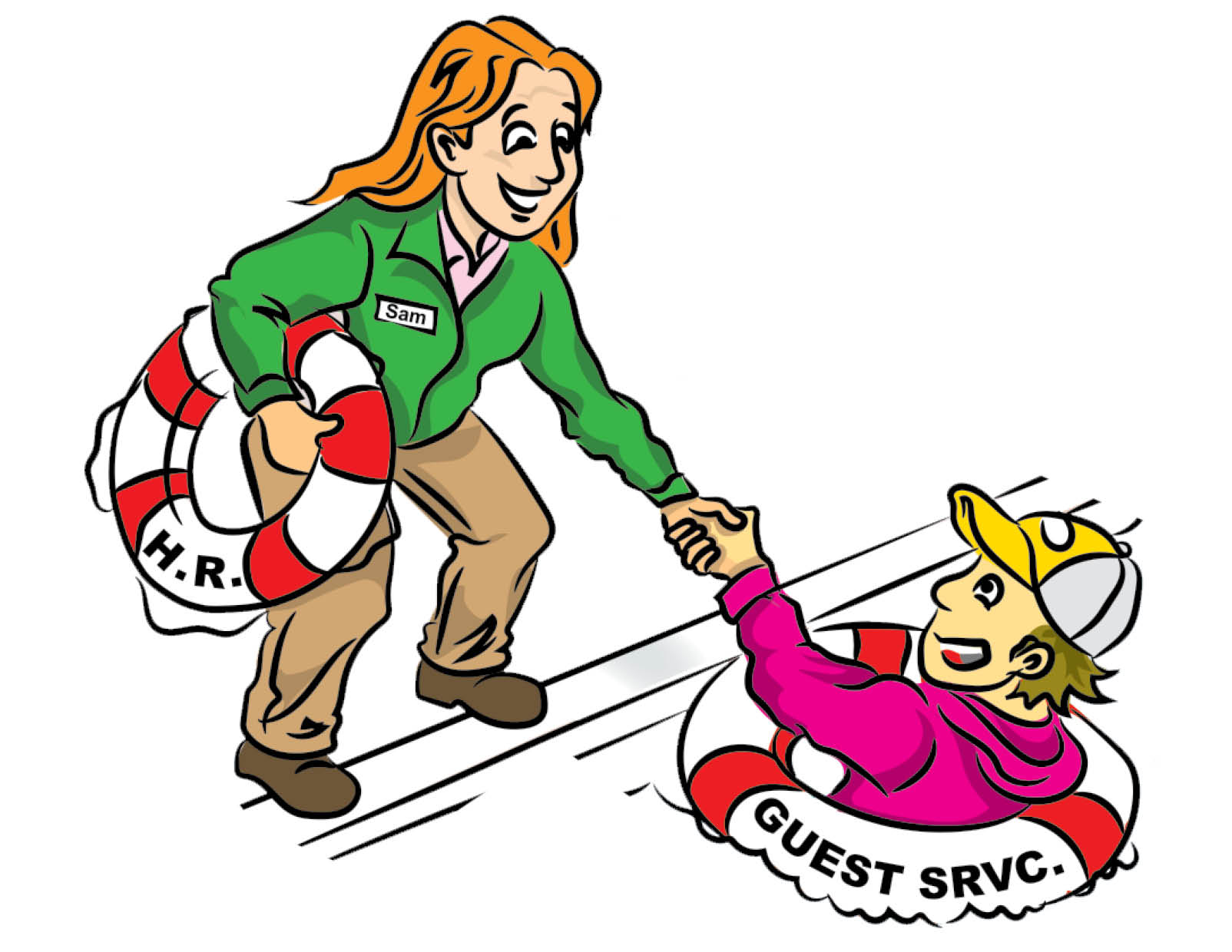
Purgatory has taken a different approach. Employees move with the guests.
“We dedicate just about a week for our frontline indoor guest service team to get them familiar with the different parts of the operation,” says Purgatory director of HR and risk Julian DePasquale. Employees are not confined by the boundary of a job description. They know where the guest is going because they have been trained to understand the whole journey.
The system, from Snow Operating’s Trail model, reverses the familiar industry pattern of hiring employees into narrowly defined departments, training them for one function and considering cross-training later when staffing gets tight.
“Really, every position at a ski resort is guest services,” DePasquale says. “We’re here to make the guest’s time with us better.”
Across the industry, operators are questioning whether traditional orientation—policies, paperwork, presentations, and a handoff to the department manager—is enough. The more interesting work is happening where resorts have identified a specific point of friction—departmental silos, weak cultural connection, poor information flow, inconsistent recognition, or leaders who have never been taught how to lead—and redesigned it.
Purgatory: Centralize Hiring, Broaden the Job
At Purgatory, hiring and onboarding of frontline positions now run through human resources rather than individual departments. This gives employees a more consistent introduction and frees managers to prepare their teams and operations. It also solves the issue of an individual applying for several positions, tying up multiple managers in screening interviews.
Customer service focus. By not confining them to departmental boundaries, the objective, DePasquale says, is to operate with fewer, better-trained employees who could become “multifaceted customer service representatives.”
The Trail system, with both inside and outside guest service tracks, is entering its third winter, and DePasquale says employee and guest Net Promoter Scores have improved greatly since its adoption, along with higher revenue and margins while reducing head count.
Indoor guest services retention produced another milestone: “We didn’t have to hire a single new person for our summer season,” DePasquale says. “That’s the first time I’ve seen that.”
Tamarack: No Gatekeeping
 Tamarack Resort in west-central Idaho, along the shore of Lake Cascade, has also made breaking down silos a central strategy. Perhaps uniquely, its solution begins with information.
Information sharing. As Tamarack expanded in recent years across mountain operations, lodging, food and beverage, golf, events, and lake recreation, chief financial and operating officer Kara Finley grew frustrated that information discussed among directors often failed to reach the people serving guests.
“The message never made it down to the front line, the people who are doing all the work,” Finley says. “Screw it. I want them to know it. No gatekeeping.”
Using the Notion platform, Tamarack implemented a resortwide intranet employees can access from their phones. It brings together operating hours, occupancy, visitation, events, weather, transportation information, and employee recognition, helping team members understand what is happening beyond their own workspaces.
That matters when a large wedding, a busy golf weekend, and increased mountain visitation may affect parking, restaurants, housekeeping, transportation, and guest services. All team members are invited to twice-weekly digital meetings on Notion to share the information and help teams prepare for what’s ahead.
New employees receive a half-day orientation, a resort bus tour and practical information about uniforms, shuttles and schedules, along with an explanation of Tamarack’s mission: “We exist to deliver memorable experiences across our mountain, meadow, and lake for all guests to enjoy.”
Strong results. Quarterly engagement surveys suggest that broader understanding is paying off. Finley says employee satisfaction, about a 3-out-of-5 rating five years ago, recently reached an all-time high of 4.7.
Alta: Turning History into Culture
At the top of Little Cottonwood Canyon in the Wasatch Mountains of Utah, Alta’s onboarding challenge is different. New employees need to learn their jobs, but they are also joining a ski area shaped by traditions established over 88 seasons.
Cultural intros. Each fall, Alta shares its “Steeped in Tradition” video series with new employees during onboarding, then continues using the series throughout their first winter.
The videos introduce the people, events, and customs that shaped Alta. These provide a more memorable introduction of the ski area’s culture than a presentation slide listing values.
“Of course, it’s important for them to understand the ins and outs of their job responsibilities,” says marketing director Brandon Ott. “But if we can help them feel connected to Alta, then we know there is a higher likelihood that they will be happy and engaged employees.” »
Existing assets. This practical approach repurposes an existing storytelling asset rather than building another stand-alone training program. The videos can be shown consistently, revisited later, and used to give employees context for traditions they did not personally experience.
That repetition matters. A cultural message delivered once during orientation can quickly evaporate amid the immediate demands of learning a job. By bringing the series back throughout an employee’s first season, cultural connection develops over time.
Ott says the approach has been well received by first-year employees.
The larger lesson is simple: Resort history becomes more useful when employees can see the people behind it and understand why certain traditions still matter.
Sunlight: Hospitality Starts Inside
 At Colorado’s Sunlight Mountain Resort, onboarding is designed to feel less like a classroom and more like a welcome.
Meaningful gathering. Employees sit with people from other departments rather than clustering with the co-workers they already know. They share a meal, participate in an icebreaker, watch photos and videos, and raise sparkling cider in a welcome toast.
Those details are intentional. Before employees are expected to create a warm guest experience, Sunlight gives them an employee experience built around connection and hospitality.
The effort continues after orientation through free daily breakfast, transportation and carpool support, town halls, newsletters, and values developed with employee participation. The resort has also strengthened supervisor training, recognizing that the tone established during orientation must be reinforced by managers once the season begins.
Guests take notice. Sunlight CEO Cindy Dady says the results can be seen in the messages guests send the resort. “Many talk about the hospitality of our people,” she says.
One guest described an employee who stopped what he was doing during a crowded race morning to resolve the family’s ticketing mistake. The employee did not simply direct them elsewhere. He took ownership, fixed the problem and then continued showing the same attentiveness to other guests throughout the day.
The family later decided to become season pass holders.
Another parent wrote that her daughter, nervous before her first ski lesson, became so attached to her instructor that she cried when it was time to leave. The child went home knowing how to ski and wanting to return.
The stories illustrate what Sunlight wants its culture to produce: Employees who understand that a routine interaction can become the defining memory of a guest’s visit.
Employee retention provides another measure of success. “We have an overall retention rate of 75 percent,” Dady says. “The ski and bike shop is probably closer to 95 percent.”
Cranmore: Recognition as Instruction
In the White Mountains of New Hampshire, Cranmore Mountain Resort has found that some of its most visible training tools do not look like training.
Public recognition. Its Slopeside Shoutouts program, initiated last season, sends members of the leadership team into the field each week to recognize a frontline employee for outstanding performance, positive guest feedback or going beyond expectations.
The recognition takes place where employees and guests can see it. That visibility turns praise into instruction: It shows the wider team what the resort values and what strong performance looks like in practice.
“The program has continued through the summer and will be expanded next winter,” says marketing director Rebecca Deschenes.
Simple gestures. Cranmore also began sending handwritten welcome cards from the leadership team to new full-time, year-round employees. It’s a simple gesture that sends a personal message before the employee settles into the routine of the job: Leadership knows the person has joined and considers that arrival worth acknowledging.
The resort supports those efforts with a full day of facilitated training for frontline managers, a returning-employee orientation followed by a social gathering, new-hire orientation, years-of-service recognition and an engagement committee focused on employee events, volunteer opportunities, and a scholarship fund.
“Over the past few years, the primary focus has been strengthening guest service and leadership skills,” Deschenes says.
Recognition becomes a form of instruction. It tells employees what good performance looks like, reinforces it in front of peers, and demonstrates that leadership is paying attention.
Solitude: Prepare the Leaders
 In Utah’s Big Cottonwood Canyon, Solitude Mountain Resort has moved the starting line for onboarding earlier, focused on the leaders who shape an employee’s experience after orientation ends. » cont.
Starting strong. The resort held its inaugural Leadership Summit to bring leaders together before the 2025-26 winter season with “a renewed sense of community and a collective understanding of leadership expectations,” explains HR manager Abbie Reeder.
The summit’s theme, “Leading from where you are,” included leadership journeys, the leadership pipeline, and the distinction between recognition and appreciation. Rotations gave participants opportunities to interact with leaders and colleagues they might rarely encounter during normal operations.
The cross-functional element was especially important. Managers often spend the season focused on immediate departmental demands. The summit gives them time to build relationships
before those pressures intensify.
Participant feedback helped Solitude gauge the initial value.
“My key takeaway was understanding the journey to leadership, the need to think outside the box, the difference between being a leader and a manager, and the importance of listening to and supporting my people,” one participant wrote.
Another said, “I was able to meet and interact with a number of colleagues I had never met before. I thought the rotation of leaders was especially beneficial.”
The long game. Reeder says the resort has received “a lot of positive feedback” while acknowledging that the longer-term effect will take time to measure as the summit continues.
That patience reflects an important truth about onboarding. A welcome event can set expectations, but employees judge the organization by what happens next. Do supervisors listen? Do departments cooperate? Are good contributions noticed? Are the stated values reflected in daily decisions?
Solitude is betting that stronger onboarding begins with leaders who are well prepared to answer those questions.
Many Paths to Success
These six resorts have invested in distinctly different tools: a flexible, cross-functional Trail, an open-access mobile information hub, story-rich videos, a welcoming shared meal, a personal handwritten note, and a season-opening leadership summit. Each helps employees answer three questions before the season gets busy:
Where do I fit? What matters here? How does my work support the whole team and our guests?
Purgatory’s DePasquale answers that in four words:
“One job, one team.”