



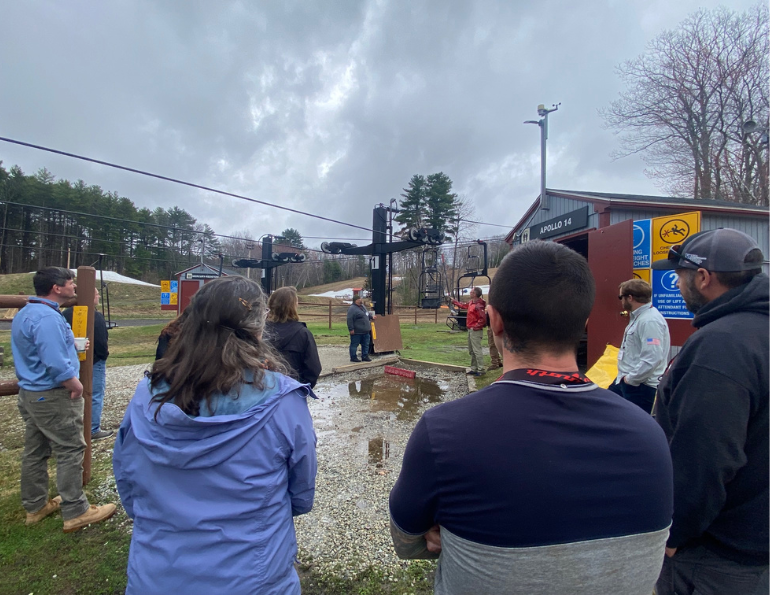
For an industry that touches millions every winter, the mountain resort business remains surprisingly misunderstood when it comes to careers. Outside those who work within it, ski area employment is often seen narrowly: lift operators, ski instructors, perhaps ski patrol. To many students, parents, and teachers, resort work still appears seasonal or temporary, something done for a winter or two before moving on to a “real” career.
Those inside the industry know a different reality.
Modern ski areas operate as complex businesses relying on a wide range of skilled professionals. Behind the scenes are electricians maintaining lifts, welders repairing critical components, engineers designing snowmaking systems, mechanics servicing fleets of groomers and snowmobiles, IT specialists managing resort systems, and operations teams coordinating logistics across entire mountains. These roles require training, technical skills, and experience, and they support careers that can span decades.
Yet despite these opportunities, the ski industry is rarely discussed as an option in career planning with high school students. The students learning welding, diesel mechanics, electrical work, engineering, or hospitality management are seldom told that those same skills can lead to a mountain resort. The challenge is not a lack of jobs—it’s a lack of awareness.
Unique Strengths
Ski industry careers are compelling once people are exposed to them. The mountain work environment is certainly part of the appeal. But talk with longtime professionals and another theme quickly emerges: the people. Operating a ski area requires coordination across departments. Snowmaking teams rely on lift maintenance. Grooming depends on snowmaking and operations. Guest services, food and beverage, and ski school must work together to manage guest flow. Everyone works together to execute big events.
The culture. The result is a workplace culture that is inherently team oriented. That collaboration fosters a strong sense of camaraderie and shared purpose, something many professionals say is hard to find elsewhere.
The network. Another defining feature is the ski industry’s tight professional network. While many industries talk about “six degrees of separation,” the ski industry often feels closer to one. Employees move between resorts, suppliers work with operators across regions, and professionals regularly cross paths through shared vendors and projects. This network creates real mobility. Someone who begins a career at one mountain may find opportunities opening at another, supported by relationships built along the way.
Pipeline Opportunity
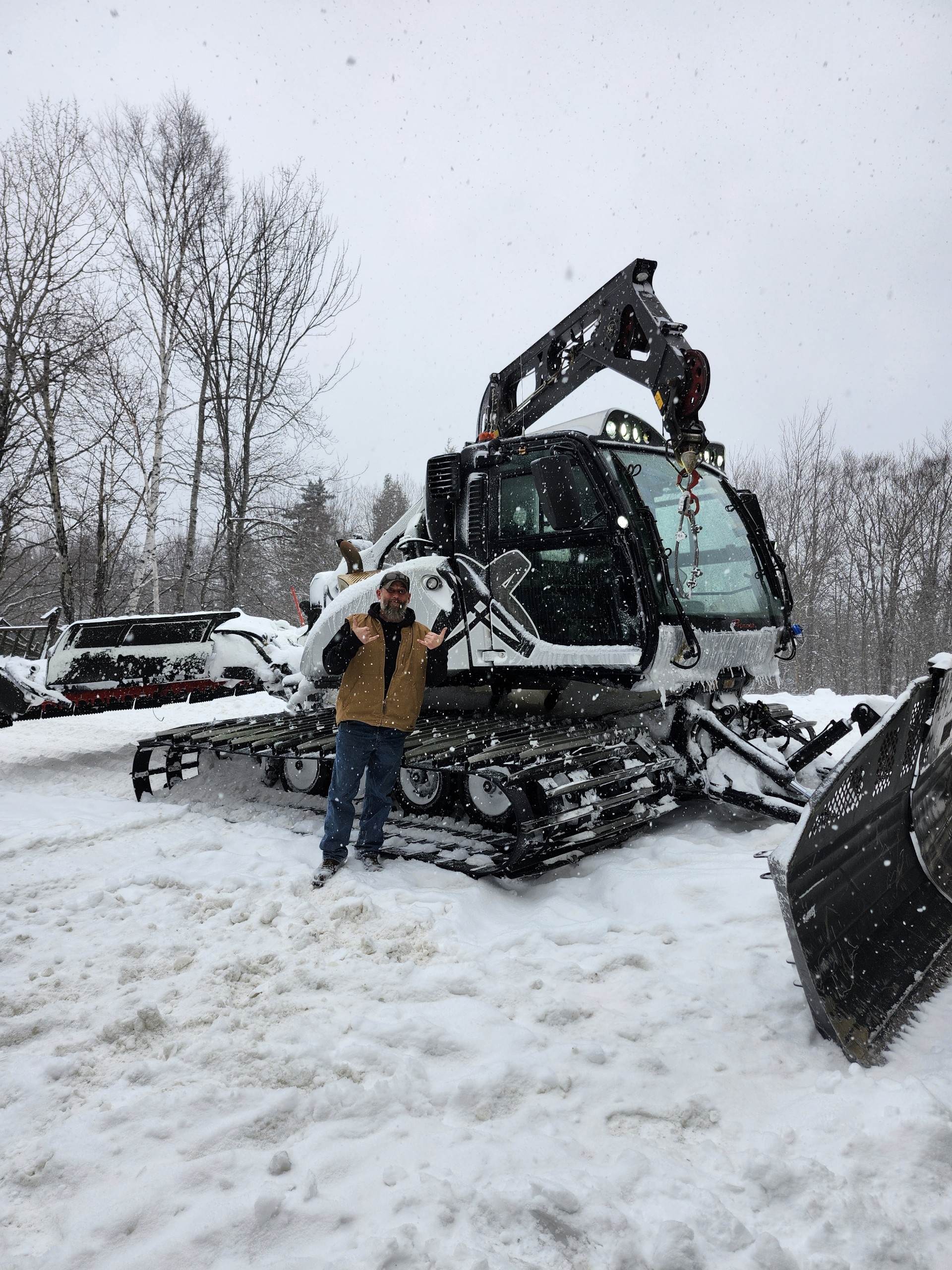 A site visit to Waterville Valley, N.H., was eye opening for heavy machinery instructor Brian Lebel, who got a close look at the technical skills and teamwork needed to maintain and operate snowcats.Despite these strengths, the industry’s story is not widely told to the next generation of skilled workers. High school students typically learn about careers through two sources: parents and teachers. If neither understands ski industry opportunities, those pathways never enter the conversation.
Educate educators. That is why Career and Technical Education (CTE) programs are such an important opportunity. Millions of students across the U.S. are enrolled in programs that teach hands-on skills such as welding, construction trades, engineering, electrical systems, and heavy equipment operation—skills that align directly with ski area operations.
Helping educators see that connection can be transformative.
A transformative experience. Recently, The Pipeline Project organized an experience that illustrates this well. Brian Lebel, a heavy machinery instructor at the Wilbur H. Palmer Career and Technical Education Center in New Hampshire, was invited to participate in a snowcat ride-along at Waterville Valley Resort, N.H. The visit was coordinated with general manager Tim Smith and grooming manager Ethan Hadaway, who welcomed Lebel for a firsthand look at the work that happens long after lifts stop spinning.
When Lebel arrived, the snowcat scheduled for the ride-along was in the shop with a mechanical issue. Instead of heading straight onto the mountain, the visit began inside the maintenance facility where a crew of technicians worked together to diagnose the problem. Each person jumped in where they could help, sharing ideas and working collectively to get the machine running again so it could get back on the mountain.
For Lebel, whose job is preparing students for careers operating and maintaining heavy equipment, the scene was striking—because of the teamwork.
Once the repair was completed, Lebel rode in a winch cat. The experience offered a close look at the skill required to shape terrain overnight, but equally important was a glimpse into the culture behind the work—the people who work together to make it happen—and it left a lasting impression, one that he’ll bring back to the classroom.
“I just saw plenty of opportunities for the [students],” he said. “I’m excited to help open new doors.”
The Right Kind of Awareness
Lebel caught a glimpse of the teamwork and camaraderie that make working in the ski industry so special. It’s something ski areas can do a better job of communicating to help attract talent. While long-term efforts to connect with educators and CTE programs are essential, there are immediate steps ski areas and suppliers can take to raise awareness and position themselves as places where good people would want to work.
Tell more stories. One of the simplest is to tell more of these stories. Sharing the behind-the-scenes work of grooming teams, lift mechanics, snowmakers, and technicians on resort and supplier social media can highlight the expertise and collaboration required to operate a modern ski area. Featuring the people that work in the industry, and hearing directly from those who have built careers in it, helps others see what is possible.
Rewrite the job description. Another opportunity for the industry is to rethink how and where job opportunities are presented. CTE centers, community colleges, and trade schools represent a large pipeline of prospective talent.
Posting openings through school job boards and working directly with CTE career counselors and instructors can help introduce the ski industry to students who may never have considered it. Just as important is how those jobs are described. Too often, postings emphasize seasonal work rather than the broader career pathway behind the role. Providing context about advancement opportunities, training programs, and educational pathways—such as CTE programs, certifications, or related college degrees—can help prospective workers see the industry differently. A job posting that illustrates a potential future can be far more compelling than one that simply lists duties.
Industry advantages. As mentioned earlier, the ski industry offers advantages many workplaces cannot match, including outdoor mountain work, strong teamwork, and a close professional network. Communicating those strengths can help position ski areas as long-term career destinations.
For many, what begins as a job becomes something much larger: a career built on teamwork, shared challenges, and a community that spans the entire industry. The more that story is told, the easier it becomes for the next generation to see themselves as part of it.