
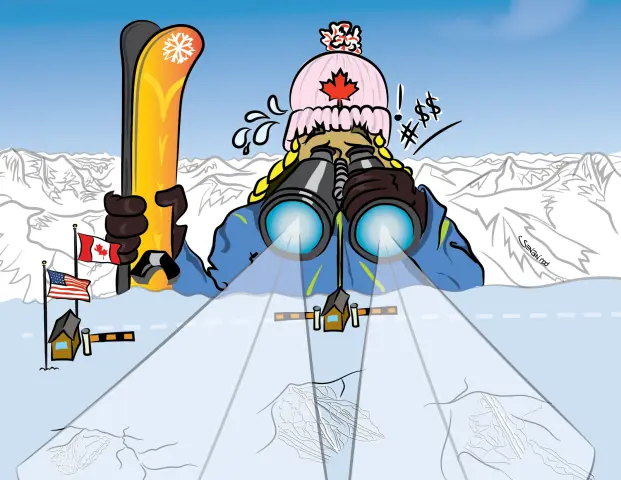


A chance encounter at a Leitner-Poma dinner during the 2025 NSAA National Convention led to a significant connection for Taos Ski Valley. Taos CEO John Kelly met Henrik Volpert, CEO of Oberstdorf Kleinwalsertal Bergbahnen (Germany/Austria), who introduced him to the Global Sustainability Ski Alliance (GSSA), an organization confronting the industry’s greatest challenge, climate change.
The role of the GSSA. Formed in May 2025, the GSSA unites ski areas across Europe, Scandinavia, and the Southern Hemisphere, including Compagnie des Alpes (France), KitzSki (Austria), Kronplatz (Italy), LAAX (Switzerland), Levi (Finland), NZSki (New Zealand), Oberstdorf (Germany/Austria), and SkiStar (Sweden/Norway). Taos officially joined GSSA in March 2026, becoming its first North American member.
The Alliance’s core mission: pool resources and expertise to reduce CO2 emissions, advance sustainable innovation in ski tourism, and strengthen the social fabric of mountain communities. GSSA convenes twice annually for full membership meetings; working groups meet more frequently on targeted challenges: electrifying vehicles and operations, low-carbon concrete and green steel, spare parts lifecycle management, and data-driven operational efficiency.
Lessons for North America. In April 2026, I attended GSSA’s in-person meeting in Les Arcs, France, the first European ski area to earn B Corporation certification in 2023. (Taos was the world’s first resort to achieve B Corp status in 2017.)
Being the only North American member provides Taos—and by extension, the broader U.S. industry—with valuable perspectives on where our infrastructure differs and where we may be falling behind.
Hydrotreated vegetable oil (HVO) fuel availability, for example, is widely accessible across Western Europe and Scandinavia, enabling many resorts to significantly reduce grooming and operational fleet emissions. In the U.S., HVO supply is inconsistent, and winter-blend HVO is especially difficult to procure.
Also, guest transportation is the most significant Scope 3 emissions challenge for ski areas globally. Resorts in Western Europe and Scandinavia are tackling this head-on with regional rail partnerships, funicular and cable systems linking resort villages to base areas, and pioneering trials of electric autonomous buses within resort boundaries. The solutions being developed abroad are worth watching closely.
Leveraging influence. GSSA is using its combined market power to push ski industry suppliers to set their own climate targets, too. This influence became clear at Mountain Planet in Grenoble, France, held shortly after the GSSA meeting. There, Prinoth unveiled its all-electric full-size groomer, the Leitwolf E-Motion, in partnership with Compagnie des Alpes, which will pilot the machine across its resort portfolio during the 2026–27 winter season. (Taos was the first resort in North America to deploy an electric snow groomer.) Supplier engagement on this scale reflects the impact alliances like GSSA can have.
Thinking globally. At Mountain Planet, I joined a panel titled “Mountains Under Pressure: Natural Risks, Climate Adaptation and Global Resilience.” The conversation was anchored by a sobering new government report on the French Alps, which found that the French Alps have warmed 2.6°C (4.7°F) since 1959—more than twice the global average.
The panel organized its discussion around five operational realities:
1. The scale of risks has shifted. Extreme weather events are now exceeding every historical benchmark operators have planned for.
2. Past-based models are obsolete. Rather than basing resilience strategies on historical data, resorts must build new frameworks to anticipate the unknown.

3. Peak performance must yield to robustness. Mountain operations must be designed to absorb shocks and function under degraded conditions. AI tools may help model these scenarios and support real-time operator decision-making.
4. Resilience is a collective endeavor. Effective resilience requires coordination across resort operators, public agencies, and local communities.
5. Transparency builds trust and guest loyalty. Visitors expect destinations to acknowledge climate risks openly and demonstrate concrete plans to adapt.
The big picture. The need for collaborative resilience extends well beyond winter resorts and their communities, of course. On May 20, the UN General Assembly adopted a landmark resolution, backed by 141 member states, affirming governments’ responsibility to protect their populations from the escalating climate crisis. The resolution calls on all nations to avoid significant environmental harm and coordinate climate action globally. The United States was among eight countries that voted against the measure.
Whatever one’s view of climate policy, the operational realities facing ski areas—shrinking snowpack, intensifying storms, compressed seasons, rising construction and energy costs—require a response. Alliances like GSSA help further work that is desperately needed.
Why this matters. The GSSA model offers a practical template: operators sharing operational data, procurement leverage, and field-tested innovations across national borders. GSSA’s working groups generate real findings on concrete, fuel, fleet electrification, and data systems that any operator can apply. The group helps ensure that the best thinking on sustainability isn’t limited by geography. NSAA regional and national conferences, Mountain Planet, Interalpin, and Mountain Towns 2030 are also useful venues.
The questions driving this work are the same whether you’re operating in New Mexico, Norway, or New Zealand: How do we reduce our footprint while maintaining the guest experience? How do we build operations resilient enough to handle conditions we’ve never seen before? And how do we do it fast enough to matter?
Those making the most meaningful progress share a commitment to connecting across organizational and national boundaries, sharing hard-won operational knowledge rather than guarding it, and piloting approaches that have no proven track record in their market. That combination—connection, transparency, and calculated risk-taking—is what the moment requires, and what will determine whether we hand off thriving mountain ecosystems to the generations that follow.