



Every year, the SAM Summit Series leadership development program brings together emerging leaders from ski areas across North America with seasoned industry executives for a series of conversations on the various elements of leadership. In an Ask Me Anything-style session during the most recent program, mentees posed candid questions to the panel of mentors, who gave equally candid answers with strong takeaways.
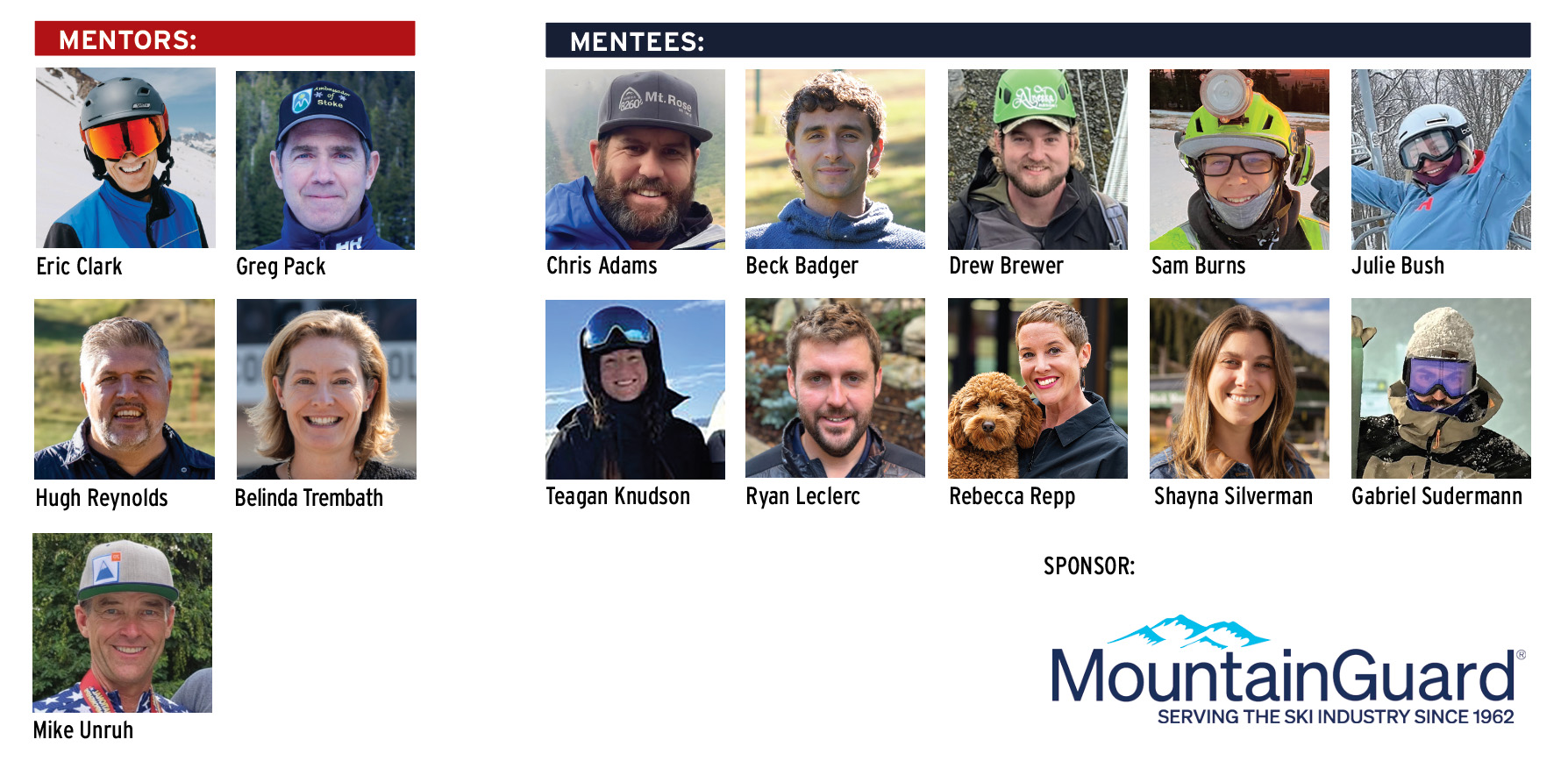
The panel included Mammoth Mountain, Calif., president and CEO Eric Clark, Mount Hood Meadows, Ore., president and general manager Greg Pack, Snow Partners chief marketing officer Hugh Reynolds, Whistler Blackcomb, B.C., vice president and COO Belinda Trembath, and Boyne Resorts senior vice president of mountain operations Mike Unruh.
Their responses offered practical guidance drawn from decades of leadership experience. But the questions themselves were equally revealing. Participants were largely concerned with skills such as building trust, communicating through uncertainty, creating healthy workplace cultures, balancing priorities, and personal growth.
Together, the questions and answers offered insight into both the challenges emerging leaders are facing and the lessons seasoned executives have learned along the way.
SAM’s Summit Series leadership development platform offers mountain resort professionals at all levels the opportunity to learn from industry leaders, peers, and experts, and gain tangible takeaways to apply to their careers, operations, and teams. Learn more at saminfo.com/the-summit-series.
Leading Through Change
Throughout the conversation, participants asked how leaders should guide teams through restructuring, shifting priorities, and decisions employees had little role in making.
Processing time. For Trembath, communicating effectively about change begins with recognizing that leaders are often further along in processing that change than the employees they lead.
“You need to meet people where they’re at,” she said. “If you think you’ve communicated enough, then communicate and check back in again.”
Share the why. Reynolds expanded on that idea by emphasizing the importance of explaining not only what is changing, but why.
“The more you can share what the ‘why’ is behind the change, the better people understand it,” he said. While leaders can’t always disclose every factor behind a decision, he added, providing context helps employees understand the organization’s direction and builds trust during periods of uncertainty.
Clarity in goal setting. That same emphasis on clarity in communication carried into Clark’s response to a question about balancing culture and operational efficiency during peak season. When a resort is busiest, competing priorities can quickly distract teams, he said. Establishing clear goals before the season begins—and defining what success looks like—gives employees something to rally around when demands begin to compete. “It’s really important to understand and say what success is,” he said.
Just as importantly, he added, leaders should celebrate measurable accomplishments, rather than offering generic praise, to reinforce exactly what success looks like along the way.
Building Culture Intentionally
Questions about workplace culture also surfaced throughout the AMA, including how leaders should approach departments where turnover suggests employees don’t feel they belong.
Fostering belonging. Unruh encouraged participants to probe their teams to better understand from where a negative culture might stem. “I think the leaders have just got to start asking a bunch of questions to understand the why behind it,” he said.
Understanding why employees are leaving allows a leader to eliminate problems, establish clear expectations, and hold people accountable—all of which play a role in shaping a healthier culture. “Culture is defined as ‘the way we do it around here,’” he added. “As the leader, you get to dictate how we do it around here.”
Pack shared insights from an experience where he brought in an outside facilitator to help reset the culture in one department. “As leaders,” he acknowledged, “sometimes you have to pull out the checkbook” to invest in your culture and teams.
The gambit worked: Because the team members were speaking to a third party, “it wasn’t a top-down thing,” he said, and the outside perspective allowed employees to work through difficult issues together. Ultimately, the work transformed the department’s culture, though it also led to moving on from a handful of employees who weren’t willing to embrace the new direction.
Develop people to build culture. The topic of culture was also discussed from another perspective, that of developing people. Asked about the best leadership advice he’s received, Clark pointed instead to some of his mentors who demonstrated the importance of investing in others.
“They just truly believed in helping other people along,” he said. “Investing in others was probably the best thing I’ve learned.”
Admit mistakes and failures. Unruh echoed that people-first mindset while discussing one of leadership’s most difficult personnel responsibilities: letting employees go.
“Letting people go is not cruel if you’re letting people go for the right reason,” he said. After coaching and supporting an employee, leaders sometimes have to recognize that someone simply isn’t in the right role. Keeping them in a position for which they aren’t suited, he argued, ultimately hurts both the individual and the rest of the team.
Own Your Development
Career growth generated another series of thoughtful questions, particularly around how leaders know when it’s time to pursue new opportunities and how they continue developing once they’ve taken on greater responsibility.
Step sideways to step up. Trembath encouraged participants to think beyond the traditional career ladder. Early in her career, organizational restructuring eliminated her regional marketing role, prompting her to accept what many viewed as a step backward to remain in the industry. Within a year, she had moved into general management.
“Being willing to take a step backwards—or sideways—to move up is something we need to think about,” she said, explaining that lateral experiences often provide the broader perspective needed for future leadership roles. “I wouldn’t advocate that backwards is always the right way, but I think there are lots of opportunities within our industry, particularly if you’re wanting to move from one department to another, to take a sideways step, to develop the skills, and then the world becomes a little more your oyster.”
Pack’s career followed a similar philosophy. Early on, he intentionally sought experiences outside his own department because he wanted to understand how an entire resort functioned.
“I was so curious about all the other departments,” he said. So, he asked to ride in snowcats, work snowmaking shifts, sit in on meetings, and even get involved in marketing. “It really helped me understand how the whole resort worked,” he noted.
Learn from other leaders. Pack also reflected on another source of growth: working with ineffective leaders. Some of his most valuable lessons learned, he said, came from observing poor management styles and deciding he wanted to lead differently.
Leading differently also involved picking up good behaviors from others, of course. “I try to take pieces from everybody’s management style and really find something that’s comfortable,” he said.
Those experiences, both positive and negative, helped shape a leadership style that emphasizes approachability, curiosity, and collaboration rather than authority alone.
Self-directed growth. The mentors repeatedly returned to the idea that professional development is largely self-directed. Pack recalled advice from one of his own mentors that “95 percent of your development is in your own hands.”
That philosophy resurfaced when participants asked how to know when it was time to pursue new opportunities.
“If you can’t find that opportunity at your home resort, first make sure they know you want to grow,” Pack advised. “They won’t know unless you tell them.”
Reynolds added that career growth also requires a willingness to embrace uncertainty.
“I’ve found in my career that opportunities move in direct correlation with your willingness to take risk,” he said. Whether that means taking a lateral role, changing departments, or stepping outside one’s comfort zone, meaningful growth rarely happens without some degree of uncertainty. “The magic happens when you’re willing to step outside your comfort zone and take a little bit of risk,” he said.
“It doesn’t matter how long you’ve been at a resort,” Trembath added, “stay curious.”
Setting Priorities
Several participants also asked practical questions about managing increasing responsibility—how experienced leaders organize competing priorities, determine where to focus limited resources, and avoid becoming overwhelmed as their responsibilities expand.
Tech support. Trembath highlighted the growing role AI can play in helping leaders manage calendars, email, and follow-up tasks, freeing more time for strategic work. “Explore what opportunities you have to work within the parameters of your organization’s IT rules because it (AI) really will help you catch those items that you might otherwise drop,” she said.
Make a list. She also encouraged leaders to deliberately identify the most difficult task each day and tackle it first rather than allowing it to linger. “Take the time at the start and the end of the day just to sit down and work out, ‘what are your priorities?’” she advised.
Clark emphasized resisting the temptation to pursue too many initiatives at once. “When there are so many things that you want to do, you can easily get lost in doing too much and not achieving enough,” he said. For example, successful strategic plans, Clark said, clearly identify priorities, assign ownership, and establish measurable outcomes so teams understand what matters most.
What guests want. A question about budgets led Unruh to offer perhaps the simplest decision-making framework of the session.
“Figure out what your guests really want,” he advised. “Protect those things.” Rather than assuming leaders know which investments matter most, he encouraged participants to continually evaluate decisions through the guest experience.
Don’t be afraid to take a risk, though. “Maybe you’re going to be like Apple and find something the guests don’t know they want, but you think will be a hit, and that’s where you take a risk,” Clark suggested. “Sometimes it’ll work, sometimes it won’t.”
Defining Success
The mentors also challenged participants to think differently about success.
Beyond the budget. Asked what tells him a season has been successful beyond financial performance, Pack pointed first to employee engagement. “Your employees are always trying to tell you something,” he said. Staff surveys, he added, provide valuable feedback—but only if leaders act on what they learn.
He also emphasized the value of communicating with guests. Honest conversations—even about difficult operational decisions—can strengthen trust over time.
“When you’re being honest,” he said, guests begin to understand the reasoning behind decisions. In his experience, transparency and direct communication have even turned former critics into advocates willing to defend the resort publicly when questions arise.
Leadership principles. The mentors consistently referenced the same principles of effective leadership: communicate clearly, invest in people, remain curious, and lead with purpose.
Simple guidance, perhaps, but fitting for a discussion that revealed as much through the questions as the answers.
The next generation of resort leaders isn’t asking only how to run mountains more efficiently. They’re asking how to build stronger teams, earn trust, navigate change, and develop as leaders themselves. Judging by the mentors’ advice, those are exactly the questions they should be asking.