




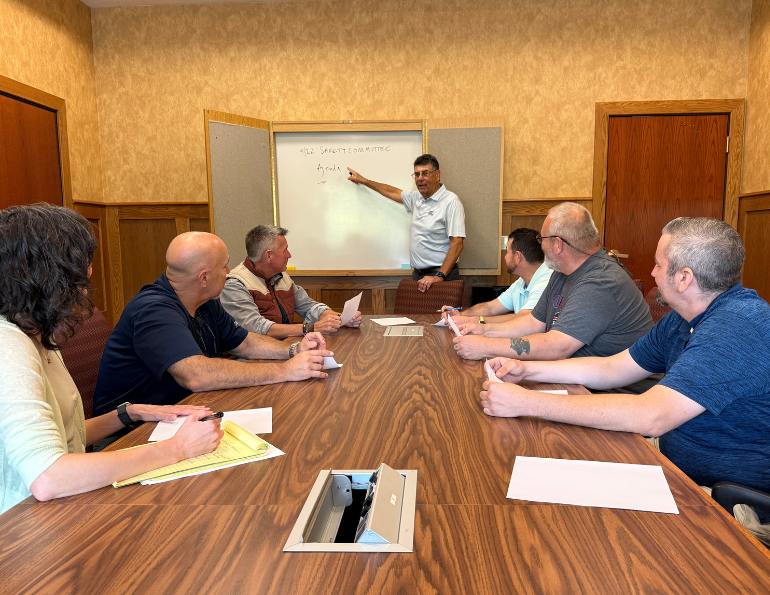
In 2017, Holiday Valley, N.Y., launched an Employee Safety Committee with the help of a loss control consultant from our insurance broker. Our goal has been to strengthen the safety culture at the resort to improve our employee safety record. And in that, we have been very successful.
This effort has a significant moral justification: we don’t want our employees to get hurt while they are at work. It also has a business justification: investing in a strong employee safety culture saves time, energy, and money in the long term. Since its inception, we’ve seen a huge improvement in our experience mod (more than 50 points) and have realized six-figure savings in our workers’ compensation policy premiums. Employee injuries have declined in both frequency and severity. Over the past four years, we’ve cut our average employee incident rate in half compared to its historic peak. Similarly, the severity rate also has fallen by 50 percent, measured in terms of lost work days. As our safety initiatives become more robust, we continue to see a positive trend.
Safety Committee Meetings
Holiday Valley’s safety committee has approximately 15 employee members, from frontline staff to c-suite leaders, plus loss control representatives from the New York State Insurance Fund. While the committee has some standing members, membership rotates with turnover and seasonal shifts.
We aim to have members from any department that faces significant job hazards and/or losses. For example, housekeeping, which has been overrepresented in the incident data at times, as well as seasonal jobs like golf course maintenance and snowsports, which tend to have unique risks that merit timely discussion. If a member cannot attend, departments send an alternate, which increases intradepartmental awareness of the committee.
The committee meets monthly or bimonthly to review incidents and near misses across the company, discuss recent safety and operational inspections, share timely safety messages (e.g., sun safety in the summer), and solicit employee feedback. A standing agenda item is a rotating review of department safety practices. Through this review, department members share their successes, receive recognition, and field questions from peers. This helps identify shortfalls and spark improvements, such as a recommendation to the facilities department to secure AV cables with specialized cord covers rather than carpet runner mats.
Safety Initiatives
Some of the specific initiatives the committee has focused on include:
- Safe skiing and riding. We continually deliver a message that on-snow staff are expected to ski or ride with safety in mind.
- Slip and fall risk reduction. We provide traction devices and encourage appropriate footwear for various positions (e.g. ticket checkers, valets, outdoor hosts).
- Near-miss reporting and root cause analysis. Tools like the “5 Whys” exercise—an exploration of cause and effect by asking “why” five times to get to the root cause of a problem—help identify underlying issues.
- Collision prevention, a major focus in recent seasons. Snowsports, safety patrol and ski patrol leadership train staff to select appropriate routes during higher-traffic times, to exercise vigilance in high-traffic zones, and to use good judgment when choosing a stopping place. Safety patrol has also stepped up enforcement of the Reckless Skier policy, particularly in managing evening student groups; strengthened its relationship with group sales to improve the flow of information to school group advisors; and even boards school buses at the start of each season to give student groups a safety orientation.
The committee’s focus on safe skiing expectations corresponded with a sharp drop in the on-snow injury rate, and the on-snow departments have maintained those improvements for four years running. Although we can’t tie near-miss reporting and root cause analysis to any specific reductions, it is our belief that the overall decline in employee incidents is partly a result of an improved safety culture that encourages employees to keep safety top of mind.
We look at various data sources to figure out which specific safety initiatives to address (e.g., slip and falls). Specifically, we review our loss runs for frequency and severity by injury type, solicit employee feedback, and keep abreast of National Ski Areas Association (NSAA) and Ski Areas of New York (SANY) initiatives.
Spreading the Safety Message
Since we have a lot of seasonal staff, the committee focuses on finding a variety of methods to deliver and reinforce our messages and initiatives, including:
- Low-tech flyers posted at time clocks.
- “Toolbox talk” handouts, one-page flyers for department managers that cover specific, seasonally appropriate safety topics for weekly “toolbox talks” with employees, and a sign-in sheet to document employee attendance.
- An employee newsletter, printed weekly in winter and biweekly in summer, that includes a safety message with employee photos to help engage readers (e.g., a message about PPE featuring photos of employees wearing appropriate gear).
- Standing meeting (e.g., staff meetings, mountain ops meetings, etc.), where department leaders are encouraged to incorporate safety messaging.
- A pre-season general orientation session, where each year, committee chair Bob Piede delivers a short overview of Holiday Valley’s safety culture and the initiatives for the season ahead.
The philosophy is that by building a strong safety culture among staff, we’ll reduce the risk of incidents overall. To that end, the specific items we focus on and how we communicate them are second in importance to finding ways to talk about safety at every opportunity. Employees are encouraged to be mindful of their own safety and that of their coworkers. We want to teach our employees good safety fundamentals so that they can think for themselves in the varied and sometimes unpredictable situations they encounter on the job. Transparency about losses and near misses reinforces that expectation.
Support from our workers’ comp carrier strengthens these efforts. The carrier offers lots of great resources at no extra charge. For example, they send a loss control representative to collaborate with us on self-directed department safety inspections. They’ve also conducted an OSHA 10 course for our employees, a voluntary 10-hour training program that covers common workplace hazards, safety measures, and employees’ rights and responsibilities provided by an OSHA-authorized trainer who customized the topic list to the needs of a ski resort. Additionally, our carrier offers a comprehensive online safety resource database with a wide array of “toolbox talk” handouts and training tools.
We’ve also made a small investment in a paid loss control consultant, who has helped us make action-specific goals. For example, we’re currently working on a training program for first-line supervisors to help boost the flow of information between the front line and upper management.
The safety committee has sparked real cultural change and has been instrumental in improvements that have led to fewer of our team members going home injured and saved the resort significant premium costs. Fewer employee injuries also means reduced non-reimbursable costs—things like the time a manager spends documenting an incident and following up, the costs of finding and training a replacement for the injured employee, or the possibility of overtime when a department is short staffed due to injury. In sum, Holiday Valley’s safety committee is an investment that continues to pay remarkable dividends.