




The Case for Automation
By Adam Mahler, Mountain Manager, Trollhaugen, Wi
 Trollhaugen is a small, third-generation, independent, family-operated ski area just outside Minneapolis. Our journey into automation took off in 2020 when we invested in major pump house upgrades, automated Snowmax injection, and modern snow guns. While we already had a handful of automated guns in our fleet, we wanted to set ourselves up for the future by focusing on firepower and efficiency. The results have been well worth the time and capital devoted.
Strategic upgrades. To achieve greater capacity, we needed to rework our entire system to deliver more water to our guns, faster. We more than doubled our capacity, implementing three bigger pumps at 1,800 gpm and switching out 125 hp motors for 300 hp. That gave us the pressure and volume needed to hit our goals. TechnoAlpin curated our new pump house, integrated ATASS software with the new and existing snow guns, and helped centralize our snowmaking operations. Since then, we have continued to round out our fleet, adding a mix of tower fan guns, lances, and mobiles.
The strategic upgrades had immediate impact. The efficiency of the fan guns, the ability of the new guns to make finer adjustments (more steps along the production curve) and maintain a consistent snow quality, and the decreased need to decide whether to add or subtract water all created noticeable improvement.
Systems communication. We also gained the ability to communicate with our permanently-mounted guns at all times. Our software can send an error message to the shop computer, our cell phones, or turn on a warning light. If the system determines a shutdown is necessary, that gun can drain itself and allow the crew to diagnose the issue later, saving us precious time and resources.
That functionality is valuable. In 2024, we suffered a complete power outage during a snowmaking push. The guns with auto hydrants were able to close and drain themselves, allowing our crew to get to the manual and mobile guns in our system faster, preventing freezing of lines and machines. It was a huge relief to everyone to know the automated guns are essentially able to take care of themselves when a serious event occurs. The peace of mind is priceless.
Staff impacts. Another benefit: The advancements in technology have allowed us to train new and existing staff more in depth and reduced onboarding time. We have been able to better equip smaller crews and alleviate some of the stressors that come with the job.
With all changes come challenges. There is a large learning curve with the advanced technology. When troubleshooting problems, although the system tells you what’s wrong, it’s up to you and your team to remedy it. Service and maintenance are more complicated tasks than with manual guns. There’s more to check and clean, and as with any other tool, the equipment needs to be maintained properly to work properly. Over the years, I have noticed our team’s increased confidence and skill in fixing and maintaining these machines. Building a relationship with the TechnoAlpin service team has allowed us to learn our systems more fully and bounce ideas off experts.
ROI. While the cost for fixing and maintaining is higher compared to manual guns, the return on the quality of snow produced is well worth it. I receive high praise from our snowcat operators on how consistent the snow is.
At Trollhaugen, we strive to make the best snow, and the difference in our product over the last six years is staggering. We have become accustomed to compliments all season long from customers, longtime and new. While snowmaking and quality are just two pieces of the huge ski area operations puzzle, they have significant impact on the customer experience. Automation in snowmaking has helped us solidify our legacy as a small but mighty ski area.
The Case for Manual Snowmaking
By Jon Schaefer, CEO, Bear Den Partners
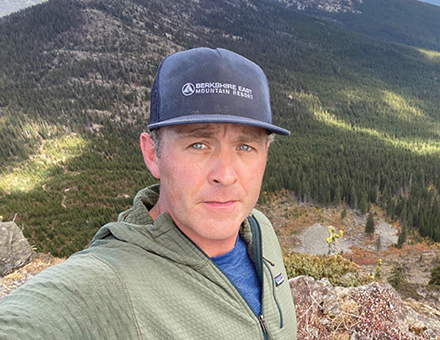 My first memory of snowmaking is from 1984 at Berkshire East, Mass., standing under dim orange lights watching a Hedco gun powered by a Volkswagen motor sputter to life. The only thing automatic about that machine was the breakdowns. I was 6 years old, tagging along with my dad while crews kept mismatched Highlands, Boynes, and SMI 320s alive with equal parts skill, luck, and stubbornness. As a teenager, I was pointed to a four-wheeler on Thanksgiving and was told to go start guns. Around our mountain, holidays waited until the snowmakers got theirs.
I remember the nights when temperatures would finally drop, the phone would ring, and my father would mutter, “We lost prime.” Then we’d head to the pump room, where exhausted crews struggled with ancient pumps. Hours would disappear while men wrenched on failing equipment and we made no snow at all.
That was snowmaking for many independent ski areas: a ragtag operation built on grit, scavenged parts, and miracles. Looking back, the only thing missing was a witch doctor.
When I returned to ski area management in 2008, the equipment had improved, but many of the problems remained. We still took seven to 10 nights to open terrain. We still missed weather windows. We still hauled hose across trails we’d already spent days on because the system couldn’t finish the job efficiently. Eventually, having dealt with frozen hydrants, rat-chewed electrical boxes, mud-bee nests, and valves stuffed with beer cans, I realized the issue wasn’t effort—it was system design.
After thousands of hours rebuilding and operating systems, I’ve come to a simple conclusion: for many small and mid-sized mountains, a well-designed and -run manual snowmaking system is still the best option.
Understand your system. Automation is impressive technology, but it’s expensive, and too many resorts think buying it replaces understanding their system. It doesn’t. A properly designed manual operation, with a trained crew and a resort fully engaged in the process, can perform at an incredibly high level. When it works, it becomes a point of pride for the entire mountain.
There are no “redneck miracles” in snowmaking. It’s science. Pressure, flow rates, pipe size, pump curves, elevation gain, wet-bulb temperatures, water storage, air capacity—all of it matters. Isaac Newton studied atmospheric pressure and pumps to keep the Royal Navy powered centuries ago. The math behind moving water uphill isn’t new, but too often ski areas still operate on instinct instead of understanding.
Manual systems succeed when they’re optimized scientifically. Your water source must match your pump capacity. Your pumps must match your pipe. Your airflow and electrical supply must support your guns. Every vertical foot matters. Every gallon matters. Even simple math done on a napkin is better than ignoring the numbers entirely.
Automation closes the gap between ideal output and actual performance using computers, sensors, and expensive controls. A great manual system closes that same gap with knowledgeable people—as long as they have the necessary training, trust, and operational discipline.
A knowledgeable team. That’s why listening to snowmakers matters so much. The people pulling hose at 3 a.m. know where hydrants freeze, where pressure drops, where guns ice up, and where the system wastes energy. Too often, leadership treats crews like badge numbers instead of skilled operators. That’s a mistake. The best snowmaking operations have strong teams, from the GM down. Management must trust the people doing the work and give them the tools and support to succeed.
I still skin uphill staring at pipe, ski down studying snow piles, and hike trails in summer looking at guns, hydrants, and valves. My crew does the same. That kind of ownership and institutional knowledge is hard to beat.
How to optimize. I’m not anti-automation. It absolutely has a place. But before resorts spend millions on technology, they should first learn how their manual systems work. Optimize the intake. Balance the pumps and pipe. Understand the science. Train and trust the crew.
Once you do that, you start finding “five-dollar bills” everywhere—in efficiency, snow quality, guest experience, and morale.
And after all these years, the feeling remains the same. Every fall, when the guns fire and the mountain turns white under the lights, it still feels magical. Snowmaking isn’t just infrastructure. It’s the foundation of skiing itself, and we owe it to the next generation to get it right.
The Case for Blended Systems
By Brendan Ryan, Principal, Alpine Solutions
 If I could snap my fingers and have a fully automated snowmaking system with new pipe, electrical infrastructure and an experienced, well-trained maintenance team, I would. For those of us that must maximize ever-limited capital resources, though, a blended system can increase snow output and effectiveness at a reasonable cost.
I’ve seen the full technology spectrum: 1,000 cfm air giants dragged from trail to trail; gleaming fully automated fan and tower installations; and everything in between. I’ve come to a firm conclusion: For most U.S. resorts, the answer isn’t a fully automated mountain. It’s a thoughtfully blended system that combines manual fixed towers, semi-automated hydrant technology, selective full automation, and a completely automated water plant. Get that blend right, and you don’t just make more snow faster—you deploy capital effectively now while still preparing for an unknown future.
The financial opportunity cost of full automation must be considered against alternatives that can also increase snowmaking output.
Consider the following, in order of priority:
Kill the air constraint. Nothing limits water utilization faster than running out of compressed air. A system still dominated by internal mix guns is fighting itself. Those guns can use up to 10 times more air per snow volume than modern low-energy towers. The argument that “big air is the only way” has proven time and time again to be a fallacy. Switching to modern fixed low-energy towers doesn’t just reduce air consumption—it unlocks the entire hill. Eliminate your air constraint below 25 wet bulb as fast as the capital budget allows.
Stop moving snow guns. My second conviction is equally strong: stop moving equipment. The highest system utilization I saw for winter 2025-26—83 percent on a 4,000-gpm system—was achieved with 96 percent fixed equipment, a crew of four snowmakers per shift, and warmer temperatures than most of the local competition. Fixed towers are faster to start and shut down than any movable gun. They’re safer for the team. They build culture because snowmakers spend their shifts making snow, not dragging hoses and hauling sleds across the hill.
For most resorts, I target 80 percent fixed equipment. The remainder provides flexibility to address terrain that doesn’t justify permanent infrastructure or has aerial obstructions.
What about automating portable fans? Moving automated guns introduces drainage challenges, transport damage risk, and minimizes the reliability of instant on/off system utilization that towers provide. Consider this option cautiously.
Water pressure and distribution. Modern snowmaking technology is transformational, but only if you feed it properly. First, the pipe needs to hold water reliably. Second, at least 300 psi at the snow gun enables quality and quantity of snow. Third, the ability to safely distribute water throughout all elevations of the system is needed for effective top-to-bottom skiing experiences.
The first full automation dollars should be spent in the snowmaking water plant.
Modern PLCs and interfaces enable most systems to be controlled with one employee, ensuring labor hours are allocated to the hill. Modern plant controls also capture performance data, so you can make well-informed reinvestment decisions.
Semi-automatic hydrants on key terrain. Once your plant is automated and you have a solid fleet of fixed tower guns, semi-automated hydrant technology belongs on your primary terrain. This delivers the ability to turn guns on and off safely and quickly—capturing the short marginal windows that are increasingly frequent—without the need for the electrical and communication infrastructure of full automation. This cuts cost, troubleshooting challenges, and maintenance dramatically. The speed advantage in tight windows increases system utilization across multiple phases.
Full automation where it pays off. I’m not against full automation. I’m against indiscriminate automation. A single fully-automated fan gun can cost 10 times more than a fixed manual tower. The math for full automation works best in specific scenarios: wide, primary terrain logging more than 150 hours per season. Alternating fully-automated fans with manual towers improves impact per dollar. Open with the combination, resurface with the fans.
Don’t forget about the team investment needed for full automation. Your team must have technical depth to maintain automated technology year-round. Neglected automation is worse than manual snowmaking equipment.
A holistic approach. The blended system isn’t a compromise; it’s a holistic approach that balances the team, water, and air systems. This is the strategy, in my opinion, that stretches capital dollars to ensure the full snowmaking system is effective. A great snow surface is defined by the quality of all your trails, not just the automated ones.